Quick Answer: Are Electric Farm Tractors Ready for Real Farm Work?
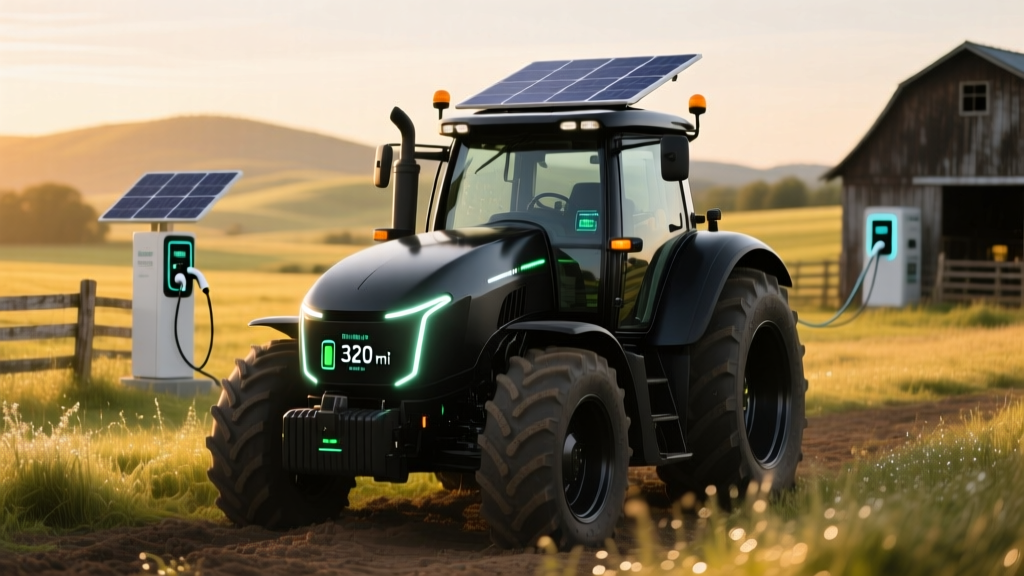
Electric farm tractors are viable in 2026 for light-to-medium duty tasks on small-to-mid-size farms — think orchard spraying, livestock feeding runs, light tillage, and property maintenance. Current models like the Monarch MK-V and Solectrac eTrac offer 40–120 kWh battery packs delivering 4–10 hours of runtime depending on load. However, for heavy continuous tillage, large-acreage row-crop operations, or multi-shift harvest work, diesel tractors remain the practical choice due to energy density limitations and charging infrastructure gaps in rural areas. Expect to pay $40,000–$90,000+ upfront for an electric tractor, but save $2,000–$6,000 annually on fuel and maintenance depending on usage hours.
While most EV coverage focuses on passenger cars and trucks, the electrification wave has reached the farm gate. Electric farm tractors are no longer vaporware — several models are in production and working on real farms today. But agricultural duty cycles are fundamentally different from highway commuting, and the buying calculus requires its own framework. Here's what you need to know before trading in your diesel.
Current Electric Farm Tractor Lineup: Specs and Pricing
The electric tractor market in 2026 is still emerging, with a handful of serious manufacturers delivering production models. Here's how the leading options stack up on paper and in the field:
| Model | Battery (kWh) | Continuous HP | Peak HP | Est. Runtime (hrs) | Charge Time (L2) | Base Price (USD) |
|---|---|---|---|---|---|---|
| Monarch MK-V | 60–120 (swappable) | 40 | 70 | 4–10+ | ~3–5 hrs (per pack) | $68,000–$89,000 |
| Solectrac eTrac 40 | 40 (LFP) | 28 | 40 | 4–6 | ~4–5 hrs | $44,900 |
| Solectrac eUtilim 40 | 40 (LFP) | 28 | 40 | 4–6 | ~4–5 hrs | $39,900 |
| Fendt e100 Vario (announced) | 100 | ~67 | ~100 | ~4–6 | TBD | TBD (EU market) |
Key takeaway: Usable battery capacity ranges from roughly 40 kWh to 120 kWh across current models. Unlike passenger EVs where range is measured in miles, tractor runtime is measured in hours under load — and load varies enormously depending on whether you're pulling a bottom plow through clay or just running a PTO-driven feed mixer.
Most production electric tractors use LFP (lithium iron phosphate) chemistry, which is the right call for agricultural use: LFP tolerates daily deep cycling better than NMC, handles heat well, and doesn't require cobalt or nickel. The trade-off is lower energy density (heavier batteries for the same kWh), but tractors can use ballast weight productively.
Electric Tractor vs. Diesel Tractor: Operating Cost Breakdown
The purchase price of an electric tractor is typically 30–80% higher than a comparable diesel model. But the operating cost story is dramatically different. Here's a side-by-side comparison based on 500 annual operating hours — realistic for a diversified small-to-mid-size farm:
| Cost Category | Electric Tractor (60 kWh) | Diesel Tractor (~40 HP) |
|---|---|---|
| Purchase price | $68,000–$89,000 | $30,000–$45,000 |
| Annual fuel/energy (500 hrs) | $600–$1,200 (electricity) | $3,500–$5,500 (diesel) |
| Annual maintenance | $200–$500 | $800–$1,800 |
| 5-year fuel + maintenance total | $4,000–$8,500 | $21,500–$36,500 |
| Oil changes per year | 0 | 2–4 |
| DEF fluid / emissions system | N/A | $200–$500/yr |
Energy math in detail: A 60 kWh battery pack charged at the US average agricultural electricity rate of ~$0.12/kWh costs about $7.20 per full charge. Assuming you cycle through one full charge per working day across 200 operating days, that's roughly $1,440/year in electricity. With solar panels on a barn roof — which many farms already have or can install — marginal charging cost can approach zero during sunny months.
Diesel, by contrast, at $3.80/gallon and a consumption rate of roughly 1.5–2.5 gallons/hour under mixed load, runs $2,850–$5,000 annually for 500 hours. And diesel prices have shown far more volatility than electricity rates over the past decade.
The maintenance gap is equally significant. Electric motors have no oil, no fuel filters, no air filters (in the engine sense), no DEF fluid, no DPF regeneration cycles, and no transmission fluid in a conventional sense. You're maintaining hydraulics, cooling systems, and greasing pivot points — that's largely it. Manufacturers like Monarch Tractor emphasize this simplicity as a core selling point.
Real-World Runtime: What the Battery Actually Delivers
This is where marketing claims meet physics, and it's the single most important factor in deciding whether an electric tractor fits your operation.
A 60 kWh battery does not deliver 60 kWh of continuous work. Real-world usable capacity is typically 85–90% of nameplate (the battery management system reserves a buffer to protect cell health). So from a 60 kWh pack, expect roughly 51–54 kWh of usable energy.
Runtime varies drastically by task:
- Light PTO work (feed mixing, spraying): 8–12 kW draw → 4.5–6.5 hours
- Loader/bucket work (moving feed, clearing): 15–25 kW average → 2–3.5 hours
- Light tillage/cultivation: 20–35 kW → 1.5–2.5 hours
- Heavy continuous tillage (plowing, disking): 35–55 kW+ → 1–1.5 hours
For comparison, a 40 HP diesel tractor with a 12-gallon fuel tank might run 8–10 hours before refueling, regardless of task intensity, because diesel fuel contains roughly 36 kWh of energy per gallon. That's 432 kWh in a 12-gallon tank — vastly more stored energy than any current electric tractor battery. This energy-density gap is the fundamental constraint of electric agricultural equipment.
Cold weather matters. LFP batteries lose 15–30% of usable capacity below freezing. If you're running a tractor in January in Minnesota, expect your 5-hour summer runtime to drop to 3.5–4 hours. Battery preconditioning (warming the pack before heavy use) helps, but it consumes energy from the pack itself.
Charging Infrastructure on the Farm: What You'll Actually Need
Unlike highway EV charging, tractor charging happens at the homestead. Here's the practical reality of what an electric farm tractor requires:
Level 2 Charging (Standard Setup)
Most electric tractors charge via a standard J1772 connector at Level 2 (240V AC). At 7.2–10 kW charging power, a 60 kWh pack recharges in approximately 6–8 hours — which works fine for overnight charging between workdays.
Electrical Service Requirements
You'll need a dedicated 40–50 amp, 240V circuit at your barn or equipment shed. If your farm's electrical panel is already near capacity (common on older properties), a panel upgrade from 100A to 200A service may be required. Expect to pay:
| Item | Estimated Cost |
|---|---|
| Level 2 EVSE (charger unit, 40–48A) | $500–$1,200 |
| Electrical wiring (50–100 ft run to barn) | $800–$2,500 |
| Subpanel installation (if needed) | $500–$1,500 |
| Panel upgrade 100A → 200A (if needed) | $1,500–$3,500 |
| Permits and inspection | $100–$400 |
| Total (typical, no panel upgrade) | $1,400–$4,200 |
Solar synergy: Farms with existing or planned solar arrays can pair tractor charging with daytime solar production. A 10 kW solar array producing ~40–50 kWh/day in summer can effectively "fuel" an electric tractor for free during peak growing season. This is a genuine advantage that diesel cannot replicate.
Swappable Batteries (Monarch Approach)
The Monarch MK-V uses a swappable battery system — you can run one pack while charging another, effectively enabling near-continuous operation if you invest in 2–3 battery packs. Each additional pack costs approximately $10,000–$15,000, but it eliminates charging downtime during critical windows like planting or harvest.
Common Misconceptions About Electric Farm Tractors
| Myth | Fact |
|---|---|
| "Electric tractors can't produce enough torque for real work." | Electric motors deliver peak torque at 0 RPM — they actually produce more low-end pulling force than equivalent diesel engines. The Monarch MK-V produces 70 peak HP with instant torque, competitive with 40–50 HP diesel tractors for draft work. |
| "Batteries won't last in farm conditions." | LFP batteries are rated for 3,000–5,000+ full charge cycles before degrading to 80% capacity. At one cycle per day, 250 days/year, that's 12–20 years of service. Manufacturers typically warranty batteries for 5–8 years. Dust, vibration, and moisture protection is addressed via IP-rated enclosures. |
| "You can't run PTO implements with electric tractors." | Current production electric tractors include standard Category 1 three-point hitches and PTO outputs (540 RPM). They run conventional implements — mowers, tillers, sprayers, post-hole diggers — without modification. |
| "Electric tractors are a niche toy, not real equipment." | Monarch Tractor has deployed fleets to commercial operations including vineyards and orchards in California. The use case is real but specific — these tractors excel in repetitive, moderate-load tasks with overnight charging access, not 14-hour harvest marathons. |
| "The battery replacement will bankrupt you." | Current LFP pack replacement estimates range from $10,000–$20,000 depending on capacity. That's significant, but comparable to a major diesel engine rebuild ($8,000–$15,000). And LFP packs are lasting longer than initial projections. |
Federal Incentives and Tax Considerations
Electric farm tractors do not qualify for the IRS §30D Clean Vehicle Credit — that credit applies to on-road passenger vehicles. However, other financial incentives apply:
- Section 179 expensing: Farm equipment, including electric tractors, can typically be fully expensed in the year of purchase under IRC Section 179, subject to annual limits (check current-year IRS limits with your tax professional).
- USDA REAP Grants: The Rural Energy for America Program offers grants covering up to 50% of the cost of energy-efficient agricultural equipment, which can include electric tractors and associated charging infrastructure. Check USDA's REAP page for current availability in your state.
- State and utility incentives: Many state clean-energy programs and rural electric cooperatives offer rebates for electric agricultural equipment. These vary significantly by jurisdiction — contact your local utility and state energy office for specifics.
- Depreciation: Standard MACRS depreciation schedules apply to farm equipment, and bonus depreciation rules may accelerate write-offs.
Always consult a tax professional familiar with agricultural operations before making purchase decisions based on incentive availability.
Decision Framework: Should You Buy an Electric Farm Tractor?
Choose an Electric Farm Tractor If:
- You operate a small-to-mid-size farm (under ~100 acres of active cultivation)
- Your primary tasks are light-to-medium duty: orchard/vineyard work, livestock feeding, property maintenance, light spraying, loader work
- You have reliable 240V electrical access at your equipment barn or can install it
- You have (or plan) solar panels that can offset charging costs
- You value reduced noise (critical for livestock operations and early-morning work near residences)
- You want to eliminate diesel fuel storage, handling, and price volatility
- Your daily runtime needs are under 6–8 hours with overnight charging available
Stick With Diesel (or Wait) If:
- You farm large acreage requiring continuous heavy tillage or planting operations
- You need 10+ hours of uninterrupted high-load runtime during critical seasonal windows
- Your operation lacks 240V electrical infrastructure and a panel upgrade is prohibitively expensive
- You need a tractor above 60–70 continuous HP — no electric option exists in this class yet
- You operate in extreme cold climates where LFP capacity loss compounds already-limited runtime
- Your budget cannot absorb the higher upfront cost, even with long-term savings
What First-Time Electric Tractor Buyers Should Know
If you're considering your first electric farm tractor, these practical points will save you headaches:
- Audit your actual duty cycle. Log your current tractor hours for one full season. Note which tasks consume the most hours and at what intensity. If 80% of your hours are light-to-medium work, an electric tractor covers most of your needs — you can keep a diesel for the heavy 20%.
- Get an electrical assessment before buying. Have a licensed electrician evaluate your barn/shop panel capacity, distance to the charging location, and any upgrade requirements. Do this before placing a tractor order — charging infrastructure lead time can be weeks to months.
- Plan for winter. If you'll operate in freezing temperatures, ask the manufacturer about battery thermal management. Some models include pack heating; others don't. A cold-soaked LFP battery that isn't preconditioned will deliver noticeably less runtime and accept charge more slowly.
- Dealer and service support is still thin. Unlike the John Deere or Kubota dealer network, electric tractor service infrastructure is limited. Ask manufacturers directly: Who services your equipment within 100 miles of my farm? What's the parts availability? Can I perform basic diagnostics myself?
- Resale value is unproven. The used electric tractor market barely exists in 2026. Depreciation curves for electric agricultural equipment are still being established. If you plan to trade in within 5 years, factor in uncertainty around residual value.
- Consider a "mixed fleet" approach. Many early adopters run one electric tractor for daily light-duty tasks and keep their diesel for heavy seasonal work. This captures most of the fuel and maintenance savings without risking downtime during time-critical operations.
How long do electric tractor batteries last before replacement?
LFP battery packs used in most electric tractors are rated for 3,000–5,000+ full charge cycles to 80% state of health. At typical farm usage (one cycle per working day, ~250 days/year), that translates to 12–20 years before meaningful capacity loss. Most manufacturers warranty batteries for 5–8 years. When replacement is needed, expect to pay $10,000–$20,000 depending on pack size — comparable to a major diesel engine overhaul.
Can I charge an electric tractor from a standard household outlet?
Technically yes, via Level 1 (120V) charging, but it's impractically slow — expect 1–2 kW of charge rate, meaning a 60 kWh pack would take 30–60 hours to fully charge. A dedicated 240V Level 2 circuit (40–50A) is strongly recommended and delivers a full charge in 5–8 hours overnight.
Do electric tractors work with my existing implements?
Yes, in most cases. Current production electric tractors include standard Category 1 three-point hitches and 540 RPM PTO outputs. They're designed to work with conventional implements — rotary mowers, box blades, tillers, sprayers, post-hole augers, and loader attachments. Verify hitch category and PTO specifications match your implement requirements before purchasing.
Are electric tractors safe around livestock?
Electric tractors are significantly quieter than diesel — typically 60–70 dB under load vs. 85–95 dB for diesel. This is a genuine advantage for livestock operations where noise stress affects animal health and productivity. The lack of exhaust emissions also makes them safer for use inside barns and enclosed livestock facilities.
What happens if I run out of battery in the field?
Unlike a diesel tractor where you can bring a fuel can, a depleted electric tractor must be towed or recharged in place. Most models include a transport mode that allows towing. The practical solution is operational planning: monitor state of charge like you'd monitor a fuel gauge, and return to the barn for a top-up before the pack is fully depleted. Swappable battery systems (like Monarch's) mitigate this by allowing a fresh pack to be brought to the tractor.