Quick Verdict: The BMW i3's Acceleration and Character
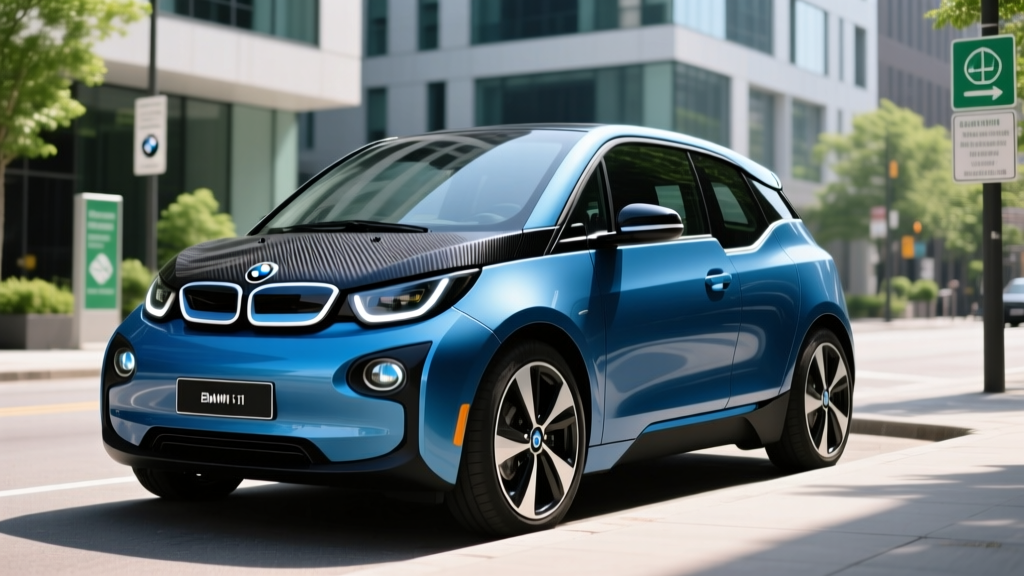
The BMW i3 was never designed to win drag races, but its 0-60 mph time of 6.9 seconds (for the standard i3 with 170 hp) feels quicker than the number suggests. That's because the electric motor delivers 184 lb-ft of torque instantly from zero RPM, giving the lightweight carbon-fiber-reinforced plastic (CFRP) chassis a punchy, responsive character in city traffic that many more powerful EVs can't match at low speeds.
BMW discontinued the i3 after the 2021 model year, making this a used-EV proposition in 2026. But for urban commuters who value tight turning circles, unique design, and BMW build quality, the i3 remains one of the most distinctive electric vehicles on the road. The later 42.2 kWh battery models (2019-2021) offer a practical 153-mile EPA range, while the sportier i3s trims shave the 0-60 sprint to 6.8 seconds with 184 hp.
| EPA Range | 153 miles (42.2 kWh battery, 2019-2021) |
| Battery | 42.2 kWh gross / 37.9 kWh usable, NMC lithium-ion |
| 0-60 mph | 6.9 sec (i3) / 6.8 sec (i3s) |
| Horsepower | 170 hp (i3) / 184 hp (i3s) |
| Max DC Fast Charge | 50 kW (CCS) |
| 10-80% DC Time | ~45 minutes |
| Drivetrain | Rear-wheel drive (single motor) |
| EPA Efficiency | 113 MPGe combined / 30 kWh/100 mi |
| Battery Warranty (when new) | 8 years / 100,000 miles |
BMW i3 0-60 Performance: Why It Feels Faster Than It Looks
The BMW i3's 0-60 mph time of 6.9 seconds places it in warm-hatch territory — not sports-car fast, but genuinely quick for daily driving. The i3s variant, with its slightly wider track, sport suspension, and 184 hp motor, manages 6.8 seconds. Both versions are limited to an electronically governed top speed of 93 mph (i3) or 100 mph (i3s).
What the stopwatch doesn't capture is how the i3 delivers its performance. The 184 lb-ft of torque (199 lb-ft on the i3s) arrives the instant you touch the accelerator, with no gear shifts, no turbo lag, and no power-band wait. The i3's curb weight is roughly 2,900 lbs — nearly 1,000 lbs lighter than a Tesla Model 3 — and that low mass makes the car feel nimble and eager at urban speeds.
The single-speed transmission and rear-wheel-drive layout give the i3 a playful, tossable character. BMW's one-pedal driving mode is among the most aggressive in the industry, with strong regenerative braking that lets you navigate stop-and-go traffic without touching the brake pedal in most situations.
Performance by Trim (2019-2021 Final Generation)
| Trim | 0-60 mph | Horsepower | Torque | Top Speed |
|---|---|---|---|---|
| i3 (standard) | 6.9 sec | 170 hp | 184 lb-ft | 93 mph |
| i3s (sport) | 6.8 sec | 184 hp | 199 lb-ft | 100 mph |
Real-World Range: What 153 EPA Miles Actually Means
EPA Estimated: 153 miles (combined city/highway, 42.2 kWh models, 2019-2021)
Real-World Expectation: 125-140 miles highway at 70 mph; 135-155 miles city driving with regen; 95-115 miles in cold weather (below 32°F) without preconditioning.
Earlier 33 kWh models (2017-2018) carry a 114-mile EPA rating; expect 90-105 miles real-world.
The i3's range story requires context across its production run. BMW offered three battery generations:
- 60 Ah / 22 kWh (2014-2016): 81-mile EPA range — essentially a city-only car today
- 94 Ah / 33 kWh (2017-2018): 114-mile EPA range — workable for short commutes
- 120 Ah / 42.2 kWh (2019-2021): 153-mile EPA range — the version to target on the used market
The 42.2 kWh pack uses Samsung SDI NMC (nickel manganese cobalt) cells with 37.9 kWh usable capacity. BMW's thermal management system is passive air-cooling rather than active liquid cooling, which means the battery is more susceptible to temperature extremes. In hot summer conditions or repeated DC fast-charging sessions, you may notice power throttling to protect the cells.
For a 2026 used buyer, the 120 Ah model is the clear pick. Its 153-mile EPA range covers most daily commutes comfortably, and real-world city driving with frequent regenerative braking can stretch that close to the sticker number. Highway driving at sustained speeds above 65 mph, however, will see that drop to roughly 125-140 miles due to the i3's tall, boxy aerodynamic profile (drag coefficient of 0.29 is decent, but the tall frontal area works against it).
Cold weather is the i3's range Achilles' heel. Without a heat pump (the i3 uses resistive cabin heating), winter range can drop 30-40% in sub-freezing temperatures. Preconditioning the battery while plugged in is essential to mitigate this loss.
Charging Speed: 50 kW DC and Level 2 at Home
The BMW i3's charging capability reflects its era. The maximum DC fast-charge rate is 50 kW via CCS (on models equipped with the DC fast-charging option — verify this when buying used, as it was not standard on all trims). A 10-80% charge takes approximately 45 minutes at a 50 kW station.
On a modern 150 kW or 350 kW DC fast charger, the i3 will still only pull 50 kW maximum. The charge curve is relatively flat between 10-70% SoC, then tapers significantly above 80% to protect battery health. Plan to charge to 80% on road trips and move on rather than waiting for a full top-up.
Charging Speed Breakdown
| Level | Power | Miles Added per Hour | 0-100% Time | Best Use |
|---|---|---|---|---|
| Level 1 (120V) | 1.4 kW | ~4 mi/hr | ~28 hours | Emergency trickle |
| Level 2 (240V) | 7.4 kW | ~22 mi/hr | ~5.5 hours | Home/overnight |
| DC Fast (CCS) | 50 kW peak | ~150 mi/hr (peak) | ~45 min (10-80%) | Road trips |
Level 2 charging at 7.4 kW is the practical daily solution. A full charge from empty takes about 5.5 hours, meaning an overnight session on a home Level 2 charger (like a ChargePoint Home Flex or Emporia Vue) easily replenishes the battery. Installation of a 240V/40A circuit typically costs $800-$2,000 depending on your electrical panel's capacity and the run distance from panel to garage.
One important note for used buyers: some early i3 models came with a Range Extender (REx) option — a small 650cc two-cylinder gasoline generator that kicks in when the battery depletes, adding roughly 60-80 miles of range. While this eases range anxiety, it adds maintenance complexity (oil changes, fuel system) and disqualifies the REx models from certain EV-only incentives.
Efficiency: 113 MPGe and Class-Leading City Consumption
The BMW i3's efficiency is where it truly shines. The EPA rates the 42.2 kWh model at 113 MPGe combined, breaking down to 124 MPGe city and 102 MPGe highway. In energy terms, that's 30 kWh per 100 miles — excellent for any EV, and a reflection of the i3's lightweight construction and efficient powertrain.
At the national average electricity rate of approximately $0.17/kWh (as of early 2026, per EIA data), driving 100 miles in an i3 costs roughly $5.10. Compare that to a 30 MPG gas car at $3.50/gallon, which would cost $11.67 for the same distance — the i3 saves about $6.50 per 100 miles, or roughly $650 over 10,000 miles of annual driving.
City driving with frequent stops maximizes the i3's regenerative braking advantage, often pushing real-world efficiency above the EPA estimate. Highway cruising at 75+ mph, however, will see efficiency drop to 33-36 kWh/100 mi due to aerodynamic drag.
Interior, Cargo, and Technology
The i3's interior is unlike any other BMW — or any other car, for that matter. The cabin uses sustainable materials including eucalyptus wood trim, recycled plastic fiber upholstery, and natural wool accents. The minimalist design feels more Scandinavian lounge than German sport sedan.
Dimensions and Space
| Measurement | Specification |
|---|---|
| Seating Capacity | 4 passengers |
| Front Legroom | 40.5 inches |
| Rear Legroom | 31.9 inches (tight for adults) |
| Cargo Volume (rear seats up) | 15.1 cu ft |
| Cargo Volume (rear seats folded) | 39.2 cu ft |
| Turning Circle | 32.3 feet (exceptionally tight) |
The rear-hinged "coach doors" (suicide doors) on the passenger side create a wide opening for rear-seat access, but they require the front door to be opened first. The rear seats work well for children or occasional adult passengers on short trips, but the 31.9 inches of rear legroom is tight for taller adults on longer journeys.
Cargo space is practical for groceries and daily needs: 15.1 cubic feet behind the rear seats expands to 39.2 cubic feet with the rear seats folded flat. There is no front trunk (frunk) — the i3's front compartment houses the motor and electronics.
Tech and Driver Assistance
The final-generation i3 (2019-2021) features BMW's iDrive 6.0 infotainment system with a 10.25-inch display, Apple CarPlay (wireless on later models), and navigation with EV-specific route planning that accounts for charging stops. The system is responsive and well-organized, though it lacks the Android Auto integration found in newer BMWs.
Driver-assistance features include:
- Active Cruise Control with Stop & Go
- Driving Assistant Plus (lane-keeping, forward collision warning, automatic emergency braking)
- Park Distance Control (front and rear sensors)
- Surround View Camera (360-degree)
These are SAE Level 2 driver-assist features — they do not make the i3 self-driving. The driver must remain fully engaged with hands on the wheel and eyes on the road at all times. The i3 does not offer the more advanced hands-free systems like GM's Super Cruise or Ford's BlueCruise.
Used Pricing, Tax Credits, and Value in 2026
Since BMW discontinued the i3 after 2021, all purchases in 2026 are on the used market. Here's what pricing looks like:
| Model Year / Trim | Original MSRP | 2026 Used Price (est.) | Federal Used EV Credit |
|---|---|---|---|
| 2019 i3 (42.2 kWh) | $45,545 | $18,000-$22,000 | Up to $4,000* |
| 2020 i3 (42.2 kWh) | $45,545 | $20,000-$24,000 | Up to $4,000* |
| 2021 i3s (42.2 kWh) | $52,395 | $24,000-$28,000 | Up to $4,000* |
*Under IRS §25E (the previously owned clean vehicle credit), eligible buyers can claim 30% of the sale price up to $4,000 on a used EV. Requirements include: vehicle sale price must be $25,000 or less, buyer income must not exceed $75,000 (single) / $150,000 (joint), and the vehicle must be purchased from a licensed dealer. Full rules at IRS.gov. The i3's used pricing often falls right at or below the $25,000 cap, making many examples eligible.
The i3's value proposition in 2026 is strong for the right buyer. A 2020 i3 with 30,000-50,000 miles can be had for $20,000-$24,000 before the used EV credit, potentially dropping to $16,000-$20,000 after the $4,000 credit. That's affordable entry into a premium-brand EV with unique character and low running costs.
Battery Health Considerations for Used Buyers
The i3's original battery warranty was 8 years/100,000 miles against defects and capacity loss below 70%. For a 2019 model, that warranty extends through 2027; for 2021 models, through 2029. Before purchasing, request a battery health report from a BMW dealer showing the current State of Health (SoH). Most 42.2 kWh i3s with moderate mileage show 88-95% SoH, meaning 34-36 kWh of usable capacity remains.
If the battery does need replacement outside warranty, expect a cost of $8,000-$12,000 for a refurbished or new pack from BMW — a significant expense relative to the car's value. Third-party battery repair shops are emerging as a lower-cost option, often replacing individual failed modules for $2,000-$4,000.
Who Should Buy the BMW i3?
- Urban commuters with round-trip drives under 80 miles who can charge at home
- Second-car households needing an efficient, easy-to-park city runabout
- Design-conscious buyers who want something visually distinctive and sustainably built
- Tight-city dwellers who benefit from the 32.3-foot turning circle and compact footprint
- Long-distance road trippers — 153-mile range and 50 kW charging make highway travel slow
- Families needing 5 seats — the i3 seats only four, with tight rear quarters
- Cold-climate drivers without garage parking — resistive heating crushes winter range
- Buyers wanting the latest ADAS — the i3's driver assists are a generation behind current offerings
BMW i3 vs. Key Used-EV Competitors
| Spec | BMW i3 (2020) | Chevy Bolt EV (2020) | Nissan LEAF SV (2020) |
|---|---|---|---|
| EPA Range | 153 mi | 259 mi | 149 mi (40 kWh) |
| 0-60 mph | 6.9 sec | 6.5 sec | 7.9 sec |
| Battery | 42.2 kWh | 66 kWh | 40 kWh |
| DC Fast Charge | 50 kW | 55 kW | 50 kW (CHAdeMO) |
| Seats | 4 | 5 | 5 |
| Cargo | 15.1 cu ft | 16.9 cu ft | 23.6 cu ft |
| 2026 Used Price | $20-24K | $16-20K | $14-18K |
The Chevy Bolt EV is the pragmatic choice — more range, more space, five seats, and often cheaper on the used market. But it lacks the i3's premium materials, rear-hinged doors, carbon-fiber construction, and BMW driving dynamics.
The Nissan LEAF offers more cargo room but uses the increasingly obsolete CHAdeMO charging connector (vs. CCS on the i3 and Bolt), and its passive battery thermal management is even more limited than the i3's for fast-charging endurance.
The i3 wins on uniqueness, urban maneuverability, build quality, and efficiency. It loses on range, rear-seat space, and DC charging speed compared to more mainstream alternatives.
Frequently Asked Questions
What is the BMW i3's 0-60 time?
The standard BMW i3 (170 hp) hits 0-60 mph in 6.9 seconds. The sportier i3s variant (184 hp) does it in 6.8 seconds. Both are rear-wheel drive with instant electric torque that makes them feel quicker in city driving than the numbers suggest.
Does the BMW i3 qualify for any federal tax credit in 2026?
Since the i3 is only available used, it does not qualify for the new-vehicle §30D credit (up to $7,500). However, it may qualify for the §25E Previously Owned Clean Vehicle Credit — up to $4,000 (30% of sale price) if the sale price is $25,000 or less, buyer income is under $75K single/$150K joint, and the vehicle is purchased from a licensed dealer. Check current rules at IRS.gov.
How fast does the BMW i3 charge at home?
On a Level 2 (240V) home charger at 7.4 kW, the i3 adds approximately 22 miles of range per hour. A full charge from empty takes about 5.5 hours. Most owners charge overnight and wake up to a full battery every morning. Level 1 (120V) trickle charging adds only ~4 miles per hour and is best reserved for emergencies.
Is the BMW i3 reliable as a used EV?
The i3 has a generally solid reliability record, with the electric powertrain proving durable. Common concerns include the air-cooled battery's sensitivity to extreme temperatures, the cost of BMW-specific parts (CFRP body panels, narrow 155/70R19 tires), and potential battery degradation on high-mileage or hot-climate examples. A pre-purchase inspection at a BMW dealer, including a battery State of Health check, is strongly recommended.
Should I buy the i3 or the i3s?
The i3s adds 14 hp, 15 lb-ft of torque, a sport suspension, wider wheels, and a slightly lower ride height. The 0-60 improvement is marginal (6.8 vs. 6.9 seconds), but the i3s feels more planted in corners and has a more aggressive stance. If you find one within your budget, the i3s is the more engaging driver's car. If value is the priority, the standard i3 delivers nearly the same experience at a lower price.
What's the biggest drawback of owning a BMW i3 in 2026?
The two biggest limitations are range (153 miles EPA, less in real-world highway or cold-weather driving) and DC fast-charge speed (50 kW peak means 45-minute stops for a 10-80% charge). For a dedicated city commuter with home charging, these are manageable. For anyone needing road-trip flexibility or living in a charging-desert area, a used Chevy Bolt EV or Tesla Model 3 offers significantly more versatility.