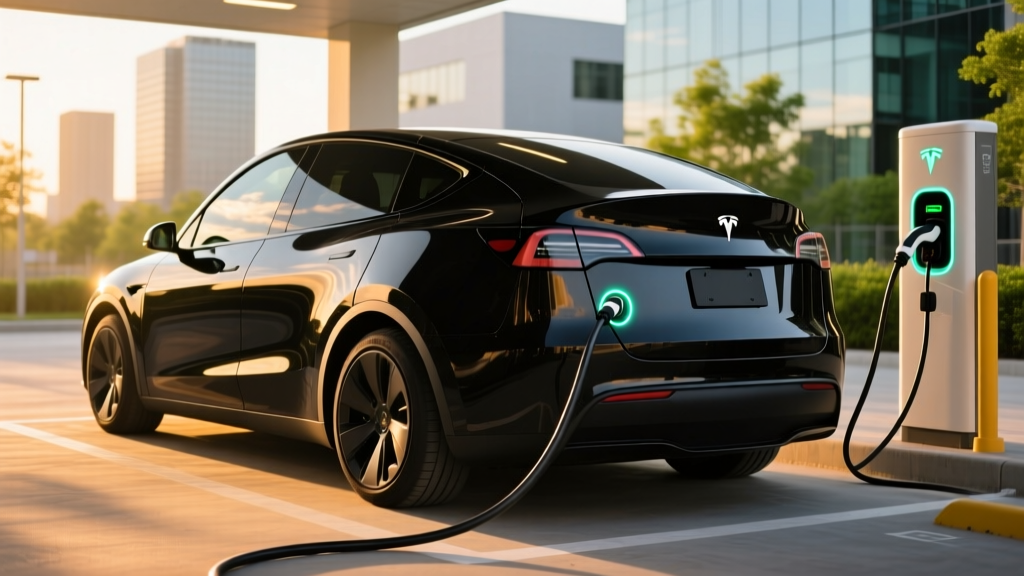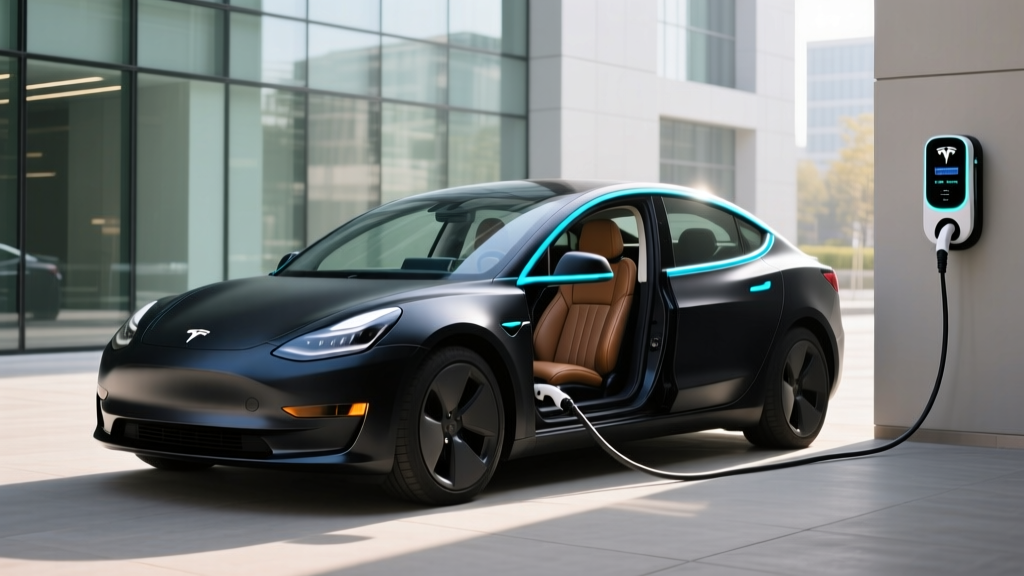
Tesla's over-the-air update cadence has always set it apart from legacy automakers, but the latest software drop for the 2026 Model 3 Highland has caught owners and shoppers off guard. A Tesla update includes surprise features ranging from enhanced adaptive cruise behavior to a redesigned energy-app interface and new cabin-overheat protections — additions that weren't on any public roadmap. For buyers evaluating the Model 3 right now, these software bonuses layer on top of an already compelling EV sedan. This review covers everything you need to know: real-world range, charging speeds, pricing after federal tax credits, and whether the Model 3 still holds its crown against the Hyundai Ioniq 6, BMW i4, and Polestar 2.
What's New: The Tesla Update That Includes Surprise Features
In early 2026, Tesla pushed software version 2026.8 to Model 3 Highland vehicles. While release notes mentioned minor UI tweaks, owners quickly discovered several unannounced additions:
- Adaptive Cruise Smoothing: The following-distance algorithm now modulates braking more gradually in stop-and-go traffic, reducing the lurching effect that plagued earlier builds.
- Energy App Overhaul: A new trip-planning overlay shows projected State of Charge (SoC) at each waypoint with real-time wind and elevation data — previously only available through third-party apps like A Better Route Planner.
- Cabin Overheat Protection 2.0: Now uses predictive thermal modeling based on your parked location's forecasted temperature rather than reacting after cabin temps exceed a threshold.
- Ambient Lighting Customization: Long Range and Performance trims now support full RGB spectrum control for the interior ambient light strip, a feature owners had requested since the Highland redesign launched.
- Dashcam Multi-View Export: You can now export all camera angles simultaneously as a synchronized multi-video file, useful for insurance claims or incident documentation.
These additions reinforce Tesla's software-first approach to vehicle ownership. Unlike competitors requiring dealer visits for feature updates, the Model 3 continues to improve in your driveway. However, the core hardware — battery, motors, chassis — remains unchanged from the 2024 Highland refresh, so let's examine what that hardware actually delivers.
Range, Battery, and Efficiency: Real-World Numbers
The 2026 Model 3 is offered in three trims, each with distinct battery chemistry and range profiles. Tesla does not officially publish usable battery capacity, but teardown analysis and EPA test data give us reliable figures.
| Trim | Battery (usable kWh) | Chemistry | EPA Range | MPGe (city/hwy/combined) | kWh/100 mi |
|---|---|---|---|---|---|
| RWD (Base) | ~57.5 kWh | LFP (CATL) | 272 mi | 132 / 117 / 125 | 27 |
| Long Range AWD | ~75 kWh | NMC (Panasonic) | 341 mi | 136 / 120 / 129 | 26 |
| Performance AWD | ~75 kWh | NMC (Panasonic) | 315 mi | 122 / 108 / 116 | 30 |
The LFP (lithium iron phosphate) chemistry in the RWD trim is a critical differentiator. LFP cells sacrifice some energy density — hence the smaller pack and lower range — but offer superior cycle life and thermal stability. Tesla and CATL recommend charging LFP batteries to 100% at least once per week for accurate SoC calibration. The NMC packs in the Long Range and Performance trims benefit from daily charge limits of 80–90% to minimize long-term degradation. If you plan to own the car for 8+ years and charge daily, LFP's longevity advantage is meaningful.
Charging Speed: DC Fast Charging and Home Level 2
Charging speed remains one of the Model 3's strongest attributes, thanks to Tesla's Supercharger network and the vehicle's efficient thermal management system.
| Charging Level | Max Rate | Speed / Time | Connector |
|---|---|---|---|
| Level 1 (120V household) | ~1.4 kW | ~3–5 miles per hour | NACS (native) |
| Level 2 (240V home/public) | 11.5 kW (48A) | ~37–44 miles per hour | NACS (native) |
| DC Fast Charge (V3 Supercharger) | 250 kW (LR/Perf); 170 kW (RWD) | 10–80% in ~25 min (LR); ~30 min (RWD) | NACS (native) |
| DC Fast Charge (CCS adapter) | ~150 kW (adapter-limited) | 10–80% in ~35 min | CCS1 via adapter |
A few nuances matter here. The 250 kW peak rate on Long Range and Performance trims is a peak, not a sustained rate. The actual charge curve tapers significantly above 50% SoC. In practice, you'll see 250 kW only between roughly 10–25% SoC, dropping to ~150 kW by 50%, and falling below 60 kW past 80%. This is why the 10–80% time is the meaningful metric — not the peak kW number Tesla advertises.
The RWD trim's 170 kW DC fast-charge ceiling reflects its LFP chemistry, which accepts charge more slowly at high SoC. However, because Tesla recommends regular 100% charging for LFP, you're more likely to charge to full on road trips anyway, partially offsetting the slower taper.
At home, the onboard 11.5 kW charger is competitive with the segment. A full charge from 10% to 100% on a Level 2 Wall Connector takes roughly 7–8 hours for the Long Range — easily overnight. Note that the Model 3 uses the NACS (North American Charging Standard) connector natively. With Tesla opening Superchargers to non-Tesla EVs, the network advantage has narrowed, but Tesla owners still benefit from seamless plug-and-charge authentication, reliable stall uptime, and the most extensive highway-corridor coverage in North America.
Performance and Driving Dynamics
| Trim | Drivetrain | Horsepower | 0–60 mph | Top Speed |
|---|---|---|---|---|
| RWD | Rear-Wheel Drive (single motor) | ~283 hp | 5.8 sec | 125 mph |
| Long Range AWD | Dual-Motor AWD | ~346 hp | 4.2 sec | 125 mph |
| Performance AWD | Dual-Motor AWD | ~510 hp | 2.9 sec | 163 mph |
The Highland refresh brought meaningful chassis improvements that carry into 2026: revised suspension tuning with frequency-selective dampers, additional acoustic insulation, and a stiffer subframe. The result is a noticeably quieter, more composed ride than the pre-2024 Model 3. Road noise at highway speed is dramatically reduced — one of the most common complaints about earlier models.
The Performance trim's 2.9-second 0–60 time remains ferocious by any standard and competitive with the BMW i4 M50 (3.3 sec) and the Hyundai Ioniq 6 AWD (4.5 sec). But the more relevant comparison for most buyers is the Long Range, which balances 4.2-second acceleration with 341 miles of EPA range — a combination no rival sedan currently matches.
Regenerative braking on the Model 3 is strong but no longer offers adjustable levels as it did in earlier software builds. Tesla has defaulted to a firm regen profile that enables one-pedal driving in most conditions. If you prefer coasting or graduated regen blending, this is a notable limitation compared to Hyundai/Kia's adjustable paddle-shift regen system.
Pricing, Tax Credits, and Ownership Cost
| Trim | Base MSRP | As-Tested (typical config) | Federal §30D Credit | Effective Price (after credit) |
|---|---|---|---|---|
| RWD | $38,990 | $39,990 (w/ FSD transfer) | Up to $7,500* | ~$32,490 |
| Long Range AWD | $47,740 | $49,240 (w/ paint + wheels) | Up to $7,500* | ~$41,740 |
| Performance AWD | $54,990 | $56,490 (w/ red paint) | Up to $7,500* | ~$48,990 |
*Federal tax credit eligibility under IRS §30D is subject to multiple requirements:
- MSRP Cap: Sedans must have an MSRP at or below $55,000. The RWD and Long Range trims qualify; the Performance trim at $54,990 base qualifies but exceeds the cap if options push the total above $55,000.
- Buyer Income Cap: Modified adjusted gross income must not exceed $150,000 (single), $225,000 (head of household), or $300,000 (joint filers).
- Battery Sourcing: The full $7,500 credit requires meeting both critical-minerals and battery-component sourcing requirements. As of 2026, Tesla's US-built cells and North American mineral supply chains generally satisfy both halves, but verify current-year compliance at purchase.
- Point-of-Sale Transfer: You can transfer the credit to Tesla at purchase, reducing your out-of-pocket cost directly rather than waiting to claim it on your tax return.
Destination fees ($1,390) and optional paint colors ($1,000–$2,500) add to the bottom line. Full Self-Driving (Supervised) remains a $8,000 add-on or $99/month subscription, though its value proposition is debated — more on that below.
On the ownership-cost side, the Model 3 benefits from minimal scheduled maintenance (no oil changes, no transmission fluid, brake pad life extended by regen). Tesla's 5-year estimated total cost of ownership is competitive with a similarly priced BMW 3 Series or Mercedes C-Class when factoring in fuel savings, though insurance premiums for Teslas tend to run 15–25% higher than segment averages according to industry data.
Interior, Cargo, and Technology
The Model 3's minimalist interior philosophy remains polarizing. Everything routes through the 15.4-inch center touchscreen — climate controls, mirror adjustment, glovebox release, and even the turn signals on the steering wheel (a Highland-specific change that continues to draw mixed reviews).
For 2026, the cabin materials have improved modestly: ventilated front seats are now standard across all trims, and the rear seat gains a slight cushion-foam revision for better thigh support. Rear legroom measures 34.9 inches, adequate for average adults but tighter than the Hyundai Ioniq 6 (37.0 in) or BMW i4 (35.7 in).
| Measurement | Value |
|---|---|
| Front headroom | 40.3 in |
| Rear headroom | 37.8 in |
| Front legroom | 42.7 in |
| Rear legroom | 34.9 in |
| Trunk (rear) | 21.0 cu ft |
| Frunk (front trunk) | 3.1 cu ft |
| Total cargo | 24.1 cu ft |
The 21.0 cu ft rear trunk is generous for a compact sedan and benefits from a wide hatchback opening. The 3.1 cu ft frunk is small — useful for charging cables and a small bag but not a meaningful cargo area.
Driver-Assistance Technology: The Model 3 comes standard with Tesla Autopilot, a Level 2 driver-assistance system providing adaptive cruise control, lane-centering, and automatic emergency braking. The optional Full Self-Driving (Supervised) package adds automatic lane changes, on/off-ramp navigation, traffic-light recognition, and a city-streets driving mode.
The infotainment system remains Tesla's strongest suit in this category: fast, responsive, with native navigation, Spotify/Apple Music integration, a built-in web browser, and access to streaming video while parked. Wireless phone charging, Bluetooth, and Wi-Fi connectivity are standard. Notably, there is no Apple CarPlay or Android Auto — a deliberate Tesla choice that frustrates some buyers accustomed to phone-mirroring interfaces.
Warranty Coverage
| Coverage Area | Term |
|---|---|
| Basic Vehicle (bumper-to-bumper) | 4 years / 50,000 miles |
| Battery & Drive Unit (RWD) | 8 years / 100,000 miles |
| Battery & Drive Unit (LR / Performance) | 8 years / 120,000 miles |
| Battery Capacity Retention Guarantee | Minimum 70% SoH during warranty period |
Tesla's battery warranty guarantees that the pack will retain at least 70% of its original capacity during the warranty term. If degradation exceeds that threshold, Tesla will repair or replace the battery to bring it back above 70%. Real-world data from high-mileage Model 3 owners suggests NMC packs typically retain 85–90% capacity at 100,000 miles under normal charging habits, while LFP packs show even slower degradation curves. Out-of-warranty battery replacement costs remain high — estimated between $12,000 and $16,000 depending on the trim — but the likelihood of needing one within the vehicle's first decade is statistically low based on current field data.
Pros, Cons, and Who Should Buy
Pros
- Best-in-class efficiency (129 MPGe combined, LR trim)
- Supercharger network access with seamless plug-and-charge
- Continuous OTA improvements — the latest update added unadvertised features
- Strong resale value relative to EV segment averages
- Excellent performance-per-dollar in Long Range and Performance trims
- LFP battery option (RWD) offers superior long-term cycle life
- Class-leading infotainment responsiveness and feature depth
Cons
- Steering-wheel turn signals require adaptation and frustrate some drivers
- No Apple CarPlay or Android Auto support
- Rear seat legroom is tight vs. Ioniq 6 and BMW i4
- FSD (Supervised) costs $8,000 and remains Level 2 — not autonomous
- Insurance premiums tend to be 15–25% above segment average
- Non-adjustable regenerative braking removes driver preference
- Service center availability varies widely by region
Who the 2026 Model 3 Suits Best
- Daily commuters with home charging access who value low running costs and strong range.
- Tech-forward buyers who want continuous software improvements and don't mind a minimalist cabin.
- Road-trip enthusiasts who benefit from the Supercharger network's reliability on interstate corridors.
- Performance seekers (Performance trim) who want sports-car acceleration in a practical sedan.
Less ideal for: Families needing maximum rear-seat space, buyers who insist on Apple CarPlay, and those in rural areas far from Tesla service centers.
How It Stacks Up Against Key Competitors
The Model 3 Long Range at ~$41,740 after the federal credit competes directly with the Hyundai Ioniq 6 SEL AWD (~$44,000 after credit), the BMW i4 eDrive40 (~$49,000 after credit), and the Polestar 2 Long Range Dual Motor (~$46,000 after credit). The Model 3's advantages are efficiency, Supercharger access, and OTA feature evolution. The Ioniq 6 counters with more rear-seat space, CarPlay, and adjustable regen. The BMW i4 offers a more traditional luxury interior and superior ride refinement. The Polestar 2 provides a distinctive design and Google-based infotainment with Android Automotive OS.
On pure value — range per dollar, charging infrastructure access, and total cost of ownership — the Model 3 Long Range remains the benchmark. But the gap has narrowed considerably since 2023, and the "best" choice now depends heavily on your priorities around interior space, interface preference, and brand allegiance.
Frequently Asked Questions
What is the real-world range of the 2026 Tesla Model 3?
The Long Range AWD delivers an EPA-estimated 341 miles, but expect roughly 290–310 miles on highway-only trips in moderate weather and 220–260 miles in sub-freezing conditions. The RWD trim's EPA estimate is 272 miles, with real-world highway range around 230–245 miles and winter range as low as 180 miles.
How fast does the Model 3 charge at home and on DC fast chargers?
On a Level 2 home charger (240V, 48A), the Model 3 adds roughly 37–44 miles of range per hour, fully charging overnight. On a V3 Supercharger, the Long Range and Performance trims peak at 250 kW and charge from 10–80% in about 25 minutes. The RWD trim peaks at 170 kW with a 10–80% time of roughly 30 minutes.
Does the 2026 Tesla Model 3 qualify for the $7,500 federal EV tax credit?
The RWD and Long Range trims generally qualify for the full $7,500 credit under IRS §30D, provided the buyer meets income limits ($150K single / $300K joint) and the vehicle's MSRP stays at or below $55,000 for sedans. The Performance trim qualifies at its $54,990 base MSRP but may exceed the cap with options. Always verify current-year battery-sourcing compliance before purchase.
Is the Tesla Model 3 worth buying over the Hyundai Ioniq 6 or BMW i4?
If you prioritize maximum range, charging-network reliability, and continuous software updates, the Model 3 Long Range is still the strongest choice. If rear-seat comfort, Apple CarPlay, or a more traditional luxury interior matters more, the Ioniq 6 and BMW i4 are compelling alternatives. Test-drive all three — the steering-wheel turn signals and lack of CarPlay are dealbreakers for some buyers and non-issues for others.
What are the biggest drawbacks of the 2026 Model 3?
The most commonly cited issues are the steering-wheel-mounted turn signals (replacing the traditional stalk), no Apple CarPlay/Android Auto, tighter-than-average rear legroom, elevated insurance costs, and the $8,000 price of the FSD package which remains a Level 2 driver-assist system — not autonomous driving.
How long will the Model 3 battery last?
Tesla warranties the battery for 8 years / 100,000 miles (RWD) or 8 years / 120,000 miles (LR/Performance) with a minimum 70% capacity retention guarantee. Real-world data from high-mileage owners suggests typical degradation of 10–15% over the first 100,000 miles for NMC packs and slightly less for LFP. Out-of-warranty replacement costs range from $12,000 to $16,000, though most owners will never need one.