The Bottom Line on the Electric Drive Smart Fortwo
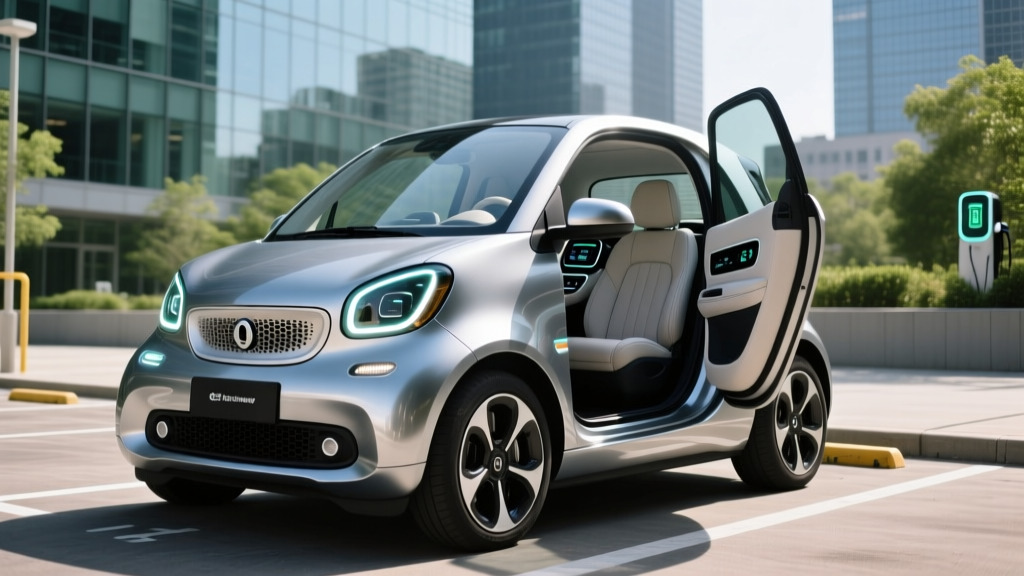
The Smart Fortwo Electric Drive (badged EQ Fortwo after 2018) is a discontinued two-seat microcar with a 58-mile EPA range from a 17.6 kWh battery. Smart exited the U.S. market after the 2019 model year, so every example available is used. At current used prices of roughly $8,000–$14,000, it can serve as an ultra-cheap city commuter if you have reliable home charging and a short daily drive. It is not viable as a sole vehicle for most households, and its limited DC fast-charging capability makes road trips impractical.
What the Electric Drive Smart Fortwo Actually Is
The Smart Fortwo Electric Drive was the battery-electric variant of Daimler's tiny two-seat city car. Sold in the U.S. from the 2013 model year through 2019, it went through two main generations:
- 2013–2015 (451 generation): 17.6 kWh battery, ~68-mile EPA range, 74 hp electric motor, 22 kW onboard charger for Level 2.
- 2017–2019 (453 generation, later badged EQ Fortwo): 17.6 kWh battery, 58-mile EPA range (adjusted testing), 80 hp (60 kW) motor, 7.2 kW Level 2 onboard charger.
Smart officially left the United States after the 2019 model year. Mercedes-Benz (Smart's parent) shifted the brand to a joint venture with Geely for the Chinese and European markets, and no new Smart EVs are sold in the U.S. as of 2026. That means every electric drive Smart Fortwo you'll find stateside is a used vehicle, and you'll be dealing with a shrinking dealer and parts network.
Range, Battery, and Charging: The Hard Numbers
The 453-generation EQ Fortwo's 17.6 kWh battery (approximately 16.7 kWh usable) is small by any modern standard. Here's what that means in practice:
| Specification | Value |
|---|---|
| EPA Range | 58 miles (453 gen); 68 miles (451 gen) |
| Battery Capacity | 17.6 kWh total (~16.7 kWh usable), lithium-ion |
| Motor Output | 80 hp / 60 kW (453 gen); 74 hp (451 gen) |
| 0–60 mph | ~11.4 seconds |
| Top Speed | 81 mph (electronically limited) |
| EPA Efficiency | 108 MPGe combined (453 gen) |
| Level 1 Charging (120V) | ~2.3 kW; ~16–18 hours for full charge |
| Level 2 Charging (240V) | 7.2 kW onboard; ~3 hours for full charge |
| DC Fast Charging | Not available on U.S. models |
| Connector | J1772 (Level 1/2) |
Real-World Range Reality
The EPA sticker says 58 miles. In real-world city driving at moderate temperatures, expect roughly 50–55 miles. On the highway at 65+ mph, that drops to 40–45 miles. In cold weather (below 35°F) with cabin heat running, plan for 35–42 miles of usable range before you're searching for a plug. The Smart Fortwo Electric Drive has no battery preconditioning system, so cold-soaked batteries charge slower and deliver less range.
The absence of DC fast charging is the Fortwo's most significant practical limitation. Every charge must go through the J1772 Level 1 or Level 2 connector. Even at a public Level 2 station at 7.2 kW, a full charge takes about three hours. This car lives and dies by your home charging setup.
Electric Drive Smart Fortwo vs. Gas Fortwo vs. Modern Budget EVs
To understand whether the Fortwo ED makes sense, you need context. Here's how it stacks up against the gas-powered Smart Fortwo it replaced and a few modern alternatives available in 2026:
| Vehicle | EPA Range / MPG | Fuel/Energy Cost per Year* | Used Price (2026) | Seats |
|---|---|---|---|---|
| Smart Fortwo ED (2017–2019) | 58 mi range / 108 MPGe | ~$450 (electricity) | $8,000–$14,000 | 2 |
| Smart Fortwo Gas (2016–2018) | 34 MPG combined | ~$1,500 (gasoline) | $7,000–$11,000 | 2 |
| Nissan Leaf S (2019–2021, used) | 149 mi range / 111 MPGe | ~$500 (electricity) | $12,000–$18,000 | 5 |
| Chevy Bolt EV (2020–2022, used) | 259 mi range / 120 MPGe | ~$480 (electricity) | $16,000–$22,000 | 5 |
| Chevy Bolt EV (2026, new) | ~259 mi range (est.) | ~$480 (electricity) | ~$28,000 (new MSRP) | 5 |
*Annual fuel/energy cost based on 15,000 miles/year and national average electricity/gas prices per fueleconomy.gov. Actual costs vary by region and driving pattern.
The Fortwo ED saves roughly $1,000 per year in fuel compared to the gas Fortwo, but the gas Fortwo has no range limitation and can refuel in three minutes. The used Nissan Leaf or Chevy Bolt cost a few thousand more upfront but offer dramatically more range, five seats, and DC fast charging — making them far more versatile daily drivers.
True Cost of Ownership: What You'll Actually Spend
Buying a used EV at a low price is only the start. Here's a realistic five-year ownership projection for a 2018 EQ Fortwo purchased at $11,000, driven 8,000 miles per year (a realistic city-commuter mileage for this car):
| Cost Category | Smart Fortwo ED (5-Year) | Smart Fortwo Gas (5-Year) |
|---|---|---|
| Purchase Price | $11,000 | $9,000 |
| Energy/Fuel (40,000 mi total) | $1,200 | $4,000 |
| Maintenance | $800 | $2,500 |
| Insurance (avg.) | $4,500 | $4,000 |
| Federal Tax Credit | $0 (used EV credit expired/limited) | $0 |
| Estimated Depreciation | $3,000 | $2,500 |
| 5-Year Total | ~$20,500 | ~$22,000 |
| Cost Per Mile | ~$0.51 | ~$0.55 |
Key takeaways from this breakdown:
- Energy savings are real but modest — you save about $2,800 on electricity vs. gas over five years, largely because the Fortwo ED is a low-mileage vehicle by nature.
- Maintenance is cheaper — no oil changes, no transmission fluid, fewer brake replacements thanks to regenerative braking. Budget roughly $160/year vs. $500/year for the gas model.
- Insurance is slightly higher — EVs tend to carry a 10–15% insurance premium due to higher repair costs for battery-adjacent damage, though the Fortwo's low value limits this effect.
- No federal tax credit — the §30D new EV credit does not apply to used purchases. The former used-EV credit (up to $4,000 under §25E) was available through certain tax years but has been subject to legislative changes. Check current IRS §25E rules before assuming eligibility.
- Depreciation risk is elevated — Smart has no U.S. presence, parts availability is thinning, and buyer demand for 58-mile-range EVs is low. The car may be difficult to resell.
Home Charging Setup: Your Make-or-Break Factor
Because the Fortwo ED cannot DC fast charge, your home charging situation determines whether this car is livable. Here's what you need to know:
Level 1 (120V Standard Outlet)
The Fortwo comes with a 120V trickle charger. At roughly 2.3 kW, a full charge from empty takes 16–18 hours. If your daily commute is under 25 miles round trip and you can plug in every night, Level 1 is technically sufficient — you'll replenish about 30 miles of range overnight. But if you drain the battery significantly, you'll need a full day to recover.
Level 2 (240V Dedicated Circuit)
A Level 2 home charger at 32 amps (7.7 kW) will charge the Fortwo at its maximum onboard rate of 7.2 kW, completing a full charge in about 3 hours. This is the recommended setup.
- Level 2 equipment cost: $300–$700 for a quality unit (ChargePoint Home Flex, Emporia Vue, etc.)
- Electrical installation: $500–$2,000 depending on panel proximity and whether you need a new 240V circuit. Older homes may require a panel upgrade ($1,500–$3,000+).
- Permit and inspection: $50–$200 depending on municipality.
- Total home install: Budget $850–$2,900 for a complete Level 2 setup.
Always hire a licensed electrician and pull a permit. The NHTSA and your local building department require compliant installations for safety and insurance purposes.
Apartment/Street Parking Reality
If you live in an apartment without dedicated parking or park on the street, the Fortwo ED is a very risky purchase. Relying on public Level 2 infrastructure means planning 3-hour charging sessions into your routine. Public Level 2 costs average $1.00–$1.50/hour, which erodes the fuel-cost advantage quickly.
Common Misconceptions About the Electric Drive Smart Fortwo
| Myth | Fact |
|---|---|
| "It qualifies for the $7,500 federal tax credit." | No. The Fortwo ED is only available used, and the §30D new-vehicle credit does not apply. The used-EV credit (§25E) has specific income, price, and sourcing requirements — and is subject to legislative changes. Verify at IRS.gov. |
| "58 miles is enough for anyone's commute." | The average American drives 37 miles per day, but that includes longer weekend trips, errands, and detours. With cold-weather losses of 25–35%, a 58-mile EPA range becomes 38–44 miles in winter — dangerously thin for many drivers. |
| "The battery will need expensive replacement soon." | Lithium-ion batteries in low-stress, small-pack applications like the Fortwo tend to degrade slowly. Most 2017–2019 examples retain 85–92% of original capacity. However, if replacement is needed, expect $4,000–$7,000 — a significant percentage of the car's value. Parts sourcing is complicated by Smart's U.S. exit. |
| "It can charge at any public fast charger." | The Fortwo ED has no DC fast-charging capability. It is limited to Level 1 and Level 2 (J1772). You cannot use CCS, NACS, or CHAdeMO DC fast chargers at all. |
| "It's a great first EV for anyone." | It can be a great first EV for a specific buyer: someone with home charging, a sub-20-mile commute, a second vehicle in the household, and a tight budget. For a sole-vehicle buyer, it's a poor choice. |
What First-Time EV Buyers Should Know Before Purchasing
If the Fortwo ED is your entry point into electric driving, understand these ownership realities before signing:
- Battery health is everything. Ask the seller for a battery state-of-health (SoH) reading. Some Mercedes-Benz dealerships can pull this via diagnostic tool. An SoH below 80% significantly reduces the car's already limited range and should reduce the purchase price accordingly.
- Parts availability is declining. Smart's U.S. departure means body panels, trim pieces, and some electronic modules are getting harder to source. Mercedes-Benz dealers may still service the car, but turnaround times for ordered parts can stretch to weeks or months.
- Safety is a real concern. The Fortwo earned acceptable crash-test scores in its era, but it's a 2,000-pound vehicle sharing roads with 5,000-pound trucks and SUVs. The IIHS rated earlier Smart models, but small cars inherently face higher risk in multi-vehicle collisions.
- Resale value is uncertain. As newer used EVs with 200+ mile ranges drop below $15,000, demand for a 58-mile microcar will continue to shrink. Plan to drive this car until it's nearly worthless, or accept a loss on resale.
- Check for open recalls. Enter any VIN at NHTSA.gov/recalls to verify all recall campaigns have been completed — especially important for a discontinued brand with fewer active dealers.
Decision Framework: Is the Electric Drive Smart Fortwo Right for You?
Buy the Smart Fortwo ED If:
- Your daily round-trip commute is under 25 miles and you rarely deviate from that route.
- You have reliable home charging (garage, driveway, or dedicated outlet).
- This is a second or third vehicle in your household — you have another car for longer trips.
- You live in a mild climate where cold-weather range loss is minimal (think Southern California, Florida, Texas).
- Your budget is strictly under $15,000 and you want a pure EV, not a hybrid.
- You value easy parking in a dense urban environment above all else.
Skip It and Look Elsewhere If:
- This would be your only vehicle — the 58-mile range and lack of DC fast charging make it too limiting.
- You lack home charging access — apartment dwellers and street parkers will struggle.
- You live in a cold climate where winter range drops to 35–42 miles.
- You need more than two seats or any meaningful cargo space (7.8 cu ft behind seats).
- You want a car with strong resale value or robust parts availability.
- You can stretch your budget to $14,000–$20,000 — a used Chevy Bolt EV or Nissan Leaf offers vastly more capability.
Frequently Asked Questions
How long does the Smart Fortwo ED battery last?
Based on degradation data from similar small lithium-ion packs, expect 85–92% state of health after 6–8 years of typical use. The original battery warranty was 8 years/100,000 miles, but most 2017–2019 examples are now out of warranty. A well-maintained pack should deliver 100,000+ miles before dropping below 70% capacity, but replacement cost ($4,000–$7,000) may exceed the vehicle's value.
Can I take the Smart Fortwo ED on a road trip?
Realistically, no. With a 58-mile range and no DC fast charging, every stop requires a 3-hour Level 2 session. A 200-mile trip would need 3–4 charging stops totaling 9–12 hours of charging time. This car is strictly a local commuter.
Is the Smart Fortwo ED safe to drive?
The Fortwo has a reinforced steel safety cell (the "Tridion cell") and performed adequately in crash testing for its class. However, physics is physics — at roughly 2,000 pounds, it's at a significant disadvantage in collisions with larger vehicles. Standard safety features include stability control, multiple airbags, and ABS, but it lacks modern ADAS features like automatic emergency braking or lane-keeping assist.
Will Mercedes-Benz still service the Smart Fortwo?
Some Mercedes-Benz dealerships will still service the Fortwo ED, but support is inconsistent. Parts availability is declining since Smart left the U.S. market after 2019. Before purchasing, call your local Mercedes dealer to confirm they'll service the vehicle and ask about parts lead times.
How does the Fortwo ED compare to a used Chevy Bolt or Nissan Leaf?
The Bolt EV offers 259 miles of EPA range, DC fast charging up to 55 kW, five seats, and a much larger cargo area — all for $16,000–$22,000 used. The Leaf (40 kWh models) offers 149 miles of range and optional DC fast charging for $12,000–$18,000. Both are dramatically more practical as sole vehicles. The Fortwo's only advantage is its lower purchase price, tiny footprint for urban parking, and marginally lower energy costs.
What's the cheapest way to charge the Fortwo ED at home?
Level 1 (standard 120V outlet) is cheapest in terms of upfront cost — the car includes the cable, and no electrical work is needed. At a national average of ~$0.16/kWh, a full 17.6 kWh charge costs about $2.82, giving you roughly 58 miles of range. That's under $0.05 per mile — roughly one-third the per-mile cost of the gas Fortwo.