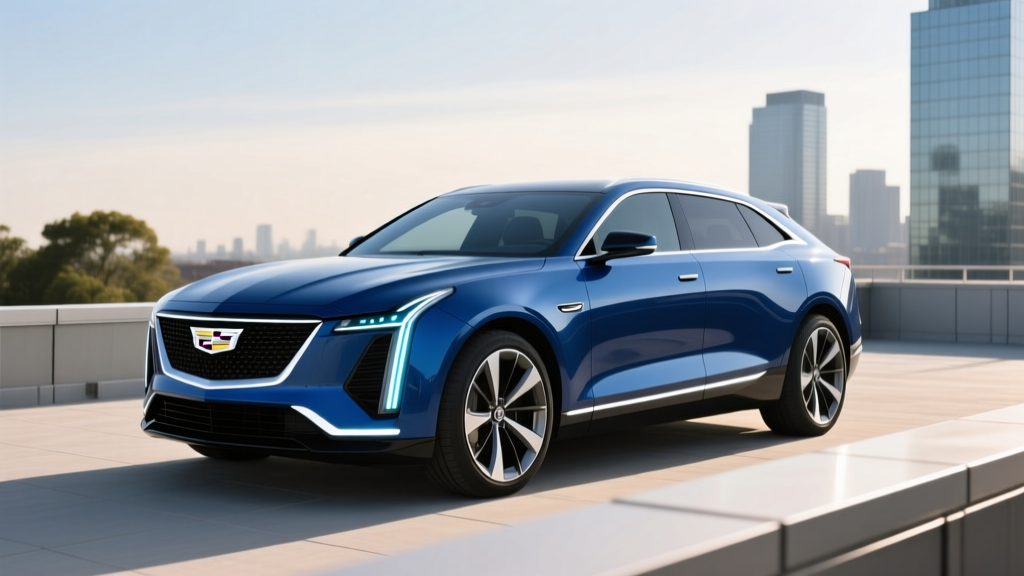
Quick Answer: Is the Cadillac Vistiq Worth It?
The 2026 Cadillac Vistiq is a three-row luxury electric SUV positioned between the Lyriq and the Escalade IQ. With an EPA-estimated 305 miles of range, a 102 kWh NMC battery, and DC fast charging up to 200 kW (10–80% in roughly 23 minutes), it targets families who want premium space without stepping up to the Escalade IQ's $130,000+ price tag. Starting around $59,990 before destination, the Vistiq may qualify for the $7,500 federal tax credit (via point-of-sale transfer) depending on your income, battery sourcing, and the SUV MSRP cap — but verify eligibility at purchase, as IRS §30D rules are strict and subject to change.
Range, Battery, and Real-World Efficiency
The Vistiq uses GM's Ultium platform with a 102 kWh usable battery pack (NMC chemistry — nickel manganese cobalt). Cadillac targets an EPA-estimated 305 miles for the dual-motor AWD configuration, which is the volume trim.
EPA vs. Real-World Range: What to Actually Expect
EPA sticker: 305 miles
Highway driving (70–80 mph): Expect ~250–270 miles. Three-row SUVs carry aerodynamic penalties at speed.
Cold weather (below 32°F): Plan for 220–250 miles. NMC chemistry loses roughly 15–25% in freezing temps without consistent preconditioning.
Mixed suburban/commute: 280–300 miles is achievable with regen braking and moderate climate use.
The Vistiq includes a heat pump for cabin efficiency, which helps mitigate cold-weather range loss compared to resistive heating — but physics still wins in deep winter.
Efficiency lands around 78 MPGe combined (approximately 43 kWh/100 miles), which is competitive for a 6,000+ lb luxury SUV but trails the smaller Lyriq's ~89 MPGe. If you're coming from a gas three-row like the Cadillac XT6 (21 MPG combined), the per-mile energy cost drops substantially — more on that below.
Charging Speed and Infrastructure
The Vistiq supports DC fast charging at up to 200 kW via the NACS (Tesla-style) connector, which is now standard across GM's EV lineup. On a 350 kW Electrify America or Tesla Supercharger V4 stall, you'll see peak rates near 200 kW that taper significantly after 80% State of Charge.
| Level | Power | Miles Added Per Hour | Notes |
|---|---|---|---|
| Level 1 (120V) | ~1.4 kW | ~3–4 mi/hr | Emergency/trickle only |
| Level 2 (240V, 48A) | 11.5 kW | ~30 mi/hr | Home overnight: 0–100% in ~9 hrs |
| DC Fast (peak) | 200 kW | ~500+ mi/hr (burst) | 10–80% in ~23 min; tapers above 80% |
Real-world charging curve reality: You won't sustain 200 kW for the full session. Expect an average of ~140–160 kW from 10–80%, which still delivers roughly 200 miles of range in 20 minutes. Above 80% SoC, charge speed drops sharply to protect the battery — plan to unplug at 80% on road trips unless you genuinely need the last 20%.
For home charging, a Level 2 wall connector on a 60A circuit (48A continuous) is the practical minimum for a 102 kWh pack. Installation typically runs $800–$2,500 depending on panel capacity and conduit distance — budget $1,500 as a median. If your home has a 100A electrical panel, you may need a $2,000–$4,000 panel upgrade to 200A.
Performance and Powertrain
The dual-motor AWD Vistiq produces an estimated 615 horsepower and 650 lb-ft of torque, delivering a 0–60 mph time in the 3.7-second range. That's sports-sedan acceleration in a three-row family hauler — and it's instant, with no turbo lag or gear hunting.
GM's Ultium platform uses a low center of gravity (battery pack under the floor), so body roll is controlled for an SUV of this size. Regenerative braking offers one-pedal driving capability, though Cadillac's implementation is slightly less aggressive than Tesla's — you'll still use the brake pedal occasionally for hard stops.
Pricing, Trims, and Federal Tax Credit
The 2026 Cadillac Vistiq starts at approximately $59,990 for the Luxury trim (dual-motor AWD). A Premium Luxury trim is expected around $67,000, and a Sport trim near $72,000. Destination charges add ~$1,395.
| Trim | MSRP | After $7,500 Credit (if eligible) |
|---|---|---|
| Luxury | $59,990 | ~$52,490 |
| Premium Luxury | $67,000 | ~$59,500 |
| Sport | $72,000 | ~$64,500 |
Federal §30D Tax Credit: Do You Qualify?
The Vistiq is classified as an SUV, so the MSRP cap is $80,000 (all trims clear this). However, eligibility depends on:
- Buyer income limits: AGI ≤ $300K (married filing jointly), $225K (head of household), $150K (single)
- Battery sourcing: Critical minerals and battery components must meet escalating domestic-content thresholds — verify with the dealer at point of sale
- Point-of-sale transfer: You can apply the $7,500 as an immediate discount at the dealership (reduces out-of-pocket), or claim it on your tax return
Critical: Credit eligibility changes as supply chains shift. Always confirm current status on IRS.gov's qualified vehicles list before signing. A tax professional can advise on your specific situation.
Cost of Ownership: Vistiq vs. Gas Three-Row SUV
Let's compare the Vistiq to a gas-powered luxury three-row — the Cadillac XT6 (starting ~$55,000, 21 MPG combined) — over 5 years and 60,000 miles.
| Category | Vistiq (EV) | XT6 (Gas) |
|---|---|---|
| Purchase (after credit) | $52,490 | $55,000 |
| Fuel / Energy | $4,200 (home charging @ $0.14/kWh) | $10,800 (@ $3.50/gal, 21 MPG) |
| Maintenance | $1,200 (cabin filter, tires, wiper fluid) | $3,500 (oil, brakes, filters, fluids) |
| Insurance (avg) | $11,500 | $9,500 |
| Total 5-Year | $69,390 | $78,800 |
Net 5-year savings with Vistiq: ~$9,400, driven primarily by fuel and maintenance. Insurance is typically 15–20% higher for EVs due to repair costs and parts pricing — factor this in.
After 5 years, depreciation will likely favor the gas XT6 slightly (EV resale values remain volatile), but the upfront credit and operating savings offset this for most buyers who plan to keep the vehicle 7+ years.
Real-World Ownership: What First-Time EV Buyers Need to Know
Home Charging Access Is Non-Negotiable for Most Owners
If you can install a Level 2 charger at home (garage, driveway, or dedicated parking), the Vistiq will refuel overnight for ~$0.14/kWh (national average) — roughly $14 for a full 305-mile "tank." If you rely solely on public DC fast charging at $0.40–$0.60/kWh, your fuel cost doubles or triples, and convenience drops sharply.
Apartment/condo dwellers: Check whether your building has EV charging infrastructure or plans to install it. Without home or workplace charging, a PHEV or gas vehicle may be more practical.
Cold Weather and Range Planning
In sub-freezing climates (Minnesota, New England, mountain states), expect 20–25% range loss in winter. The Vistiq's heat pump helps, but preconditioning the battery while plugged in is essential for preserving range and enabling fast DC charging. If your commute is 100+ miles round-trip in winter, you'll need to charge more frequently.
Public Charging Reliability
GM's adoption of NACS means Vistiq owners can access Tesla Superchargers (17,000+ stalls nationwide) via an adapter or native port, plus Electrify America, EVgo, and ChargePoint networks. Supercharger reliability is generally superior (95%+ uptime), but non-Tesla networks still suffer from broken stalls and payment friction in some regions.
Use apps like PlugShare or A Better Routeplanner to map charging on road trips. For a 300-mile drive, you'll likely need one 15–20 minute stop — plan around meal breaks or rest stops.
Decision Framework: Should You Buy the Cadillac Vistiq?
Buy the Vistiq If:
- You need three rows and want an EV (limited competition: Kia EV9, Rivian R1S, Tesla Model X)
- You have home charging access (Level 2 install feasible)
- You qualify for the $7,500 federal credit (check IRS rules)
- You want luxury features (Super Cruise hands-free driving, 33" LED display, premium audio) without Escalade IQ pricing
- Your daily driving is under 200 miles, with occasional 300+ mile road trips
Consider Alternatives If:
- You lack home charging and public infrastructure is sparse in your area → PHEV or gas
- You need 400+ miles of range without stopping → Tesla Model X (348 mi EPA) or wait for future models
- You're budget-sensitive → Kia EV9 starts ~$54,900 with similar range and three rows
- You want maximum cargo space → Escalade IQ (larger, but $130K+)
FAQ: Cadillac Vistiq Ownership Questions
Does the Cadillac Vistiq qualify for the $7,500 federal tax credit?
The Vistiq is classified as an SUV (MSRP cap $80,000), so all trims clear the price threshold. However, you must meet income limits (≤$300K joint, $150K single) and the vehicle must satisfy battery sourcing requirements, which change annually. Verify on IRS.gov and confirm with your dealer at purchase. The credit can be applied as a point-of-sale discount.
How long does it take to charge the Vistiq at home?
On a Level 2 charger (11.5 kW, 48A), a full 0–100% charge takes roughly 9 hours. Most owners plug in at night and wake up to a full battery. For daily driving of 40–60 miles, you'll only need to top off 15–20 kWh overnight (~2 hours).
What's the real-world range in winter?
In sustained freezing temperatures (20–32°F), expect 220–250 miles from a full charge, depending on cabin heat usage and driving style. Preconditioning while plugged in minimizes loss. Below 0°F, plan for 200 miles or less.
Is the Vistiq bigger than the Lyriq?
Yes. The Vistiq is ~15 inches longer and adds a third row (seats 6–7). Cargo space behind the third row is estimated at 15–18 cu ft (comparable to a midsize SUV's trunk), expanding to 40+ cu ft with the third row folded. The Lyriq is a two-row, five-passenger crossover.
What's the battery warranty?
GM covers the Ultium battery for 8 years / 100,000 miles, warranting against defects and excessive capacity loss (typically defined as dropping below 60–70% State of Health). NMC chemistry degrades slowly — expect 90%+ capacity retention at 100K miles based on Bolt EUV and Lyriq data.
Can I tow with the Vistiq?
Cadillac estimates a 4,000–5,000 lb towing capacity when properly equipped. Towing will reduce range by 30–50% depending on trailer weight and aerodynamics — plan charging stops accordingly.
How does Super Cruise work in the Vistiq?
Super Cruise is a Level 2 driver-assist system (not autonomous — you must remain attentive). It enables hands-free driving on 400,000+ miles of mapped highways using LiDAR, cameras, and driver monitoring. You can remove your hands from the wheel, but your eyes must stay on the road. It's a $2,500–$3,000 option on most trims and worth it for frequent highway commuters.
Final Verdict
The 2026 Cadillac Vistiq fills a narrow but valuable niche: a premium three-row electric SUV under $65K (after credit) with 300+ miles of range and access to Tesla's Supercharger network. It's not the longest-range EV, nor the cheapest, but for families transitioning from a gas XT6 or BMW X5, it offers a compelling ownership experience — provided you have home charging and live in a climate where 305 miles of EPA range translates to 250+ real-world miles year-round.
If you're cross-shopping, test-drive the Kia EV9 (more affordable, slightly less luxury), Rivian R1S (more off-road capability, higher price), and Tesla Model X (longer range, polarizing styling). The Vistiq wins on traditional luxury execution and GM's improving EV software — but only if the charging math works for your lifestyle.