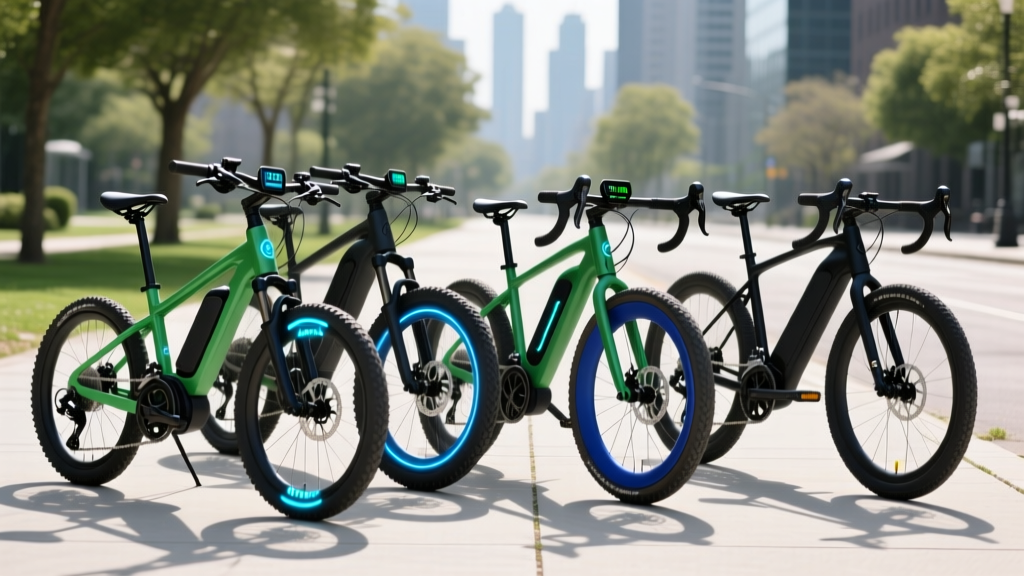
Important scope note: AutoEdgeView covers electric and smart automobiles — EVs, PHEVs, hybrids, charging, and autonomous driving. Electric bicycles fall outside our core automotive coverage. However, because the underlying battery, motor, and regenerative-braking technology overlaps significantly with EVs, we've prepared this technical explainer to help readers evaluate e-bike regen claims with the same data-driven lens we apply to cars.
Quick Answer
Most e-bikes with hub motors (direct-drive, not geared) support regenerative braking. Notable 2026 models with regen include the Rad Power RadCity 5 Plus, Specialized Turbo Vado SL (via its SL 1.2 motor system), and several Stromer models (ST1, ST3, ST5) using direct-drive rear hubs. However, e-bike regen typically recovers only 3–8% of battery energy per charge cycle in real-world flat-terrain riding — far less than the 20–30% recovery you'd see in a four-wheel EV. Regen is most meaningful on long downhill descents, where recovery can reach 10–15%.
How Regenerative Braking Works on E-Bikes vs. EVs
In any electric drivetrain, regenerative braking reverses the motor's function: instead of consuming electricity to produce motion, the motor acts as a generator, converting kinetic energy back into electrical energy during deceleration. The physics are identical whether you're in a Tesla Model Y or on a Stromer ST5.
The difference is scale. A typical EV battery holds 60–100 kWh of energy and the vehicle weighs 4,000–5,500 lbs. That mass carries enormous kinetic energy at speed — energy that regen can recapture. An e-bike battery holds 0.4–0.7 kWh (400–700 Wh) and the combined bike-plus-rider weight is roughly 220–280 lbs. The kinetic energy available for recovery is roughly 1/20th that of a car.
There's also the motor-type constraint. E-bikes use two main motor architectures:
- Direct-drive hub motors: The motor is directly coupled to the wheel with no internal gears or freewheel mechanism. This allows reverse torque (regen) to feed current back to the battery. Examples: Stromer, BionX (discontinued), some Grin Technologies setups.
- Geared hub motors and mid-drive motors: These use internal planetary gears or a freewheel/clutch that disconnects the motor from the wheel during coasting and braking. They cannot perform regenerative braking because the mechanical one-way clutch prevents reverse energy transfer. This includes most Bosch, Shimano STEPS, and Brose mid-drive systems.
Energy Recovery: The Real Numbers
Manufacturers sometimes market regen as a range-extending feature, but the physics limit its contribution. Here's what independent testing and owner data show:
| Riding Scenario | Typical Regen Recovery | Range Added (500 Wh Battery) |
|---|---|---|
| Flat urban commute, stop-and-go | 3–5% | 0.7–1.2 miles |
| Rolling hills, moderate descents | 5–8% | 1.2–2.0 miles |
| Long sustained downhill (mountain descent) | 10–15% | 2.5–4.0 miles |
| Flat highway-speed riding, minimal braking | 1–2% | 0.3–0.5 miles |
For comparison, a 2026 Tesla Model 3 Long Range (82 kWh battery, ~4,000 lbs curb weight) routinely recovers 15–25% of energy in city driving through regen, adding a meaningful 40–60 miles of effective range per charge cycle in stop-and-go conditions. The mass-energy advantage of four-wheel EVs is substantial.
E-Bike Models With Regenerative Braking (2026)
The e-bike market has consolidated around mid-drive systems (Bosch, Shimano) that do not support regen. Models with regen are increasingly niche, typically using direct-drive hub motors. Here are the primary options available in 2026:
| Model | Motor Type | Battery (Wh) | EPA-Est. Range | MSRP |
|---|---|---|---|---|
| Stromer ST5 (2026) | Direct-drive rear hub (CYRO Drive III) | 983 Wh | ~75 mi (assist level dependent) | $11,999 |
| Stromer ST3 (2026) | Direct-drive rear hub (CYRO Drive II) | 814 Wh | ~60 mi | $8,499 |
| Grin Technologies All-Axle (custom build) | Direct-drive hub (various) | 500–1,000 Wh (user-selected) | Varies by build | $2,500–$4,500 (kit) |
| Ebikes.ca Trike/Commute builds | Direct-drive hub (Grin MXUS, etc.) | Custom | Varies | $3,000–$6,000 |
Models that do NOT have regen (despite common assumptions): Any e-bike with a Bosch Performance Line CX, Shimano STEPS, Brose, or Yamaha mid-drive motor. This includes most models from Trek, Specialized (mid-drive variants), Cannondale, Giant, Riese & Müller, and Gazelle. Geared hub motors like the Bafang G020 also lack regen due to their internal freewheel clutch.
The EV Comparison: Why Regen Matters More in Cars
Regen Effectiveness: E-Bike vs. EV
| Factor | E-Bike (500 Wh, 250 lbs total) | EV (75 kWh, 4,200 lbs) |
|---|---|---|
| Kinetic energy at 20 mph | ~5.6 kJ | ~94 kJ |
| Kinetic energy at 65 mph | N/A (not highway-capable) | ~990 kJ |
| Typical city regen recovery | 3–5% | 15–25% |
| Range added per charge cycle | 0.7–1.2 miles | 40–60 miles |
| Brake pad wear reduction | Modest (light vehicle) | Major (pads often last 100k+ mi) |
Source: Kinetic energy calculated via KE = ½mv². EV recovery data from fueleconomy.gov EV technology overview.
This is why automakers invest heavily in one-pedal driving and sophisticated regen blending — the payoff is enormous. On an e-bike, the practical benefit is marginal for most riders on flat terrain.
Real-World Ownership Considerations
If you're deciding between a regen-equipped direct-drive hub e-bike and a more common mid-drive model, consider these practical factors:
Weight and Efficiency Trade-Off
Direct-drive hub motors are heavier (typically 8–12 lbs for the motor alone) than geared hubs or mid-drives because they lack internal gears to multiply torque. This adds unsprung weight to the wheel, slightly reducing efficiency during acceleration and making the bike feel more sluggish from a stop. The regen recovery rarely offsets this weight penalty on flat terrain.
Charging and Battery Longevity
E-bike batteries use the same lithium-ion chemistry (typically NMC cells in a 10S or 13S configuration) as EVs. Charging is done via a dedicated external charger — typically a 2A or 4A charger delivering 42V (for 36V nominal systems) or 54.6V (for 48V systems). A full charge on a 500 Wh battery with a 2A charger takes roughly 3.5–4 hours. The cost per full charge at the US average electricity rate of $0.17/kWh is approximately $0.09.
Regen current on e-bikes is typically low (1–3A) compared to the battery's charge acceptance rate, so it does not cause the thermal stress that aggressive DC fast charging can cause in EVs. Battery degradation is more a function of total charge cycles, storage SoC, and temperature — the same lithium-ion care principles that apply to EV traction batteries.
Maintenance and Brake Wear
One genuine benefit of e-bike regen: it reduces wear on rim brakes or disc brake pads, since the motor provides some deceleration force before the friction brakes engage. However, e-bike brake wear is already low due to the vehicle's light weight. Expect pad life of 2,000–5,000 miles with regen versus 1,500–3,000 miles without — a modest improvement, not the 3–5x extension seen in EVs.
Myths vs. Facts About E-Bike Regen
| Common Claim | Reality |
|---|---|
| "Regen doubles your range" | False. Real-world recovery is 3–8% on typical rides. Range is overwhelmingly determined by assist level, terrain, rider weight, wind, and battery capacity. |
| "All e-bikes have regenerative braking" | False. Most popular mid-drive systems (Bosch, Shimano, Brose) cannot regen due to their freewheel clutch design. Only direct-drive hub motors support it. |
| "Regen eliminates the need for friction brakes" | Dangerous misconception. E-bike regen provides modest deceleration (~0.1–0.15g) — insufficient for emergency stops. Functional friction brakes are legally required and essential for safety. |
| "Regen damages the battery" | Unfounded for e-bikes. Regen currents (1–3A) are well within safe charge rates for typical e-bike battery packs. This differs from EVs, where repeated aggressive regen at high SoC can accelerate degradation. |
| "You should always choose regen if available" | Not necessarily. Direct-drive hub motors sacrifice low-speed torque, add weight, and cost more. For flat-terrain commuters, a lighter mid-drive without regen is often the better overall package. |
Decision Framework: Should You Prioritize Regen?
Choose a regen-equipped e-bike (direct-drive hub) if:
- Your commute includes long downhill sections (2+ miles of sustained descent) where regen recovery reaches 10–15%
- You ride a speed pedelec (Class 3, 28 mph assist) where higher speeds mean more kinetic energy to recover
- You value reduced brake maintenance on high-mileage commutes (50+ miles/week)
- You prefer the smooth, quiet operation of a gearless hub motor
Choose a mid-drive e-bike (no regen) if:
- Your riding is primarily flat or rolling terrain where regen recovery is negligible (3–5%)
- You need strong hill-climbing torque — mid-drives leverage the bike's gears for superior low-speed climbing
- You want a lighter bike — mid-drive systems are typically 4–8 lbs lighter overall
- You prioritize brand ecosystem and dealer support — Bosch/Shimano dealers are far more common than Stromer/Grin specialists
- Your budget is under $4,000 — quality direct-drive regen e-bikes start around $5,000+
Cost Breakdown: Regen E-Bike vs. Mid-Drive E-Bike vs. Gas Car
| Cost Category | Regen Hub E-Bike (Stromer ST3) | Mid-Drive E-Bike (Trek Verve+ 4S) | Gas Car (30 MPG, $3.40/gal) |
|---|---|---|---|
| Purchase price | $8,499 | $5,250 | $28,000 |
| Fuel/energy (5 years, 60k mi) | $270 | $290 | $6,800 |
| Maintenance (5 years) | $1,200 | $1,400 | $4,500 |
| Insurance (5 years) | $600 | $600 | $7,500 |
| Battery replacement (if needed, yr 5+) | $800 | $700 | N/A |
| 5-Year Total | $11,369 | $8,240 | $46,800 |
Energy costs based on $0.17/kWh (US average, EIA). Gas price: $3.40/gal US average. E-bike insurance assumes homeowner/renter policy rider. Maintenance includes tires, brake pads, chain/cassette, and annual tune-ups.
The energy savings from regen (roughly $5–$15 over 5 years) are negligible compared to the purchase price premium of a direct-drive system. The real financial story is that any e-bike dramatically undercuts a gas car on operating costs — the regen vs. non-regen choice is a minor optimization within an already efficient platform.
Frequently Asked Questions
Can I add regenerative braking to my existing e-bike?
Only if your e-bike already has a direct-drive hub motor and a compatible controller. If you have a mid-drive (Bosch, Shimano, Brose) or a geared hub motor (Bafang G020, etc.), adding regen is not mechanically possible without replacing the entire motor and controller system. For most riders, this conversion is not cost-effective compared to purchasing a purpose-built regen-capable bike.
Does regenerative braking work in cold weather on e-bikes?
Yes, but with reduced effectiveness — similar to EVs. Lithium-ion batteries have higher internal resistance at low temperatures (below 40°F / 4°C), which limits the charge acceptance rate. Most e-bike battery management systems (BMS) will reduce or disable regen current in cold conditions to prevent lithium plating. Expect 30–50% less regen recovery in freezing conditions, mirroring the cold-weather regen limitations documented in EV cold-weather testing by fueleconomy.gov.
Why don't Bosch and Shimano offer regenerative braking?
Both companies have prioritized mid-drive architectures that leverage the bicycle's existing drivetrain (chain, cassette, derailleur) for optimal torque multiplication and hill-climbing performance. These systems require a mechanical freewheel that prevents reverse energy transfer. Bosch and Shimano have determined that the weight, complexity, and cost of adding regen to a mid-drive system is not justified by the 3–5% energy recovery available on typical e-bike rides.
Are there any electric motorcycles or scooters with regen?
Yes — and here the physics are more favorable due to higher mass and speeds. The Zero SR/S (electric motorcycle, ~500 lbs) and Energica Ego+ both feature adjustable regenerative braking that meaningfully extends range. This falls outside our automotive scope, but the principle is the same: more mass at higher speeds = more kinetic energy to recover.
Does the IRS §30D federal EV tax credit apply to e-bikes?
No. The IRS §30D clean vehicle credit applies only to four-wheeled motor vehicles with a gross vehicle weight rating under 14,000 lbs. E-bikes do not qualify. Some state and local programs offer e-bike purchase incentives (notably Colorado, California, and several utility-company rebate programs), but these vary by jurisdiction and are separate from federal EV tax policy.
Bottom Line
Regenerative braking on e-bikes is real but modest. If you ride mountainous terrain daily or prioritize brake-pad longevity on high-mileage commutes, a direct-drive hub e-bike from Stromer or a custom Grin build offers genuine — if small — benefits. For the majority of flat-terrain commuters, the extra weight, cost, and reduced low-speed torque of a direct-drive hub are not justified by 3–5% energy recovery. The e-bike market's shift toward mid-drive systems reflects a rational engineering trade-off: accept zero regen in exchange for lighter weight, better hill-climbing, and broader dealer support.
For readers evaluating their broader electrification strategy, the real takeaway is that regenerative braking's payoff scales with vehicle mass and speed. If regen energy recovery is a priority, a four-wheel EV — where it adds 40–60 miles of effective range per charge — is where the technology delivers transformative value.