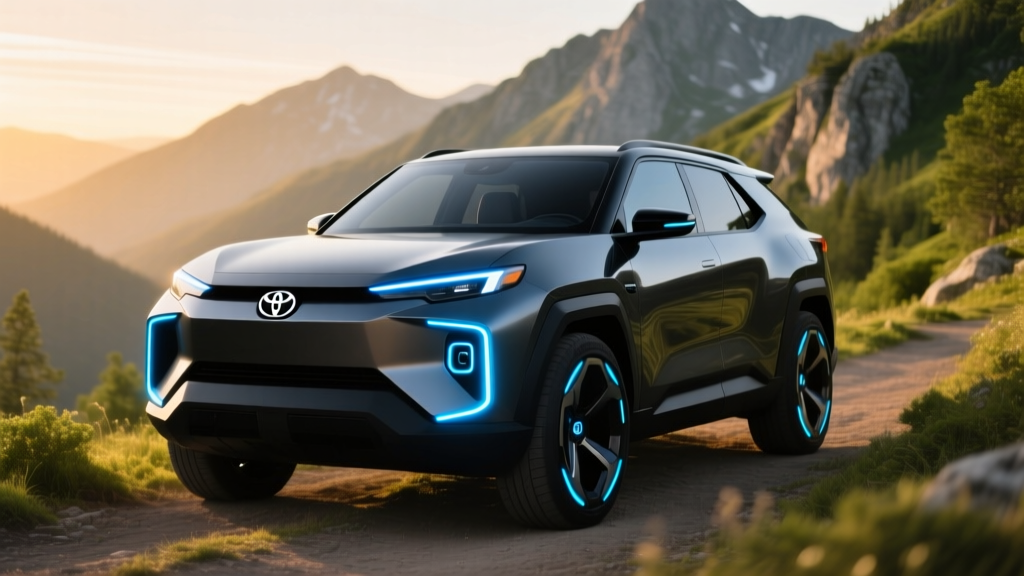
If you've been searching for an electric 4Runner, here's the straight answer: as of early 2026, Toyota has not yet released a fully electric 4Runner. The current sixth-generation 4Runner (introduced for the 2025 model year) is offered as a conventional hybrid (i-FORCE MAX) and a gasoline turbo-four, but not as a battery-electric vehicle (BEV). However, Toyota has signaled that an electrified 4Runner — likely a BEV variant built on the brand's expanding EV platform — is part of its mid-term product plan. Until then, buyers looking for an electric body-on-frame SUV from Toyota will need to weigh the hybrid 4Runner against true BEV competitors like the Rivian R1S, the GMC Hummer EV, or the upcoming electric Jeep Wrangler concepts.
Where the 4Runner Stands in Toyota's EV Lineup
Toyota's electrification strategy has been a multi-path approach: hybrids (HEVs), plug-in hybrids (PHEVs), hydrogen fuel cells, and battery-electric vehicles. The bZ4X crossover was Toyota's first mass-market BEV, delivering an EPA-estimated 252 miles of range with a 71.4 kWh (usable) lithium-ion battery. Since then, Toyota has committed to launching 30 BEV models globally by 2030, with a next-generation battery platform promised for 2027–2028 that targets 497+ miles of range on higher-end models.
The 4Runner, however, occupies a unique space. It's a body-on-frame, off-road-focused SUV with a loyal buyer base that prioritizes durability, trail capability, and towing over efficiency. Converting this platform to a BEV presents engineering challenges — battery weight, ground clearance preservation, and off-road articulation — that Toyota has been cautious about tackling. According to Toyota's official pressroom, the company is developing a dedicated EV platform for trucks and large SUVs, but specific model announcements for an electric 4Runner remain unconfirmed.
Current 4Runner Powertrain Options: Gas vs. Hybrid
For 2026, the sixth-generation 4Runner is available with two powertrains. Here's how they compare on paper:
| Spec | i-FORCE (Turbo Gas) | i-FORCE MAX (Hybrid) |
|---|---|---|
| Engine | 2.4L Turbo I-4 | 2.4L Turbo I-4 + Electric Motor |
| Horsepower | 278 hp | 326 hp |
| Torque | 317 lb-ft | 465 lb-ft |
| EPA Combined MPG | ~21 MPG | ~26 MPG |
| Towing Capacity | 6,000 lbs | 6,000 lbs |
| Base MSRP (SR5) | ~$42,000 | ~$47,000 |
The i-FORCE MAX hybrid is the closest thing to an "electrified 4Runner" available today. It uses a small electric motor integrated into the transmission bell housing — this is a conventional hybrid (HEV), not a plug-in. You cannot charge it from a wall outlet, and it offers no electric-only driving range. The efficiency gain is real but modest: roughly 5 MPG combined over the gas-only model, translating to about $350–$450 in annual fuel savings for a driver covering 15,000 miles per year at $3.50/gallon.
What an Electric 4Runner Would Need to Compete
Based on the competitive landscape and Toyota's stated battery technology roadmap, a production electric 4Runner would likely need to hit the following benchmarks to be viable:
- Range: 300+ miles EPA (to offset real-world off-road and towing range loss, which can cut EV range by 30–50%)
- Battery capacity: ~100–120 kWh usable (likely NMC chemistry for energy density; LFP would add too much weight for off-road packaging)
- DC fast charging: Peak rate of at least 250 kW, with a 10–80% charge time under 25 minutes
- Ground clearance: 9+ inches (matching the current 4Runner's 9.0–9.6 inches depending on trim)
- Towing: 6,000+ lbs rated — though real-world EV towing range loss is severe, often cutting range in half
- Price: $55,000–$70,000 to compete with the Rivian R1S ($75,900 base) and remain accessible to 4Runner's traditional buyer
Toyota's announced next-generation battery, expected around 2027–2028, targets 497 miles of range on a sedan application. In a heavy, boxy, off-road SUV like the 4Runner, real-world range would be far lower — expect 300–350 miles EPA in a best-case scenario, with highway and cold-weather driving reducing that to 240–280 miles.
EV vs. Gas 4Runner: The Ownership Cost Reality
Let's compare what ownership would look like between a hypothetical electric 4Runner, the current gas 4Runner, and the current hybrid 4Runner over 5 years and 75,000 miles:
| 5-Year Cost | Gas 4Runner (21 MPG) | Hybrid 4Runner (26 MPG) | Est. Electric 4Runner (3 mi/kWh) |
|---|---|---|---|
| Fuel / Energy | $12,500 | $10,096 | $3,750 (home) / $7,500 (public) |
| Maintenance | $3,500 | $3,200 | $1,500 |
| Federal Tax Credit | $0 | $0 | Up to $7,500* |
| Insurance (est.) | $9,000 | $9,000 | $10,500 |
| Total (excl. purchase) | $25,000 | $22,296 | $12,750–$17,250 |
*Per IRS §30D rules, the federal EV tax credit of up to $7,500 is subject to MSRP caps ($80,000 for SUVs), buyer income limits ($300K joint / $150K single), and critical-mineral and battery-component sourcing requirements. Eligibility for a future electric 4Runner cannot be confirmed until production specs and supply chain details are finalized. The credit can now be transferred to the dealer at point of sale as an upfront discount.
The electric 4Runner would save roughly $5,000–$10,000 in operating costs over 5 years compared to the gas model, but that assumes reliable access to affordable home charging. If you're dependent on public DC fast charging (which averages $0.35–$0.50/kWh nationally), the savings narrow significantly.
Common Misconceptions About an Electric 4Runner
| Myth | Fact |
|---|---|
| "The electric 4Runner is available now." | It is not. The 2026 4Runner is offered only as a gas turbo or conventional hybrid (HEV). No plug-in or BEV variant exists. |
| "EVs can't do real off-roading." | The Rivian R1S has completed the Rubicon Trail, and electric motors deliver instant torque ideal for rock crawling. The challenge is range loss (up to 50% on technical trails) and battery vulnerability to impact — issues solvable with skid plates and larger packs. |
| "A hybrid 4Runner is basically the same as an electric one." | The i-FORCE MAX hybrid has no plug, no electric-only range, and a 1.5 kWh battery. A BEV would have 100+ kWh, plug-in charging, and zero tailpipe emissions. They are fundamentally different. |
| "I'll get the full EPA range towing or off-road." | Towing a 5,000-lb trailer with any EV typically cuts range by 40–50%. Off-road driving with low-speed, high-torque demands also significantly reduces efficiency. Plan for 150–200 real-world miles when towing with a future electric 4Runner. |
| "The $7,500 tax credit applies to everyone." | Per the IRS, the credit has income caps, MSRP caps, and battery-sourcing requirements that disqualify many buyers and some vehicles. Always verify eligibility for the specific model year at purchase. |
What to Do While You Wait: Alternatives Today
If you want an electrified off-road SUV and can't wait 2+ years for a potential electric 4Runner, here are your real options in 2026:
Choose the 4Runner Hybrid (i-FORCE MAX) if:
- You need a 4Runner specifically (trail credibility, Toyota reliability, dealer network)
- You don't have home charging access
- You tow regularly and can't afford the range penalty of an EV
- You want proven off-road hardware (locking rear diff, crawl control, available front disconnecting stabilizer bar on TRD Pro)
Choose the Rivian R1S if:
- You want a true BEV with off-road capability today (up to 410 miles EPA with Max Pack, 8.9" ground clearance in Standard mode, 14.9" in Max)
- You have home Level 2 charging (a must for R1S ownership — public charging alone is impractical for daily use)
- Your budget accommodates $75,900+ MSRP (the R1S exceeds the $80,000 SUV MSRP cap for the federal credit at higher trims)
- You want quad-motor torque vectoring for precise trail control
Wait for the Electric 4Runner if:
- You're 2–3 years out on your purchase cycle anyway
- Toyota's dealer network and resale value are priorities
- You want Toyota's battery warranty track record (the brand offers 10-year/150,000-mile hybrid battery coverage on current models)
- You're hoping for a sub-$60,000 starting price with federal credit eligibility
First-Time EV Buyer Essentials (For When It Arrives)
When an electric 4Runner does launch, first-time EV buyers should prepare for these ownership realities:
Home charging is non-negotiable for satisfaction. Level 1 charging (120V, ~1.4 kW) would add roughly 3–4 miles of range per hour to a large SUV battery — meaning a full charge from empty would take 30+ hours. A Level 2 home charger (240V, 7.7–11.5 kW) cuts that to 10–14 hours and is the practical standard for daily ownership. Budget $1,200–$2,500 for a quality Level 2 station and professional installation, with a possible $1,000–$3,000 additional cost if your electrical panel needs an upgrade to 200 amps.
Understand kW vs. kWh. This is the most common confusion point. kWh (kilowatt-hours) measures battery capacity — how much energy the tank holds. kW (kilowatts) measures power — how fast energy flows in or out. A 100 kWh battery charging at 50 kW takes 2 hours; at 200 kW, it takes roughly 30 minutes (in practice, charging curves taper above 80% State of Charge, so 10–80% times are the standard benchmark).
Cold weather costs range. Expect 20–35% range reduction in freezing temperatures, due to battery chemistry limitations and cabin heating demands. A 320-mile EPA electric 4Runner might deliver 210–250 miles in a Midwestern winter. A heat pump (which Toyota has been incorporating into newer EV platforms) mitigates but doesn't eliminate this loss.
Insurance will likely be higher. EVs carry 15–25% higher insurance premiums on average, due to higher repair costs, specialized parts, and elevated vehicle values. Get quotes before purchasing.
Frequently Asked Questions
Is there an electric Toyota 4Runner for 2026?
No. The 2026 Toyota 4Runner is available with a 2.4L turbocharged gas engine (278 hp) or the i-FORCE MAX hybrid powertrain (326 hp). Neither is a plug-in or battery-electric vehicle. Toyota has not announced a production timeline for a BEV 4Runner.
When will the electric 4Runner be available?
Toyota has not confirmed a date. Industry analysts expect a battery-electric body-on-frame SUV from Toyota no earlier than the 2027–2028 model year, likely riding on a dedicated EV truck platform. Any specs circulating online are speculative and should be treated as preliminary.
Does the 4Runner hybrid qualify for the federal EV tax credit?
No. The i-FORCE MAX is a conventional hybrid (HEV), not a plug-in hybrid (PHEV) or battery-electric vehicle (BEV). Only vehicles with a plug and a minimum battery capacity of 7 kWh qualify under IRS §30D. The 4Runner hybrid does not qualify.
What's the best electric SUV for off-roading right now?
The Rivian R1S is the most capable electric off-road SUV currently in production, with up to 410 miles of range (Max Pack), adjustable air suspension for up to 14.9 inches of ground clearance, and available quad-motor torque vectoring. The GMC Hummer EV SUV offers similar capability with CrabWalk diagonal driving and Extract Mode (15.9 inches of clearance) but starts above $98,000.
Will an electric 4Runner be able to tow?
It will almost certainly be rated for towing — the current gas 4Runner tows 6,000 lbs. However, real-world EV towing range is dramatically reduced. Expect a 40–50% range loss when towing a 4,000–5,000 lb trailer at highway speeds. A 320-mile EPA rating could drop to 160–190 miles while towing, which is a significant trip-planning constraint on long hauls.
Should I buy a gas 4Runner now or wait for the electric version?
If you need a vehicle within the next 12 months and your driving pattern includes frequent towing, remote off-road travel, or areas with limited charging infrastructure, the current gas or hybrid 4Runner is the pragmatic choice. If your purchase timeline is 2028 or later, you have home charging, and your daily driving is under 200 miles, waiting for the electric 4Runner (or evaluating competitors that launch sooner) makes sense.