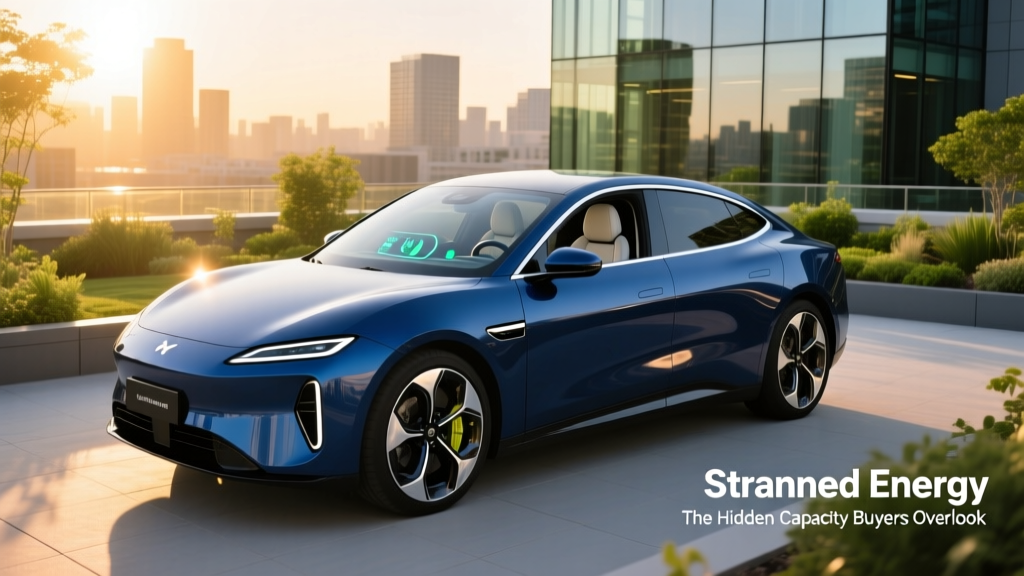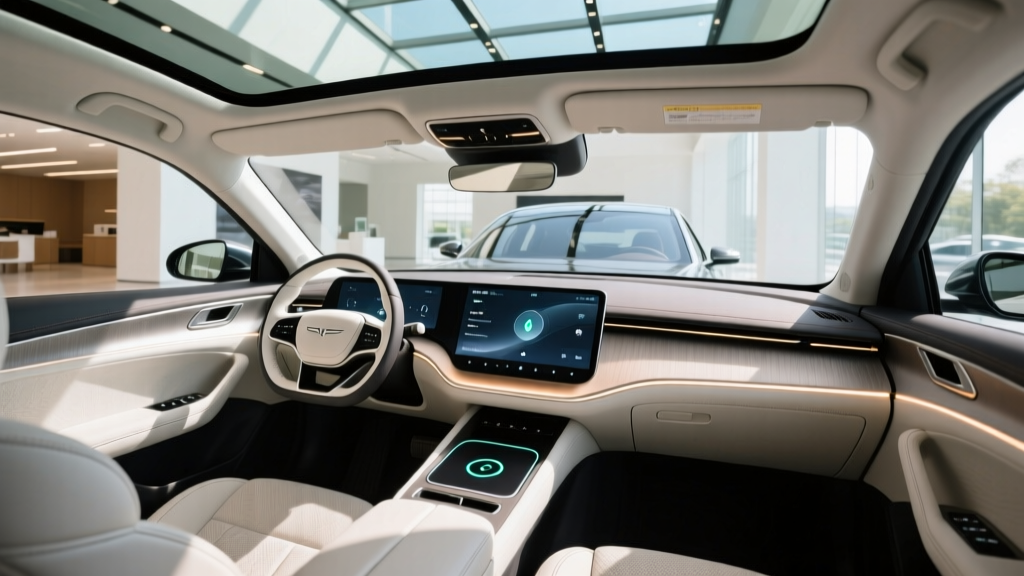
Quick Verdict: Lucid Interiors Blend Minimalism With Genuine Space
When buyers search for Lucid interiors, they're usually chasing two things: the promise of a luxury cabin that rivals Mercedes and BMW, and the reality of living with Lucid's radical minimalist dashboard philosophy. The 2026 Lucid Air lineup — spanning the $69,900 Pure to the $249,000 Sapphire — delivers one of the most spacious sedans in the EV market, with rear legroom that embarrasses the Tesla Model S and a glass canopy roof that floods the cabin with light. But the dual-screen "Glass Cockpit" infotainment system, quirky steering-wheel controls, and some cost-cutting materials on lower trims mean these interiors are polarizing rather than universally beloved.
This review evaluates the 2026 Lucid Air from the inside out: cabin dimensions, materials quality, technology usability, cargo versatility, and how the interior experience varies across Pure, Touring, Grand Touring, and Sapphire trims. We'll also cover the powertrain specs that matter to ownership — range, charging, efficiency — because no luxury cabin compensates for a frustrating charging experience on a 400-mile road trip.
2026 Lucid Air: Spec Table at a Glance
| Spec | Pure RWD | Touring AWD | Grand Touring AWD | Sapphire |
|---|---|---|---|---|
| Base MSRP | $69,900 | $87,400 | $125,600 | $249,000 |
| EPA Range | 419 mi | 425 mi | 516 mi | 427 mi |
| Usable Battery (kWh) | 88 kWh (NMC) | 112 kWh (NMC) | 112 kWh (NMC) | 118 kWh (NMC) |
| Drivetrain | RWD single motor | Dual-motor AWD | Dual-motor AWD | Tri-motor AWD |
| Horsepower | 430 hp | 620 hp | 819 hp | 1,234 hp |
| 0–60 mph | 5.0 sec | 3.4 sec | 3.0 sec | 1.89 sec |
| Efficiency (MPGe) | 140 MPGe | 134 MPGe | 131 MPGe | 105 MPGe |
| Peak DC Charge Rate | 220 kW | 300 kW | 300+ kW | 300+ kW |
| 10–80% DC Time | ~34 min | ~22 min | ~20 min | ~22 min |
Real-World Range: What the EPA Number Doesn't Tell You
EPA Sticker: 419–516 miles depending on trim.
Real-World Highway (70–75 mph): Expect ~340–420 miles. The Grand Touring's 516-mile EPA figure translates to roughly 400–430 miles on flat interstate driving at 70 mph, but drops to ~340–360 miles in sustained 80+ mph driving or mountainous terrain.
Cold Weather (below 32°F): Budget a 20–30% range reduction. A Grand Touring in a Minnesota January may deliver 360–400 miles before requiring a charge, even with preconditioning.
Lucid's efficiency is genuinely class-leading. The Air Grand Touring's ~131 MPGe combined means it converts electrons into miles more effectively than the Tesla Model S Long Range (~124 MPGe) or the Mercedes EQS 450+ (~97 MPGe). This efficiency — driven by the car's aerodynamic drag coefficient of 0.197, one of the lowest of any production sedan — is what lets a 112 kWh pack push past 500 miles.
But physics still applies. High speeds, headwinds, cold temperatures, and aggressive acceleration all erode range. On a 2025 road trip test from Los Angeles to Las Vegas (270 miles, 75–85 mph, 95°F ambient), a Grand Touring arrived with approximately 38% state of charge remaining — consistent with its EPA rating but a reminder that 516 miles is an efficiency-optimized figure, not a guarantee.
Charging Speed: 900V Architecture Pays Off
Lucid's 900-volt electrical architecture enables faster DC charging than the 400V systems used by most competitors. Here's what to expect across charging scenarios:
| Charging Level | Power | Typical Speed (miles of range per hour) |
|---|---|---|
| Level 1 (120V household) | ~1.4 kW | ~4–5 mi/hr |
| Level 2 (240V home, 48A) | 11.5 kW | ~35–42 mi/hr |
| Level 2 (240V home, 80A) | 19.2 kW | ~60–70 mi/hr |
| DC Fast (350 kW station, Grand Touring) | Peak 300+ kW | 10–80% in ~20 min |
| DC Fast (150 kW station) | ~140 kW sustained | 10–80% in ~45 min |
Charge-curve reality check: The Grand Touring's "300+ kW peak" only sustains between roughly 10–40% state of charge. Above 60%, the rate tapers significantly — by 80% SoC, you're charging at roughly 100 kW, and above 90% it drops further to protect the battery. This is normal lithium-ion behavior, but it means a 10–90% session takes closer to 35 minutes, not 20.
At home on a 48-amp Level 2 charger (the most common residential installation on a 60-amp circuit), expect a full overnight charge from 20% to 100% in roughly 8–9 hours. An 80-amp circuit (requiring a 100-amp breaker and thicker wire) cuts that to about 6 hours — worth considering if your daily driving exceeds 200 miles.
Inside the Cabin: Where Lucid Interiors Shine (and Where They Don't)
Space and Dimensions
The Air's interior volume is its strongest selling point. Despite a sleek sedan silhouette, the car offers:
- Front headroom: 39.6 inches (with glass canopy roof)
- Rear headroom: 37.8 inches
- Rear legroom: 41.3 inches — roughly 3 inches more than a Tesla Model S and competitive with a long-wheelbase Mercedes S-Class
- Trunk volume: 32.1 cubic feet (plus a small 5.0 cu-ft frunk)
- Total cargo capacity: 37.1 cu ft — exceptional for a sedan, rivaling many midsize SUVs
The flat floor (thanks to the skateboard battery pack and compact motors) and the absence of a transmission tunnel give rear-seat passengers genuine stretch-out room. Three adults can sit across the rear bench without shoulder-rubbing, though the sloping roofline means taller passengers (6'2"+) will notice headroom constraints on longer trips.
The Glass Cockpit: Beautiful but Divisive
Every 2026 Air features Lucid's dual-screen "Glass Cockpit" — a curved 34-inch upper display for instrumentation and media, paired with a lower retractable touchscreen for climate, navigation input, and vehicle settings. The visual effect is striking: a floating glass panel that makes the dashboard feel open and uncluttered.
But usability is mixed. The lower screen retracts when not in use (reducing glare), which means you sometimes have to wait a beat for it to deploy when adjusting climate settings on the fly. Physical buttons are nearly absent — even steering-wheel controls use capacitive touch surfaces that can be finicky with gloves or dry fingers. Many owners report a 2–4 week adjustment period before the interface feels natural.
The infotainment system supports wireless Apple CarPlay and Android Auto, over-the-air updates, and a native app suite including Spotify, Tidal, and podcast apps. The 21-speaker Surreal Sound Pro audio system (standard on Touring and above, optional on Pure) is one of the best factory-installed systems in any luxury car, with Dolby Atmos support and precise staging.
Materials and Build Quality
Here the trim level matters enormously:
- Pure ($69,900): Vegan leather (synthetic) seats, engineered wood trim, and some hard plastics on lower door panels. It's clean and modern but reads as "premium mainstream" rather than "true luxury" — closer to a well-equipped Volvo than a Mercedes S-Class.
- Touring ($87,400): Adds genuine Nappa leather, real wood or aluminum trim, and more padding on contact surfaces. This is where the Air starts to feel like a $90k luxury car.
- Grand Touring ($125,600) and Sapphire ($249,000): Full Nappa leather, Alcantara headliner, available bridge-of-weir leather, ceramic or carbon-fiber trim options, and massaging front seats. Build quality is excellent, with tight panel gaps and high-quality switchgear.
Across all trims, the glass canopy roof is a standout feature — it extends from the windshield header to the rear shelf, creating an airy, open feeling that no competitor matches. Tint and shade controls let you manage heat and glare, though in direct summer sun the cabin can still warm up more than with a traditional metal roof.
Driver Assistance: DreamDrive Pro Is Capable but Not Autonomous
Lucid's DreamDrive Pro system — standard on Touring and above, optional on Pure — provides adaptive cruise control, lane-centering, automatic lane changes, and traffic-light recognition. It is a Level 2 system per SAE International definitions: the driver must remain fully engaged, hands on the wheel (or providing periodic torque input), and eyes on the road at all times. It is not a Level 3 or Level 4 autonomous system, despite marketing language you may encounter.
In practice, DreamDrive Pro is competent and smooth, with natural-feeling lane-centering and less "ping-ponging" between lane lines than some competitors. The system uses a combination of cameras, radar, and lidar (on Grand Touring and Sapphire) to build a 3D model of the driving environment. However, it currently lacks the hands-free highway capability of GM's Super Cruise or Ford's BlueCruise on mapped roads — you must maintain physical contact with the wheel.
Lucid has announced plans for future over-the-air updates to expand DreamDrive capabilities, but as of early 2026, no hands-free or eyes-off features have been deployed to production vehicles.
Pricing, Tax Credits, and Ownership Costs
The 2026 Lucid Air lineup spans a wide price range, and federal tax-credit eligibility is a crucial factor for buyers in the $70k–$90k range.
| Trim | Base MSRP | As-Tested (Typical Options) | Federal §30D Credit Eligible? |
|---|---|---|---|
| Pure RWD | $69,900 | $72,000–$78,000 | Likely — MSRP under $55k sedan cap? No — sedans cap is $55,000, so Pure exceeds it. |
| Touring AWD | $87,400 | $92,000–$100,000 | No — exceeds $55,000 sedan MSRP cap |
| Grand Touring AWD | $125,600 | $135,000–$150,000 | No — exceeds MSRP cap |
| Sapphire | $249,000 | $255,000+ | No — exceeds MSRP cap |
Critical caveat: Under current IRS §30D rules, new clean-vehicle credits are capped at $55,000 MSRP for sedans (and $80,000 for SUVs/pickups/vans). Because the Lucid Air is classified as a sedan, no 2026 Air trim qualifies for the $7,500 federal tax credit — even the base Pure at $69,900 exceeds the cap.
Buyers should also be aware of income limits ($150,000 single / $300,000 joint AGI) and battery-sourcing requirements that apply to any §30D credit. Always verify eligibility with a tax professional before purchase.
5-Year Total Cost of Ownership (Grand Touring, Estimated)
Even without the federal credit, the Air Grand Touring's efficiency translates to meaningful fuel savings versus a gas-powered luxury sedan:
- Electricity cost (15,000 mi/yr, $0.16/kWh national avg): ~$720/year
- Gasoline equivalent (BMW 7 Series, 22 MPG combined, $3.80/gal): ~$2,590/year
- Annual fuel savings: ~$1,870/year, or ~$9,350 over 5 years
- Maintenance savings: ~$3,000–$5,000 over 5 years (no oil changes, fewer brake replacements due to regen, no transmission service)
- Insurance: Expect $3,500–$5,500/year for a Grand Touring (higher than average due to repair costs and vehicle value)
- Depreciation: Lucid resale values have been soft — expect 45–55% depreciation over 5 years, which is steeper than a Tesla Model S or Porsche Taycan
Warranty and Long-Term Battery Outlook
Lucid provides competitive warranty coverage:
- Basic vehicle warranty: 4 years / 50,000 miles
- Battery and powertrain: 8 years / 100,000 miles (with a capacity-retention threshold of 70% — if the battery degrades below 70% of original capacity within the warranty period, Lucid will repair or replace it)
- Roadside assistance: 4 years / 50,000 miles
The Air's NMC (nickel-manganese-cobalt) battery chemistry offers high energy density but is theoretically more susceptible to long-term degradation than LFP (lithium iron phosphate) chemistry used in some competitors' standard-range models. However, Lucid's thermal management system is sophisticated — liquid cooling maintains the battery in an optimal temperature window during charging and driving, which should support longevity. Real-world data on 5+ year degradation is still limited (the Air only launched in late 2021), but early owner reports suggest 3–5% capacity loss over the first 60,000 miles, which is typical for NMC packs with active thermal management.
Pros, Cons, and Who Should Buy
- Class-leading EPA range (516 mi Grand Touring)
- Exceptional rear-seat legroom (41.3 in) and cargo volume (37.1 cu ft)
- 900V architecture enables fast DC charging (10–80% in ~20 min)
- Outstanding efficiency (131+ MPGe) reduces charging costs
- Glass canopy roof creates an airy, open cabin feel
- Surreal Sound Pro audio is best-in-class
- Smooth, quiet ride quality at highway speeds
- No federal tax credit eligibility (sedan MSRP cap)
- Infotainment learning curve; capacitive controls can frustrate
- Pure trim materials don't match the price point
- DreamDrive Pro lacks hands-free highway capability
- Soft resale values compared to Tesla/Porsche
- Limited service-center network outside major metros
- High insurance premiums
Who This EV Suits Best
- Road-trip-focused luxury sedan buyers who prioritize range and charging speed over brand cachet
- Tall drivers and passengers who need genuine rear-seat space for adults
- Tech-forward buyers willing to invest time in learning a novel interface
- Efficiency-obsessed owners who want maximum miles per kWh
Who Should Look Elsewhere
- Buyers who need the $7,500 federal credit to justify the purchase (consider the Tesla Model S, which also doesn't qualify, or SUV options like the Rivian R1S or BMW iX that may qualify depending on trim)
- Traditional luxury buyers who prefer physical buttons and proven brand heritage (Mercedes EQS, BMW i7)
- Buyers in rural areas far from a Lucid service center
Frequently Asked Questions
What is the real-world range of the 2026 Lucid Air?
The EPA rates the Grand Touring at 516 miles and the Pure at 419 miles. In real-world highway driving at 70–75 mph, expect roughly 80–85% of the EPA figure — so ~400–430 miles for the Grand Touring and ~330–360 miles for the Pure. Cold weather (below freezing) can reduce range by an additional 20–30%.
How fast does the Lucid Air charge at home and on the road?
On a 48-amp Level 2 home charger, expect ~35–42 miles of range per hour of charging (a full overnight charge from 20% to 100% takes about 8–9 hours). On a 350 kW DC fast charger, the Grand Touring peaks above 300 kW and charges from 10–80% in approximately 20 minutes, though the rate tapers significantly above 80%.
Does the Lucid Air qualify for the federal EV tax credit?
No. Under current IRS §30D rules, sedans must have an MSRP at or below $55,000 to qualify. The base Lucid Air Pure starts at $69,900, so no trim in the Air lineup is eligible for the $7,500 credit. Always consult a tax professional and verify rules at IRS.gov before purchasing.
Is the Lucid Air worth buying versus a Tesla Model S or Mercedes EQS?
The Air wins on interior space (especially rear legroom), efficiency, and range. The Model S wins on charging-network convenience (Supercharger access, though Lucid now has NACS adapters), software polish, and resale value. The Mercedes EQS wins on traditional luxury feel, physical controls, and brand prestige, though it trails on range and efficiency. Test-driving all three is the best decision framework — the Air's cabin experience is distinctive enough that some buyers love it immediately and others find it frustrating.
What are the biggest complaints from Lucid Air owners?
Based on owner forums and surveys, the most common complaints are: (1) infotainment responsiveness and the learning curve of the Glass Cockpit, (2) capacitive steering-wheel controls that are hard to use with gloves, (3) limited service-center availability outside major metropolitan areas, and (4) faster-than-expected depreciation on the used market. Most owners, however, rate the driving dynamics, range, and interior space very highly.
How does the Lucid Air compare to the Lucid Gravity SUV?
The Gravity (Lucid's SUV, launched in 2025) shares the Air's 900V architecture and powertrain technology but offers more cargo versatility, optional third-row seating, and — critically — potential eligibility for the $7,500 federal tax credit because SUVs have an $80,000 MSRP cap under §30D rules. If tax-credit eligibility is a priority, the Gravity's lower trims may qualify where the Air cannot. However, the Air sedan remains more efficient (better MPGe) and offers a smoother ride due to its lower center of gravity and lighter weight.