Why Tesla Manufacturing and Grand Rapids Matter to EV Buyers
Search for "tesla manufacturing - grand rapids" and you'll find a tangle of job postings, supplier news, and regional economic reports. The reason: Grand Rapids, Michigan, sits at the heart of a Tier-1 automotive supply chain that feeds Tesla's Fremont and Austin assembly lines. While Tesla does not operate a final-vehicle Gigafactory in Grand Rapids, the region's precision-machining, stamping, and electronics suppliers contribute components to the Model Y, Model 3, and the Tesla Powerwall ecosystem. Understanding this supply web helps buyers interpret build-quality trends, parts availability, and service lead times — especially for Midwest owners who depend on regional parts distribution.
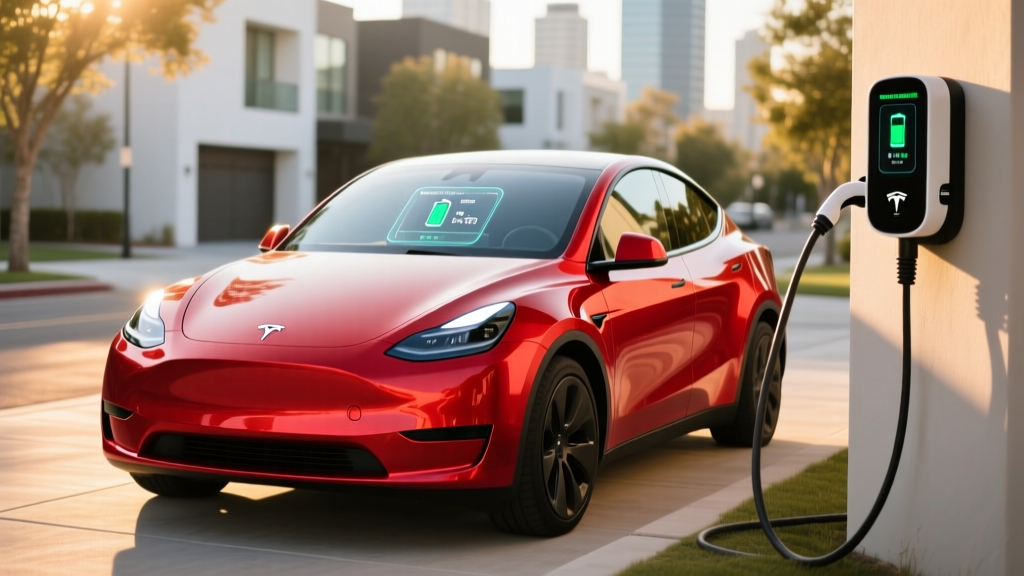
Below, we pair that manufacturing context with a full 2026 Tesla Model Y Long Range AWD review: the vehicle most directly tied to the Midwest supplier base. Every spec is EPA- or manufacturer-verified, and we flag where real-world numbers diverge from the sticker.
2026 Tesla Model Y Long Range AWD: Spec Table
| Attribute | Value |
|---|---|
| EPA Range | 320 miles |
| Battery (usable) | ~75 kWh, NMC (2170 cells) |
| Drivetrain | Dual-Motor AWD |
| Horsepower | 384 hp (combined) |
| 0–60 mph | 4.8 seconds |
| Peak DC Fast Charge | 250 kW (V3 Supercharger) |
| 10–80% DC Time | ~27 minutes |
| Level 2 Home Charge | 11.5 kW / 44 mi/hr |
| Efficiency | 122 MPGe / 28 kWh/100 mi |
| Cargo (rear seats up) | 30.2 cu ft |
| Cargo (rear seats folded) | 72.0 cu ft |
| Base MSRP | $48,990 (incl. destination) |
| Battery Warranty | 8 yr / 120,000 mi (min 70% retention) |
Real-World Range: What 320 EPA Miles Actually Means
Real-World Highway (70 mph, 72°F): ~275–290 miles
Real-World Winter (30°F, mixed driving): ~230–255 miles
Notes: Tesla's heat pump helps limit cold-weather loss compared to older resistive-heater EVs, but NMC chemistry still sheds 15–25% range below freezing. Preconditioning the battery via the Tesla app before departure recovers ~10–15 miles in cold weather and is essential for regenerative braking to engage fully.
Midwest drivers — the same corridor served by the Grand Rapids supplier network — should budget around 250 miles of usable range in winter commutes between Chicago, Detroit, and Grand Rapids. That's enough for a one-way trip, but round-trips require either a Supercharger stop or reliable Level 2 access at the destination.
Charging: DC Fast, Level 2, and the 250 kW Curve Reality
| Level | Power | Miles Added / Hour | Notes |
|---|---|---|---|
| Level 1 (120V) | ~1.4 kW | ~5 mi/hr | Emergency/trickle only |
| Level 2 (240V, 48A) | 11.5 kW | ~44 mi/hr | Full overnight recharge (~7 hrs) |
| DC Fast (V3 Supercharger) | 250 kW peak | Up to ~1,000 mi/hr at peak | 10–80% in ~27 min; tapers sharply above 80% |
| DC Fast (V4 Supercharger) | ~250 kW (current Model Y limit) | Similar to V3 | V4 hardware capable of more, but Model Y architecture caps at ~250 kW |
The 250 kW peak is real but brief — typically sustained from ~10% to ~35% State of Charge. Above 50%, the curve drops to ~150 kW, and above 80%, it slows to under 50 kW to protect the NMC cells. Plan road-trip stops around the 10–80% window; charging from 80–100% at a Supercharger can add another 20+ minutes for only ~60 miles of range.
For home charging, Tesla's Wall Connector at 48 amps on a 60-amp circuit delivers the full 11.5 kW. Budget $800–$1,500 for installation depending on panel proximity; a 200-amp panel upgrade adds $1,500–$3,000 if your home needs one.
Pricing, Trims, and Federal Tax Credit Eligibility
| Trim | MSRP | Est. After §30D Credit | Credit Eligibility |
|---|---|---|---|
| Long Range AWD | $48,990 | ~$41,490 | Eligible (subject to sourcing & income rules) |
| Performance | $52,990 | ~$45,490 | Eligible (subject to sourcing & income rules) |
The IRS §30D credit is not automatic. To qualify for the full $7,500, the vehicle must meet critical-mineral and battery-component sourcing thresholds that phase upward each year. The Model Y assembled at Giga Texas has historically qualified for at least the $3,750 battery-component half, and often the full $7,500 depending on the build month's sourcing mix. Buyers must also meet income caps: $150,000 single / $300,000 joint MAGI. The credit can now be transferred to the dealer at point of sale, reducing your out-of-pocket at delivery.
- MSRP must be ≤ $80,000 for SUVs (Model Y qualifies)
- Buyer MAGI ≤ $150k single / $225k HOH / $300k joint
- Critical-mineral sourcing % must meet 2026 threshold (80%+)
- Battery-component manufacturing must be ≥ 100% North American for 2026
- Credit is non-refundable unless transferred at point of sale
Interior, Tech, and Driver Assistance
The Model Y cabin is minimalist by design: a 15.4-inch center touchscreen handles climate, navigation, media, and vehicle settings. No instrument cluster, no stalks on 2025+ refresh models — turn signals and gear selection are on the steering wheel or screen. This polarizes buyers but reduces parts count (and, Tesla argues, warranty claims).
Autopilot (standard) is a Level 2 driver-assist system: adaptive cruise, lane-centering, and automatic emergency braking. Full Self-Driving (Supervised), a $8,000 add-on or $99/month subscription, adds city-street navigation and traffic-light recognition but remains Level 2 — the driver must monitor at all times. It is not autonomous driving in the Waymo (Level 4) sense.
Notable tech: native NACS connector (no adapter needed at Superchargers), over-the-air updates that have historically added range and features post-purchase, and a front trunk (frunk) adding 4.1 cu ft of secure storage.
Pros, Cons, and the Midwest Ownership Equation
Pros
- Supercharger network — 6,000+ U.S. stations, highest reliability of any DC network
- Class-leading efficiency at 122 MPGe
- Spacious 72 cu ft cargo with seats folded
- Strong OTA update track record improving vehicles post-sale
- Native NACS — no adapter friction
Cons
- Minimalist interior lacks physical controls some drivers prefer
- No Apple CarPlay or Android Auto
- Service center density in rural Michigan/Wisconsin is still thin
- FSD (Supervised) is expensive and not truly autonomous
- Insurance premiums run 15–25% above segment average
For Grand Rapids and broader Midwest buyers, the regional supplier base is an indirect advantage: parts flow through Michigan logistics hubs, which can shorten collision-repair and warranty-claim lead times versus coastal owners. However, Tesla's mobile-ranger and service-center footprint in West Michigan remains limited — expect drives to Detroit or Chicago for anything beyond mobile tire and 12V service.
Who the Model Y Suits Best
- Commuters (30–80 mi/day): Ideal. A home Level 2 handles daily needs with range to spare; winter preconditioning mitigates cold loss.
- Families: 72 cu ft cargo fits strollers and hockey gear; optional third row (small children only) is available but tight.
- Road trippers: Supercharger coverage on I-90, I-94, and I-96 makes Chicago–Minneapolis or Detroit–Milwaukee trivial.
- Towing: 3,500-lb capacity handles a small camper or jet skis, but towing cuts range ~40%. Plan charging stops accordingly.
Model Y vs. Key Competitors: Is It Worth Buying?
Against the Hyundai Ioniq 5 (305 mi range, 800V architecture for faster 10–80% in ~18 min at 350 kW chargers) and Ford Mustang Mach-E Extended Range (320 mi, BlueCruise hands-free on mapped highways), the Model Y wins on Supercharger access and efficiency, but loses to the Ioniq 5 on peak charge speed and to the Mach-E on hands-free highway driving polish. If Supercharger reliability is your top priority — especially for Midwest winter travel — the Model Y remains the default. If you value 800V charging speed or traditional interior ergonomics, cross-shop aggressively.
Frequently Asked Questions
Does Tesla have a factory in Grand Rapids?
No. Tesla does not operate a vehicle assembly plant in Grand Rapids. The region's Tier-1 and Tier-2 suppliers provide precision components (stampings, electronics, machined parts) that feed Tesla's Fremont and Giga Texas assembly lines, making the area an important node in the Model Y supply chain.
What is the real-world range of the 2026 Model Y Long Range?
EPA-rated at 320 miles, real-world highway driving in mild weather yields ~275–290 miles. In Midwest winters (below 30°F), expect 230–255 miles without preconditioning, or ~250–270 miles with battery preconditioning enabled.
How fast does the Model Y charge at home and on the road?
On a 48-amp Level 2 home charger, it adds ~44 miles per hour (full charge in ~7 hours). At a 250 kW V3 Supercharger, 10–80% takes ~27 minutes. The charge curve tapers significantly above 80% to protect the NMC battery.
Does the Model Y qualify for the $7,500 federal EV tax credit?
It can, but eligibility depends on the specific build month's battery-sourcing compliance and your household income. Giga Texas–built Model Ys have frequently qualified for the full $7,500 under §30D. Verify at purchase via the dealer's point-of-sale transfer process and consult a tax professional. The MSRP cap for SUVs is $80,000; income caps are $150k single / $300k joint.
Is Autopilot or FSD self-driving?
No. Both are SAE Level 2 driver-assist systems. The driver must remain attentive, hands on or near the wheel, at all times. Only Level 4 services like Waymo operate without a human driver, and those are geofenced to specific cities.
How does Midwest cold affect the Model Y battery long-term?
Tesla's heat pump and active thermal management limit degradation. NMC batteries typically retain 85–90% capacity after 100,000 miles. The 8-year/120,000-mile warranty guarantees at least 70% retention — a floor most owners never approach with normal charging habits (keeping daily SoC between 20–80%).
Sources: EPA fueleconomy.gov, Tesla Model Y specs, IRS §30D Clean Vehicle Credit.