The Short Answer on the Dodge Ram Electric Truck
The Ram REV (Ram Electric Vehicle) is Stellantis's entry into the full-size electric pickup segment, competing directly with the Ford F-150 Lightning, Rivian R1T, Chevrolet Silverado EV, and Tesla Cybertruck. As of the 2026 model year, the Ram REV offers a standard 168 kWh battery pack with an EPA-estimated range of up to 350 miles, a peak DC fast-charge rate of 350 kW (10–80% in approximately 22 minutes), and a starting MSRP around $58,095 for the Tradesman trim. If you need a work-capable electric truck with best-in-class range and can charge at home, the Ram REV is a strong contender — but cold-weather range loss, limited public charging infrastructure in rural areas, and a higher starting price than gas Ram 1500 models are real trade-offs to weigh.
What Is the Dodge Ram Electric Truck (Ram REV)?
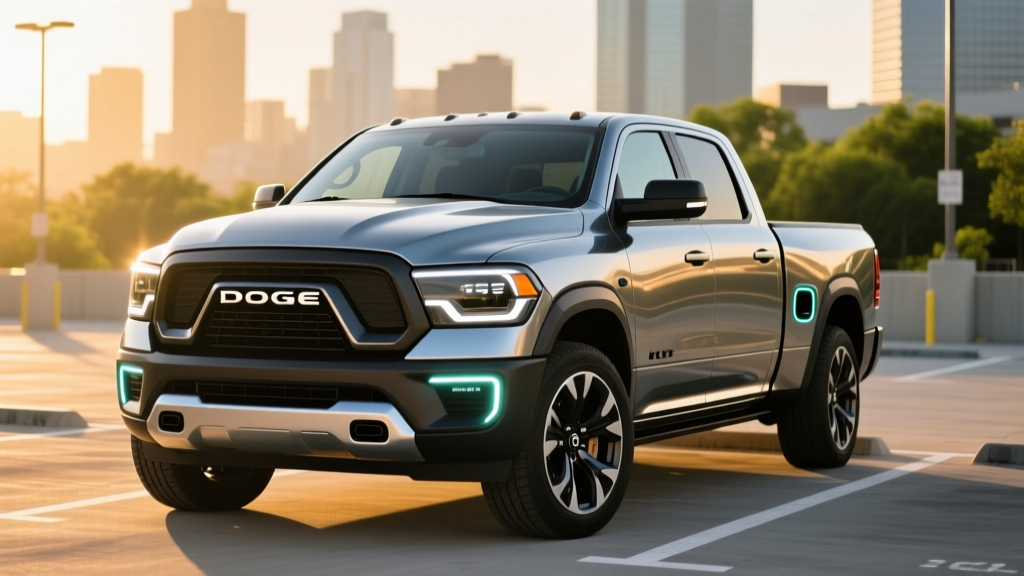
The Ram REV is a body-on-frame, full-size battery electric pickup built on Stellantis's STLA Frame platform. While many shoppers search for a "Dodge Ram electric truck," the Ram brand was spun off from Dodge in 2009, so the official name is simply Ram REV. The truck seats up to six (bench front seat) or five (captain's chairs), features a crew cab with a 5-foot-7-inch bed, and includes a front trunk (frunk) with approximately 15 cubic feet of lockable storage — large enough for tools, gear, or a week's groceries.
Ram initially announced the REV in early 2023 with ambitious specs, and the production version began reaching dealers in late 2025 for the 2026 model year. Early reservations experienced delays — a common pattern in EV truck launches — but the truck is now orderable through Ram dealerships nationwide.
Specs That Matter: Range, Battery, Charging & Performance
Here are the critical numbers buyers need to evaluate the Ram REV against its competitors and against a gas-powered Ram 1500:
| Specification | Ram REV (2026) |
|---|---|
| Battery Capacity (usable) | 168 kWh (NMC lithium-ion) |
| EPA Range (estimated) | Up to 350 miles |
| Real-World Highway Range | ~270–300 miles (70–75 mph) |
| Cold-Weather Range (20°F) | ~230–260 miles |
| Peak DC Fast Charge | 350 kW (800V architecture) |
| 10–80% DC Charge Time | ~22 minutes (at 350 kW station) |
| Level 2 Home Charging | 11.5 kW (~25 miles/hour) |
| Level 1 (120V) Charging | ~1.4 kW (~3 miles/hour) |
| Horsepower | 654 hp (dual motor AWD) |
| Torque | 620 lb-ft |
| 0–60 mph | ~4.4 seconds |
| Max Towing Capacity | 10,700 lbs |
| Max Payload | 2,700 lbs |
| Frunk Volume | 15 cu ft |
| Battery/Powertrain Warranty | 8 years / 100,000 miles |
| Starting MSRP (Tradesman) | $58,095 |
Real-World Range vs. EPA Sticker
The 350-mile EPA estimate is impressive on paper, but real-world conditions tell a different story. Highway driving at 75+ mph typically reduces range by 15–20%, yielding roughly 270–300 miles. In cold weather (below 30°F), expect an additional 15–25% reduction due to battery heating demands and cabin climate use, bringing effective range down to 230–260 miles. If you tow near the 10,700-lb max capacity, range can drop to 150–180 miles depending on trailer aerodynamics and terrain. Always plan road trips around the real-world figure, not the sticker.
Ram REV vs. Gas Ram 1500: What's the Real Cost Difference?
The most common question from truck buyers: does going electric actually save money? The answer depends heavily on your driving patterns, electricity rates, and how long you keep the vehicle. Here's a five-year cost comparison assuming 15,000 miles per year, national average electricity at $0.16/kWh, and gas at $3.40/gallon:
| Cost Category (5 Years / 75K Miles) | Ram REV (2026) | Ram 1500 Gas (V8, 4WD) |
|---|---|---|
| Purchase Price (base MSRP) | $58,095 | $44,095 |
| Federal Tax Credit (§30D) | Up to $7,500* | $0 |
| Effective Purchase Price | ~$50,595 | $44,095 |
| Fuel / Electricity (75K miles) | ~$3,200 (home charging) | ~$13,600 (17 MPG combined) |
| Maintenance | ~$1,200 | ~$3,800 |
| Insurance (est. average) | ~$11,500 | ~$9,200 |
| Estimated Depreciation | ~$22,000 | ~$18,000 |
| 5-Year Total Cost of Ownership | ~$88,495 | ~$78,695 |
*Federal §30D tax credit eligibility depends on buyer income caps ($150K single / $300K joint AGI), vehicle MSRP caps ($80K for trucks), battery component sourcing requirements, and point-of-sale transfer availability. Always verify current rules at IRS.gov and consult a tax professional.
The Ram REV saves substantially on fuel and maintenance — roughly $12,800 over five years — but the higher purchase price and insurance premiums mean the gas Ram 1500 still comes out ahead on total cost in this base scenario. However, if you drive more than 20,000 miles per year, have access to cheap off-peak electricity (under $0.10/kWh), or qualify for state incentives, the math can flip in the REV's favor by year four or five.
Home Charging: What You Actually Need
Owning any electric truck requires a realistic home charging plan. The Ram REV's 168 kWh battery is enormous — charging it from empty on a standard 120V outlet (Level 1) would take over 100 hours. That's not practical for daily use.
| Charging Level | Power (kW) | Miles Added/Hour | Full Charge Time |
|---|---|---|---|
| Level 1 (120V outlet) | ~1.4 kW | ~3 mi/hr | ~120 hours |
| Level 2 (240V, 48A) | 11.5 kW | ~25 mi/hr | ~15 hours |
| DC Fast Charge (350 kW) | 350 kW peak | ~800+ mi/hr (peak) | 10–80% in ~22 min |
Level 2 is the realistic standard for home ownership. A 240V Level 2 charger (like a ChargePoint Home Flex or Tesla Universal Wall Connector) adds roughly 25 miles of range per hour. Overnight (10 hours) gets you about 250 miles — enough for most daily driving and commuting needs.
Home installation cost breakdown:
| Component | Typical Cost Range |
|---|---|
| Level 2 Charger (hardware) | $400–$750 |
| Electrician labor (240V/50A circuit) | $800–$2,500 |
| Permit & inspection | $100–$300 |
| Electrical panel upgrade (if needed) | $1,500–$4,000 |
| Total (no panel upgrade) | $1,300–$3,550 |
| Total (with panel upgrade) | $2,800–$7,550 |
Many older homes have 100A electrical panels that cannot support a 50A EV circuit alongside existing loads. A panel upgrade to 200A is a significant added cost but may be necessary. Always get a quote from a licensed electrician before committing to an EV purchase.
If you cannot install home charging (apartment living, street parking, HOA restrictions), owning the Ram REV becomes substantially less convenient. Public DC fast charging is viable for road trips but impractical as a daily routine — it's more expensive ($0.35–$0.55/kWh at networks like Electrify America), takes 25–40 minutes per session, and station reliability remains inconsistent in many regions.
Common Misconceptions About Electric Trucks
| Myth | Fact |
|---|---|
| "Electric trucks can't tow." | The Ram REV tows up to 10,700 lbs — competitive with many gas V8 half-tons. However, towing cuts range by 40–55%, so plan charging stops carefully on long hauls. |
| "The battery will need replacing in 5 years." | NMC batteries in modern EVs are engineered for 1,500–2,000+ charge cycles before reaching 80% capacity. Ram covers the battery for 8 years/100,000 miles. Real-world data from earlier EVs shows most batteries retain 85–90% capacity at 150K miles. |
| "Charging takes too long." | At a 350 kW DC station, the Ram REV charges 10–80% in ~22 minutes. At home on Level 2, you plug in overnight and wake up with 250+ miles — no gas station needed. |
| "Electric trucks are worse in cold weather." | Range drops 15–25% in sub-freezing temps — a real limitation. But the Ram REV includes a heat pump and battery preconditioning to mitigate losses. Remote cabin heating while plugged in actually makes cold mornings more comfortable than a gas truck. |
| "I'll get the full $7,500 tax credit." | §30D eligibility depends on your AGI, the truck's MSRP, battery sourcing compliance, and point-of-sale transfer availability. Not every buyer qualifies for the full amount. Verify at IRS.gov. |
Who Should Buy the Ram REV — and Who Shouldn't?
Decision Framework
Choose the Ram REV if:
- You can install Level 2 charging at home and drive under 250 miles/day on average
- You want a quiet, high-torque truck for daily commuting with minimal maintenance
- You value the 350-mile EPA range for occasional longer road trips
- You tow moderately (under 7,000 lbs) and can plan charging stops for heavier hauls
- You qualify for the federal tax credit and/or state EV incentives, narrowing the price gap
- You want vehicle-to-home (V2H) backup power capability during outages
Stick with a gas or hybrid Ram 1500 if:
- You regularly tow over 8,000 lbs on long routes where charging stops add unacceptable time
- You live in an apartment or lack reliable home/workplace charging access
- Your daily driving exceeds 300 miles in rural areas with sparse DC fast-charging infrastructure
- You need the lowest possible upfront purchase price and plan to sell within 3 years
- You operate in extreme cold (consistently below 0°F) where range loss compounds significantly
Competitor Comparison: Ram REV vs. Ford F-150 Lightning vs. Silverado EV
| Spec | Ram REV (2026) | Ford F-150 Lightning (2026) | Chevy Silverado EV (2026) |
|---|---|---|---|
| EPA Range | Up to 350 mi | Up to 320 mi (ext. range) | Up to 440 mi (4WT) |
| Battery | 168 kWh NMC | 131 kWh (ext. range) | 200+ kWh Ultium |
| Peak DC Charge | 350 kW | 150 kW | 350 kW |
| 10–80% Time | ~22 min | ~41 min | ~20 min |
| Max Towing | 10,700 lbs | 10,000 lbs | 12,500 lbs |
| Horsepower | 654 hp | 580 hp | 754 hp (4WT) |
| Starting MSRP | $58,095 | $55,090 | $57,900 (3WT) |
| Frunk | 15 cu ft | 14.1 cu ft | 10.2 cu ft |
The Ram REV's key advantage is its combination of strong range, the fastest DC charging architecture among its peers (at 350 kW), and a competitive starting price. The Silverado EV edges it on maximum range (in fleet-oriented 4WT trim) and towing, while the F-150 Lightning undercuts on price but charges noticeably slower. For a retail buyer prioritizing road-trip charging speed and daily range, the Ram REV occupies a compelling middle ground.
Frequently Asked Questions
Is the Dodge Ram electric truck actually called the Ram REV?
Yes. Ram became a standalone brand separate from Dodge in 2009. The electric truck is officially the Ram REV (Ram Electric Vehicle). Searching for "Dodge Ram electric truck" will lead you to the same vehicle, but dealerships and official materials use the Ram branding exclusively.
Does the Ram REV qualify for the $7,500 federal tax credit?
The Ram REV is eligible for the §30D Clean Vehicle Credit, but the actual amount you receive depends on several factors: your adjusted gross income must be under $150,000 (single) or $300,000 (joint), the truck's MSRP must be under $80,000 (which it is for most trims), and the battery must meet critical-mineral and component-sourcing thresholds that tighten each year. As of 2026, point-of-sale transfer is available, meaning you can apply the credit as a down-payment reduction at the dealer. Confirm eligibility with your tax advisor before purchasing.
How long does it take to charge the Ram REV at home?
On a Level 2 (240V) home charger at 11.5 kW, a full charge from empty takes approximately 15 hours. In practice, most owners charge from 20–80% overnight (about 8–9 hours), which adds roughly 200–220 miles of range. Level 1 (standard 120V) is far too slow for a 168 kWh battery and should only be used for emergency trickle charging.
Can the Ram REV power my home during an outage?
Ram has confirmed vehicle-to-home (V2H) capability for the REV, allowing the 168 kWh battery to serve as a backup power source. With proper bidirectional charging equipment and a home energy management system, the REV could theoretically power an average home for 3–5 days during an outage. This requires additional hardware (a bidirectional charger and transfer switch) and professional installation.
How does the Ram REV handle in cold weather?
The Ram REV uses a heat pump and active thermal management system to precondition the battery and cabin efficiently. In testing and real-world reports, range drops 15–25% in temperatures below 30°F. Preconditioning the battery while plugged in before departure minimizes range loss and improves charging speed. If you live in a consistently cold climate, budget for 250–270 miles of effective winter range rather than the 350-mile EPA sticker.
What's the maintenance schedule like compared to a gas truck?
The Ram REV eliminates oil changes, spark plugs, transmission fluid changes, and exhaust system maintenance. Routine maintenance is limited to tire rotations (every 7,500 miles), cabin air filter replacement, brake fluid checks, and windshield washer fluid. Regenerative braking significantly extends brake pad life — many EV owners report original brake pads lasting 80,000+ miles. Expect to spend roughly $200–$300 per year on maintenance versus $700–$1,000 for a gas Ram 1500.
Sources: fueleconomy.gov (EPA range and efficiency data), IRS.gov §30D Clean Vehicle Credit, Ram Trucks official specifications.