Did Lucid Reverse Split — And Should EV Buyers Care?
If you've been searching "did Lucid reverse split," you're likely tracking Lucid Group (LCID) stock and wondering what the company's financial maneuvers mean for its flagship vehicle, the Lucid Air. Let's clear this up immediately: as of early 2026, Lucid Group has not executed a reverse stock split. The company has explored various capital-raising strategies, including equity offerings and its significant backing from Saudi Arabia's Public Investment Fund (PIF), but a formal reverse split has not been enacted.
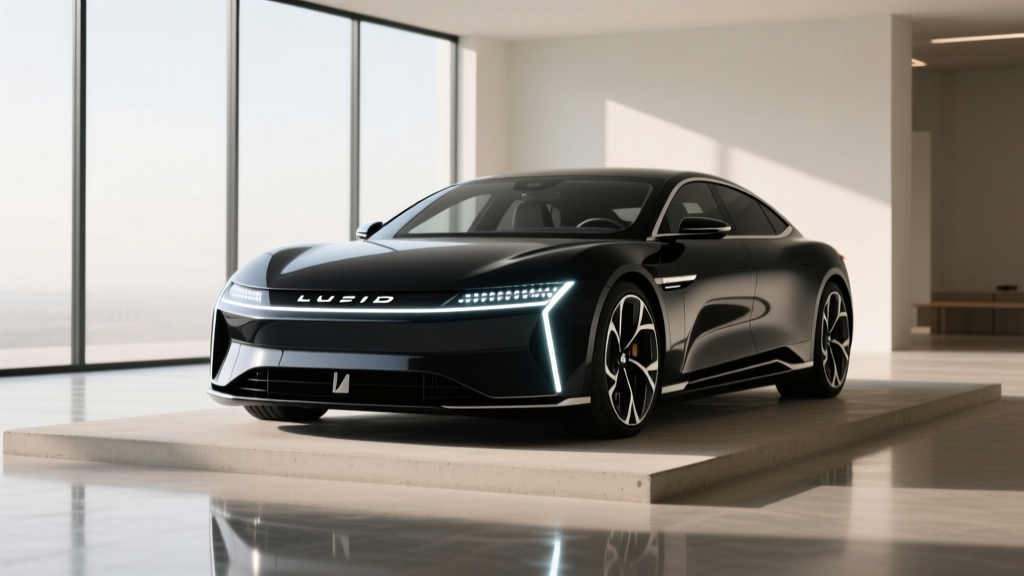
For prospective Lucid Air buyers, the real question isn't stock mechanics — it's whether Lucid's financial stability translates into long-term parts availability, service infrastructure, and warranty honoring. This review tackles both the financial context and the hard EV specs you need to make an informed purchase decision on the 2026 Lucid Air sedan.
Lucid Air 2026: Core Specifications at a Glance
| Spec | Pure RWD | Touring AWD | Grand Touring AWD |
|---|---|---|---|
| EPA Range | 419 mi | 425 mi | 516 mi |
| Battery (usable) | 88 kWh (NMC) | 112 kWh (NMC) | 112 kWh (NMC) |
| Horsepower | 430 hp | 620 hp | 819 hp |
| 0–60 mph | 5.0 sec | 3.4 sec | 3.0 sec |
| Drivetrain | RWD (single motor) | AWD (dual motor) | AWD (dual motor) |
| Max DC Fast Charge | 220 kW | 300 kW | 300 kW |
| 10–80% DC Time | ~25 min | ~15 min | ~15 min |
| Level 2 Home Rate | 19.2 kW (~82 mi/hr) | 19.2 kW (~82 mi/hr) | 19.2 kW (~82 mi/hr) |
| MPGe (combined) | 146 MPGe | 134 MPGe | 131 MPGe |
| Base MSRP | $69,900 | $78,900 | $111,900 |
| Battery/Powertrain Warranty | 8 yr / 100,000 mi | 8 yr / 100,000 mi | 8 yr / 100,000 mi |
Sources: fueleconomy.gov, Lucid Motors official specifications.
Real-World Range: What the EPA Sticker Doesn't Tell You
EPA (Grand Touring): 516 miles
Real-world highway (70 mph, 75°F): ~410–440 miles
Real-world highway (32°F, cold weather): ~320–360 miles
City/mixed (moderate climate): ~460–500 miles
EPA (Pure RWD): 419 miles
Real-world highway (70 mph, 75°F): ~340–370 miles
Real-world highway (32°F, cold weather): ~270–300 miles
The Lucid Air Grand Touring's 516-mile EPA rating remains the highest of any production EV sold in the US. But EPA tests include generous low-speed city cycles that flatter efficiency. In sustained highway driving at 70 mph, expect to use roughly 24–26 kWh/100mi in the Grand Touring, which translates to about 410–440 real-world miles on a full charge. Cold weather compounds this: lithium-ion cells lose efficiency below 40°F, and cabin heating draws significant power. Plan for 30–35% range reduction in sub-freezing highway driving.
Lucid's efficiency advantage comes from its miniaturized drive units, 900V+ electrical architecture, and an industry-leading drag coefficient of 0.197. The Air converts electricity to motion more effectively than any competitor — the Grand Touring achieves roughly 4.4 miles per kWh, compared to the Tesla Model S Long Range at roughly 3.8 mi/kWh.
Charging Speed: 300 kW Peak, but Read the Curve
| Charging Level | Power (kW) | Rate | Time |
|---|---|---|---|
| Level 1 (120V household) | ~1.4 kW | ~6 mi/hr | 0–100%: ~80 hrs (112 kWh) |
| Level 2 (240V home, 19.2 kW) | 19.2 kW | ~82 mi/hr | 0–100%: ~6 hrs (112 kWh) |
| DC Fast Charge (peak) | 300 kW (Touring/GT) | ~1,000+ mi/hr at peak | 10–80%: ~15 min |
| DC Fast Charge (Pure) | 220 kW | ~800 mi/hr at peak | 10–80%: ~25 min |
The Touring and Grand Touring trims accept up to 300 kW at a DC fast charger, enabled by Lucid's 900V battery architecture. On a 350 kW Electrify America or Ionity station, you'll see peak rates above 280 kW in the 10–40% SoC window. However, the charge curve tapers significantly above 60%, dropping to roughly 100 kW by 75% and below 50 kW past 85%. The 10–80% time of approximately 15 minutes is legitimate — but don't expect a full charge at that rate.
For home charging, the Air's onboard 19.2 kW AC charger is among the fastest available. On a 48-amp Level 2 home station (most common), you'll get about 11.5 kW (~50 mi/hr). To unlock the full 19.2 kW, you'll need a hardwired 80-amp circuit — which requires a 100-amp breaker and likely a panel upgrade if your home has a standard 200-amp service. Budget $1,500–$3,500 for a professional Level 2 installation depending on your electrical panel.
Performance and Driving Dynamics
The Grand Touring's 819 horsepower and 3.0-second 0–60 time make it one of the quickest sedans ever built, yet Lucid's engineering focus is clearly efficiency over brute force. The dual-motor AWD system uses permanent magnet motors on both axles, and the Air's low center of gravity (battery pack underfloor) delivers composed cornering despite the vehicle's 4,800–5,200 lb curb weight.
The Pure RWD model sacrifices the second motor but keeps the Air's refined ride quality. Its 430 hp and 5.0-second 0–60 time are more than adequate for daily driving, and the 419-mile EPA range makes it one of the longest-range EVs at its price point.
Driver Assistance: Lucid's DreamDrive Pro system provides SAE Level 2 driver assistance — lane centering, adaptive cruise, and automated lane changes. This is not autonomous driving. The driver must maintain attention and hands-on-wheel engagement at all times. DreamDrive uses 32 sensors including LiDAR, which gives it an edge in object detection over camera-only systems, but it trails Tesla Autopilot and GM Super Cruise in highway seamlessness and coverage area.
Pricing, Tax Credits, and Total Cost
| Trim | Base MSRP | As-Tested (typical) | §30D Credit Eligible? |
|---|---|---|---|
| Pure RWD | $69,900 | $72,000–$75,000 | Possible (see rules below) |
| Touring AWD | $78,900 | $82,000–$88,000 | No — exceeds sedan MSRP cap |
| Grand Touring AWD | $111,900 | $115,000–$130,000 | No — exceeds sedan MSRP cap |
The IRS §30D federal tax credit imposes a $55,000 MSRP cap on sedans (vans, SUVs, and trucks have a $80,000 cap). The Lucid Air Pure's $69,900 starting price exceeds this threshold, making it ineligible for the full $7,500 credit regardless of battery sourcing or buyer income.
This is a critical point for buyers cross-shopping the Air against competitors: the Tesla Model S, BMW i5, and Mercedes EQS also largely exceed the sedan MSRP cap. If the $7,500 credit is essential to your budget, you'll need to look at lower-priced sedans (Tesla Model 3, Hyundai Ioniq 6) or consider SUVs priced under $80,000.
- Vehicle MSRP must be ≤$55,000 (sedans) or ≤$80,000 (SUVs/trucks/vans)
- Buyer AGI: ≤$150,000 (single), ≤$225,000 (head of household), ≤$300,000 (joint)
- Battery must meet critical mineral and component sourcing thresholds (phased annually)
- Credit can be transferred to dealer at point of sale for immediate price reduction
- Check irs.gov for current-year eligibility — rules change frequently
Interior Space, Tech, and Daily Ownership
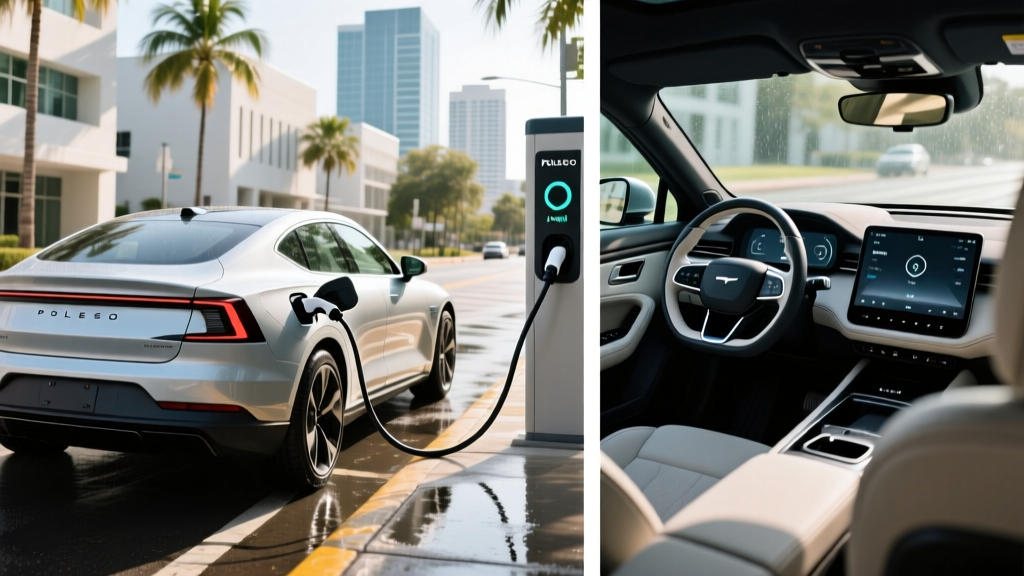
The Air's interior is genuinely spacious. Front legroom measures 41.1 inches, rear legroom 36.6 inches — competitive with the BMW 5 Series. Cargo volume totals 32 cubic feet with the trunk and front trunk (frunk) combined, which exceeds most luxury sedans. The glass canopy roof creates an airy cabin but contributes to heat soak in summer — tinting or a sunshade is recommended in hot climates.
The 34-inch curved glass cockpit display is visually stunning, but the infotainment software has drawn criticism for sluggish response times and an unintuitive menu structure. Lucid has issued multiple OTA updates to improve this, and the 2026 software is noticeably more responsive than launch versions. Wireless Apple CarPlay and Android Auto are standard.
Notable drawbacks:
- Service center footprint remains thin outside major metros — some owners rely on mobile service
- No Apple CarPlay integration with the Lucid navigation for preconditioning routing
- Rear seat comfort is good but not S-Class level; no available rear-seat entertainment screens
- Insurance premiums run 20–35% higher than comparable ICE luxury sedans
Lucid Air vs. Key Competitors
| Attribute | Lucid Air GT | Tesla Model S LR | BMW i5 eDrive40 | Mercedes EQS 450+ |
|---|---|---|---|---|
| EPA Range | 516 mi | 402 mi | 295 mi | 390 mi |
| Battery | 112 kWh NMC | ~100 kWh | 81.2 kWh NMC | 108.4 kWh NMC |
| Max DC Charge | 300 kW | 250 kW | 205 kW | 200 kW |
| 10–80% Time | ~15 min | ~22 min | ~27 min | ~31 min |
| 0–60 mph | 3.0 sec | 3.1 sec | 5.7 sec | 5.9 sec |
| Base MSRP | $111,900 | $74,990 | $66,800 | $104,400 |
| §30D Eligible | No | No | No (sedan cap) | No |
| Efficiency (MPGe) | 131 | 124 | 99 | 97 |
The Air Grand Touring wins on range and efficiency by a wide margin. The Model S counters with a more mature Supercharger network and lower price. The BMW i5 and Mercedes EQS prioritize brand prestige and dealer service networks. None of these luxury sedans qualify for the §30D credit at current MSRPs.
- Best-in-class EPA range (516 mi GT)
- Industry-leading efficiency (4.4 mi/kWh)
- 300 kW DC fast charging
- Spacious interior with 32 cu ft cargo
- 900V architecture future-proofs charging
- Standard LiDAR in DreamDrive Pro
- No §30D tax credit eligibility (MSRP cap)
- Limited service center network
- Infotainment software still maturing
- High insurance premiums
- Company financial uncertainty
- Higher starting price than Model S
Lucid's Financial Health: What Buyers Should Know
Returning to the "did Lucid reverse split" question: the concern behind the search is whether Lucid will still be around to honor its 8-year/100,000-mile battery warranty. Here's the honest picture:
Lucid's PIF backing (Saudi Arabia's sovereign wealth fund holds approximately 60% of Lucid shares) provides a substantial financial floor. In 2024–2025, PIF injected multiple billions in capital to sustain operations. Lucid also has a commercial agreement to supply vehicles for Saudi Arabia's EV market, providing a revenue stream beyond US consumer sales.
However, Lucid's US sales volumes remain low (roughly 8,000–10,000 vehicles annually), and the company continues to operate at significant losses. The upcoming Lucid Gravity SUV (launching 2025–2026) is critical to expanding volume. For buyers, the practical risk is service inconvenience rather than total company collapse — but it's a legitimate factor in the purchase decision.
Who Should Buy the Lucid Air?
- Maximum range is your top priority (frequent 300+ mile road trips)
- You value efficiency and can charge at home with a high-power Level 2 station
- You want a luxury sedan that stands apart from the Tesla ubiquity
- You live near a Lucid service center or are comfortable with mobile service
- Budget exceeds $70,000 and tax credit ineligibility doesn't impact your decision
Look elsewhere if:
- The $7,500 federal tax credit is essential to your budget
- You need robust dealer-service infrastructure in a rural area
- You prefer a proven luxury brand with decades of service history
- You want an SUV body style (consider the Lucid Gravity or Tesla Model X)
Frequently Asked Questions
Did Lucid reverse split its stock in 2025 or 2026?
No. As of early 2026, Lucid Group (LCID) has not executed a reverse stock split. The company has relied on equity raises and PIF capital injections to fund operations. A reverse split could theoretically happen if the stock price remains below Nasdaq's $1 minimum bid requirement for an extended period, but this has not occurred.
What is the real-world range of the Lucid Air?
The Grand Touring's EPA rating is 516 miles. Expect roughly 410–440 miles in real-world highway driving at 70 mph in moderate temperatures, and 320–360 miles in cold-weather highway conditions. The Pure RWD delivers approximately 340–370 real-world highway miles.
How fast does the Lucid Air charge?
Touring and Grand Touring trims accept up to 300 kW DC fast charging, reaching 10–80% in approximately 15 minutes on a 350 kW station. The Pure tops out at 220 kW (~25 minutes 10–80%). Home Level 2 charging at 19.2 kW adds roughly 82 miles per hour, but most home installations deliver 11.5 kW (~50 mi/hr) on a 48-amp circuit.
Does the Lucid Air qualify for the $7,500 federal EV tax credit?
No. The IRS §30D credit caps sedan MSRP at $55,000. The cheapest Lucid Air Pure starts at $69,900, well above the threshold. No Air trim qualifies regardless of buyer income or battery sourcing. Check irs.gov for current rules.
Is the Lucid Air worth buying vs. the Tesla Model S?
If range and efficiency are paramount, the Air Grand Touring's 516-mile EPA rating and 4.4 mi/kWh efficiency are unmatched. The Model S counters with a lower price ($74,990 vs. $111,900), the extensive Supercharger network, and a more mature service infrastructure. Neither qualifies for the §30D credit. The Air is the better engineering achievement; the Model S is the safer ownership bet for those outside major metros.
What is the Lucid Air's battery warranty?
Lucid covers the battery and powertrain for 8 years or 100,000 miles, whichever comes first. The warranty guarantees the battery will retain at least 70% of its original capacity during the coverage period. This is competitive with Tesla's 8-year/150,000-mile battery warranty on the Model S.
Always verify current pricing, specifications, and tax credit rules on lucidmotors.com and irs.gov before purchasing. Figures in this article reflect 2026 model-year data available at time of writing.