The Quick Answer: Is the Defender Electric Worth Waiting For?
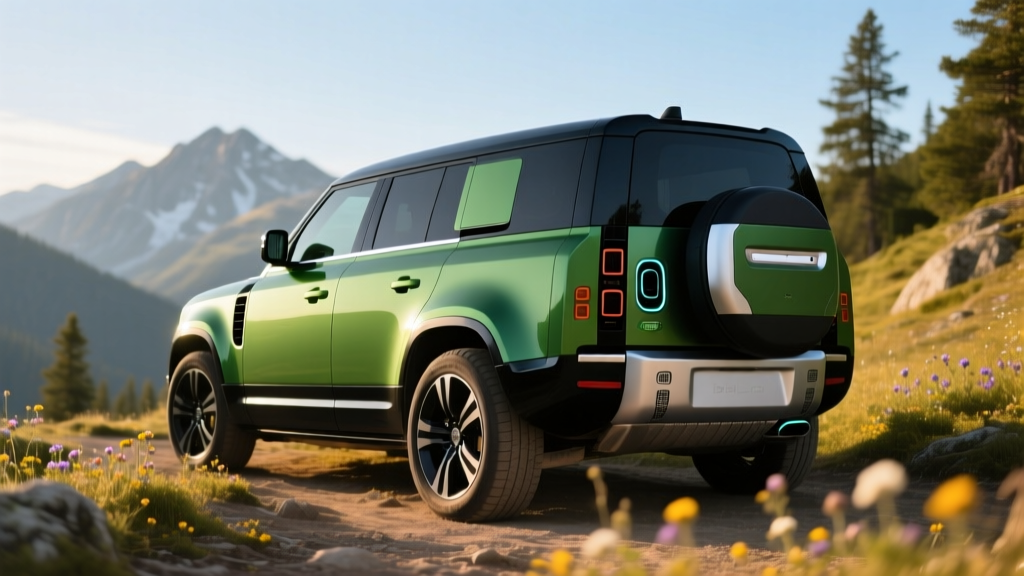
Land Rover has confirmed an all-electric Defender, currently targeted for the 2027 model year (arriving late 2026 or early 2027). Based on Jaguar Land Rover's EMA platform and confirmed teaser details, expect roughly 280–320 miles of EPA-estimated range, an ~110–120 kWh battery pack, and a starting price likely between $95,000 and $110,000. It will not qualify for the federal §30D new-EV tax credit due to its price exceeding the $80,000 SUV MSRP cap. If you need an electric off-roader today, the Rivian R1S or Mercedes G 580 EQ remain your only alternatives in this segment.
What We Know About the Defender Electric So Far
Jaguar Land Rover officially confirmed the electric Defender during its 2023 strategy update, and throughout 2024–2025 the company has released prototype images and testing footage showing camouflaged units tackling extreme terrain, water fording, and cold-weather validation. The vehicle will ride on JLR's EMA (Electric Modular Architecture) platform — the same skateboard underpinning the next-generation Range Rover Electric.
Key confirmed or strongly indicated specifications:
- Platform: EMA, 800-volt capable architecture
- Battery chemistry: Likely NMC (nickel manganese cobalt) given the energy-density requirements for off-road ground clearance and towing
- Estimated usable capacity: 110–120 kWh
- Drivetrain: Dual- or tri-motor AWD with terrain-response torque vectoring
- Estimated 0–60 mph: 4.5–5.5 seconds (based on comparable EMA-platform targets)
- Towing capacity: Expected 7,500+ lbs (matching or exceeding the Defender 110 gas models)
- Wading depth: JLR has confirmed the electric Defender will match or exceed the gas model's 35.4 inches
JLR has been deliberately cautious with its EV timeline. The electric Defender was originally slated for a 2025 reveal but was pushed back as the company recalibrated its EV strategy in mid-2024 amid softer luxury-EV demand. Current projections from Land Rover's official channels and industry reporting point to a formal unveiling in late 2025 or early 2026, with customer deliveries beginning in 2027.
Estimated Range, Efficiency, and Real-World Expectations
No official EPA range figure exists yet for the Defender Electric. However, we can make an informed projection using the EMA platform's known characteristics, the vehicle's estimated weight (roughly 6,000–6,400 lbs based on prototype analysis), and its boxy aerodynamic profile.
| Metric | Estimated / Projected | Notes |
|---|---|---|
| EPA Range (est.) | 280–320 miles | Based on ~110–120 kWh usable, 2.0–2.3 mi/kWh |
| Real-World Highway (70 mph) | 230–270 miles | Boxy aero, heavy curb weight reduce highway efficiency |
| Real-World Cold Weather (20°F) | 200–240 miles | ~20–25% range loss typical for large NMC packs without preconditioning |
| Off-Road Range | 150–200 miles | Low-range crawling, terrain response draws high sustained current |
| Efficiency (est.) | ~55–62 MPGe combined | Comparable to Rivian R1S and Mercedes EQG efficiency targets |
Real-World Range Reality Check
The Defender's iconic flat windshield, upright roofline, and wide track create a drag coefficient likely around Cd 0.38–0.42 — significantly higher than a Tesla Model Y (~0.23) or even the Rivian R1S (~0.30). At highway speeds, aerodynamic drag dominates energy consumption. If you regularly drive above 70 mph on interstates, expect range to drop 15–20% below the EPA sticker. Off-road use — particularly rock crawling or deep sand — will further compress range due to sustained high-torque, low-speed motor draw. Plan real-world trips around 230–260 miles of usable range in mixed driving.
Charging Speed and Infrastructure Compatibility
The EMA platform supports 800-volt architecture, which is critical for fast DC charging. Based on JLR's stated targets for the Range Rover Electric (which shares the platform), the Defender Electric should support peak DC fast-charging rates of approximately 200–250 kW.
| Charging Level | Power (kW) | Est. Time / Rate | Use Case |
|---|---|---|---|
| Level 1 (120V household) | ~1.4 kW | ~3–4 mi/hr added | Emergency/top-up only; full charge in 80+ hours |
| Level 2 (240V home, 48A) | ~11.5 kW | ~28–34 mi/hr added; full charge in ~10–12 hrs | Daily overnight charging — primary method for most owners |
| DC Fast Charge (peak) | ~200–250 kW | 10–80% in est. 25–35 min | Road trips; taper expected above 80% SoC |
A critical detail for prospective owners: the Defender Electric will almost certainly ship with a NACS (Tesla-style) charge port in the North American market, as JLR confirmed its adoption of the NACS standard for all future EVs sold in the US and Canada. This grants access to Tesla Supercharger stations (with the appropriate adapter or natively), significantly expanding road-trip charging options in remote areas — a genuine advantage for an off-road-oriented vehicle.
Defender Electric vs. Gas Defender 110: Cost and Capability Comparison
The current gas-powered Defender 110 (P400, 3.0L inline-6 mild hybrid) remains the benchmark. Here's how the electric variant is likely to compare on key ownership metrics.
| Metric | Defender Electric (est.) | Defender 110 P400 (gas MHEV) |
|---|---|---|
| Base MSRP | $95,000–$110,000 | $69,400 (2025 base S) |
| Federal Tax Credit (§30D) | $0 — exceeds $80K SUV cap | N/A (not a qualifying EV/PHEV) |
| Fuel/Energy Cost per Mile | ~$0.05–$0.07 (home L2, $0.14/kWh avg) | ~$0.22–$0.26 (17 MPG combined, $3.80/gal) |
| Annual Fuel/Energy (12,000 mi) | ~$600–$840 | ~$2,640–$3,120 |
| Annual Maintenance (est.) | ~$300–$500 | ~$800–$1,200 (oil, filters, spark plugs, transmission) |
| 5-Year Total Energy + Maintenance | ~$4,500–$6,700 | ~$17,200–$21,600 |
| Estimated Insurance (annual) | $2,800–$3,600 | $2,200–$2,800 |
| Towing Capacity | ~7,500 lbs (est.) | 8,201 lbs |
| Wading Depth | 35.4+ inches (confirmed by JLR) | 35.4 inches |
5-Year Total Cost of Ownership Estimate
| Category | Defender Electric (est.) | Defender 110 P400 |
|---|---|---|
| Purchase Price (base) | $100,000 | $69,400 |
| Federal Tax Credit | $0 | $0 |
| Energy/Fuel (5 yrs) | $3,500 | $14,400 |
| Maintenance (5 yrs) | $2,000 | $5,000 |
| Insurance (5 yrs) | $16,000 | $12,500 |
| Estimated Depreciation (5 yrs) | $45,000–$55,000 | $30,000–$38,000 |
| 5-Year Total Cost | ~$121,500–$131,500 | ~$101,300–$109,300 |
Note: Depreciation estimates for the electric Defender are uncertain given no resale history. Luxury EVs have experienced steeper depreciation in 2023–2025, which may persist. Source: EPA fueleconomy.gov for gas Defender efficiency; electricity costs based on US EIA average residential rate.
Home Charging Setup: What Defender Electric Owners Will Need
With an estimated 110–120 kWh battery, the Defender Electric has one of the largest packs in any consumer EV. This makes home charging infrastructure especially important — Level 1 (standard 120V) charging is functionally useless for daily needs, adding only 3–4 miles per hour.
| Item | Estimated Cost | Notes |
|---|---|---|
| Level 2 EVSE (48A hardwired, e.g., ChargePoint Home Flex or Wallbox Pulsar Max) | $500–$800 | NACS connector recommended; 11.5 kW output at 240V/48A |
| Electrical panel assessment | $0–$200 | Many electricians include this in the quote |
| Wiring & conduit run (50–100 ft from panel to garage/carport) | $800–$2,500 | Varies heavily by distance, wall type, and local code |
| 60A circuit breaker + installation labor | $400–$1,200 | Required for a 48A continuous-draw charger (NEC 125% rule) |
| Panel upgrade (if needed — 200A service minimum) | $1,500–$4,000 | Older homes with 100A or 150A panels will likely need this |
| Permits & inspection | $100–$400 | Varies by municipality |
| Total (no panel upgrade) | $1,800–$4,900 | Most common scenario for modern homes |
| Total (with panel upgrade) | $3,300–$8,900 | Budget for this if your home is pre-1990 |
Important: Always have a licensed electrician perform a load calculation on your panel before installing a Level 2 charger. A 48A charger draws 11.5 kW continuously — if your home already runs central AC, an electric oven, and a dryer on a 150A panel, you may trip the main breaker without a panel upgrade or a smart load-management device like the Span panel or Wallbox Power Boost.
Tax Credit Eligibility and Incentive Reality
This is where the math gets unfavorable for the Defender Electric. Under current IRS §30D rules, new EVs must meet several criteria to qualify for up to $7,500 in federal tax credits:
- MSRP cap: SUVs, pickups, and vans must have an MSRP at or below $80,000. The Defender Electric will almost certainly exceed this.
- Buyer income cap: Modified adjusted gross income must not exceed $150,000 (single) / $300,000 (joint).
- Battery sourcing: Critical minerals and battery components must meet phased-in domestic/free-trade sourcing thresholds.
- Final assembly: Must occur in North America. JLR's EMA vehicles are built in the UK (Solihull/Halewood), which disqualifies them from §30D regardless of price.
The Defender Electric fails on at least two counts: MSRP and assembly location. Buyers should budget the full purchase price without expecting a federal credit. Some state-level incentives (California's CVRP, Colorado's state EV credit, New York's Drive Clean Rebate) may still apply — check your state's energy office for current amounts, as these change frequently. Consult a tax professional for personalized guidance, and refer to IRS.gov §30D for the latest rules.
Common Misconceptions About the Electric Defender
| Myth | Fact |
|---|---|
| "It won't be a real Defender — electric motors can't do serious off-roading." | Electric motors deliver instant torque at zero RPM, which is actually superior to gas engines for rock crawling. The Rivian R1T/R1S and GMC Hummer EV have demonstrated serious off-road capability on electric powertrains. JLR has confirmed the electric Defender will match the gas model's wading depth and approach/departure angles. |
| "I'll save money compared to the gas Defender." | On fuel and maintenance, yes — roughly $2,000–$2,500/year. But the higher purchase price ($25K–$40K more), steeper insurance, and likely steeper depreciation mean the 5-year total cost of ownership will be higher than the gas Defender 110 P400 for most buyers. |
| "It qualifies for the $7,500 federal tax credit." | It does not. The MSRP exceeds the $80,000 SUV cap, and final assembly in the UK disqualifies it under §30D's North American assembly requirement. |
| "The battery won't last." | JLR's battery warranty is expected to cover 8 years/100,000 miles with a minimum 70% capacity retention — consistent with industry norms. NMC packs on 800V architectures with active thermal management typically degrade 10–15% over 8 years under normal use. |
| "I can charge it anywhere off-road." | Public DC fast-charging infrastructure near trailheads and remote areas remains limited. NACS compatibility helps (Tesla Superchargers are widespread), but plan off-road trips with charging logistics in mind — range drops significantly during low-speed, high-torque trail use. |
Decision Framework: Should You Wait or Buy Now?
Choose to WAIT for the Defender Electric if:
- You want the Defender badge and silhouette but want zero tailpipe emissions and lower per-mile energy costs.
- You have reliable home Level 2 charging and drive mostly in urban/suburban environments with occasional off-road use.
- You're not in a rush — deliveries are 12–18+ months away from formal launch.
- Budget is flexible: expect $100K+ with options and no federal tax credit.
Choose an ALTERNATIVE now if:
- Rivian R1S (Dual-Motor): 352 miles EPA range, $82,700 base, NACS native, proven off-road capability, available now. Qualifies for $7,500 federal credit on eligible trims/buyers.
- Mercedes G 580 with EQ Technology: ~240 miles EPA range, $160,000+, available now. More expensive but matches the G-Wagen heritage. No federal credit.
- Gas Defender 110 P400: $69,400 base, 19 MPG combined, available now. Lower total cost of ownership over 5 years despite higher fuel spend. Best if you tow frequently or drive in extreme cold/remote areas regularly.
- BMW iX xDrive50: 307 miles EPA, $87,250 base. Not an off-roader, but a luxury electric SUV with comparable interior quality and lower cost.
What First-Time EV Buyers Should Know Before Committing
If the Defender Electric would be your first EV, understand these ownership realities before putting down a deposit:
- Home charging is essential. With a 110–120 kWh pack, relying on public charging alone is expensive ($0.35–$0.55/kWh at DC fast chargers = $38–$66 per session) and time-consuming. Budget $2,000–$5,000 for a proper Level 2 home installation.
- Cold weather reduces range 20–25%. If you live in the northern US or mountain states, your 300-mile EPA estimate becomes ~225–240 miles in winter. Preconditioning the battery while plugged in mitigates this but requires planning.
- Insurance will cost more. Luxury EVs carry 20–40% higher premiums than their gas equivalents due to repair costs, battery replacement value, and parts availability. Get a quote before committing.
- Depreciation is the wildcard. Luxury EVs have seen steep depreciation in 2023–2025 (some losing 40–50% in 3 years). The Defender brand carries strong resale value historically, but the EV variant is unproven.
- Off-road range planning is real. A day on technical trails can consume 2–3 kWh per mile (vs. 0.5 kWh/mi on the highway). Carry a portable Level 1 charger for emergency top-ups at campgrounds with shore power.
Frequently Asked Questions
When will the Land Rover Defender Electric be available to buy?
JLR has targeted the 2027 model year, which typically means customer deliveries would begin in late 2026 or early 2027. The formal reveal is expected in late 2025 or early 2026. Reservations may open 6–12 months before deliveries. This is an announced/preliminary timeline and subject to change.
How much will the Defender Electric cost?
No official pricing has been released. Based on the current Defender 110 lineup ($69,400–$118,600) and the premium JLR charges for electrified powertrains, expect a base MSRP between $95,000 and $110,000, with fully loaded variants potentially exceeding $130,000. It will not qualify for the federal §30D tax credit.
Will the Defender Electric be good off-road?
JLR has explicitly committed to matching or exceeding the gas Defender's off-road capability, including wading depth (35.4+ inches), approach/departure/breakover angles, and Terrain Response systems. Electric motors provide instant torque at zero RPM, which is advantageous for rock crawling. The main limitation will be range during sustained off-road use.
What battery chemistry will it use?
JLR has not officially confirmed chemistry, but the EMA platform is expected to use NMC (nickel manganese cobalt) cells for the Defender Electric, prioritizing energy density for range and performance. LFP (lithium iron phosphate) is less likely given the weight and packaging constraints of a body-on-frame-style off-roader, though LFP variants could appear in future, lower-trim models.
Can I tow with the Defender Electric?
Yes — JLR has indicated towing capacity will be competitive with the gas Defender 110's 8,201-lb rating. Expect 7,500+ lbs. However, towing any trailer will reduce range by 30–50%, similar to how towing impacts gas-vehicle fuel economy. Plan charging stops accordingly when towing.
Is the Defender Electric self-driving?
No. It will feature JLR's advanced driver-assistance suite (adaptive cruise, lane-keeping, automated parking), which is classified as SAE Level 2 — the driver must remain fully engaged and supervising at all times. This is not autonomous driving.