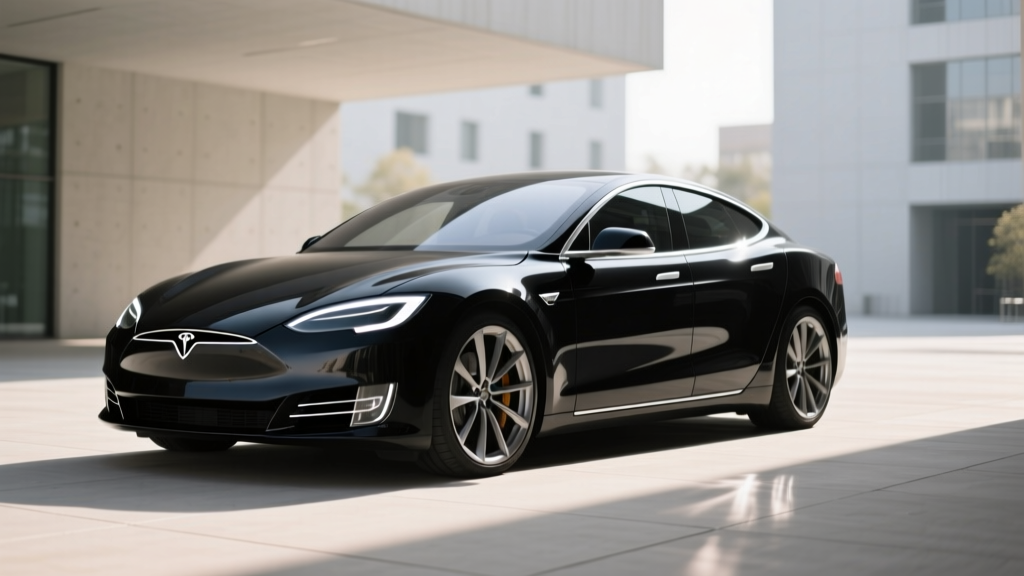
The Tesla Model S has been the benchmark luxury electric sedan for over a decade, but as rivals like the Lucid Air, BMW i7, and Mercedes EQS have closed the gap, Tesla has had to rethink the cabin experience. For 2025–2026, the Model S received meaningful interior updates — most notably a redesigned center console that addresses one of the longest-standing complaints about Tesla's minimalist approach. This review examines the updated Tesla Model S center console, the full powertrain lineup, real-world range and charging behavior, and whether the Model S remains the best premium EV sedan you can buy.
What's New With the Tesla Model S Center Console
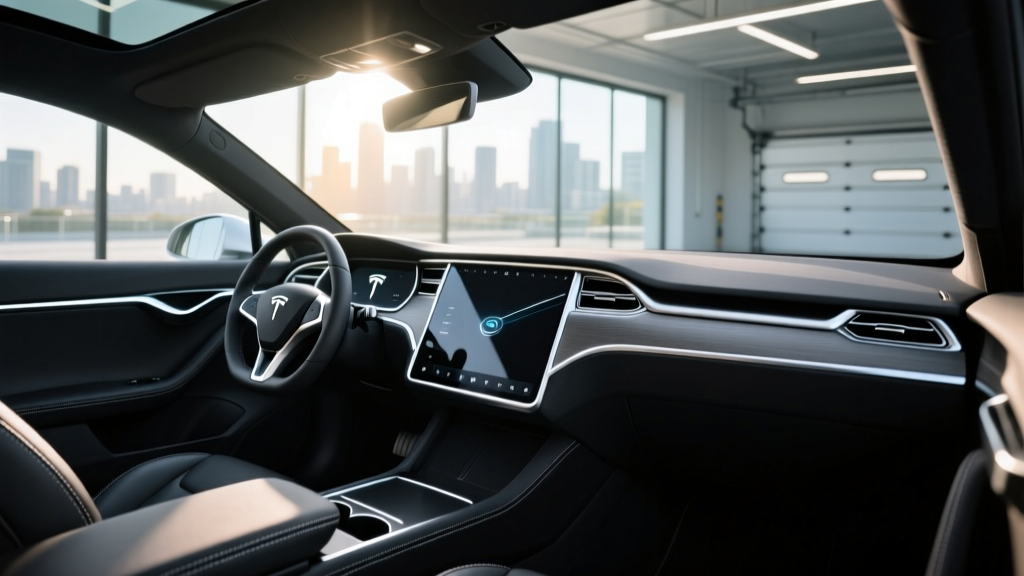
The previous Model S center console was essentially a shallow, open bin with USB-C ports — functional, but hardly befitting a six-figure luxury sedan. Tesla's refreshed console (introduced in late 2024 and carried into the 2026 model year) features a sliding armrest with a hidden storage compartment, wireless charging pad repositioned forward for better phone visibility, and an integrated rear-facing touchscreen for passengers (on models equipped with the Rear Entertainment package). The center console now offers roughly 1.2 cubic feet of enclosed storage, a significant improvement over the prior open-tray design.
Material quality has also improved. The console lid is wrapped in vegan leather with contrast stitching, and the cupholders now feature soft-close dampers. It's a meaningful step up, though it still doesn't match the handcrafted wood-and-metal detailing of a BMW i7 or the open-pore walnut of the Lucid Air. For buyers cross-shopping luxury EVs, the Model S center console is now competitive — but it's no longer class-leading in craftsmanship.
Range, Battery, and Real-World Efficiency
Both trims use a ~100 kWh (usable) battery pack with NMC (nickel manganese cobalt) chemistry. Tesla does not offer an LFP option in the Model S — the energy density required for 400+ mile range currently demands NMC cells. The pack sits low in the skateboard chassis, contributing to the Model S's 0.208 drag coefficient, among the lowest of any production vehicle.
| Spec | Long Range | Plaid |
|---|---|---|
| EPA Range | 402 mi | 359 mi |
| Battery (usable) | ~100 kWh, NMC | ~100 kWh, NMC |
| Drivetrain | Dual-Motor AWD | Tri-Motor AWD |
| Horsepower | 670 hp | 1,020 hp |
| 0–60 mph | 3.1 sec | 1.99 sec |
| Top Speed | 155 mph | 200 mph |
| Efficiency (combined) | 120 MPGe / 28 kWh/100mi | 112 MPGe / 30 kWh/100mi |
| Max DC Fast Charge | 250 kW | 250 kW |
| 10–80% DC Time | ~27 min | ~27 min |
| Level 2 Rate | 11.5 kW (44 mi/hr) | 11.5 kW (44 mi/hr) |
| Cargo Volume | 28 cu ft (rear) + 3.1 cu ft (frunk) | 28 cu ft (rear) + 3.1 cu ft (frunk) |
| Rear Legroom | 35.4 in | 35.4 in |
| Base MSRP | $74,990 | $89,990 |
| Battery Warranty | 8 yr / 150,000 mi | 8 yr / 150,000 mi |
Efficiency remains a Tesla strong point. At 28 kWh per 100 miles (Long Range), the Model S extracts more miles per electron than the heavier BMW i7 or the Mercedes EQS, both of which hover around 33–35 kWh/100mi. This efficiency advantage is why the Model S achieves over 400 miles with a smaller battery than some competitors.
Charging Speed: Home and DC Fast Charging
The Model S charges via the NACS (North American Charging Standard) connector natively — no adapter needed at Tesla Superchargers. At a V3 or V4 Supercharger, the Long Range and Plaid both peak at 250 kW. However, as with all EVs, peak rate is not sustained rate. The charging curve tapers significantly above 60% State of Charge (SoC). Here's what a typical session looks like:
- 10–40% SoC: Sustained ~230–250 kW — the fastest portion
- 40–60% SoC: Drops to ~180–200 kW
- 60–80% SoC: Tapers to ~100–130 kW
- 80–100% SoC: Slow trickle, ~30–50 kW (avoid unless necessary)
The 10–80% time of approximately 27 minutes assumes you arrive at a Supercharger with battery preconditioning active (the car automatically begins this when you navigate to a charger). Without preconditioning — for example, at a non-Tesla DC fast charger using an adapter — cold-soak can add 5–10 minutes to the session.
At home on a Level 2 Wall Connector (11.5 kW / 48 amps), the Model S adds roughly 44 miles of range per hour. A full 10–100% charge takes about 9.5 hours, making overnight charging trivial on a 240V/60A circuit. If your home has only a 240V/40A circuit (common in older panels), expect ~33 mi/hr, which is still sufficient for daily driving needs under 200 miles.
Note: kW (kilowatts) measures charging power — the rate at which energy flows. kWh (kilowatt-hours) measures battery energy capacity — how much the battery stores. A 250 kW charger delivering for one hour would add 250 kWh; in practice, a 100 kWh battery takes under 30 minutes because the rate tapers.
Performance: Long Range and Plaid Compared
The Long Range's dual-motor AWD setup delivers 670 horsepower and a 3.1-second 0–60 mph time — figures that would have defined a supercar a decade ago. In daily driving, the instant torque delivery makes highway merging effortless, and the adaptive air suspension (standard on all trims) adjusts ride height automatically, lowering at speed for aerodynamic efficiency and raising for rough roads or steep driveways.
The Plaid's tri-motor configuration (one front, two rear) produces a staggering 1,020 horsepower and a verified 1.99-second 0–60 mph on a prepped surface. It remains the quickest production sedan in the world. However, the performance delta over the Long Range is most noticeable in the 0–30 mph launch; above 80 mph, the gap narrows. For most buyers, the Long Range offers 90% of the thrill at $15,000 less.
Both trims feature Tesla's updated yoke-style steering wheel as standard, with a conventional round wheel available as a no-cost option. The yoke remains polarizing — excellent for visibility of the instrument cluster, awkward for low-speed parking maneuvers and three-point turns.
Interior, Cargo, and Daily Practicality
The Model S cabin seats five adults, though the rear middle seat is best reserved for short trips due to the floor hump created by the HVAC ducting. Front seats are ventilated and heated across all trims, with 16-way power adjustment and memory settings.
Cargo capacity is a standout: 28 cubic feet behind the rear seats (comparable to a midsize SUV) and an additional 3.1 cubic feet in the front trunk (frunk). Fold the 60/40 rear seats down and you unlock over 63 cubic feet — enough for furniture or multiple bicycles. The hatchback liftgate design makes loading bulky items far easier than the BMW i7's traditional trunk.
The 17-inch center touchscreen remains the command hub for virtually all vehicle functions, including climate, navigation, media, and vehicle settings. The secondary 12.3-inch driver display shows speed, range, and navigation directions. Rear passengers get an 8-inch screen (optional with the Rear Entertainment package) mounted on the back of the updated center console, capable of streaming media and controlling rear climate zones.
Pricing, Trims, and Federal Tax Credit Eligibility
The 2026 Model S lineup is straightforward:
- Long Range: $74,990 MSRP (+ $1,390 destination = $76,380 delivered)
- Plaid: $89,990 MSRP (+ $1,390 destination = $91,380 delivered)
Key options include FSD (Supervised) at $8,000, Premium Interior package at $2,500, and 21-inch Arachnid wheels at $4,500 (which reduce range by ~15 miles).
For buyers who need the tax credit to make the math work, the Model 3 Long Range (starting around $42,490) is the Tesla sedan that qualifies, subject to buyer income caps ($150K single / $300K joint) and battery-sourcing requirements that shift annually.
Driver Assistance: Autopilot and FSD (Supervised)
Standard Autopilot includes Traffic-Aware Cruise Control and Autosteer (lane centering on marked highways). The optional FSD (Supervised) package adds automatic lane changes, Navigate on Autopilot (highway on/off-ramp handling), traffic light and stop sign recognition, and enhanced parking features. In our experience, FSD performs well on well-marked divided highways but still requires frequent interventions in construction zones, on rural roads with faded lane markings, and during heavy rain.
Tesla's camera-only vision system (no lidar or radar) occasionally struggles in low-contrast conditions — a limitation that competitors using lidar-assisted systems (like Mercedes' Drive Pilot, which is certified to Level 3 in specific conditions) have partially addressed.
Pros, Cons, and Who Should Buy
✓ Pros
- Class-leading 402-mile EPA range (Long Range)
- Best-in-class Supercharger network access (17,000+ stalls in North America)
- Hatchback cargo versatility (28 cu ft + 63 cu ft folded)
- Tri-motor Plaid offers unmatched sedan acceleration
- Over-the-air updates continuously add features
- Low 0.208 drag coefficient aids highway efficiency
✗ Cons
- Exceeds $55K MSRP cap — no federal tax credit
- Center console improved but still lags BMW/Lucid in material luxury
- Yoke steering polarizing; round wheel should be standard
- Camera-only ADAS struggles in poor weather vs. lidar-assisted rivals
- Service center wait times remain long in many metro areas
- Rear seat comfort trails Lucid Air and BMW i7 for long trips
Who Is the Model S For?
Choose the Model S Long Range if: You need 350+ real-world highway miles for frequent road trips, want Supercharger network convenience, and value hatchback cargo versatility in a sedan form factor.
Choose the Plaid if: Track performance matters, you want the fastest sedan on the market, and budget is flexible.
Look elsewhere if: You need the federal tax credit (consider Model 3, Lucid Air Pure, or BMW i5), prioritize rear-seat luxury (BMW i7, Mercedes EQS), or want lidar-backed driver assistance (Mercedes EQS with Drive Pilot in approved areas).
Frequently Asked Questions
What is the real-world range of the 2026 Tesla Model S?
The Long Range achieves 402 miles EPA, but real-world highway driving at 70–75 mph yields approximately 340–360 miles. In cold weather (below 32°F), expect 280–310 miles. The Plaid delivers about 300–320 real-world highway miles from its 359-mile EPA rating.
How fast does the Model S charge at home and on the road?
On a Tesla Supercharger (250 kW peak), expect a 10–80% charge in approximately 27 minutes with battery preconditioning active. At home on a Level 2 Wall Connector (11.5 kW), the car adds about 44 miles of range per hour, fully replenishing overnight in roughly 9.5 hours.
Does the Tesla Model S qualify for the federal EV tax credit?
No. Under current IRS §30D rules, sedans must have an MSRP at or below $55,000 to qualify. The Model S starts at $74,990 and is ineligible regardless of buyer income or battery sourcing. State-level incentives may still apply.
Is the Model S worth buying vs. the Lucid Air or BMW i7?
The Model S wins on range (402 mi vs. Lucid Air Grand Touring's 516 mi, though the Lucid costs significantly more), charging network access, and hatchback practicality. The Lucid Air offers a more spacious rear seat and superior interior materials. The BMW i7 excels in rear-seat luxury and build quality but trails on range (~318 mi) and charging speed. If Supercharger access and cargo versatility are priorities, the Model S remains compelling.
What's changed about the Tesla Model S center console?
The 2025–2026 refresh added a sliding armrest with enclosed storage (~1.2 cu ft), repositioned wireless charging pad, optional rear-facing passenger screen, soft-close cupholders, and vegan leather wrapping. It's a significant upgrade from the previous open-bin design, though material quality still falls short of German luxury competitors.
How long will the Model S battery last?
Tesla warranties the battery for 8 years or 150,000 miles (whichever comes first) with a minimum 70% capacity retention threshold. Historical data from Tesla's fleet suggests NMC packs in the Model S retain approximately 85–90% capacity at 100,000 miles under normal charging habits (avoiding frequent 100% charges and DC fast charging above 80%). Replacement cost out of warranty is estimated at $13,000–$18,000 depending on pack configuration.
Sources: EPA Fuel Economy, IRS Clean Vehicle Credits, Tesla Model S Specifications