Quick Verdict: The Performance-Efficiency Sweet Spot
The 2026 Porsche Taycan 4S occupies a precise niche: it delivers supercar-rivaling acceleration while remaining the most balanced variant in the Taycan lineup. Buyers searching for the Taycan 4S 0-60 time will find a manufacturer-claimed 3.5 seconds (with Launch Control) and independent testing consistently in the 3.5–3.8 second range, depending on surface, tire, and battery preconditioning. That puts it within a few tenths of a Tesla Model S Plaid while offering build quality, ride refinement, and 800-volt charging architecture that few competitors can match.
But the Taycan 4S story in 2026 isn't just about straight-line speed. Porsche's mid-cycle refresh delivered a larger battery, faster charging, and improved efficiency that transforms this from a thrilling but range-limited sports sedan into a genuinely viable daily driver and road-trip EV. Below, we break down every number that matters — from real-world range to the tax-credit reality — so you can decide if the 4S is the right Taycan for your garage.
Core Specs at a Glance
| Specification | Value |
|---|---|
| EPA Range (Performance Battery Plus) | 277 miles |
| EPA Range (Standard Performance Battery) | ~240 miles (est.) |
| Battery Capacity (usable, PB+) | 97.0 kWh (NMC) |
| Battery Chemistry | NMC (Nickel Manganese Cobalt) |
| Drivetrain | Dual-motor AWD |
| Horsepower (Launch Control) | 590 hp |
| Torque | 524 lb-ft |
| 0–60 mph (Launch Control) | 3.5 sec (mfr) / ~3.6–3.8 sec (independent) |
| Top Speed | 155 mph |
| Max DC Fast Charge | 320 kW (800V architecture) |
| 10–80% DC Fast Charge | ~18 minutes |
| Level 2 Home Charging | 11 kW (AC onboard charger) |
| EPA Efficiency | 83 MPGe / 40 kWh/100 mi |
| Cargo (rear trunk + frunk) | 14.3 cu ft + 2.9 cu ft |
| Base MSRP (4S Sedan) | $106,550 |
| Battery Warranty | 8 years / 100,000 miles |
Real-World Range vs. the EPA Sticker
Real-World Expectation: ~230–255 miles highway; ~260–275 miles mixed city; ~190–220 miles in freezing temperatures with cabin heat
The Taycan 4S's 277-mile EPA figure with the larger Performance Battery Plus pack represents a significant improvement over pre-refresh models, which topped out around 227 miles. Porsche achieved this through a combination of higher energy-density NMC cells, improved inverter efficiency, and a revised two-speed rear axle that keeps the motor in its most efficient RPM band during highway cruising.
In real-world driving, the Taycan 4S behaves much like other high-performance AWD EVs: highway speeds above 75 mph erode range noticeably, and cold weather (below 30°F) can knock 15–25% off the sticker number due to battery resistance and cabin-heating demand. The heat pump (standard on 2026 models) mitigates some of this loss compared to resistive heaters, but physics is physics. For buyers in northern climates planning winter road trips, budget for roughly 200–220 usable miles between charges on a 97 kWh pack.
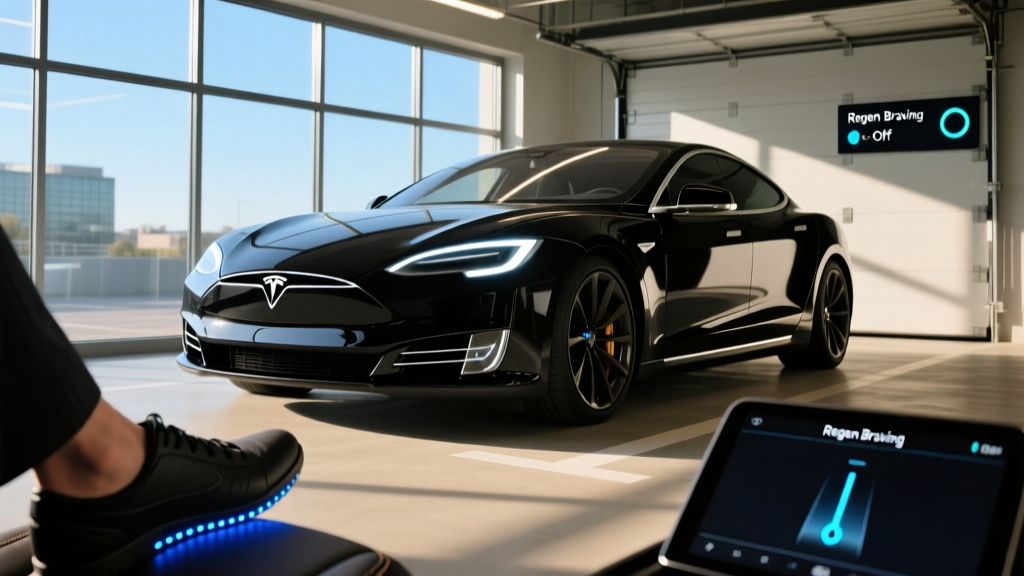
City and suburban driving is where the Taycan 4S shines efficiency-wise. Regenerative braking (up to 290 kW of recuperation in the most aggressive setting) recovers significant energy in stop-and-go traffic, and Porsche's coasting mode — which decouples the motors entirely — preserves momentum on open roads better than aggressive one-pedal driving at moderate speeds.
According to fueleconomy.gov, the 2026 Taycan 4S with the Performance Battery Plus achieves 83 MPGe combined, translating to 40 kWh per 100 miles. That's competitive with the Audi e-tron GT and slightly less efficient than a Tesla Model S, which benefits from lower curb weight and a more aerodynamic drag coefficient.
Charging Speed: 800-Volt Architecture Pays Off
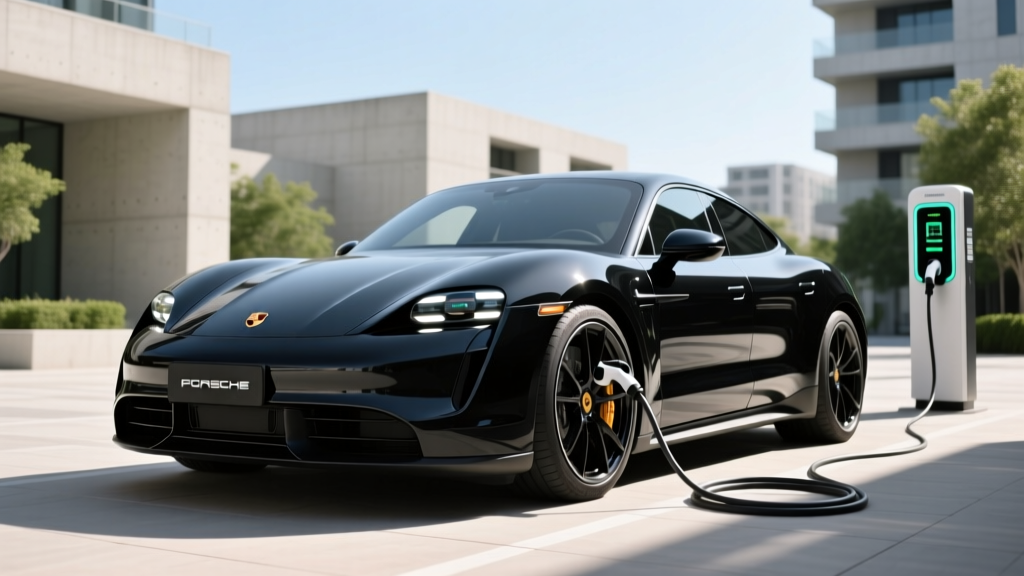
Porsche's 800-volt platform remains one of the most consequential advantages in the EV market. While most competitors run 400V systems that peak between 150–250 kW, the Taycan 4S can accept up to 320 kW at a compatible DC fast charger — and critically, it sustains high charge rates longer than most rivals thanks to aggressive thermal management.
| Charging Level | Power (kW) | Speed / Notes |
|---|---|---|
| Level 1 (120V household) | ~1.4 kW | ~3–4 miles per hour |
| Level 2 (240V home, 48A) | 11 kW | ~30 miles per hour; full charge in ~9.5 hours |
| DC Fast Charge (800V station) | Up to 320 kW | 10–80% in ~18 min; adds ~100 mi in ~10 min |
| DC Fast Charge (400V station w/ adapter) | Up to 150 kW | 10–80% in ~33 min |
The charge curve is where Porsche earns its engineering reputation. The Taycan 4S can sustain above 250 kW from roughly 10% to 45% SoC before tapering, then holds above 150 kW through 70%. Above 80%, charging slows considerably to protect cell longevity — this is standard behavior for NMC chemistry and every EV buyer should plan trips around 10–80% charging windows rather than topping to 100%.
At home on a Level 2 wall connector (240V, 48-amp circuit), the 11 kW onboard charger replenishes roughly 30 miles of range per hour, meaning a full charge from near-empty takes about 9–10 hours. For daily use, most owners will charge from 20–80% overnight, which takes roughly 5–6 hours and keeps the battery in its optimal state-of-charge window.
One practical note: to access the full 320 kW rate, you need a charger capable of delivering 800V at that power level. Electrify America, Ionity (Europe), and select newer networks support this, but many older 150 kW stations will bottleneck the Taycan's capability. Porsche includes three years of complimentary charging on the Electrify America network (with session limits), which helps offset public charging costs during the ownership honeymoon period.
Performance: Taycan 4S 0-60 and Beyond
The number most enthusiasts search for — the Taycan 4S 0-60 time — comes in at a manufacturer-claimed 3.5 seconds with Launch Control engaged. Independent testing by outlets like Car and Driver and Motor Trend has recorded times between 3.5 and 3.8 seconds, with variance driven by tire temperature, surface grip, battery state of charge (launch performance is optimal above 80% SoC), and ambient conditions.
With 590 horsepower and 524 lb-ft of torque available in overboost mode (standard driving produces roughly 482 hp), the 4S hits with immediate, relentless thrust. The two-speed transmission on the rear axle is a differentiator: first gear multiplies torque for explosive launches, while second gear enables relaxed, efficient highway cruising. You feel the shift as a subtle tug at around 45 mph — it's a uniquely mechanical sensation in an otherwise silent powertrain.
Beyond acceleration, the 4S's dual-motor AWD system provides torque vectoring that makes the car feel smaller than its 4,900-pound curb weight suggests. The standard Porsche Active Suspension Management (PASM) air suspension adapts damping in real time, and the optional rear-axle steering (a $1,800 add-on) dramatically tightens the turning radius for city maneuvering. Braking from 70 mph typically stops in 155–160 feet, aided by the standard 6-piston front calipers and aggressive regen blending.
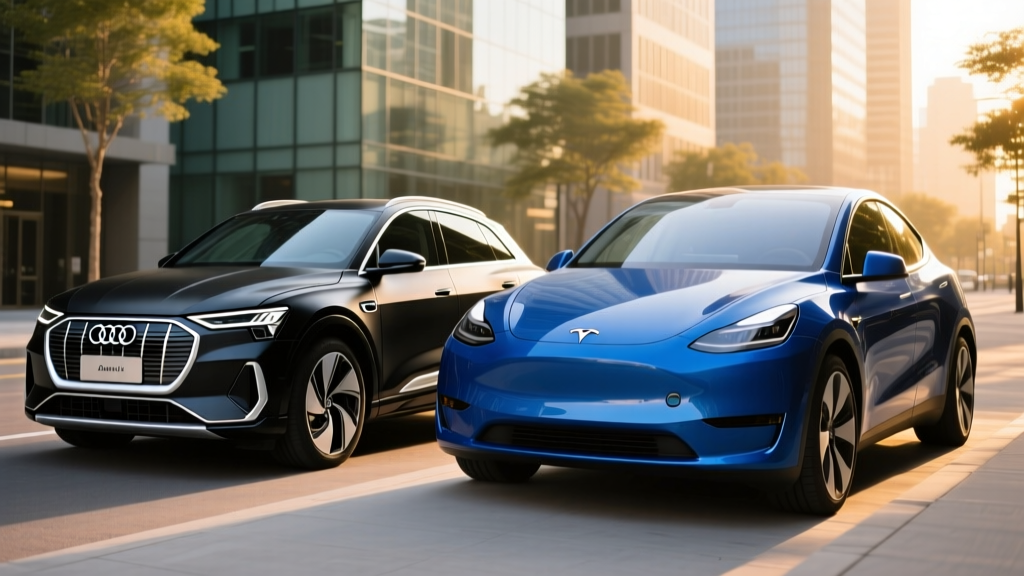
For context against competitors: the Audi RS e-tron GT (which shares the J1 platform) hits 60 in ~3.1 seconds with 637 hp, while the Tesla Model S Long Range does it in ~3.1 seconds with 670 hp. The Taycan 4S concedes a few tenths to both but delivers a driving experience — steering feel, chassis communication, ride compliance — that neither can match on a winding road.
Pricing, Trims, and Federal Tax Credit Reality
The 2026 Porsche Taycan 4S sedan starts at $106,550 (including destination). The Cross Turismo wagon variant (with slightly more cargo room and standard all-terrain mode) starts at $112,350. A well-equipped 4S with the Premium Package, Performance Battery Plus, rear-axle steering, and Adaptive Sport Seats Plus will land in the $118,000–$125,000 range before incentives.
Some buyers explore the used-EV credit (§25E), which offers up to $4,000 for pre-owned EVs priced under $25,000 — but a secondhand Taycan 4S will not meet that price threshold for several more years. Leasing, however, can sometimes pass through the commercial EV credit (§45W) as a lease incentive from the financing entity, depending on the lessor. This is a gray area worth discussing with your Porsche dealer's finance department and your tax advisor.
| Configuration | MSRP | $7,500 Fed Credit? |
|---|---|---|
| 4S Sedan (Performance Battery) | $106,550 | No (MSRP exceeds $55K cap) |
| 4S Sedan (Performance Battery Plus) | $113,750 | No |
| 4S Cross Turismo (PB+) | $119,550 | No |
| Typical as-tested (loaded 4S sedan) | $118,000–$125,000 | No |
Interior, Cargo, and Daily Livability
The Taycan's cabin is undeniably premium — leather, aluminum, and available carbon fiber trim throughout — but it prioritizes form over function in ways buyers should understand before signing.
Passenger space: Front-seat comfort is excellent, with available 18-way Adaptive Sport Seats Plus providing superb long-distance support. Rear legroom, at 32.7 inches, is tight for adults over six feet, particularly with the panoramic roof (which eats 0.5 inches of headroom). The transmission tunnel hump (a legacy of the J1 platform's packaging) limits the middle rear seat to short trips.
Cargo: The rear trunk offers 14.3 cubic feet — adequate for two large suitcases or a week's groceries — while the front trunk (frunk) adds 2.9 cubic feet, enough for a charging cable bag and a small duffel. Total cargo capacity trails the Tesla Model S (28 cu ft rear) and even the Audi e-tron GT (which manages slightly more rear volume). The Cross Turismo wagon bumps rear cargo to 15.7 cu ft with a more usable hatchback opening.
Infotainment: The 12.6-inch curved driver display, 10.9-inch central touchscreen, and available 10.9-inch passenger screen run Porsche Communication Management (PCM) 7.0. Wireless Apple CarPlay and Android Auto are standard. The system is responsive, but the touch-sensitive climate controls on the lower screen draw consistent criticism for being fiddly while driving — physical knobs would be a welcome return.
Driver assistance: Porsche InnoDrive (adaptive cruise with predictive speed adjustment based on navigation data and road-sign recognition) is a $3,200 option and works well on highways. Lane-keeping assist, automatic emergency braking, and surround-view camera are standard. However, Porsche's Level 2 driver-assist suite is noticeably less ambitious than Tesla's Autopilot or GM's Super Cruise — it does not offer hands-free driving on mapped highways, and the lane-centering can feel tentative on faded lane markings. This is SAE Level 2, requiring full driver attention at all times.
Ownership Costs, Warranty, and Longevity
Porsche provides a 4-year / 50,000-mile limited vehicle warranty and an 8-year / 100,000-mile battery warranty that guarantees the 97 kWh NMC pack will retain at least 70% of its original capacity. This is industry-standard and matches BMW, Mercedes, and Audi, though it falls short of Hyundai/Kia's 10-year/100,000-mile coverage.
NMC chemistry in the Taycan has demonstrated strong longevity in early data. Porsche's conservative buffer management (the car reserves roughly 5–6 kWh at the bottom of the pack that is never accessible to the driver) protects against deep-discharge degradation. Real-world degradation data from 2020–2023 Taycan owners shows an average of 3–5% capacity loss over the first 60,000 miles, which is favorable for NMC.
Insurance costs are a reality check: the Taycan 4S typically costs $3,200–$4,500 per year to insure (depending on state, driver profile, and coverage), placing it in the same tier as the Model S and RS e-tron GT. Always pull a personalized quote before committing.
Maintenance is lighter than a gas-powered Panamera — no oil changes, fewer brake pad replacements thanks to heavy regen use — but Porsche's labor rates and parts pricing are premium-brand. Budget $800–$1,200 annually for tire rotation, cabin air filters, brake fluid checks, and the inevitable set of replacement tires (the standard Michelin Pilot Sport EV or Pirelli P Zero Elect run $350–$500 per corner and last 20,000–30,000 miles under spirited driving).
Pros, Cons, and Who Should Buy
- Taycan 4S 0-60 in 3.5 sec with repeatable launch performance
- 800V architecture: 320 kW peak, 10–80% in ~18 min
- Best-in-class ride quality and steering feel
- 277 mi EPA range (PB+) is viable for road trips
- Premium build quality, quiet cabin, strong resale value
- No federal $7,500 tax credit (MSRP above $55K cap)
- Rear seat and cargo space trail Model S and e-tron GT
- Touch-sensitive climate controls frustrate while driving
- Driver-assist suite less capable than Tesla/GM rivals
- High insurance and tire replacement costs
Who the Taycan 4S suits best: Driving enthusiasts who prioritize dynamics, build quality, and charging speed over maximum range or interior space. It's an outstanding daily driver for commuters with home Level 2 charging, a capable (if not class-leading) road-trip EV thanks to 800V fast charging, and a credible alternative to the Panamera for buyers ready to go electric. It is not the right choice for families needing spacious rear seats, buyers dependent on the federal tax credit, or those who want the most advanced hands-free driving tech.
Frequently Asked Questions
What is the real-world range of the Taycan 4S?
Expect 230–255 miles on the highway, 260–275 miles in mixed city driving, and 190–220 miles in freezing weather. The 277-mile EPA figure applies to the Performance Battery Plus pack under optimal conditions.
How fast does the Taycan 4S charge?
On an 800V DC fast charger, it peaks at 320 kW and charges from 10–80% in approximately 18 minutes. At home on Level 2 (240V, 11 kW), expect roughly 30 miles of range per hour, or a full charge in about 9.5 hours.
Does the Taycan 4S qualify for the federal EV tax credit?
No. The §30D new-vehicle credit has an MSRP cap of $55,000 for sedans, and the Taycan 4S starts at $106,550. Income limits and battery-sourcing rules add further restrictions for eligible vehicles. Consult irs.gov for current rules.
Is the Taycan 4S worth buying over the Tesla Model S or Audi RS e-tron GT?
Choose the Taycan 4S if driving dynamics, build quality, and 800V charging speed are your priorities. Choose the Model S if you need more range (402 mi EPA), more cargo space, and access to the Supercharger network natively. Choose the RS e-tron GT if you want similar platform dynamics with slightly more power and a different design language, but less range.
What battery does the Taycan 4S use, and how long will it last?
The Performance Battery Plus pack is a 97 kWh (usable) NMC lithium-ion battery. Porsche's 8-year/100,000-mile warranty guarantees at least 70% capacity retention. Early real-world data suggests 3–5% degradation over 60,000 miles, indicating strong long-term durability.
Is Porsche InnoDrive self-driving?
No. InnoDrive is an SAE Level 2 driver-assist system combining adaptive cruise control with predictive speed adjustment. The driver must keep hands on the wheel and remain fully engaged at all times. It does not offer hands-free capability like GM's Super Cruise.