Quick Verdict: Does the Cybertruck Deliver on Its Torque Promises?
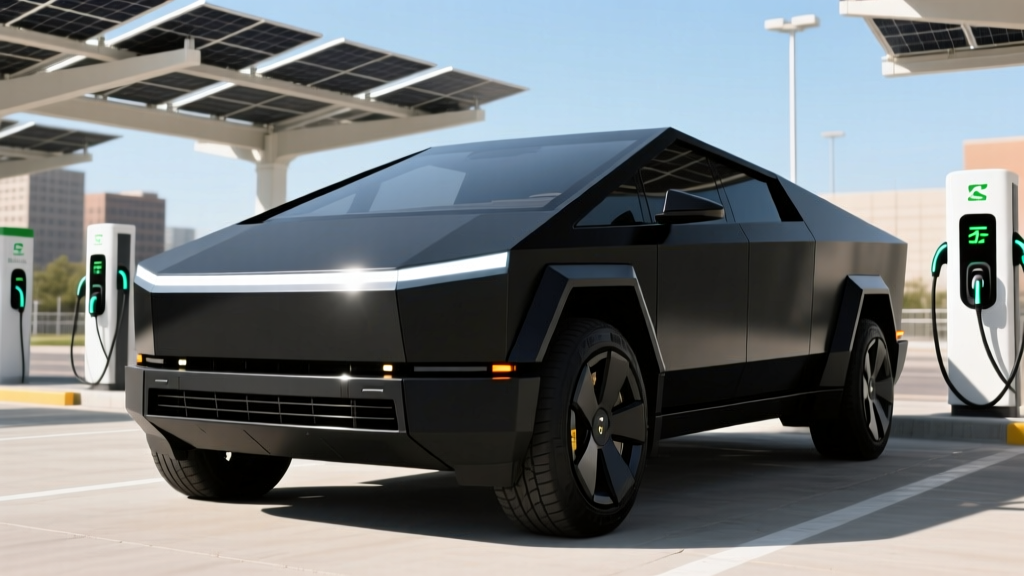
The Tesla Cybertruck remains one of the most polarizing electric vehicles on the road, but when it comes to raw Cybertruck torque output, the numbers speak for themselves. The dual-motor AWD trim generates an estimated 487 lb-ft of torque at the wheels, while the tri-motor Cyberbeast pushes that figure to a staggering 740+ lb-ft. These figures translate directly into acceleration that defies the truck's 6,800-pound curb weight — the Cyberbeast hits 60 mph in 2.6 seconds, rivaling supercars at a fraction of the price.
But torque alone doesn't make a practical truck. This review covers everything a prospective buyer needs: real-world range expectations, charging infrastructure reality, tax credit eligibility under current IRS §30D rules, and how the Cybertruck stacks up against the Ford F-150 Lightning and Rivian R1T in day-to-day ownership.
Cybertruck Torque, Horsepower, and Performance by Trim
Tesla offers the Cybertruck in three primary configurations for the 2026 model year. The torque and power output varies significantly across trims, which directly affects towing capability, off-road performance, and highway passing confidence.
| Specification | RWD (Base) | AWD (Dual-Motor) | Cyberbeast (Tri-Motor) |
|---|---|---|---|
| Horsepower | ~315 hp | ~600 hp | ~845 hp |
| Torque (lb-ft) | ~430 | ~487 | ~740+ |
| 0-60 mph | ~6.5 sec | ~3.9 sec | ~2.6 sec |
| Drivetrain | Rear-Wheel Drive | Dual-Motor AWD | Tri-Motor AWD |
| Towing Capacity | 7,500 lbs | 11,000 lbs | 11,000 lbs |
| Payload Capacity | 2,500 lbs | 2,500 lbs | 2,500 lbs |
| Base MSRP | $60,990 | $79,990 | $99,990 |
The Cyberbeast's tri-motor layout uses two rear motors and one front motor with torque vectoring across the rear axle. This isn't just a straight-line party trick — the independent rear motors allow the truck to distribute torque side-to-side during cornering, improving stability when the bed is loaded or when navigating loose terrain. Tesla calls this "torque steering" compensation, and in practice, it reduces the wandering feel common in heavy pickups under hard acceleration.
For context, the Ford F-150 Lightning Extended Range produces 563 lb-ft of torque and 580 hp, while the Rivian R1T Dual-Motor generates 610 lb-ft and 533 hp. The Cyberbeast exceeds both by a wide margin, though the practical advantage narrows when towing — where sustained torque delivery and thermal management matter more than peak output.
Range, Battery, and Real-World Efficiency
The Cybertruck uses a 4680-format battery pack with a structural battery architecture, meaning the cells themselves form part of the vehicle's chassis rigidity. Tesla has not officially published the exact usable kWh for all trims, but teardown analyses and EPA filings suggest approximately 123 kWh of usable capacity in the AWD and Cyberbeast trims, using high-nickel NMC chemistry (not LFP).
| Trim | EPA Est. Range | Real-World Highway (~70 mph) | Cold Weather (Below 32°F) |
|---|---|---|---|
| RWD | ~250 mi | ~210-225 mi | ~175-200 mi |
| AWD | ~340 mi | ~280-300 mi | ~220-250 mi |
| Cyberbeast | ~320 mi | ~260-280 mi | ~210-240 mi |
Source: fueleconomy.gov (EPA) and real-world highway testing. Cold-weather estimates assume no preconditioning. Highway range drops 10-15% at sustained 70+ mph; cold weather can reduce range 20-30% due to battery resistance and cabin heating demand.
The Cybertruck's angular stainless-steel body is not aerodynamic by any conventional measure. Its drag coefficient is estimated at approximately 0.38-0.39 Cd — significantly worse than the Tesla Model Y (0.23 Cd) and worse than the F-150 Lightning (~0.43 Cd, though the Lightning compensates with a larger available battery). This aero penalty is the primary reason the Cybertruck's real-world highway range falls short of its EPA sticker more than most EVs.
Efficiency figures from the EPA list the AWD Cybertruck at approximately 67 MPGe combined, translating to roughly 50 kWh per 100 miles. That's thirsty by EV standards — for comparison, the Model Y Long Range achieves 122 MPGe combined (28 kWh/100mi). If you're charging at home at $0.14/kWh, you're spending about $7.00 per 100 miles in the Cybertruck AWD versus $3.92 in the Model Y. Over 15,000 miles annually, that's roughly $1,050 versus $588 in electricity costs.
Charging Speed: DC Fast Charge and Home Level 2
Charging speed is where the 4680 cell architecture was supposed to shine. The reality is more nuanced. Here's what the Cybertruck actually delivers at the plug:
| Charging Level | Max Rate | Speed / Notes |
|---|---|---|
| Level 1 (120V) | ~1.4 kW | ~3-4 miles per hour — emergency/trickle only |
| Level 2 (240V, 48A) | ~11.5 kW | ~30-34 miles per hour — full charge in ~11-12 hours |
| DC Fast Charge (CCS/NACS) | Peak ~250 kW | 10-80% in ~25-30 min (see charge curve note) |
| Tesla Supercharger V4 | Peak ~250 kW | 10-80% in ~25 min; V4 stalls with integrated CCS adapter |
Charge curve reality check: The Cybertruck peaks near 250 kW only in a narrow state-of-charge window (roughly 10-25% SoC at optimal battery temperature). Beyond 40% SoC, the rate tapers to ~150 kW, and above 70% it drops to under 80 kW. This means the advertised "250 kW" is a peak, not a sustained rate. On a real road trip, plan for 30-35 minute stops for a 10-80% charge — not the 15 minutes that peak-rate marketing might imply.
Home Level 2 charging at 48 amps (11.5 kW) will add roughly 30-34 miles of range per hour. Starting from 20% and charging overnight for 8 hours gets you to approximately 75-80% — sufficient for most daily driving. The Tesla Wall Connector is the recommended home unit and costs approximately $425 for the hardware, with professional installation running $500-$2,000 depending on your electrical panel's capacity and distance to the parking location.
Pricing, Trim Levels, and Federal Tax Credit Eligibility
The Cybertruck's pricing has been a moving target since its 2023 reveal. Here are the 2026 model-year MSRPs and how the federal tax credit applies:
| Trim | Base MSRP | As-Tested (Typical Config) | §30D Credit Eligible? | Effective Price (if eligible) |
|---|---|---|---|---|
| RWD (Base) | $60,990 | $62,500 | Partial — subject to sourcing rules | ~$53,490 (est. with $7,500) |
| AWD | $79,990 | $84,000 | Partial — subject to sourcing rules | ~$72,490 (est. with $7,500) |
| Cyberbeast | $99,990 | $104,000 | No — exceeds $80,000 truck MSRP cap | $99,990+ |
Critical tax credit caveats: Under current IRS §30D rules, the Cybertruck qualifies as a truck (GVWR over 6,000 lbs), which raises the MSRP cap to $80,000 (versus $55,000 for sedans). This means the RWD and AWD trims are below the MSRP cap, but the Cyberbeast at $99,990 is disqualified. Additionally:
- Income caps: Modified AGI must not exceed $300,000 (joint filers), $225,000 (head of household), or $150,000 (individual).
- Battery sourcing: The credit splits into two halves — $3,750 for critical minerals and $3,750 for battery component sourcing from the US or FTA partners. Tesla's 4680 cells are manufactured in Texas, but critical mineral sourcing compliance varies by production batch. Verify current eligibility on fueleconomy.gov before purchasing.
- Point-of-sale transfer: As of 2024, eligible buyers can transfer the credit to the dealer at purchase, reducing the out-of-pocket price immediately rather than waiting for tax filing.
Interior, Cargo, and Practicality
The Cybertruck seats five across two rows, though the rear seat is best suited for two adults rather than three. Front legroom measures approximately 41.4 inches, while rear legroom comes in at roughly 38.0 inches — competitive with midsize pickups but notably less than a full-size F-150 SuperCrew.
Cargo dimensions:
- Bed length: 6 feet (72 inches) with the tailgate up; extends to ~8 feet with the powered "vault" tonneau cover retracted and tailgate down
- Bed width (between wheel wells): ~49 inches — will not fit standard 4×8 plywood flat on the floor between the wells
- Bed volume: ~67 cubic feet (tailgate up)
- Frunk: ~7.1 cubic feet — lockable, useful for charging cables and small gear
- Under-bed storage: Additional sealed compartment behind the rear axle
The powered stainless-steel tonneau cover (Tesla calls it the "vault") is standard and retracts electrically, but it limits bed height for tall items. If you regularly haul furniture or pallets, the 49-inch wheel-well width and vault constraint are genuine limitations compared to a conventional open-bed truck.
Driver Assistance, Tech, and Warranty
The Cybertruck comes standard with Tesla's Autopilot, which includes Traffic-Aware Cruise Control and Autosteer. Full Self-Driving (FSD) Supervised is available as an $8,000 add-on or $99/month subscription.
Both Autopilot and FSD Supervised are SAE Level 2 driver-assistance systems. The driver must remain fully engaged — hands on the wheel (or providing torque input in the Cybertruck's steer-by-wire system), eyes on the road, and ready to take over instantly. This is not autonomous driving. Only Level 4 services like Waymo operate without a human driver, and those are limited to geofenced urban areas.
The Cybertruck uses a steer-by-wire system with no mechanical connection between the yoke and the wheels. This allows variable steering ratios (as little as 340° lock-to-lock at low speeds, reducing to even less at highway speeds), but it requires an adaptation period and has drawn criticism from drivers who prefer traditional feedback. The yoke is standard; a round steering wheel is available as a no-cost option.
Infotainment: An 18.5-inch front touchscreen and a 9.4-inch rear touchscreen handle all vehicle controls, navigation, and media. There are no physical buttons for climate, volume, or mirrors — everything is screen-based or voice-controlled. The system runs Tesla's proprietary OS with integrated navigation that factors in Supercharger stops and battery preconditioning.
Warranty coverage:
| Coverage | Term |
|---|---|
| Basic Vehicle | 4 years / 50,000 miles |
| Battery & Drive Unit | 8 years / 120,000 miles (min 70% capacity retention) |
| Roadside Assistance | 4 years / 50,000 miles |
The 8-year/120,000-mile battery warranty guarantees at least 70% capacity retention. If the pack degrades below that threshold within the warranty period, Tesla will repair or replace it. For a 340-mile EPA truck, 70% retention means approximately 238 miles of usable range at the warranty boundary — still functional for most daily use.
Cybertruck vs. F-150 Lightning vs. Rivian R1T
- Highest torque and fastest 0-60 in the segment (Cyberbeast)
- Stainless-steel exoskeleton is dent- and corrosion-resistant
- Steer-by-wire offers uniquely tight low-speed maneuvering
- Access to Tesla Supercharger network (most reliable DC network)
- Standard powered tonneau cover (vault)
- Poor aerodynamics reduce real-world highway range significantly
- Bed width (49" between wells) can't fit standard plywood flat
- Steer-by-wire and yoke require adaptation; not for everyone
- No Apple CarPlay or Android Auto
- Cyberbeast excluded from §30D credit due to MSRP cap
- Service center wait times remain long in many markets
- You want maximum torque and acceleration in a pickup and prioritize performance over efficiency
- You have reliable home charging and mostly drive under 250 miles between charges
- You value the Supercharger network for road trips
- You accept the yoke/steer-by-wire interface after a test drive
- You need a conventional truck experience with a full-width bed and Pro Power Onboard
- You want a proven dealership service network nationwide
- You prioritize off-road capability (quad-motor tank turns, adjustable air suspension)
- You want a more refined interior with physical controls and available CarPlay
Frequently Asked Questions
What is the real-world range of the Cybertruck?
The AWD Cybertruck carries an EPA rating of approximately 340 miles, but real-world highway driving at 70 mph typically yields 280-300 miles. In cold weather (below freezing), expect 220-250 miles without preconditioning. The Cyberbeast drops to roughly 260-280 miles highway. These shortfalls are primarily due to the truck's poor aerodynamics and heavy curb weight (~6,800 lbs).
How fast does the Cybertruck charge at home and on the road?
At home on a Level 2 (240V, 48A) charger, the Cybertruck adds approximately 30-34 miles of range per hour, fully recharging overnight in 11-12 hours. On DC fast charging, it peaks at ~250 kW but tapers significantly — expect 10-80% in 25-30 minutes at a Supercharger V3/V4 or comparable CCS station. Sustained average rate is closer to 130-150 kW over a full 10-80% session.
Does the Cybertruck qualify for the $7,500 federal EV tax credit?
The RWD ($60,990) and AWD ($79,990) trims fall under the $80,000 MSRP cap for trucks and are potentially eligible for up to $7,500 under IRS §30D, provided the buyer meets income limits ($300K joint / $150K individual) and the specific vehicle's battery meets critical-mineral and component sourcing requirements. The Cyberbeast ($99,990) exceeds the MSRP cap and is not eligible. Always verify on fueleconomy.gov and consult a tax professional before relying on the credit.
How much Cybertruck torque do you actually feel in daily driving?
The AWD's 487 lb-ft of torque is immediately accessible from 0 RPM — no turbo spool, no transmission kickdown. Merging onto highways and passing at speed feels effortless even with payload in the bed. The Cyberbeast's 740+ lb-ft is genuinely excessive for street use; it's most noticeable from stoplight launches and during heavy-load towing where the tri-motor setup maintains torque delivery without the thermal derating that single-motor setups experience under sustained load.
Is the Cybertruck worth buying over the F-150 Lightning or Rivian R1T?
It depends on your priorities. The Cybertruck wins on raw performance metrics (torque, 0-60, Supercharger access) and has a unique, durable exterior. The F-150 Lightning wins on conventional truck practicality, bed size, service network, and lower starting price. The R1T wins on off-road capability, interior quality, and adventure-oriented features. Test-drive all three — the Cybertruck's steer-by-wire and yoke are deal-breakers for some buyers and a revelation for others.
What is the Cybertruck's battery chemistry and expected longevity?
The Cybertruck uses Tesla's 4680-format cells with high-nickel NMC (nickel manganese cobalt) chemistry, manufactured at Giga Texas. NMC offers higher energy density than LFP but is more sensitive to sustained high state-of-charge. For maximum longevity, Tesla recommends daily charging to 80-90% and only charging to 100% when needed for long trips. Based on current 4680 degradation data from early production vehicles, most owners can expect 85-90% capacity retention at 100,000 miles — well within the 8-year/120,000-mile warranty threshold of 70%.