The Cybertruck in Law Enforcement: Beyond the Headlines
Searches for cybertruck police deployments spiked after several U.S. police departments received donated Cybertrucks wrapped in full law-enforcement livery. But viral marketing and actual fleet procurement are very different things. For fleet managers, municipal budget analysts, and EV-curious taxpayers, the real question isn't whether a Cybertruck looks imposing in a parade — it's whether it can handle a shift.
This profile evaluates the 2026 Tesla Cybertruck AWD (the variant most relevant to fleet consideration) through a practical lens: range under load, DC fast-charge behavior, real-world efficiency, cargo configuration for equipment, total acquisition cost, and federal tax-credit mechanics under IRS §30D. We'll also compare it head-to-head against the Ford F-150 Lightning, the electric pickup that several departments have actually placed in active service.
| Spec | Value |
|---|---|
| EPA Range | 340 miles (with range extender battery option) |
| Battery Capacity | ~123 kWh usable (NMC chemistry, 4680 cells) |
| Drivetrain | Dual-motor AWD |
| Horsepower | 600 hp |
| 0–60 mph | 3.9 seconds |
| Max DC Fast Charge | 250 kW peak (V4 Supercharger) |
| 10–80% DC Charge | ~28 minutes |
| Level 2 Home Charging | 11.5 kW / ~37 miles per hour |
| Towing Capacity | 7,500 lbs |
| Payload | 2,500 lbs |
| MPGe (Combined) | 79 MPGe |
| Efficiency | 43 kWh/100 mi |
| Base MSRP (AWD) | $79,990 |
| Battery Warranty | 8 years / 120,000 miles |
Range Reality: What the EPA Sticker Doesn't Tell You
The Cybertruck AWD carries an EPA-estimated 340 miles when equipped with Tesla's optional range-extender battery pack that occupies roughly one-third of the bed. Without it, the standard dual-motor configuration rates at approximately 318 miles EPA. These are headline-grabbing numbers, but patrol work rarely mirrors the EPA test cycle.
EPA sticker: 340 mi (w/ range extender) / 318 mi (standard)
- City patrol, stop-and-go: ~270–290 mi — regen braking recovers energy at low speeds
- Highway response / rural coverage at 70+ mph: ~220–250 mi — the Cybertruck's 6,600+ lb curb weight and slab-sided aerodynamics punish efficiency at speed
- Cold climate (below 32°F) with HVAC: ~190–230 mi — expect 25–35% range loss; the stainless-steel exoskeleton provides no insulation benefit
- With light bar, radio rack, and idle equipment draw: Subtract an additional 5–10% depending on upfit
For an 8-hour patrol shift averaging 80–120 miles, even cold-weather range covers a single shift comfortably. But multi-shift operations, rural jurisdictions, or pursuit scenarios demand careful route and charging planning. The Cybertruck's 43 kWh/100 mi efficiency is significantly worse than a fleet sedan like the Tesla Model 3 (25 kWh/100 mi) — meaning higher electricity cost per mile driven.
Charging Speed and Fleet Infrastructure Requirements
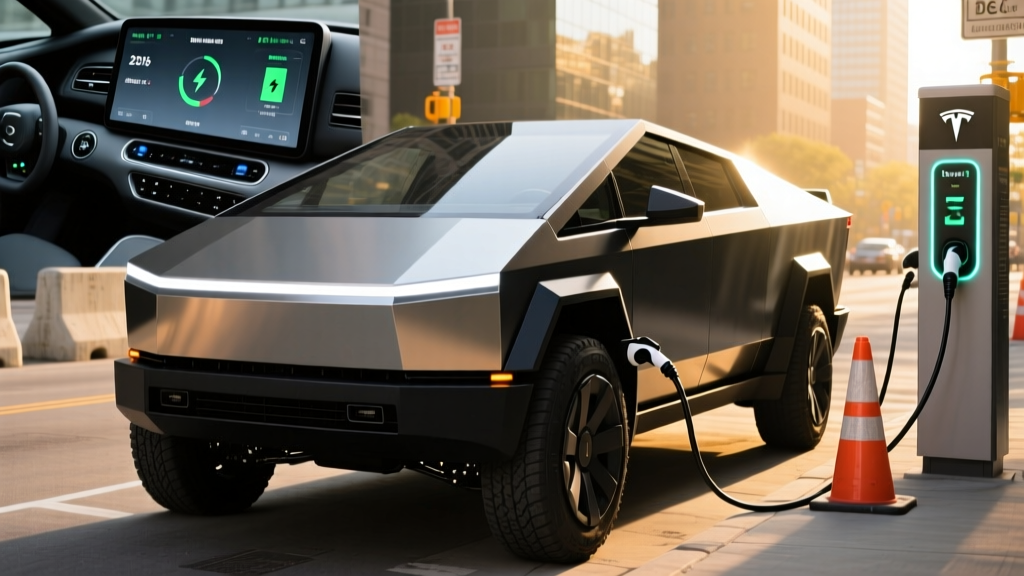
Charging downtime is the single biggest operational friction point for any EV police fleet. The Cybertruck supports up to 250 kW peak DC fast charging on Tesla V4 Superchargers (using the NACS connector). Tesla quotes roughly 28 minutes from 10% to 80% State of Charge under optimal battery-preconditioned conditions.
However, the charge curve tells the real story. The 4680 NMC cells sustain peak rates only through approximately 30–40% SoC, after which the rate tapers progressively. Charging from 80% to 100% can add another 25–30 minutes. For fleet ops, the practical rule is to charge to 80% and rotate vehicles rather than topping off.
| Charge Level | Power (kW) | Miles Added/Hour | Best For |
|---|---|---|---|
| Level 1 (120V standard outlet) | 1.2 kW | ~3 mi/hr | Emergency trickle only |
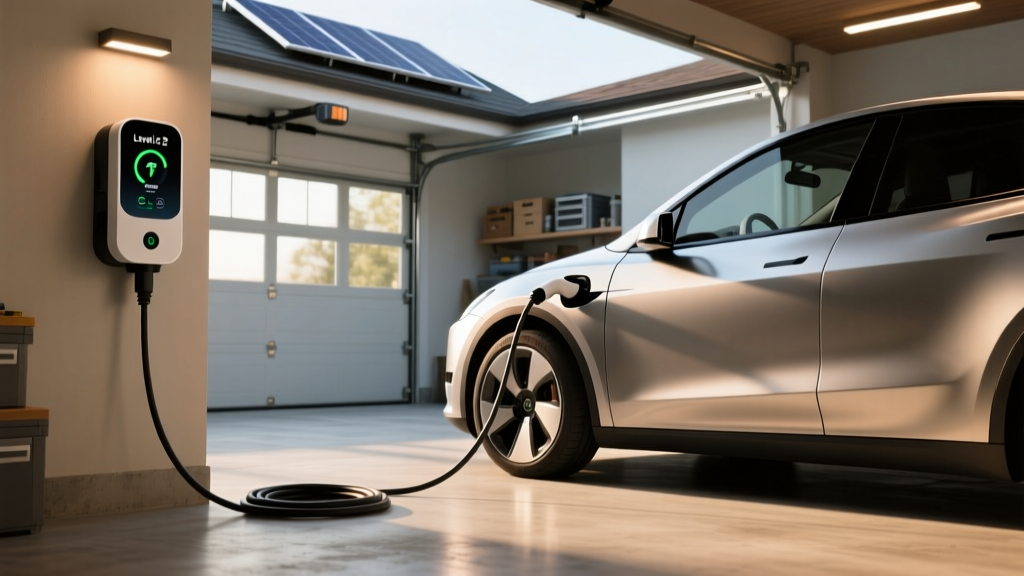
| Level 2 (240V, 48A Wall Connector) | 11.5 kW | ~37 mi/hr | Overnight depot charging |
| DC Fast (V4 Supercharger, peak) | 250 kW | ~540 mi/hr (peak) | Mid-shift top-up, 10–80% |
| DC Fast (CCS adapter, Electrify America) | ~150 kW (typical) | ~330 mi/hr | Non-Tesla network fallback |
For fleet depot charging, each Level 2 Wall Connector requires a dedicated 60A circuit. A 10-vehicle precinct installing five dual-port chargers should budget for electrical panel upgrades — many municipal garages built before 2010 lack the spare amperage. Expect installation costs of $2,000–$5,000 per charger including conduit runs, permitting, and load-management hardware.
Performance, Towing, and Patrol-Relevant Capability
The dual-motor AWD Cybertruck produces 600 horsepower and reaches 60 mph in 3.9 seconds — figures that exceed any traditional police interceptor currently in service. The instant torque delivery aids pursuit acceleration and merging onto highways under emergency conditions.
Towing capacity is rated at 7,500 lbs, sufficient for a boat, small trailer, or mobile command unit. Payload is 2,500 lbs. The 6.5-foot bed (with range extender; longer without) accommodates standard equipment racks, but the bed's angled tonneau cover and tapered geometry complicate some upfit configurations compared to a conventional full-size truck bed.
Off-road capability is genuine: 16 inches of ground clearance in Extract mode, adaptive air suspension, and approach/departure angles that handle unpaved rural roads and flood-prone areas. For jurisdictions covering rough terrain, this is a legitimate advantage over lowered pursuit sedans.
Tesla's Autopilot and Full Self-Driving (Supervised) are SAE Level 2 driver-assistance systems. The driver must remain fully engaged, hands on the wheel, eyes on the road. This is not autonomous driving. For law enforcement, FSD's stoplight recognition and lane-centering can reduce fatigue on highway transfers, but it does not replace an alert operator — and departmental policy must reflect the supervision requirement.
Pricing, Trim Levels, and Federal Tax Credit Eligibility
The Cybertruck is offered in three trims for 2026. Here's how they price out before and after potential incentives:
| Trim | Base MSRP | Federal §30D Credit | Effective Price | Eligible? |
|---|---|---|---|---|
| RWD (announced, late 2026) | $60,990 (est.) | Up to $7,500 | ~$53,490 | Yes (under $80K truck cap) |
| AWD | $79,990 | $0 | $79,990 | No — exceeds $80K MSRP cap for trucks |
| Cyberbeast | $99,990 | $0 | $99,990 | No — exceeds MSRP cap |
This is a critical detail that most coverage misses. Under IRS §30D rules, the MSRP cap for pickup trucks is $80,000. The AWD at $79,990 sits at the razor's edge, but adding any factory option (range extender, Foundation Series package, FSD license) pushes the effective MSRP past the cap, disqualifying the vehicle. The Cyberbeast trim at $99,990 is categorically ineligible.
Additionally, the buyer must meet income thresholds ($150K single / $300K joint AGI), and the vehicle's battery must satisfy critical-mineral and battery-component sourcing requirements that have tightened annually since 2024. Fleet purchases by government entities face additional restrictions — §30D is a personal income tax credit and cannot be claimed directly by a municipality. Some jurisdictions have used the commercial clean vehicle credit (§45W) instead, which has different rules.
- Vehicle MSRP must not exceed $80,000 (truck classification) — options count
- Buyer AGI: ≤$150K single, ≤$225K head of household, ≤$300K joint
- Battery critical minerals: ≥80% sourced from U.S. or FTA partners (2026 threshold)
- Battery components: 100% manufactured or assembled in North America (2026 threshold)
- Final assembly in North America (Cybertruck built in Austin, TX — meets requirement)
- Credit is non-refundable for personal tax; point-of-sale transfer available via registered dealer
- Government fleet entities: look to §45W commercial credit instead (up to $7,500 for vehicles <14,000 lbs GVWR)
Cargo, Interior, and Equipment Upfit Considerations
The Cybertruck seats five with a 60/40 split rear bench. Rear legroom measures approximately 38.4 inches — adequate for a partitioned prisoner transport configuration, though the sloping roofline limits headroom for taller detainees. The front trunk (frunk) provides ~7.1 cubic feet of lockable storage, useful for securing sensitive equipment like laptops, radar guns, or evidence.
The bed offers 67 cubic feet of volume with the tonneau closed. Tesla's integrated 120V and 240V bed outlets (up to 9.6 kW continuous output via Powershare) can run scene lighting, power tools, or mobile command electronics without a separate generator — a genuine operational advantage for disaster-response and community-event roles.
However, the stainless-steel exoskeleton resists traditional upfit modifications. Drilling into the body for light-bar mounts, antenna pass-throughs, or prisoner cage anchors requires specialized fabrication. Several aftermarket companies now offer no-drill clamp-based light-bar and rack systems designed specifically for the Cybertruck's geometry, but these add $2,000–$5,000 to fleet prep costs.
Cybertruck vs. F-150 Lightning: Which Electric Pickup Suits a Fleet?
| Attribute | Tesla Cybertruck AWD | Ford F-150 Lightning Lariat |
|---|---|---|
| EPA Range | 318 mi (340 w/ extender) | 320 mi (extended-range battery) |
| Battery | ~123 kWh NMC (4680) | ~131 kWh NMC |
| 0–60 mph | 3.9 sec | ~4.5 sec |
| Towing | 7,500 lbs | 10,000 lbs |
| Max DC Charge | 250 kW | 150 kW |
| 10–80% DC Time | ~28 min | ~41 min |
| Bed Length | 6.5 ft (w/ extender) | 5.5 ft |
| Pro Power Onboard | 9.6 kW (Powershare) | 9.6 kW (Pro Power) |
| Base MSRP (comparable trim) | $79,990 | ~$69,995 |
| §30D Credit Eligible? | Borderline (options can disqualify) | Yes (under $80K at Lariat) |
| Dealer/Service Network | Tesla service centers (limited) | Ford commercial fleet dealers (extensive) |
| Upfit Ecosystem | Emerging, limited | Mature, police-specific upfitters |
Cybertruck — 250 kW peak vs. Lightning's 150 kW means shorter mid-shift downtime.
F-150 Lightning — Ford's commercial fleet infrastructure, existing police upfitter partnerships (Whelen, Setina, Havis), and dealer-proximity advantage are decisive for departments that can't afford weeks of downtime waiting for proprietary Tesla parts.
F-150 Lightning — lower MSRP, confirmed §30D eligibility at Lariat trim, and established fleet-purchase programs reduce total procurement friction.
Tie — both offer 9.6 kW bidirectional output for running scene equipment without a generator.
Who Should Actually Put a Cybertruck in a Police Fleet?
The Cybertruck makes sense for a narrow set of law-enforcement use cases:
- Community relations / PR vehicles: The attention it generates at events, school visits, and recruitment drives is measurable. Several departments using donated Cybertrucks report increased social-media engagement and foot traffic at community events.
- Specialized units needing off-road EV access: Search-and-rescue, border patrol sectors with unpaved terrain, and park-ranger divisions benefit from the air suspension and ground clearance in a zero-tailpipe-emission platform.
- Disaster-response and mobile command: The 9.6 kW Powershare capability eliminates towed generators for short-duration scene lighting and communications relay.
It is not ideal as a primary patrol interceptor for most urban and suburban departments. The reasons are practical: higher acquisition cost vs. the Lightning, immature upfit ecosystem, limited Tesla service-center density for fleet-volume repairs, and §30D ineligibility at the AWD trim once options are added.
- Class-leading DC fast-charge speed (250 kW)
- 9.6 kW onboard power for scene equipment
- Exceptional acceleration (3.9 sec 0–60)
- Stainless-steel body resists minor dents and vandalism
- Adaptive air suspension with Extract mode for rough terrain
- Over-the-air updates add features without dealer visits
- AWD trim borderline-ineligible for §30D credit with options
- Upfit ecosystem is immature — few police-specific mounts available
- Tesla service centers lack fleet-volume capacity in most regions
- Poor efficiency (43 kWh/100 mi) raises per-mile electricity cost
- Stainless body complicates custom fabrication
- No traditional instrument cluster — 18.5" center screen only, problematic for dash-mounted fleet tech
- Real-world highway range drops significantly under 250 mi in cold weather
Frequently Asked Questions
What is the real-world range of the Cybertruck in police use?
Expect 220–290 miles depending on driving pattern. City patrol with frequent stops leverages regen braking for ~270–290 miles. Highway response at sustained speeds drops to 220–250 miles. Add a cold-climate penalty of 25–35% in winter, and subtract another 5–10% for idle equipment draw from light bars and radios. For a single 8-hour shift covering 80–120 miles, range is sufficient, but multi-shift rotations require mid-shift charging.
How fast does the Cybertruck charge on DC fast chargers and at a depot?
On a Tesla V4 Supercharger, the Cybertruck peaks at 250 kW and reaches 10–80% in approximately 28 minutes with a preconditioned battery. At a depot Level 2 Wall Connector (11.5 kW / 48A), expect roughly 37 miles of range added per hour — meaning a full overnight charge (8–10 hours) replenishes 300+ miles. CCS adapter charging on non-Tesla networks typically peaks around 150 kW, adding ~30% more time.
Does the Cybertruck qualify for the federal EV tax credit?
It depends on trim and options. The RWD (announced for late 2026 at ~$60,990) will likely qualify if buyer income and battery-sourcing requirements are met. The AWD at $79,990 sits at the $80K truck MSRP cap — adding any factory option (range extender, FSD) pushes it over, disqualifying the purchase. The Cyberbeast at $99,990 does not qualify. Municipalities cannot claim §30D directly but may explore the §45W commercial clean vehicle credit. Always verify current rules at IRS.gov and consult a tax professional.
Is the Cybertruck worth buying for a police fleet vs. the F-150 Lightning?
For most departments, the F-150 Lightning is the more pragmatic fleet choice: lower MSRP, confirmed tax-credit eligibility, a mature police-upfit ecosystem, and Ford's extensive commercial dealer and service network. The Cybertruck wins on DC charging speed and onboard power capability, but its higher cost, limited upfit options, and service-center constraints make it better suited as a specialty or community-relations vehicle rather than a primary patrol unit.
What are the biggest drawbacks of using a Cybertruck as a police vehicle?
The top concerns are: (1) immature aftermarket upfit ecosystem — few police-specific light bars, prisoner cages, and equipment mounts exist yet; (2) Tesla's service network is not built for fleet-volume turnaround; (3) the stainless-steel body resists drilling, complicating custom installations; (4) efficiency is poor for a fleet vehicle at 43 kWh/100 mi; and (5) the absence of a traditional instrument cluster forces all vehicle information through a single center touchscreen, which is suboptimal for dash-mounted fleet technology integration.
Can the Cybertruck power scene equipment without a generator?
Yes. Tesla's Powershare system provides up to 9.6 kW of continuous 120V/240V output from bed and cabin outlets. This is enough to run multiple scene lights, a PA system, radios, and laptop charging stations simultaneously for several hours without depleting the battery below a configurable reserve threshold. For disaster response and community events, this eliminates the need for a towed gasoline generator.
What is the Cybertruck's battery warranty?
Tesla covers the battery and drive unit for 8 years or 120,000 miles, whichever comes first, with a minimum 70% capacity retention threshold during the warranty period. For a fleet vehicle accumulating 20,000–30,000 miles annually, the warranty covers 4–6 years of typical patrol use. Beyond the warranty, Tesla does not publish official battery-replacement pricing; third-party estimates for the Cybertruck's ~123 kWh 4680 pack range from $15,000 to $25,000 depending on future cell-cost trajectories.