Quick Answer: Should You Buy the All Electric Jeep Wagoneer?
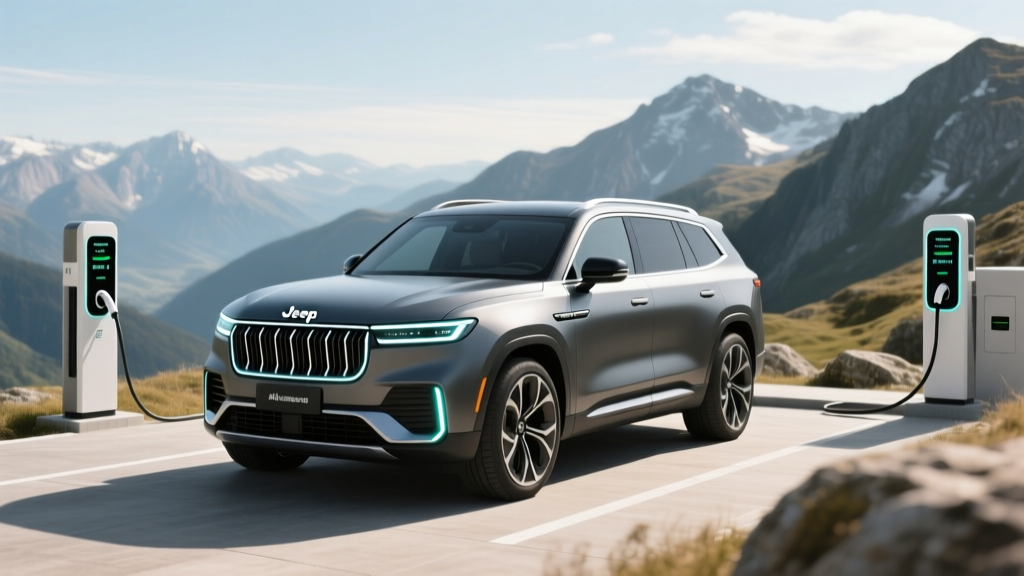
As of early 2026, the all electric Jeep Wagoneer (officially the Wagoneer S) is a 600-horsepower, dual-motor luxury SUV with an EPA-estimated range of 300 miles from a 100.5 kWh usable NMC battery. Pricing starts around $71,995 (Launch Edition) before incentives, undercutting the gas Wagoneer on fuel and maintenance but demanding home Level 2 charging and a premium upfront. Federal §30D tax-credit eligibility is not guaranteed — the vehicle exceeds the $80,000 SUV MSRP cap on higher trims and must satisfy critical-mineral and battery-component sourcing rules. If you have home charging, drive mostly in temperate climates, and want a fast, quiet three-row-class luxury EV, it's compelling. If you frequently tow, road-trip through charging deserts, or lack a 240V circuit, the gas Wagoneer or a plug-in hybrid remains more practical.
What the All Electric Jeep Wagoneer Actually Is
Stellantis positions the Wagoneer S as Jeep's first global battery-electric vehicle, built on the STLA Large platform. Despite the Wagoneer nameplate, it's sized closer to a midsize SUV than the body-on-frame gas Wagoneer — think Grand Cherokee footprint with a premium cabin. It launches with two dual-motor AWD trims:
- Launch Edition: 600 hp, 617 lb-ft torque, 0–60 mph in ~3.4 seconds, MSRP ~$71,995
- High-line trims (expected later 2026): similar powertrain, additional luxury packages, MSRP climbing toward $80,000+
There is no RWD base model at launch. Jeep quotes a 100.5 kWh usable battery pack (NMC chemistry, liquid-cooled) and a peak DC fast-charge rate that should accept up to ~200 kW, though sustained rates taper above 80% state of charge as with all NMC packs.
Range, Efficiency, and Real-World Expectations
The EPA rates the Wagoneer S Launch Edition at approximately 300 miles combined. Efficiency lands around 2.0–2.2 miles per kWh, or roughly 88–95 MPGe combined depending on wheel and equipment configuration.
Real-World Range Reality Check
EPA sticker: ~300 miles
Highway 75 mph, temperate: expect ~250–270 miles
Winter (20–30°F), highway: expect ~200–225 miles (NMC packs typically lose 20–30% in sustained cold)
Towing (when rated): expect ~150–175 miles depending on trailer weight
Preconditioning the battery via the Uconnect app before fast-charging or departure is essential — it warms the pack to optimal temperature, improving both regen capture and charge acceptance.
Charging Speed: Home and DC Fast Charging
Understanding the difference between kW (power, or charge rate) and kWh (energy, or battery capacity) is essential. The Wagoneer S's 100.5 kWh battery is the fuel tank; kW is how fast you fill it.
| Charging Level | Power (kW) | Miles Added per Hour | Typical Use Case |
|---|---|---|---|
| Level 1 (120V household) | ~1.4 kW | ~3–4 mi/hr | Emergency top-up only |
| Level 2 (240V home/public) | ~11–19 kW | ~25–45 mi/hr | Overnight home charging (ideal) |
| DC Fast Charge | Up to ~200 kW peak | ~100+ mi in 10 min (at peak) | Road trips; 10–80% in ~25–30 min |
On a 350 kW-capable Electrify America or Tesla Supercharger (with NACS adapter, once supported), expect the Wagoneer S to peak near 200 kW early in the charge session, then taper significantly after 80% SoC. A 10–80% charge typically takes 25–30 minutes under ideal thermal conditions. Plan road-trip stops accordingly — the last 20% of any NMC pack charges far slower than the first 60%.
Home charging reality: A 48-amp Level 2 home charger (such as a ChargePoint Home Flex or Emporia Level 2) on a 60-amp circuit delivers roughly 11.5 kW, replenishing ~25 miles of range per hour. An overnight session (10 hours) adds ~250 miles — enough for most daily needs. Installation costs vary widely: expect $800–$2,500 if your panel has capacity, or $2,500–$5,000+ if a 200-amp service upgrade is needed. Always consult a licensed electrician for final specs.
Cost Breakdown: Electric Wagoneer vs. Gas Wagoneer
The gas Wagoneer (5.7L V8 or 3.0L Hurricane I6) starts around $60,000 but climbs quickly with options. Here's how five-year costs compare for a similarly equipped luxury SUV driven 15,000 miles per year:
| Category | Wagoneer S (Electric) | Gas Wagoneer (AWD) |
|---|---|---|
| Base MSRP (approx.) | $71,995 | $65,000–$75,000 |
| Estimated §30D Federal Credit | $0–$7,500 (sourcing-dependent) | $0 |
| Fuel/Energy (5 yrs, 75k mi) | $4,500–$6,000 (home + public mix) | $12,000–$14,000 (@ $3.50/gal, 17 mpg) |
| Maintenance (5 yrs) | $1,200–$1,800 | $3,500–$5,000 |
| Insurance (5 yrs, est.) | $10,000–$13,000 | $8,500–$11,000 |
| Estimated 5-yr Depreciation | 50–55% | 45–50% |
| Est. 5-yr Total Cost | ~$80,000–$95,000 | ~$85,000–$100,000 |
Key takeaways: The electric Wagoneer saves substantially on fuel and maintenance but costs more to insure (EV premiums run 15–25% higher on average due to repair costs and parts pricing). Depreciation remains uncertain for the Wagoneer S specifically — early EV depreciation has been steep for luxury models, though Jeep's brand equity may help. The IRS §30D credit is far from guaranteed: the vehicle must meet critical-mineral and battery-component sourcing thresholds, and buyer income caps ($150K single / $300K joint AGI) apply. The Launch Edition's ~$72K MSRP falls under the $80,000 SUV cap, but higher trims may exceed it.
Common Misconceptions — Myth vs. Fact
| Myth | Fact |
|---|---|
| "It gets 300 miles no matter what." | 300 miles is the EPA combined estimate. Real-world highway driving in cold weather delivers 200–225 miles. Plan conservatively. |
| "I'll always get the $7,500 tax credit." | Eligibility depends on battery sourcing, your AGI, MSRP cap compliance, and point-of-sale transfer rules. Many EVs qualify for partial or no credit. Check fueleconomy.gov for current status. |
| "Public charging is everywhere now." | Urban and corridor coverage has improved, but rural and cross-country gaps persist. Home Level 2 charging is the backbone of EV ownership — without it, convenience drops significantly. |
| "The battery will need replacing in 5 years." | Modern NMC packs with liquid cooling typically retain 85–90% capacity after 100,000 miles. Stellantis provides an 8-year/100,000-mile battery warranty (70% capacity retention threshold). |
| "It can tow just like the gas Wagoneer." | The gas Wagoneer tows up to 10,000 lbs. The electric Wagoneer S has a significantly lower tow rating (expected ~3,500–5,000 lbs). Range while towing drops dramatically. |
Who Should Buy It — Decision Framework
Choose the All Electric Jeep Wagoneer S If:
- You have home Level 2 charging (or can install it for under $2,500)
- Your daily driving is under 80 miles round-trip, with occasional 200–250 mile road trips
- You live in a temperate or moderate climate (cold-weather range loss is real)
- You value instant torque, a quiet cabin, and low running costs over maximum towing capacity
- You don't regularly need three full-size rows of seating (the Wagoneer S is midsize, not full-size)
Stick With the Gas Wagoneer or Consider a PHEV If:
- You tow frequently (boats, trailers, campers over 3,500 lbs)
- You lack home charging access and rely on apartment or street parking
- You regularly drive 400+ miles in a day through areas with sparse DC fast-charging infrastructure
- You need true full-size three-row interior space (the body-on-frame gas Wagoneer is larger)
- You live in extreme cold (sustained sub-20°F winters) where range loss compounds daily inconvenience
First-Time EV Buyer Checklist
If the Wagoneer S would be your first electric vehicle, address these before signing:
- Verify home electrical capacity. A 200-amp panel with spare breaker slots handles most Level 2 installs. Older 100-amp panels may require a costly upgrade.
- Test your actual commute and errand mileage. Track a week of driving. If it's under 60 miles daily, even Level 1 (120V) charging can suffice — but Level 2 is strongly recommended.
- Download charging apps now. PlugShare, Electrify America, EVgo, and ChargePoint — map the DC fast chargers along your common routes before purchase.
- Confirm tax-credit eligibility with a tax professional. IRS rules change, and point-of-sale transfer requires dealer participation. Don't budget the $7,500 until it's confirmed for your specific VIN and income situation.
- Budget for insurance. Get quotes before purchase. EV insurance premiums can surprise first-time buyers — shop multiple carriers.
- Understand the charge curve. Peak kW is not sustained kW. A "200 kW" charger doesn't deliver 200 kW for the entire session. The middle 20–60% SoC window charges fastest; above 80% slows dramatically. This is physics, not a defect.
Frequently Asked Questions
Does the all electric Jeep Wagoneer qualify for the $7,500 federal tax credit?
It depends. The Wagoneer S Launch Edition at ~$72,000 falls under the $80,000 SUV MSRP cap, which is one requirement. However, the credit also hinges on battery-component and critical-mineral sourcing thresholds that change annually. Buyer income must not exceed $150,000 (single) or $300,000 (joint). Check the latest status on IRS.gov and confirm with the dealer before assuming eligibility.
What is the real-world range of the Wagoneer S on a road trip?
On a 75 mph highway drive in 65–75°F weather, expect roughly 250–270 miles before needing to charge. In winter conditions (20–30°F), that drops to 200–225 miles. Plan charging stops at 200-mile intervals to maintain a comfort buffer — running an NMC pack to near zero regularly accelerates degradation.
How long does it take to charge the Wagoneer S at home?
From near-empty to full on a 48-amp Level 2 home charger (~11.5 kW), expect roughly 9–10 hours. Most owners charge from 20–80% overnight, which takes about 5–6 hours and is healthier for long-term battery longevity than frequent 100% charges.
Is the Wagoneer S a three-row SUV like the gas Wagoneer?
No. The Wagoneer S is a midsize two-row SUV, closer in dimensions to the Grand Cherokee. The full-size, body-on-frame gas Wagoneer with three rows is a different vehicle. If you need genuine three-row capacity, the Wagoneer S does not currently fill that role.
What happens if the battery degrades?
Stellantis warranties the battery for 8 years or 100,000 miles against dropping below 70% of original capacity. Industry data from similar NMC packs suggests 85–90% retention at 100,000 miles is typical with proper care (avoiding frequent 100% charges, minimizing DC fast-charging in extreme heat). Full battery replacement, if ever needed out of warranty, is estimated at $12,000–$18,000 depending on labor and pack pricing at that time.
Can I use Tesla Superchargers with the Wagoneer S?
The Wagoneer S launches with a CCS1 port. As Stellantis transitions to NACS (Tesla's connector), adapter availability and native NACS port integration are expected for future model years. For 2026, confirm with your dealer whether a CCS-to-NACS adapter is included or available for Supercharger access.