Tesla Cybertruck Light Bar: The Off-Road Flagship Gets Serious
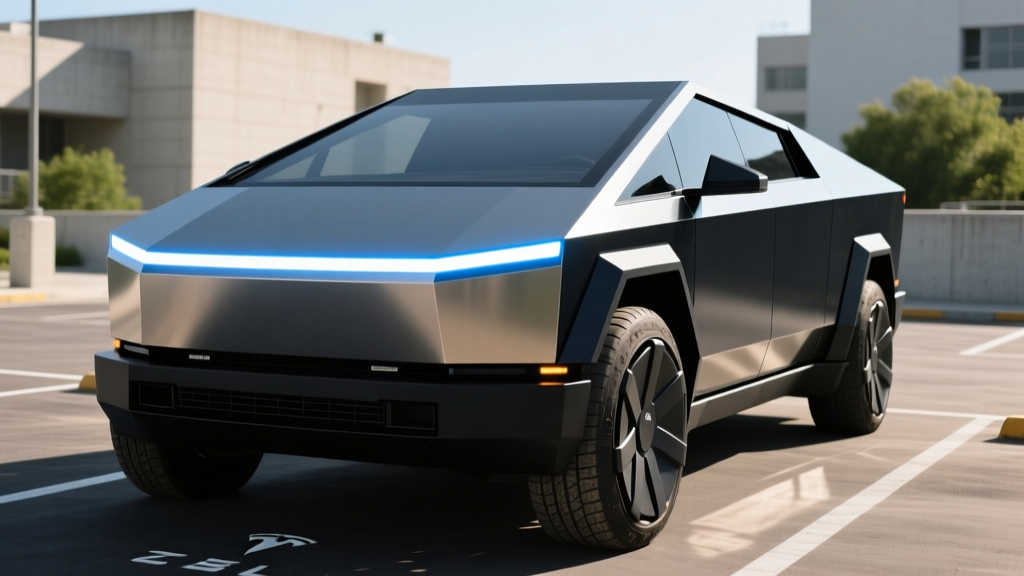
The Tesla Cybertruck has never been a conventional pickup, but the Light Bar variant—officially the Cybertruck Beast with the Off-Road Package and integrated LED light bar—pushes Tesla's angular truck into genuine overland territory. For 2026, Tesla continues to offer the Light Bar configuration on its tri-motor Beast trim, pairing a roof-mounted 60-inch LED array with adaptive air suspension, 35-inch all-terrain tires, and underbody titanium armor. It's a package that turns heads at the trailhead and the Supercharger alike.
But beyond the aggressive lighting and cladding, the Light Bar Cybertruck is still a 123 kWh (usable) battery-electric pickup with real-world compromises on range, charging infrastructure compatibility, and daily practicality. This review breaks down exactly what you get for the $114,990 starting price, how it performs on the highway and off it, and whether the federal tax credit applies.
Full Specifications: Cybertruck Beast with Light Bar
| Specification | Value |
|---|---|
| EPA Range | 320 miles (est. with Off-Road Pkg; base Beast 340 mi) |
| Battery Capacity (Usable) | ~123 kWh, NMC (nickel manganese cobalt) |
| Drivetrain | Tri-motor AWD (1 front, 2 rear) |
| Horsepower | 845 hp (combined peak) |
| 0–60 mph | 2.6 seconds |
| Top Speed | 130 mph |
| Max DC Fast Charge | 250 kW (V3 Supercharger), 350 kW capable on V4 |
| 10–80% DC Charge Time | ~28 minutes (at V3 250 kW stall) |
| Level 2 Home Charging | 11.5 kW (48A), ~34 miles/hr |
| Efficiency | 54 MPGe combined / ~58 kWh/100 mi |
| Towing Capacity | 11,000 lbs |
| Payload | 2,500 lbs |
| Bed Length | 6 ft (72 in) |
| Cargo Volume (Bed + Frunk) | 67 cu ft bed, 7 cu ft frunk |
| Ground Clearance (max) | 17.4 in (Extract Mode) |
| Base MSRP | $114,990 (Beast + Off-Road Pkg + Light Bar) |
| Federal Tax Credit (§30D) | Not eligible (exceeds $80,000 MSRP cap for trucks) |
| Battery/Drive Unit Warranty | 8 years / 120,000 miles |
Range, Efficiency, and Real-World Expectations
EPA sticker: 320 miles (with Off-Road Package; 340 mi for standard Beast).
Real-world highway (70 mph, moderate temps): Expect 260–290 miles. The Cybertruck's slab-sided stainless-steel body creates substantial aerodynamic drag above 65 mph, reducing efficiency to roughly 62–68 kWh/100 mi at speed.
Cold weather (below 32°F): Plan for 200–240 miles. NMC chemistry loses roughly 25–30% range in sub-freezing conditions, even with Tesla's heat pump and battery preconditioning.
Towing (loaded, ~8,000 lbs trailer): 140–170 miles before needing a charge stop.
The Light Bar itself adds negligible weight (roughly 12 lbs for the LED unit and wiring), so range impact from the accessory is minimal. The larger range penalty comes from the Off-Road Package's 35-inch all-terrain tires, which increase rolling resistance and reduce the EPA figure by about 20 miles compared to the standard Beast on 20-inch wheels.
Efficiency at 54 MPGe combined (per fueleconomy.gov) puts the Cybertruck Beast in line with the Rivian R1T Quad-Motor but well behind the more aerodynamic Tesla Model X. For a pickup this heavy (curb weight ~6,800 lbs), that efficiency is respectable—but it means higher per-mile charging costs than a sedan.
Charging Speed: DC Fast, Level 2, and the NACS Advantage
| Charging Level | Max Power | Miles Added per Hour | Notes |
|---|---|---|---|
| Level 1 (120V, 12A) | 1.4 kW | ~2 mi/hr | Emergency/trickle only |
| Level 2 (240V, 48A) | 11.5 kW | ~34 mi/hr | Full charge in ~11 hours; Tesla Wall Connector recommended |
| DC Fast (V3 Supercharger) | 250 kW peak | ~200 mi in 15 min | 10–80% in ~28 min; tapers sharply above 80% |
| DC Fast (V4 Supercharger) | 350 kW capable | ~250 mi in 15 min | 10–80% in ~20 min; availability still expanding in 2026 |
| CCS Adapter (non-Tesla DCFC) | ~150 kW typical | ~120 mi in 15 min | Requires Tesla CCS adapter; Electrify America, EVgo compatible |
The Cybertruck uses Tesla's native NACS connector, giving it direct access to the Supercharger network—over 18,000 V3 and expanding V4 stalls in North America as of early 2026. This remains the most reliable public DC charging ecosystem in the U.S., a genuine ownership advantage.
On a V3 Supercharger (250 kW peak), the charge curve holds near peak power from roughly 10% to 45% SoC, then tapers to ~120 kW by 65%, and drops below 50 kW past 85%. This is typical for large NMC packs. In practice, a 10–80% session takes about 28 minutes—adequate for road trips but slower than the Hyundai Ioniq 5 or Porsche Macan EV on 800V architecture.
For home charging, a Tesla Wall Connector on a 60-amp circuit delivers 11.5 kW (48A), replenishing the 123 kWh pack in roughly 11 hours from empty. Most owners who plug in nightly will never need a full charge cycle.
Performance, Drivetrain, and Off-Road Capability
The tri-motor Beast powertrain produces 845 horsepower and achieves a 2.6-second 0–60 mph time, making it one of the quickest production pickups ever built. Torque vectoring between the two rear motors and single front motor provides precise traction control without mechanical locking differentials.
The Off-Road Package (standard on Light Bar configurations) adds:
- Adaptive air suspension with 17.4 inches of max ground clearance in Extract Mode
- 35-inch Goodyear Wrangler Territory RT tires on 18-inch wheels
- Titanium underbody armor protecting battery and drive units
- Integrated LED light bar (roof-mounted, 60-inch, ~12,000 lumens) with trail/road/flood modes
- Approach/departure angles: 35° / 34° (Extract Mode)
- Wading depth: Up to 32 inches
The light bar is controlled through the 18.5-inch center touchscreen, with adjustable brightness, beam pattern (spot, flood, combo), and an amber rear-facing chase-light mode for dust/storm visibility. It draws roughly 120 watts at full brightness—negligible against the 123 kWh pack.
On pavement, the Cybertruck Beast rides surprisingly well given its weight and solid rear axle substitute (independent rear suspension with air springs). Steering is heavy at low speed (rear-wheel steering helps the 223-inch overall length feel manageable) and firms up appropriately on the highway. Body roll is controlled but present—this is a 6,800-lb vehicle, not a sports sedan.
Interior, Cargo, and Daily Practicality
The Cybertruck's interior remains minimalist: an 18.5-inch center touchscreen handles infotainment, climate, and vehicle controls. A rear 9.4-inch screen serves second-row passengers. There are no physical stalks—turn signals are on the steering wheel rim, a divisive design choice that takes genuine adaptation.
Passenger space:
- Front legroom: 41.2 inches
- Rear legroom: 38.5 inches
- Seating: 5 passengers (bench front, 3-across rear)
Cargo:
- Bed: 67 cu ft (4×6 ft footprint with tailgate down)
- Frunk: 7 cu ft (lockable, drainable)
- Sail pillars and motorized tonneau limit bed-side access but improve aerodynamics
The motorized stainless-steel tonneau cover is a standout: it retracts into the bed wall, supports 300 lbs of distributed weight on top, and seals the bed from weather. However, the sail pillars (the angled C-pillar structures) make loading tall items from the side impossible—you must load over the tailgate or from above with the tonneau open.
The integrated light bar does not interfere with the tonneau or bed rack system. Tesla offers a bed rack accessory ($1,200) compatible with the light bar mounting points for rooftop tents or cargo boxes.
Pricing, Tax Credits, and Ownership Economics
| Item | Amount |
|---|---|
| Base MSRP (Beast trim) | $99,990 |
| Off-Road Package (tires, armor, suspension tune) | $8,000 |
| Integrated Light Bar accessory | $2,500 |
| Foundation Series (required 2026; includes FSD, premium interior) | $4,500 |
| Total as-configured MSRP | $114,990 |
| Federal §30D Tax Credit | $0 (exceeds $80,000 truck MSRP cap) |
| Estimated state incentives (varies) | $0–$2,000 (check local rules) |
| Effective out-of-pocket price | ~$113,000–$115,000 |
The Cybertruck Beast does not qualify for the federal §30D Clean Vehicle Credit. IRS rules cap eligible trucks at an $80,000 MSRP (per irs.gov), and even the base AWD Cybertruck at $79,990 sits right at the threshold—though battery-sourcing and critical-mineral requirements may disqualify it regardless. The Beast at $99,990+ is well above the cap. Buyers should not factor any federal credit into their purchase budget.
Operating costs are more favorable. At the U.S. average electricity rate of $0.17/kWh (EIA, 2025), charging the Cybertruck Beast costs roughly $9.86 per 100 miles of mixed driving. A comparable gas truck at 17 MPG and $3.40/gallon costs $20.00 per 100 miles—roughly double. Over 15,000 miles annually, that's a ~$1,500 fuel savings, though insurance premiums for the Cybertruck Beast run 25–40% higher than a conventional F-150 due to repair costs and stainless-steel panel complexity.
Tech, Driver Assistance, and the FSD Question
The Cybertruck ships with Tesla's latest Hardware 4.0 (AI4) computer and includes basic Autopilot (lane centering, adaptive cruise, emergency braking). The Foundation Series package includes Full Self-Driving (Supervised), Tesla's SAE Level 2 driver-assistance system.
The driver must remain fully attentive, keep hands on the wheel (or demonstrate engagement via cabin camera), and be prepared to take over at any moment. FSD Supervised can navigate highway interchanges, stop lights, and some city streets, but it makes errors—particularly with construction zones, faded lane markings, and unprotected left turns. It is not a substitute for an engaged driver. Only Level 4 services like Waymo operate without a human driver in defined geofenced areas.
Other standout tech:
- Steer-by-wire: No mechanical connection between steering wheel and rack; enables variable ratio (lock-to-lock under 340° at low speed, more traditional at highway speed)
- Rear-wheel steering: Up to 10° for a turning circle of 40.2 ft (comparable to a midsize SUV)
- Powershare: 120V/240V outlets in the bed (9.6 kW max) for job-site tools or backup home power
- Sentry Mode & Dashcam: 8-camera surround recording, cloud-clip capable
Pros, Cons, and Who Should Buy
- Tri-motor AWD with 845 hp and 2.6-sec 0–60 is unmatched in pickups
- Supercharger network access (NACS) is the most reliable DC charging ecosystem
- Genuine off-road capability: 17.4" clearance, 35" tires, titanium armor
- Integrated light bar is functional, not cosmetic—12,000 lumens with adjustable modes
- Powershare 9.6 kW V2L is job-site and emergency-ready
- Stainless exoskeleton resists dents, scratches, and corrosion
- No federal tax credit eligibility (exceeds $80K truck cap)
- Real-world highway range drops to ~260–290 mi; towing range under 170 mi
- Charging peaks at 250 kW (V3)—slower than 800V competitors
- Stainless panels are expensive to repair; insurance costs 25–40% above average
- Steer-by-wire and yoke/wheel button signals require adaptation
- Sail pillars block side-loading; bed access is tailgate-only
- $115K as-configured is luxury-truck pricing with mainstream interior materials
Who it suits: The Cybertruck Beast with Light Bar is for buyers who want a high-performance electric pickup with genuine off-road credentials and don't need maximum range or tax-credit savings. It works as a weekend overlanding rig, a job-site power source, and a daily driver—if you have home Level 2 charging and can accept 260–290 miles of real-world highway range.
Who should look elsewhere: If you need 350+ miles of real-world range, a lower purchase price, or federal tax credit eligibility, the Rivian R1T Dual-Motor ($73,000, eligible for §30D credit) or the Ford F-150 Lightning Lariat ($65,000–$75,000 range) are more pragmatic. For towing-heavy use, no current EV pickup offers the 300+ mile range of a diesel Super Duty.
Cybertruck Light Bar vs. Key Competitors
| Spec | Cybertruck Beast (Light Bar) | Rivian R1T Quad-Motor | F-150 Lightning Platinum |
|---|---|---|---|
| Price (as tested) | $114,990 | $99,900 | $96,874 |
| EPA Range | 320 mi | 352 mi (Max Pack) | 300 mi (Ext. Range) |
| Battery | 123 kWh NMC | 149 kWh NMC (Max) | 131 kWh NMC |
| Horsepower | 845 hp | 1,025 hp | 580 hp |
| 0–60 mph | 2.6 sec | 3.0 sec | 3.8 sec |
| Max DC Charge | 250 kW | 220 kW | 150 kW |
| Towing | 11,000 lbs | 11,000 lbs | 10,000 lbs |
| Federal §30D Credit | No (over MSRP cap) | Yes (if sourcing met) | Yes (if sourcing met) |
| Integrated Light Bar | Yes (roof, 12K lumens) | Accessory (aftermarket) | No (LED bed lighting only) |
The Rivian R1T offers more range, a more refined interior, and tax credit eligibility at a lower price—but lacks the Cybertruck's integrated light bar and has slower DC charging. The F-150 Lightning is the most conventional and comfortable but trails on performance and charging speed. The Cybertruck wins on acceleration, Supercharger access, and off-road integration; it loses on price, range, and credit eligibility.
Warranty, Reliability, and Long-Term Ownership
Tesla covers the Cybertruck's battery and drive units for 8 years or 120,000 miles (whichever comes first), with a minimum 70% capacity retention threshold. The limited vehicle warranty is 4 years / 50,000 miles.
Long-term battery degradation data for the Cybertruck's specific NMC pack is still limited (the truck launched in late 2023), but Tesla's Model S/X packs of similar chemistry historically retain 88–92% capacity at 100,000 miles based on fleet data. The 123 kWh pack should provide a comfortable buffer for the 8-year warranty period.
Reliability concerns center on the steer-by-wire system, motorized tonneau, and stainless panel repair complexity—not the powertrain. Tesla's service network has expanded, but body-shop capability for stainless exoskeletons remains limited to Tesla-approved centers, which can extend repair timelines after collision damage.
Frequently Asked Questions
What is the real-world range of the Cybertruck Beast with Light Bar?
The EPA estimates 320 miles (with Off-Road Package), but real-world highway driving at 70 mph yields roughly 260–290 miles. In cold weather (below 32°F), expect 200–240 miles. Towing a loaded trailer drops range to 140–170 miles.
How fast does the Cybertruck Beast charge at home and on the road?
At home on a Level 2 Tesla Wall Connector (11.5 kW), you gain about 34 miles per hour—a full charge takes ~11 hours. On a V3 Supercharger (250 kW), 10–80% takes roughly 28 minutes. V4 Superchargers (350 kW capable) can cut that to ~20 minutes where available.
Does the Cybertruck Beast qualify for the $7,500 federal EV tax credit?
No. The IRS §30D credit caps eligible trucks at $80,000 MSRP (per irs.gov). The Cybertruck Beast starts at $99,990 and exceeds this cap regardless of buyer income or battery sourcing. Consult a tax professional for state-level incentive eligibility.
Is the integrated light bar just cosmetic, or is it functional off-road?
It's functional. The 60-inch roof-mounted LED bar produces ~12,000 lumens with selectable spot, flood, and combo beam patterns, plus an amber rear-facing chase-light mode. It's controlled via the touchscreen and draws roughly 120 watts at full brightness—negligible for the battery pack.
How does the Cybertruck Beast compare to the Rivian R1T for off-road use?
Both are capable, but differently equipped. The Cybertruck Beast offers more ground clearance (17.4" vs. 14.9" in the R1T), integrated armor, and the light bar. The R1T offers a gear tunnel (unique cross-body storage), a more refined ride on-road, and a larger Max Pack battery for extended range. The R1T also qualifies for the federal tax credit; the Cybertruck Beast does not.
Is the Cybertruck Beast worth buying over the F-150 Lightning?
If you prioritize acceleration (2.6 sec vs. 3.8 sec 0–60), Supercharger network access, and integrated off-road features, yes. If you prioritize interior comfort, conventional controls, lower price ($96K vs. $115K), and federal tax credit eligibility, the Lightning Platinum is the more pragmatic choice.
What does it cost to charge the Cybertruck Beast per mile?
At the U.S. average electricity rate of $0.17/kWh and an efficiency of ~58 kWh/100 mi, the cost is approximately $0.099 per mile. A comparable gas truck at 17 MPG and $3.40/gallon costs about $0.20 per mile—roughly double.