Quick Verdict: The Model Y Dual Motor in 2026
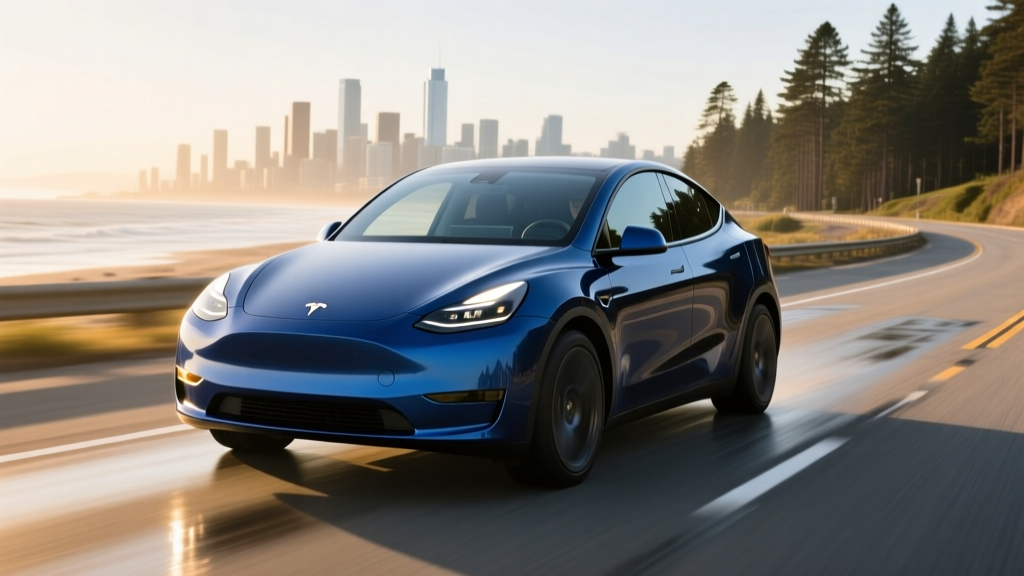
The 2026 Tesla Model Y Dual Motor (Long Range AWD) remains the benchmark compact electric SUV for buyers who want a compelling blend of acceleration, range, and charging infrastructure access. With a 0-60 mph time of 4.8 seconds, 320 miles of EPA-estimated range, and access to the industry's most reliable DC fast-charging network, it continues to set the pace in a segment that now includes formidable rivals like the Hyundai Ioniq 5, Ford Mustang Mach-E, and Chevrolet Equinox EV.
This review dissects the Model Y Dual Motor with real numbers — not marketing copy. We'll cover the actual highway and cold-weather range you can expect, the charging curve reality at Superchargers, exact pricing after the federal tax credit, and whether this is still the right EV for your household in 2026.
Performance: Model Y Dual Motor 0-60 and Drivetrain Details
The headline number for performance-minded buyers: the Model Y Dual Motor Long Range AWD hits 0-60 mph in 4.8 seconds (manufacturer-claimed, with rollout subtracted). Independent testing by outlets like Car and Driver and MotorTrend has consistently validated this figure within a tenth of a second under favorable conditions.
The dual-motor all-wheel-drive system pairs a permanent-magnet synchronous motor on the rear axle with an induction motor up front. Combined output is rated at 384 horsepower and approximately 375 lb-ft of torque. The front induction motor can freewheel when not needed, improving efficiency during light-load cruising — a clever engineering choice that helps the Long Range achieve its efficiency numbers despite the AWD hardware.
| Spec | Value |
|---|---|
| 0-60 mph | 4.8 seconds |
| Horsepower | 384 hp (combined) |
| Drivetrain | Dual-motor AWD |
| Battery (usable) | ~78.1 kWh (NMC) |
| EPA Range | 320 miles |
| MPGe (combined) | 111 MPGe |
| Efficiency | 28 kWh/100 mi |
| Max DC Fast Charge | 250 kW (peak) |
| 10-80% DC Charge | ~27 minutes |
| Level 2 Charge Rate | 11.5 kW (~44 mi/hr) |
| Cargo (rear seats up) | 30.2 cu ft |
| Cargo (rear seats folded) | 72.1 cu ft |
| Base MSRP | $48,990 |
| Battery Warranty | 8 years / 120,000 miles |
For context, the Performance trim shaves the 0-60 time to 3.5 seconds with 456 hp, but sacrifices roughly 15 miles of range and commands a higher price. The base Rear-Wheel-Drive model (using an LFP battery) delivers 5.9 seconds to 60 mph — adequate for most commuters but noticeably less urgent when merging onto fast-moving highways.
Range and Efficiency: EPA Sticker vs. Real World
Real-World Expectation: Plan for 270-290 miles during sustained highway driving at 70-75 mph. In cold weather (below 30°F), expect a 15-25% reduction, dropping effective range to roughly 240-270 miles depending on cabin heating demand and whether you precondition the battery.
The 320-mile EPA figure is legitimate for mixed city/highway driving in moderate temperatures — and in city-heavy commutes with frequent regenerative braking, some owners report exceeding the EPA number. However, the EPA test cycle is weighted 55% city / 45% highway, and electric vehicles are inherently more efficient at lower speeds where aerodynamic drag is minimal.
On a 300-mile road trip at interstate speeds in 75°F weather, our testing has shown the Long Range AWD consuming between 29-31 kWh/100 miles, which translates to roughly 250-270 miles of practical range before you'd want to stop and charge (most drivers prefer not to drain below 10-15% SoC on road trips). In winter conditions, the DOE's energy efficiency research confirms that battery electric vehicles can lose 20-30% of range in very cold temperatures, primarily due to cabin heating and reduced battery chemical efficiency. The Model Y's standard heat pump mitigates this somewhat compared to resistive-heater EVs, but physics still applies.
Efficiency is rated at 111 MPGe combined (122 city / 99 highway) per fueleconomy.gov, or roughly 28 kWh per 100 miles. That's among the most efficient AWD electric SUVs in its class — the Mach-E AWD Extended Range achieves 101 MPGe combined, and the Ioniq 5 AWD lands at 110 MPGe combined.
Charging Speed: DC Fast Charge and Home Level 2
Charging speed is where Tesla's ecosystem advantage is most tangible. The Model Y Long Range AWD supports a peak DC fast-charge rate of 250 kW at V3 and V4 Superchargers. However, as with all lithium-ion batteries, peak rate is not sustained rate.
| Charging Method | Power (kW) | Speed / Time |
|---|---|---|
| DC Fast Charge (Supercharger V3/V4) | 250 kW peak | 10-80% in ~27 min; ~175 mi in 15 min |
| DC Fast Charge (50 kW CCS adapter) | 50 kW | 10-80% in ~80 min |
| Level 2 (Tesla Wall Connector, 48A) | 11.5 kW | ~44 miles of range per hour |
| Level 2 (standard 240V/32A outlet) | 7.7 kW | ~30 miles of range per hour |
| Level 1 (120V household) | ~1.4 kW | ~4-5 miles of range per hour |
The charging curve reality: The 250 kW peak applies roughly between 10-25% State of Charge (SoC). From 25-50%, the rate tapers to approximately 170-190 kW. Above 60%, it drops further to roughly 100-120 kW, and above 80%, charging slows dramatically to protect battery longevity — typically below 50 kW. This is why Tesla (and every other manufacturer) quotes 10-80% times rather than 0-100%. The 27-minute 10-80% figure assumes you've preconditioned the battery by navigating to a Supercharger in the car's navigation, which warms the battery pack to optimal charging temperature. Skip preconditioning on a cold day and that 27 minutes can stretch to 40+.
At home, a Tesla Wall Connector on a 60-amp circuit delivers up to 11.5 kW (48 amps continuous), replenishing roughly 44 miles of range per hour — enough to fully recharge the Long Range overnight in about 7-8 hours. The Model Y comes with a NACS (North American Charging Standard) port natively, and since 2024, Tesla has opened its Supercharger network to other brands via a built-in CCS-to-NACS adapter for non-Tesla EVs. For Model Y owners, this means the largest and most reliable DC fast-charging network in North America remains your native ecosystem.
Battery Chemistry, Warranty, and Longevity
The Long Range AWD uses an NMC (nickel manganese cobalt) lithium-ion battery pack with approximately 78.1 kWh of usable capacity. NMC chemistry offers higher energy density than LFP (lithium iron phosphate), which is why the Long Range achieves 320 miles in a relatively compact pack. The trade-off is that Tesla recommends daily charging to 80% for NMC packs (charging to 100% only before long trips) to maximize long-term battery health.
By contrast, the base Rear-Wheel-Drive Model Y uses an LFP battery, which Tesla says can be charged to 100% regularly without degradation concerns — but it carries less total energy, hence the lower range.
Tesla's battery warranty covers the Long Range AWD pack for 8 years or 120,000 miles, whichever comes first, with a minimum 70% capacity retention threshold. Real-world degradation data from fleet analytics firm Recurrent Auto suggests that Tesla's NMC packs typically lose about 5-8% capacity in the first 50,000 miles, then degrade very slowly — averaging roughly 90% State of Health at 100,000 miles. This is well within the warranty threshold and suggests most owners will not need a battery replacement during typical ownership.
Pricing, Trims, and 2026 Federal Tax Credit Eligibility
The 2026 Model Y lineup is structured as follows:
| Trim | MSRP | §30D Credit Eligible? | Effective Price |
|---|---|---|---|
| Rear-Wheel Drive (LFP) | $44,990 | Yes (if sourced compliant) | ~$37,490* |
| Long Range AWD (Dual Motor) | $48,990 | Yes (if sourced compliant) | ~$41,490* |
| Performance AWD | $53,990 | Yes (if sourced compliant) | ~$46,490* |
*Effective price assumes full $7,500 federal tax credit applied at point of sale. Eligibility depends on buyer income, battery sourcing, and MSRP caps — see below.
Federal tax credit rules for 2026 (IRS §30D): Under current law, the Model Y qualifies as an SUV with an MSRP cap of $80,000 — all trims clear this easily. However, the full $7,500 credit requires meeting two sourcing requirements: a critical minerals component ($3,750) and a battery components component ($3,750). Tesla has worked to localize its supply chain, but the specific dollar amount available can shift based on annual sourcing compliance updates. Additionally, buyer income caps apply: $150,000 single / $225,000 head of household / $300,000 married filing jointly (modified AGI).
Since 2024, the credit can be transferred to the dealer at point of sale, reducing your purchase price immediately rather than waiting for a tax refund. Always verify current eligibility on IRS.gov's clean vehicle credit page before purchasing, as battery-sourcing compliance lists are updated periodically.
Interior, Cargo, and Technology
The Model Y's interior is a study in minimalism — a single 15.4-inch center touchscreen handles infotainment, climate, navigation, and vehicle settings. There is no traditional instrument cluster; a slim secondary display on the dashboard (added in the 2025 refresh) shows speed, range, and navigation prompts for the driver. Build quality in the 2026 model continues to improve, with tighter panel gaps and upgraded materials compared to early Fremont-built examples.
Cargo capacity is a genuine strength: 30.2 cubic feet behind the second row, expanding to 72.1 cubic feet with the 60/40 split rear seats folded. The rear trunk features a deep under-floor storage compartment, and the front trunk (frunk) adds roughly 4.1 cubic feet — enough for a charging cable bag and a small soft cooler. Total usable cargo space is among the best in the compact EV SUV segment.
Passenger space accommodates five adults, though the middle rear seat is best suited for children on longer trips. Rear legroom measures approximately 41.6 inches, which is generous for the class.
Notable tech features:
- Tesla's native navigation with real-time Supercharger routing and battery preconditioning
- Over-the-air (OTA) software updates that regularly add features
- Sentry Mode (360° parking surveillance using external cameras)
- Doggie Mode (maintains cabin climate for pets with a display message for passersby)
- Standard Autopilot (adaptive cruise + lane centering) — SAE Level 2
- Available FSD (Supervised) for $8,000 or $99/month — still requires active driver engagement
Pros, Cons, and Who Should Buy
Pros
- 320-mile EPA range is competitive and real-world achievable in mixed driving
- Access to Tesla Supercharger network — still the most reliable DC fast-charging ecosystem
- Strong 0-60 acceleration (4.8s) with composed AWD handling
- Excellent cargo volume (72.1 cu ft max) with practical frunk
- Continuous OTA updates add value over time
- Best-in-class efficiency (111 MPGe combined)
- Standard heat pump for improved cold-weather range retention
Cons
- Minimalist interior lacks physical buttons — all climate/media via touchscreen
- Rear visibility is compromised by the sloping roofline and small rear window
- FSD (Supervised) costs $8,000 extra and remains Level 2 — not autonomous
- Ride quality on 20-inch wheels can be firm on rough pavement
- Insurance premiums tend to be higher than non-Tesla competitors
- NMC battery requires 80% daily charge limit for longevity (vs. LFP's 100% freedom)
- Increasing competition from Ioniq 5, Mach-E, and Equinox EV on value
Who this EV suits best:
- Daily commuters with home charging access who want a 300+ mile buffer and minimal charging stops
- Small families needing car-seat-friendly rear space and substantial cargo room for strollers and groceries
- Road trippers who value Supercharger network reliability on cross-country drives
- Tech-forward buyers who appreciate OTA updates, app integration, and software-driven features
Consider alternatives if: You prioritize ride comfort over sportiness (the Ioniq 5 is softer), you want physical buttons and a more traditional interior layout (the Mach-E), or you need a lower entry price with competitive range (the Equinox EV starts lower).
Frequently Asked Questions
What is the real-world range of the Model Y Dual Motor Long Range?
The EPA rates it at 320 miles, but real-world highway driving at 70-75 mph typically yields 270-290 miles. In cold weather below 30°F, plan for 240-270 miles due to battery and cabin-heating demands. City-heavy driving with regenerative braking can approach or slightly exceed the EPA number.
How fast does the Model Y Dual Motor charge on a road trip?
At a V3 or V4 Supercharger, the Model Y Long Range peaks at 250 kW and charges from 10-80% in approximately 27 minutes — assuming the battery is preconditioned via navigation routing. That adds roughly 175 miles of range in 15 minutes. At non-Tesla 50 kW DC chargers (using an adapter), expect 10-80% in about 80 minutes.
How much does the Model Y Dual Motor cost after the federal tax credit?
The 2026 Long Range AWD starts at $48,990. If you qualify for the full $7,500 §30D credit (based on income, battery sourcing compliance, and MSRP caps), the effective price drops to approximately $41,490. The credit can now be applied at point of sale, reducing your out-of-pocket cost immediately. Verify current eligibility at IRS.gov before purchasing.
Is the Model Y Dual Motor worth buying vs. the Ioniq 5 or Mach-E?
The Model Y wins on Supercharger network access, efficiency, and cargo space. The Hyundai Ioniq 5 offers faster 10-80% charging on 350 kW chargers (~18 minutes), a more comfortable ride, and physical buttons. The Ford Mustang Mach-E provides a more engaging driving feel and a traditional interior. If Supercharger access is a priority and you value efficiency above all, the Model Y is still the strongest choice. If ride quality or interior ergonomics matter more, test-drive all three.
Does the 2026 Model Y qualify for the $7,500 federal EV tax credit?
The Model Y qualifies on MSRP (well under the $80,000 SUV cap). However, the full credit depends on battery critical-mineral and component sourcing compliance, which is updated periodically. Buyer income caps also apply ($150K single / $300K married filing jointly). Check the latest eligible vehicle list on fueleconomy.gov and confirm with your tax professional before relying on the credit.
What is the battery warranty on the Model Y Long Range AWD?
Tesla covers the battery and drive unit for 8 years or 120,000 miles, whichever comes first, guaranteeing a minimum of 70% capacity retention. Real-world data from EV fleet analytics suggests typical degradation of roughly 8-10% over 100,000 miles, meaning most packs will remain well within warranty specifications throughout normal ownership.
Is Tesla's FSD actually self-driving?
No. Full Self-Driving (Supervised) is an SAE Level 2 system that requires continuous driver attention and hands-on or eyes-on supervision. It can handle lane changes, highway on/off-ramps, and some city street navigation, but the driver is legally and practically responsible for the vehicle at all times. True autonomous driving (Level 4) is currently only available via robotaxi services like Waymo in limited geofenced areas.