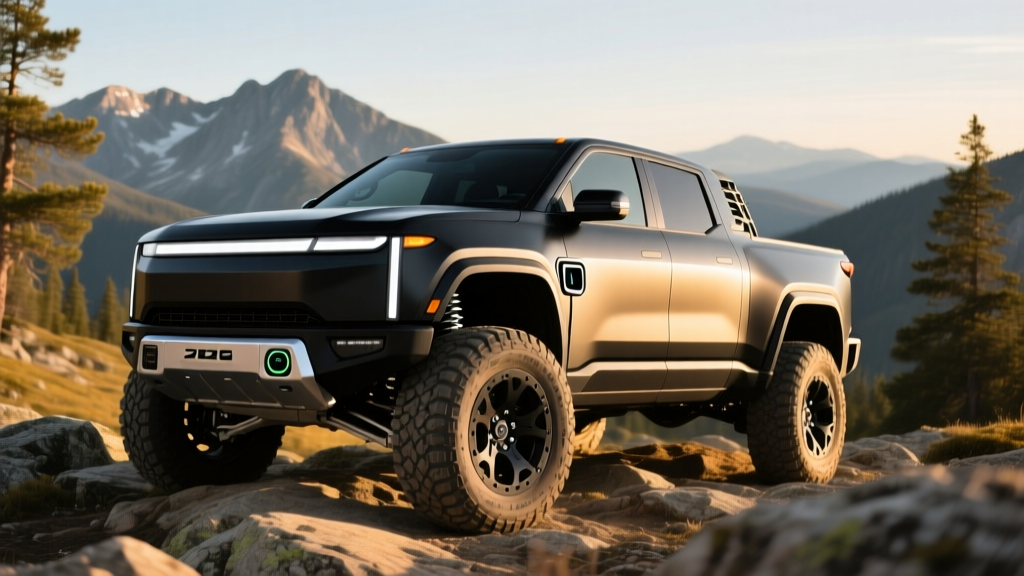
The Rivian R1T has carved out a unique niche as the only premium electric pickup built from the ground up for both daily driving and genuine off-road capability. But for buyers searching for a lifted Rivian truck, the stock R1T's adjustable air suspension only tells half the story. The real off-road potential unlocks when owners pair the R1T's robust electric skateboard platform with aftermarket lift kits, larger tires, and underbody protection.
This review covers the 2026 Rivian R1T as the foundation for a lifted build — its EPA range, charging performance, battery specs, pricing after federal tax credits, and the real-world trade-offs of lifting an electric pickup. Whether you're eyeing a 2-inch leveling kit or a full 3-inch suspension lift with 35-inch all-terrains, here's what you need to know before modifying your R1T.
2026 Rivian R1T Core Specifications
Before discussing lift modifications, let's establish the baseline specs for the current-generation R1T. Rivian offers the R1T in Dual-Motor, Performance Dual-Motor, and Tri-Motor configurations for 2026, each with distinct power outputs and range figures.
| Spec | Dual-Motor (Standard) | Performance Dual-Motor | Tri-Motor |
|---|---|---|---|
| EPA Range (Max Pack) | 352 miles | 340 miles | 328 miles |
| Battery (Max Pack) | 149 kWh usable (NMC) | 149 kWh usable (NMC) | 149 kWh usable (NMC) |
| Horsepower | 533 hp | 665 hp | 850 hp |
| 0–60 mph | 4.5 sec | 3.5 sec | 2.9 sec |
| Drivetrain | AWD (dual-motor) | AWD (dual-motor) | AWD (tri-motor) |
| Max Tow Rating | 11,000 lbs | 11,000 lbs | 11,000 lbs |
| Ground Clearance (max) | 14.9 inches | 14.9 inches | 14.9 inches |
| Base MSRP | $71,700 | $81,200 | $101,500 |
| Battery/Powertrain Warranty | 8 yr / 175,000 mi | 8 yr / 175,000 mi | 8 yr / 175,000 mi |
Rivian uses NMC (nickel manganese cobalt) lithium-ion chemistry across all R1T packs. The Max Pack's 149 kWh usable capacity is among the largest in any production EV, which becomes relevant when you factor in the range penalties that come with lifting and larger tires.
Real-World Range: Stock vs. Lifted
EPA Estimated: 352 miles (Dual-Motor Max Pack)
Real-World Expectation (stock): ~290–310 miles highway at 70 mph; ~250–270 miles in cold weather (below 32°F)
Real-World Expectation (lifted + 35" tires): ~230–260 miles highway; ~200–220 miles cold weather
The EPA range figure assumes stock tire size (typically 275/65R20 all-season or all-terrain) and standard ride height. When you lift an R1T and mount heavier, more aggressive tires, two things happen: increased rolling resistance from the tire tread pattern and added unsprung weight from larger wheels and rubber. Based on owner reports from forums like the Rivian Owners Club and real-world testing by EV outlets, expect a 15–25% range reduction with a typical 2–3 inch lift and 35-inch mud-terrain or aggressive all-terrain tires.
For the Dual-Motor Max Pack, that means your practical highway range drops from roughly 300 miles to approximately 230–260 miles depending on tire choice, driving speed, and terrain. Cold weather compounds this loss further — lithium-ion batteries lose efficiency in freezing temperatures, and cabin heating draws additional power. A lifted R1T in January in Colorado might realistically deliver 200 miles between charges on the highway.
This isn't a deal-breaker if your typical driving involves trails within 100 miles of home or daily commutes under 80 miles round-trip. But if you plan to use a lifted R1T for long road trips, you'll need to plan charging stops more carefully.
Charging Performance: DC Fast and Home Level 2
Charging speed is where the R1T's large battery pack creates both an advantage and a challenge. The 149 kWh Max Pack can accept high peak charge rates, but filling such a large battery still takes meaningful time.
| Charging Level | Power / Rate | Speed / Time |
|---|---|---|
| Level 1 (120V household) | ~1.4 kW | ~3 miles per hour |
| Level 2 (240V home, 48A) | 11.5 kW | ~25 miles per hour; full charge in ~13 hours |
| Level 2 (240V home, 60A) | 14.4 kW | ~31 miles per hour; full charge in ~10.5 hours |
| DC Fast Charge (peak) | 220 kW (CCS via NACS adapter) | 10–80% in ~42 minutes |
| DC Fast Charge (sustained avg) | ~150 kW average | 10–80% realistic: ~48–52 minutes |
Rivian transitioned to the NACS (North American Charging Standard) connector for new vehicles starting in 2025, meaning the 2026 R1T charges natively at Tesla Supercharger stations — a major practical advantage for off-road adventurers who frequently travel rural routes where Superchargers often outnumber CCS networks.
The charge curve matters here. The R1T Max Pack peaks near 220 kW at low states of charge (around 10–20% SoC) but tapers significantly above 60%. By 80% SoC, charge speed drops to roughly 80–90 kW, and above 90% it slows to under 40 kW. This is normal behavior for large NMC packs — the battery management system protects cell longevity by reducing current at higher states of charge. Plan your road-trip charging around the 10–80% window for the fastest stops.
For home charging, Rivian's Wall Charger delivers up to 11.5 kW on a 48-amp circuit (requiring a 60-amp breaker). Upgrading to a 60-amp capable charger on a 75-amp circuit pushes this to 14.4 kW. For a lifted R1T with reduced range, overnight home charging on Level 2 is essential — you'll want a full battery every morning to offset the efficiency penalty of larger tires.
Lifting the R1T: Options, Costs, and Trade-Offs
The R1T's air suspension already provides class-leading adjustable ground clearance — from 7.9 inches in Entry mode up to 14.9 inches in Max mode. But air suspension alone doesn't provide the aggressive stance, larger tire clearance, and articulation that serious off-roaders want. Here's how the lifted Rivian truck ecosystem breaks down:
Common Lift Approaches
- Leveling kit (1–1.5 inches): Spacer-based or air-suspension recalibration. Minimal range impact (~5–8%). Cost: $300–$800.
- Suspension lift (2–3 inches): Aftermarket coilover or air-bag replacement with longer control arms. Requires alignment and potential CV-angle correction. Cost: $2,500–$5,500 installed.
- Body lift + suspension combo (3+ inches): Rare on the R1T due to its unibody-skateboard architecture. Most shops recommend against body lifts on EVs due to high-voltage harness routing.
Tire Upgrades
The stock R1T fits up to roughly 34-inch tires without rubbing at full articulation. A 2-inch lift opens the door to 35x12.50 tires (such as the BFGoodrich KO2 or Nitto Ridge Grappler), while 3 inches of lift accommodates 37-inch tires with minor trimming. Larger tires also require speedometer recalibration, which Rivian's software can accommodate through dealer or third-party tuning tools.
Range and Efficiency Impact
Every modification compounds. A 2-inch lift with 35-inch all-terrain tires typically costs 15–20% of EPA range. Add a roof rack, light bar, and bed rack, and you may lose 25–30%. The R1T's efficiency drops from its stock 48 MPGe combined (2.0 kWh/mile) to approximately 38–42 MPGe (2.4–2.6 kWh/mile) in a lifted configuration, per owner-reported data on fueleconomy.gov and community tracking apps.
Warranty Considerations
Rivian's 8-year/175,000-mile battery and powertrain warranty is among the best in the EV truck segment. However, suspension modifications can void coverage on affected components — specifically suspension, driveline, and potentially wheel-bearing claims. Rivian's official stance is that aftermarket modifications don't void the battery or motor warranty unless the modification directly caused the failure (per Magnuson-Moss Warranty Act protections), but owners should document everything and choose reputable installers.
Pricing, Trims, and Federal Tax Credit Eligibility
The 2026 R1T lineup starts at $71,700 for the Dual-Motor with the Standard battery pack and climbs to over $101,500 for the Tri-Motor Max Pack. Add a lift kit and tire package ($3,000–$6,000) and you're looking at a significant investment.
| Trim | Base MSRP | As-Tested (Typical) | §30D Credit Eligible? | Effective Price (with credit) |
|---|---|---|---|---|
| Dual-Motor Standard | $71,700 | $75,000–$78,000 | Yes (if under MSRP cap) | ~$64,200–$70,500 |
| Dual-Motor Max Pack | $81,700 | $85,000–$90,000 | Yes (truck cap: $80,000) | ~$77,700–$82,500 |
| Performance Dual-Motor | $81,200 | $88,000–$94,000 | Likely no (exceeds $80K cap) | $88,000–$94,000 |
| Tri-Motor Max Pack | $101,500 | $108,000–$115,000 | No (exceeds $80K cap) | $108,000–$115,000 |
IRS §30D tax credit rules for 2026: The federal EV tax credit provides up to $7,500 for qualifying new EVs. For trucks (which the R1T is classified as), the MSRP cap is $80,000. Buyer income limits apply: modified adjusted gross income must not exceed $300,000 (joint filers), $225,000 (head of household), or $150,000 (individual). Additionally, battery component and critical mineral sourcing requirements must be met — Rivian has worked to qualify its supply chain, but eligibility can change. The credit can now be transferred to the dealer at point of sale, reducing your purchase price directly. Always verify current eligibility at IRS.gov before purchasing, as sourcing rules update periodically.
Key takeaway: Only the base Dual-Motor trims reliably fall under the $80,000 MSRP cap for trucks. Once you add the Max Pack or Performance upgrades, the R1T often prices above the threshold. A lifted build on a base Dual-Motor Standard pack is the most tax-credit-friendly path.
How the Lifted R1T Compares to Rivals
The lifted electric truck space is growing, but direct competitors remain limited. Here's how the R1T stacks up against the other electric pickups buyers cross-shop:
Rivian R1T (Lifted) Advantages
- Best-in-class adjustable ground clearance (14.9" stock)
- NACS native charging + Tesla Supercharger access
- Quad-motor option (Tri-Motor) for extreme torque vectoring
- Gear Tunnel for unique enclosed storage
- Integrated air suspension — no aftermarket bags needed
Rivian R1T (Lifted) Drawbacks
- Higher base price than Ford F-150 Lightning or Chevy Silverado EV
- Range loss significant with lift + large tires
- Smaller bed (4.5 ft) vs. full-size competitors
- Aftermarket lift ecosystem still maturing
- Service center network less dense than legacy OEMs
The Ford F-150 Lightning (extended-range: 320 miles EPA, starting ~$57,000) offers a larger bed, lower price, and a more established dealer network, but lacks the R1T's air suspension and off-road sophistication. The Chevrolet Silverado EV (4WT trim: up to 492 miles EPA, starting ~$78,000) has impressive range but is a larger, heavier truck less suited to tight trails. For a purpose-built lifted off-road EV, the R1T remains the most capable platform available.
Cargo, Interior, and Daily Practicality
The R1T's 4-foot-6-inch bed is shorter than a traditional full-size truck, but Rivian compensates with creative storage. The Gear Tunnel — a pass-through compartment behind the rear seats — provides 11.7 cubic feet of enclosed, lockable storage, ideal for recovery gear, tools, or camping equipment on a lifted build. The front trunk (frunk) adds 11.0 cubic feet.
Interior dimensions remain generous:
- Front legroom: 41.3 inches
- Rear legroom: 38.5 inches
- Rear headroom: 38.2 inches
- Bed volume: ~27 cu ft (to top of bed sides)
- Max payload: 1,760 lbs
The 15.6-inch center touchscreen runs Rivian's proprietary OS, which includes integrated trail maps, pitch/roll inclinometers, and a camera system with underbody views — genuinely useful features for off-road driving. Apple CarPlay and Android Auto are supported wirelessly. The Driver+ assistance suite includes adaptive cruise, lane centering, and automatic emergency braking — this is SAE Level 2 driver assistance, meaning you must remain attentive and keep hands on the wheel at all times.
Who Should Build a Lifted Rivian Truck?
Decision Framework
Choose the lifted R1T if:
- You want a premium EV that can handle moderate-to-difficult trails (forest roads, rock crawling, overlanding)
- Your daily commute is under 80 miles round-trip and you can charge at home
- You value the Gear Tunnel and frunk for gear storage over a full-size bed
- You want Tesla Supercharger access for trail-adjacent road trips
Look elsewhere if:
- You regularly need 300+ miles of range without stopping (lifted range won't deliver this)
- You need a 6.5+ foot bed for work hauling
- Budget is under $70,000 all-in
- You want a mature aftermarket with dealer-supported lift options
The lifted Rivian truck is best suited for the weekend adventurer who daily-drives their EV during the week and hits trails, fire roads, or overlanding routes on weekends. The R1T's combination of on-road comfort, air-suspension versatility, and NACS charging access makes it the most well-rounded platform for this lifestyle — even if the range penalty of lifting demands more charging discipline.
Frequently Asked Questions
What is the real-world range of a lifted Rivian R1T?
A stock R1T Dual-Motor Max Pack delivers approximately 290–310 real-world highway miles. With a 2–3 inch lift and 35-inch all-terrain tires, expect 230–260 miles highway in mild weather, and 200–220 miles in freezing conditions. City and trail driving at low speeds is more efficient, often returning 270+ miles equivalent.
How fast does the R1T charge at home and on the road?
On a home Level 2 charger (11.5 kW, 48A), the R1T Max Pack gains about 25 miles of range per hour, taking roughly 13 hours for a full charge. On a DC fast charger, it peaks at 220 kW and charges from 10–80% in approximately 42–52 minutes depending on battery temperature and charger capability. Preconditioning the battery via the navigation system is essential for achieving peak charge rates.
Does the Rivian R1T qualify for the $7,500 federal EV tax credit?
It depends on the trim. The R1T is classified as a truck, so the MSRP cap is $80,000. Base Dual-Motor trims generally qualify, while Performance and Tri-Motor trims typically exceed the cap. Buyer income limits ($300K joint / $150K individual) and battery-sourcing requirements also apply. The credit can be transferred at point of sale. Verify current eligibility at IRS.gov before purchasing.
Will lifting my R1T void the warranty?
Under the Magnuson-Moss Warranty Act, Rivian cannot void your entire warranty simply because you installed aftermarket parts. However, if a suspension modification directly causes a component failure (e.g., a CV joint or wheel bearing), that specific claim may be denied. The battery and motor warranty (8 years/175,000 miles) is generally unaffected by suspension lifts. Document all modifications and use reputable installers.
Is a lifted R1T worth it vs. a stock R1T or a Ford F-150 Lightning?
If your primary use case involves off-road trails, overlanding, or you simply want the aggressive stance and larger tire capability, the lifted R1T is worth the trade-offs in range and cost. The stock R1T's air suspension already handles light-to-moderate trails well. If you need a work truck with a full-size bed and lower cost, the F-150 Lightning is more practical — but it lacks the R1T's trail sophistication and Supercharger access.
What's the best tire size for a lifted R1T?
With a 2-inch lift, 35x12.50R20 all-terrain tires (BFGoodrich KO2, Falken Wildpeak AT3W) are the most popular choice, balancing off-road capability with acceptable on-road noise and range impact. A 3-inch lift can accommodate 37-inch tires, but the range and efficiency penalty increases substantially — roughly 25–30% off EPA estimates.