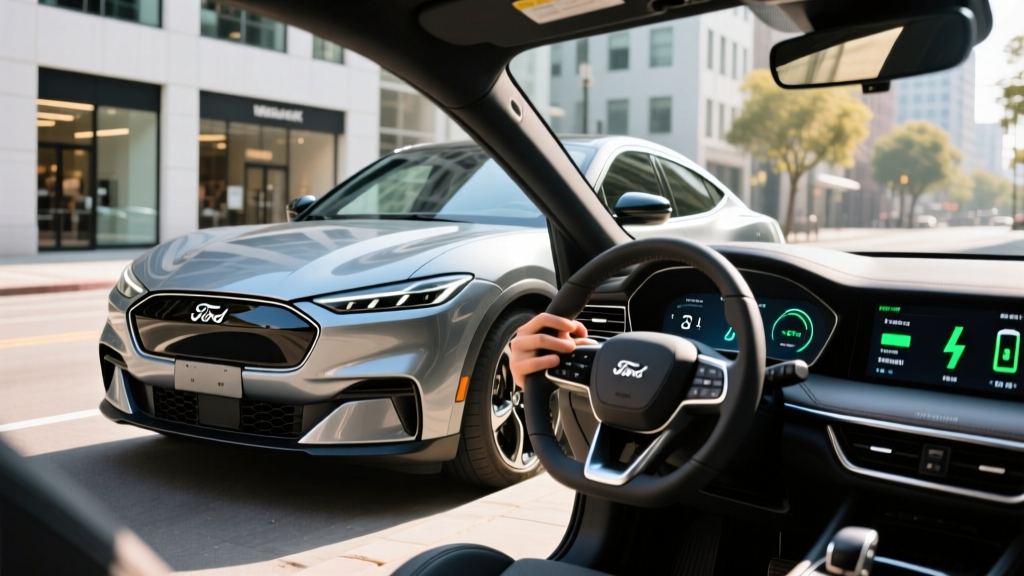
The 2026 Ford Mustang Mach-E X occupies a specific niche in the electric crossover market: it's the extended-range, rear-wheel-drive variant that prioritizes maximum distance per charge over all-wheel-drive traction or GT-level performance. For buyers who commute long distances, live in mild climates, and want to minimize charging stops on road trips, the Mach-E X makes a compelling case — but it's not without compromises.
Quick Verdict: Who Should Consider the Mach-E X?
Choose the Mach-E X if: You prioritize maximum EPA range (320 miles), have access to reliable home charging, live in a region with mild winters, and don't need AWD for snow or performance driving.
Look elsewhere if: You regularly tow (the Mach-E's 2,200-lb capacity is modest), need sub-4-second acceleration, or frequently drive in deep snow where AWD traction matters more than range.
The X trim sits between the base Select and the high-performance GT in Ford's lineup. It trades the dual-motor AWD system for a single rear motor and a larger 91 kWh battery pack, sacrificing some acceleration and wet-weather grip in exchange for roughly 30 additional miles of EPA-rated range compared to the AWD Extended Range model.
Range, Efficiency & Real-World Expectations
| Metric | 2026 Mach-E X (RWD Extended Range) |
|---|---|
| EPA Estimated Range | 320 miles |
| Battery Capacity (Usable) | 91 kWh (NMC chemistry) |
| EPA Efficiency | 101 MPGe combined / 33 kWh per 100 miles |
| Drivetrain | Rear-wheel drive, single motor |
| Horsepower | 290 hp |
| 0-60 mph | 6.1 seconds |
Real-World Range Reality Check
EPA Sticker: 320 miles
Expect in Practice: 260-285 miles on highway trips at 70-75 mph; 290-310 miles in mixed city/suburban driving with regen braking. In freezing temperatures (below 32°F), plan for 220-250 miles of usable range due to battery chemistry limitations and cabin heating demands.
Why the Gap: EPA testing includes substantial low-speed city driving where regenerative braking recovers energy. Sustained highway speeds above 65 mph increase aerodynamic drag exponentially, and cold weather increases battery internal resistance while demanding energy for thermal management and HVAC.
The Mach-E X's 91 kWh usable battery uses NMC (nickel manganese cobalt) chemistry, which offers higher energy density than LFP but requires more careful state-of-charge management for long-term health. Ford recommends daily charging to 80-90% for routine use and reserving 100% charges for road trips — a practice that extends battery lifespan.
Charging Speed: DC Fast Charging & Home Level 2
| Charging Method | Power / Rate | Time or Miles Added |
|---|---|---|
| DC Fast Charge (Peak) | 150 kW | 10-80% in ~41 minutes |
| DC Fast Charge (Sustained Average) | ~110 kW (10-80%) | ~180 miles added in 30 min |
| Level 2 Home Charging (240V, 48A) | 11.5 kW | ~32 miles per hour of charging |
| Level 2 Home Charging (240V, 32A) | 7.7 kW | ~22 miles per hour of charging |
| Level 1 (120V, 12A) | 1.4 kW | ~4 miles per hour of charging |
The Mach-E X's 150 kW peak DC fast-charge rate is respectable but not class-leading. Competitors like the Hyundai Ioniq 5 (peak 240 kW) and Kia EV6 (peak 239 kW) charge substantially faster when connected to 350 kW chargers. However, real-world charging depends on charger availability — most public DC fast chargers in 2026 max out at 150-180 kW, where the Mach-E X performs near its peak capability.
Charging Curve Reality: The Mach-E X sustains close to 150 kW from 10-30% state of charge, then tapers progressively. By 60% SoC, you're seeing ~100 kW; above 80%, it drops to 40-50 kW. This is why Ford quotes a 10-80% time rather than 0-100% — charging the final 20% can add 30+ minutes. For road trips, plan stops around the 10-80% window for optimal time efficiency.
For home charging, Ford includes the Mobile Power Cord with every Mach-E, which can handle Level 1 (120V) or Level 2 (240V, 32A) charging. For faster home replenishment, Ford's Connected Charge Station (48A, hardwired) adds ~32 miles of range per hour, meaning a full 10-100% charge takes roughly 10 hours — easily achievable overnight.
Performance & Driving Dynamics
The single rear-mounted motor produces 290 horsepower and 317 lb-ft of torque, delivering a 6.1-second 0-60 mph time. That's quick by historical standards but noticeably slower than the dual-motor AWD Extended Range (5.2 seconds) and far behind the GT Performance Edition (3.5 seconds). For most commuters and families, 6.1 seconds provides confident highway merging and passing — you'll rarely feel underpowered.
Rear-wheel drive gives the Mach-E X a more traditional, slightly tail-happy character compared to AWD models. In dry conditions, this translates to engaging handling with predictable limits. In rain or snow, however, the RWD layout demands more caution and quality winter tires. Traction control is effective but can't overcome physics on ice.
Ride quality is firm but controlled, with moderate body roll in corners. The steering is precise but light, lacking the feedback enthusiasts might expect from a vehicle wearing a Mustang badge. Noise isolation is excellent — wind and road noise are well-suppressed at highway speeds, making the Mach-E X a comfortable cruiser.
Interior Space, Cargo & Technology
| Dimension | Measurement |
|---|---|
| Front Legroom | 43.3 inches |
| Rear Legroom | 38.9 inches |
| Cargo Volume (Behind Rear Seats) | 29.7 cu ft |
| Cargo Volume (Rear Seats Folded) | 59.7 cu ft |
| Front Trunk (Frunk) | 4.7 cu ft (drainable, good for wet items) |
The Mach-E's interior accommodates four adults comfortably, with adequate rear headroom even for 6-foot passengers. The rear seat cushion is slightly low, which can leave taller passengers' knees higher than ideal on long trips, but legroom is generous.
Cargo space is competitive with rivals: 29.7 cubic feet behind the rear seats handles groceries, luggage for a weekend trip, or a large dog crate. The 4.7-cubic-foot frunk is small but useful for charging cables, wet gym clothes (it has a drain plug), or items you want separated from the main cargo area.
Infotainment: The 15.5-inch vertically oriented touchscreen runs Ford's SYNC 4A system with wireless Apple CarPlay and Android Auto. The interface is responsive, with a large navigation map occupying the upper portion and climate/vehicle controls below. Physical buttons are minimal — even the glovebox release is touchscreen-activated, which some users find frustrating.
Driver Assistance: Ford Co-Pilot360 2.0 is standard, including adaptive cruise control with stop-and-go, lane centering, automatic emergency braking, blind-spot monitoring, and rear cross-traffic alert. The optional BlueCruise system (available on higher trims or as a package) enables hands-free driving on pre-mapped divided highways — a SAE Level 2 system that still requires driver attention and will disable if the driver monitoring camera detects inattention.
Pricing, Trims & Federal Tax Credit Eligibility
| Trim | Base MSRP | Typical As-Tested | Est. After §30D Credit |
|---|---|---|---|
| Mach-E X (RWD Extended Range) | $48,995 | $50,500-$53,000 | $41,495-$45,500* |
| Mach-E X with BlueCruise Package | $51,095 | $53,500-$56,000 | $43,595-$48,500* |
*Federal Tax Credit Caveats: The IRS §30D clean vehicle credit offers up to $7,500, but eligibility depends on multiple factors that change frequently:
- MSRP Cap: SUVs must have an MSRP under $80,000 (the Mach-E qualifies)
- Buyer Income Cap: Modified AGI must not exceed $150,000 (single), $225,000 (head of household), or $300,000 (joint filers)
- Battery Sourcing: Critical minerals and battery components must meet escalating domestic-content thresholds — verify current-year compliance on the IRS qualified vehicles list
- Point-of-Sale Transfer: As of 2024+, you can transfer the credit to the dealer at purchase, reducing your out-of-pocket cost immediately rather than waiting for tax filing
Always confirm eligibility with your tax professional and check the IRS qualified vehicles list before purchasing. Battery sourcing rules have disqualified several models in recent years, and the Mach-E's eligibility has fluctuated.
Warranty Coverage
| Coverage Type | Term |
|---|---|
| Basic Vehicle Warranty | 3 years / 36,000 miles |
| Powertrain Warranty | 5 years / 60,000 miles |
| Electric Vehicle Components (Battery, Motor) | 8 years / 100,000 miles |
| Battery Capacity Retention | 8 years / 100,000 miles (minimum 70% capacity) |
Ford's EV component warranty is competitive with industry standards. The 70% capacity retention threshold over 8 years/100,000 miles means Ford will replace or repair the battery if it degrades below that level under normal use. Real-world data from 2021-2023 Mach-E owners suggests typical degradation of 5-8% over the first 60,000 miles, well within warranty limits.
Pros & Cons
Strengths
- 320-mile EPA range reduces charging anxiety on road trips
- Comfortable, quiet ride quality for long-distance cruising
- Spacious interior with practical cargo volume and frunk
- Competitive pricing after tax credit (if eligible)
- BlueCruise hands-free driving available (optional)
- Strong regenerative braking enables one-pedal driving
Weaknesses
- 150 kW peak charge rate slower than Hyundai/Kia competitors
- RWD traction limitations in snow and heavy rain
- Firm ride may not suit all buyers
- Minimal physical controls — even glovebox is touchscreen-activated
- Modest 2,200-lb towing capacity
- Tax credit eligibility uncertain due to battery sourcing rules
How It Compares to Key Competitors
| Vehicle | EPA Range | Peak DC Charge | 0-60 mph | Base MSRP |
|---|---|---|---|---|
| 2026 Ford Mustang Mach-E X (RWD) | 320 mi | 150 kW | 6.1 sec | $48,995 |
| 2026 Hyundai Ioniq 5 (RWD Long Range) | 303 mi | 240 kW | 7.3 sec | $47,500 |
| 2026 Kia EV6 (RWD Long Range) | 310 mi | 239 kW | 7.2 sec | $48,700 |
| 2026 Tesla Model Y (Long Range RWD) | 330 mi | 250 kW | 5.8 sec | $47,990 |
The Mach-E X trades blows with rivals on range but falls behind on charging speed. The Ioniq 5 and EV6 can add 180+ miles in 18 minutes at a 350 kW charger, while the Mach-E X needs roughly 30 minutes for similar replenishment. If you road-trip frequently and want minimal charging downtime, the Korean platforms have a clear advantage.
However, the Mach-E X offers a more traditional driving feel, better rear-seat comfort than the Ioniq 5, and doesn't carry the Tesla brand baggage that concerns some buyers. Interior material quality is competitive, and Ford's dealer network provides easier service access than Tesla's limited service centers in many regions.
Ownership Costs & Long-Term Value
Based on 15,000 miles annually and $0.14/kWh home electricity (national average), expect to spend roughly $650-$750 per year on charging the Mach-E X. That compares to $1,800-$2,200 for a similarly sized gas SUV at 25 MPG and $3.50/gallon fuel.
Insurance costs vary widely by region and driver profile but typically run 15-25% higher than comparable gas vehicles due to higher repair costs and vehicle values. Get quotes before purchasing — some insurers offer EV discounts that partially offset the premium.
Depreciation remains a wildcard. Early Mach-E models (2021-2022) saw steeper depreciation than Teslas but have stabilized as the EV market matures. Expect 45-55% value retention after 5 years/75,000 miles, though this varies with battery health, market conditions, and federal incentive changes.
Frequently Asked Questions
What is the real-world range of the Mustang Mach-E X?
While the EPA rates the Mach-E X at 320 miles, expect 260-285 miles on highway trips at 70-75 mph, 290-310 miles in mixed city driving, and 220-250 miles in freezing weather. Your results will vary based on driving style, terrain, temperature, and HVAC use.
How fast does the Mach-E X charge at home and on the road?
At a DC fast charger, the Mach-E X peaks at 150 kW and charges from 10-80% in approximately 41 minutes. At home with a 48-amp Level 2 charger (240V), it adds about 32 miles of range per hour, fully replenishing overnight. With a 32-amp Level 2 setup, expect ~22 miles per hour.
Does the 2026 Mach-E X qualify for the $7,500 federal tax credit?
The Mach-E X meets the MSRP cap (under $80,000 for SUVs) and most buyers will meet income requirements, but battery sourcing rules determine final eligibility. Check the IRS qualified vehicles list before purchasing, as this changes periodically based on supply chain shifts.
Is the Mach-E X worth buying over the Tesla Model Y or Hyundai Ioniq 5?
If you prioritize maximum range and don't mind slower charging, the Mach-E X is competitive. If fast charging matters for road trips, the Ioniq 5 or Model Y charge significantly faster. The Mach-E X appeals to buyers who want a traditional dealer experience, comfortable ride, and don't need AWD.
How long will the Mach-E X battery last?
Ford warrants the battery for 8 years/100,000 miles with a minimum 70% capacity retention threshold. Real-world data from early Mach-E owners shows 5-8% degradation over 60,000 miles with proper charging habits (avoiding frequent 100% charges and DC fast charging when possible). Most owners should expect 150,000-200,000+ miles before significant range loss.
Can I tow with the Mach-E X?
Yes, but capacity is modest: 2,200 pounds with the factory-installed tow package. That's sufficient for a small utility trailer, a couple of dirt bikes, or a light pop-up camper, but not a large boat or travel trailer. If towing is a priority, consider the Ford F-150 Lightning or Rivian R1S.
Final Assessment
The 2026 Ford Mustang Mach-E X delivers what its target buyer wants: long range, comfortable cruising, and practical daily usability at a competitive price (especially after the federal tax credit, if eligible). Its 320-mile EPA range provides genuine road-trip flexibility, and the spacious interior handles family duties well.
The main trade-offs are slower DC charging compared to Korean competitors and RWD limitations in snowy climates. If you live in the Sun Belt or Pacific Northwest, road-trip occasionally, and have home charging access, the Mach-E X is a strong choice. If you regularly drive in harsh winters, take frequent 400+ mile road trips, or simply want the fastest charging available, explore the Ioniq 5, EV6, or consider the Mach-E's AWD Extended Range variant.
Test-drive the Mach-E X back-to-back with its key competitors, get insurance quotes, and verify current tax credit eligibility before committing. The right EV is the one that fits your specific driving patterns, climate, and charging access — not just the one with the best spec sheet.