The Short Answer on a Corvette Electric Car
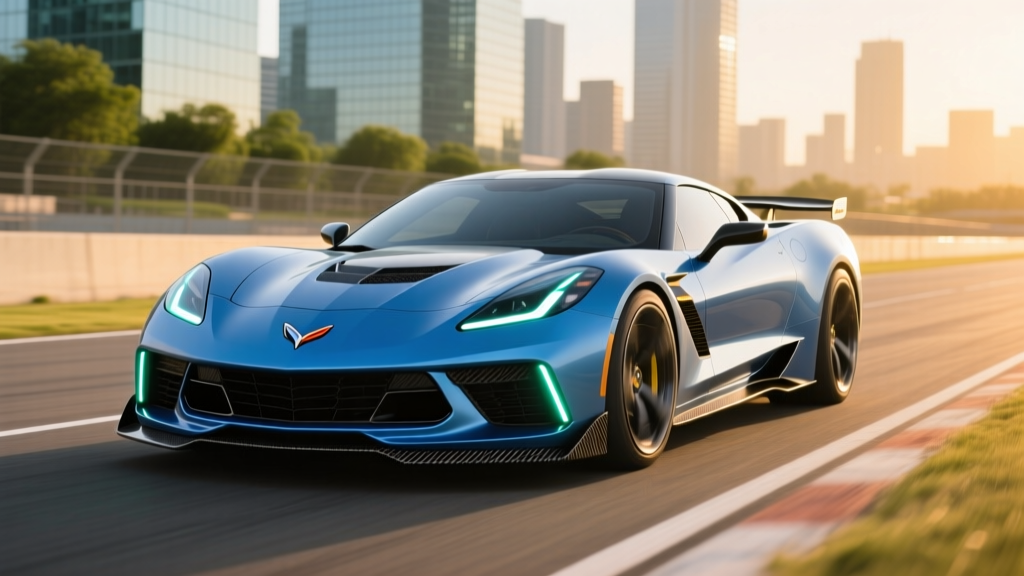
As of early 2026, Chevrolet has not officially confirmed a fully electric Corvette for sale in the United States. What has been confirmed is the Corvette E-Ray, a performance hybrid (HEV) that pairs a 6.2L V8 with a front-axle electric motor for all-wheel drive and a combined 655 horsepower — but it has no plug and no meaningful electric-only range. General Motors executives have repeatedly hinted that a battery-electric Corvette is under evaluation, and trademark filings and concept teasers have fueled speculation, but no production model-year, EPA range, battery size, or MSRP has been published. If a fully electric Corvette arrives, industry analysts project a debut no earlier than the 2028 model year, likely built on GM's Ultium-derived BEV3 or a next-generation performance platform.
What Chevrolet Has Actually Said About an Electric Corvette
The Corvette E-Ray, introduced for the 2024 model year and continuing into 2026, is the closest thing to an electrified Corvette you can buy today. It uses a 1.9 kWh lithium-ion battery (not plug-in) that powers the front wheels for brief electric assist during launches and low-speed stealth driving — typically under 1 mile of electric-only creep. This makes it a performance hybrid, not a plug-in hybrid (PHEV) or battery electric vehicle (BEV).
GM CEO Mary Barra has stated publicly that the company sees an electric future for its performance lineup, and former Corvette chief engineer Ed Welburn and current GM design leadership have teased "electrified Corvette concepts" internally. However, no press release from Chevrolet Newsroom has confirmed a production BEV Corvette. Trademark applications for names like "Corvette Stingray EV" and "eCorvette" have surfaced but do not guarantee production.
Bottom line: If you want an electrified Corvette in 2026, the E-Ray hybrid is your only option. A fully electric Corvette remains speculative.
Corvette E-Ray Hybrid: What You Can Actually Buy Now
Since the fully electric Corvette doesn't exist yet, here's a detailed look at the electrified Corvette that's on dealer lots today — the 2026 Corvette E-Ray.
| Specification | 2026 Corvette E-Ray (HEV) | 2026 Corvette Stingray Z51 (Gas) |
|---|---|---|
| Powertrain | 6.2L V8 + front electric motor (AWD) | 6.2L V8 (RWD) |
| Combined Horsepower | 655 hp | 495 hp |
| 0–60 mph | 2.9 seconds | |
| Battery | 1.9 kWh lithium-ion (non-plug-in) | N/A |
| Electric-Only Range | <1 mile (stealth mode, low speed) | N/A |
| EPA Fuel Economy | ~19 mpg combined (est.) | ~19 mpg combined |
| Starting MSRP | ~$111,400 (1LZ coupe) | ~$74,400 (1LT coupe) |
| Federal EV Tax Credit | Not eligible (HEV, not PHEV/BEV) | Not eligible |
| Drivetrain | eAWD | RWD |
The E-Ray's hybrid system is designed for performance, not efficiency. The electric motor fills torque gaps during gear shifts and provides instantaneous launch thrust, but you won't plug it in, and you won't commute on electric power. EPA fuel economy is virtually identical to the gas-only Stingray. Source: fueleconomy.gov.
What a Fully Electric Corvette Would Need to Compete
If GM green-lights a BEV Corvette, it will enter a small but growing segment of high-performance electric sports cars and grand tourers. Here's what the competitive landscape looks like and what specs an electric Corvette would need to be credible:
| Vehicle | Type | 0–60 mph | EPA Range | Battery | Starting MSRP |
|---|---|---|---|---|---|
| Corvette E-Ray (2026) | HEV | 2.5s | ~350 mi (gas) | 1.9 kWh | ~$111,400 |
| Porsche Taycan Turbo GT (2025) | BEV | 2.1s | 269 mi | 105 kWh (gross) | ~$230,000 |
| Tesla Model S Plaid (2025) | BEV | 1.99s | 359 mi | ~100 kWh | ~$89,990 |
| Lotus Eletre R (2025) | BEV | 2.9s | ~290 mi (est.) | 112 kWh | ~$120,000 |
| Projected Electric Corvette | BEV | Sub-2.5s (target) | ~250–300 mi (est.) | ~85–100 kWh (est.) | $100,000–$150,000 (est.) |
For an electric Corvette to maintain the brand's value-proposition reputation — extreme performance at a relative bargain — GM would likely target a sub-$120,000 starting MSRP, sub-2.5-second 0–60, and at least 250 miles of EPA range. The challenge: performance EVs that achieve all three simultaneously are rare and expensive. The Taycan Turbo GT costs over $230,000. The Model S Plaid sacrifices sports-car handling dynamics for sedan practicality.
Real Costs: Corvette E-Ray vs. a Hypothetical Electric Corvette
Let's compare what owning the current hybrid E-Ray costs versus what a fully electric Corvette might cost, assuming a ~$120,000 MSRP BEV variant.
| Cost Factor | Corvette E-Ray (HEV) | Hypothetical BEV Corvette |
|---|---|---|
| Purchase Price (MSRP) | ~$111,400 | ~$120,000 (est.) |
| Federal Tax Credit (§30D) | $0 (not eligible) | Up to $7,500 (if eligible — see IRS rules) |
| Annual Fuel/Energy (12,000 mi/yr) | ~$2,525 (gas at $4.00/gal, 19 mpg) | ~$540 (electricity at $0.15/kWh, 3 mi/kWh) |
| Annual Maintenance | ~$800–$1,200 (oil, filters, brakes) | ~$300–$500 (no oil, regen saves brakes) |
| Insurance (annual avg.) | ~$3,200–$4,500 | ~$3,500–$5,000 (EV performance premium) |
| 5-Year Fuel/Energy Total | ~$12,625 | ~$2,700 |
| 5-Year Maintenance Total | ~$5,000 | ~$2,000 |
The energy savings with a BEV Corvette would be substantial — roughly $10,000 over five years in fuel alone. However, insurance for high-performance EVs tends to run 10–20% higher than their gas counterparts, and upfront battery costs push the purchase price higher. The federal §30D tax credit could offset up to $7,500 at point of sale, but eligibility depends on MSRP caps (currently $80,000 for sedans, but sports cars may fall under different classifications), buyer income limits ($300,000 joint / $150,000 single), and battery critical-mineral sourcing requirements. Always verify current rules at IRS.gov.
Common Misconceptions About a Corvette Electric Car
| Myth | Fact |
|---|---|
| "The E-Ray is a plug-in hybrid." | False. The E-Ray is a conventional HEV. Its 1.9 kWh battery charges only through regenerative braking and the engine — there is no charge port. |
| "An electric Corvette will be under $80,000." | Unlikely. Current battery costs for a 90+ kWh performance pack, combined with Corvette-level chassis and interior engineering, put realistic MSRP between $100,000–$150,000. |
| "An electric Corvette can't handle like a mid-engine sports car." | Not necessarily. A skateboard battery platform lowers center of gravity, and torque-vectoring electric motors can improve cornering dynamics. The challenge is weight — EV sports cars typically weigh 500–800 lbs more than gas equivalents. |
| "It's already available to order." | False. No BEV Corvette has been announced for production. Only the E-Ray hybrid is orderable today. |
| "An electric Corvette would qualify for the full $7,500 tax credit." | Not guaranteed. §30D credit eligibility requires meeting MSRP caps, income limits, and critical-mineral/battery-component sourcing thresholds that change annually. Consult a tax professional. |
Ownership Realities: What First-Time EV Buyers Should Know
If you're considering waiting for an electric Corvette — or pivoting to an existing performance EV — here are the practical ownership factors that matter:
Home Charging Is Essential for Performance EVs
Performance EVs with 90+ kWh batteries are impractical without Level 2 home charging. A standard 120V Level 1 outlet adds roughly 3–5 miles of range per hour — meaning a full charge from 10% could take over 24 hours. A 48-amp Level 2 home charger (like a ChargePoint Home Flex or Tesla Wall Connector) on a 240V/60A circuit adds ~30–40 miles per hour, enabling a full overnight charge. Installation costs typically range from $800 to $2,500 depending on panel capacity and run length — and may require a $2,000–$5,000 electrical panel upgrade if your home has a 100-amp service.
Cold-Weather Range Loss Is Real
Performance EV batteries lose 20–35% of their EPA range in sustained sub-freezing temperatures. A BEV Corvette rated at 280 miles EPA could realistically deliver 180–210 miles in a Midwest winter. Preconditioning the battery while plugged in mitigates this, but only if you have home charging access.
Public Fast Charging for Road Trips
A performance EV with ~250 kW DC fast-charging capability could add 10–80% in roughly 20–25 minutes at a compatible station. However, charging curves taper significantly above 80% SoC, and real-world charger reliability on networks like Electrify America and EVgo remains inconsistent outside major metro corridors. For track-day driving or long road trips, plan charging stops carefully.
Insurance and Depreciation
High-performance EVs carry insurance premiums 15–30% above equivalent gas sports cars, driven by higher repair costs (specialized body shops, battery safety protocols) and elevated theft/total-loss values. Depreciation data for niche performance EVs is limited, but mainstream EVs have seen steeper depreciation than gas sports cars in 2024–2025 due to price wars and rapid tech obsolescence.
Decision Framework: Should You Wait or Buy Now?
Buy the Corvette E-Ray Now If:
- You want an electrified Corvette today with no waiting and proven reliability.
- You don't have access to Level 2 home charging and can't install it.
- You prioritize the mid-engine V8 sound, feel, and lightweight dynamics that a heavy battery pack would alter.
- You drive fewer than 10,000 miles/year and fuel savings won't offset a higher BEV purchase price.
- You want AWD capability — the E-Ray is the first all-wheel-drive Corvette ever produced.
Wait for an Electric Corvette (or Buy a Performance EV Now) If:
- You have Level 2 home charging and want to cut annual fuel costs by ~$2,000.
- Instant electric torque and sub-2.5-second 0–60 launches are your top priority.
- You're open to a Tesla Model S Plaid, Porsche Taycan, or Lotus Eletre in the meantime.
- You want lower maintenance costs (no oil changes, fewer brake replacements thanks to regen).
- You're willing to accept the weight penalty (~5,000+ lbs) and potential handling trade-offs of a battery-electric sports car.
Frequently Asked Questions
Has Chevrolet officially announced a fully electric Corvette?
No. As of 2026, Chevrolet has not announced a production battery-electric Corvette. The only electrified Corvette available is the E-Ray hybrid (HEV), which is not a plug-in and offers less than 1 mile of electric-only range.
When might an electric Corvette be available?
Industry analysts and GM insider reports suggest a possible debut no earlier than the 2028 or 2029 model year. This timeline is speculative and subject to change based on GM's product strategy and battery cost trajectories.
Does the Corvette E-Ray qualify for any federal tax credits?
No. The E-Ray is a conventional hybrid (HEV), not a plug-in hybrid (PHEV) or battery electric vehicle (BEV). The federal §30D Clean Vehicle Credit applies only to new PHEVs and BEVs that meet MSRP, income, and battery-sourcing requirements.
How much would an electric Corvette likely cost?
Based on competitive positioning against the Porsche Taycan, Tesla Model S Plaid, and current Corvette pricing, analysts estimate a starting MSRP between $100,000 and $150,000 for a BEV Corvette, depending on trim and battery size.
Would an electric Corvette be heavier than the gas version?
Yes, significantly. Current gas Corvettes weigh approximately 3,600–3,700 lbs. A BEV Corvette with a 90–100 kWh battery pack would likely weigh 4,500–5,000 lbs or more, affecting handling dynamics, tire wear, and braking performance — though a low-mounted battery would improve center of gravity.
Can I charge a future electric Corvette at Tesla Superchargers?
GM vehicles built from 2025 onward are equipped with NACS (North American Charging Standard) ports, granting access to Tesla's Supercharger network. A future electric Corvette would almost certainly use NACS, giving it access to 17,000+ Supercharger stalls nationwide plus other NACS-compatible networks.