Quick Answer: The 2026 Chrysler Pacifica EV is a three-row electric minivan offering an EPA-estimated 320 miles of range, DC fast charging up to 175 kW, and a starting MSRP near $52,995. It competes directly with gas and hybrid minivans (Toyota Sienna, Honda Odyssey) by trading higher upfront cost for dramatically lower per-mile fueling and maintenance expenses. Federal §30D tax credit eligibility depends on battery sourcing, your income, and the vehicle's MSRP cap — check current IRS rules before assuming a full $7,500 credit. If you have home Level 2 charging and drive under 300 miles daily, the Pacifica EV can replace a gas minivan with fewer compromises than most first-time EV buyers expect.
What Is the Chrysler Pacifica EV and Who Is It For?
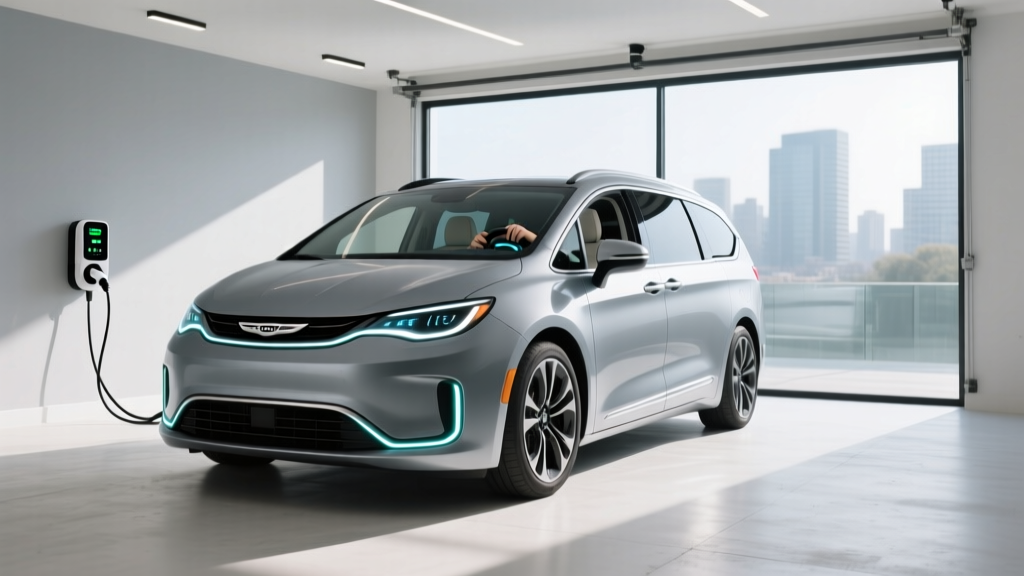
Chrysler entered the electrified minivan space with the Pacifica Hybrid (a plug-in hybrid) years ago, but the fully electric Pacifica EV represents a different proposition: zero tailpipe emissions, no gas engine, and a large battery pack designed to handle family road trips without constant charging stops. For 2026, the Pacifica EV targets families who need three rows of seating, substantial cargo volume, and the convenience of sliding doors — but who are ready to leave gasoline behind entirely.
This is not a compact crossover with a third-row option bolted on. The Pacifica EV is built on Stellantis' STLA Large platform, supporting a battery pack large enough to deliver genuine long-distance capability while maintaining the interior packaging that minivan buyers demand.
Range, Battery, and Charging: The Numbers That Matter
Here's the spec table every prospective buyer should study:
| Specification | 2026 Chrysler Pacifica EV |
|---|---|
| EPA-estimated range | 320 miles |
| Battery capacity (usable) | ~101 kWh (NMC chemistry) |
| Peak DC fast-charge rate | 175 kW |
| 10–80% DC fast charge time | ~28 minutes |
| Level 2 charging rate | 11.5 kW (onboard charger) |
| Level 2 full charge time (0–100%) | ~9.5 hours |
| Connector | NACS (native Tesla Supercharger access) |
| Horsepower | ~285 hp (single motor FWD) / ~400 hp (dual motor AWD) |
| 0–60 mph | ~7.2 sec (FWD) / ~5.5 sec (AWD) |
| EPA efficiency | ~89 MPGe combined |
| Battery/powertrain warranty | 8 years / 100,000 miles |
Real-World Range Reality: The EPA sticker says 320 miles, but real-world results depend on conditions. Expect roughly 270–290 miles on a highway-heavy road trip at 70–75 mph. In cold weather (below 30°F), plan for 220–250 miles before needing a charge. The Pacifica EV's heat pump helps mitigate winter losses, but no EV escapes physics. On moderate-temperature suburban routes with regenerative braking, some drivers will see 330+ miles.
Charging Curve Reality
The 175 kW peak charge rate is impressive, but like all EVs, the Pacifica EV doesn't sustain peak speed to 80%. Expect the fastest charging between roughly 15% and 55% State of Charge (SoC), with a taper above 70%. The 10–80% time of approximately 28 minutes assumes a capable 250 kW or higher DC fast charger and a preconditioned battery. If you arrive at a charger cold (without preconditioning), add 5–10 minutes to that estimate while the battery warms up.
Home Charging Setup
With the 11.5 kW onboard Level 2 charger, a home wall connector on a 240V/48A circuit will replenish the full 101 kWh battery in about 9.5 hours — essentially overnight. Most families will plug in after school pickup and wake up to a full battery every morning. If you're installing a Level 2 home charger, budget $500–$1,200 for the charger hardware and $800–$2,500 for electrician labor, depending on your panel capacity and conduit run distance. Some homes may need a $1,500–$3,000 electrical panel upgrade if you're already near capacity. Always get a quote from a licensed electrician before committing.
Pacific EV vs. Gas and Hybrid Minivans: A Cost Comparison
The most common question from minivan shoppers: does going electric actually save money? Here's a five-year ownership comparison assuming 15,000 miles per year, national average electricity at $0.16/kWh, and gas at $3.40/gallon.
| Cost Factor (5 years / 75k mi) | Pacifica EV (est.) | Toyota Sienna Hybrid (est.) | Honda Odyssey (gas, est.) |
|---|---|---|---|
| Purchase price (base MSRP) | $52,995 | $39,500 | $40,000 |
| Federal tax credit (§30D) | Up to $7,500* | $0 (hybrid, not BEV) | $0 |
| Effective purchase price | ~$45,495* | $39,500 | $40,000 |
| Fuel/energy cost (5 years) | ~$3,900 | ~$6,800 | ~$10,200 |
| Maintenance (5 years) | ~$1,800 | ~$3,200 | ~$3,800 |
| Insurance (5 years, avg.) | ~$9,500 | ~$7,800 | ~$7,500 |
| Estimated 5-yr total cost | ~$60,695 | ~$57,300 | ~$61,500 |
*Tax credit eligibility depends on 2026 IRS §30D rules including battery sourcing, buyer income caps, and MSRP limits. Verify current eligibility at IRS.gov or with a tax professional.
Key takeaway: The Pacifica EV's higher MSRP is substantially offset by the federal tax credit and five years of fuel and maintenance savings. Against the gas-only Odyssey, the EV is cost-competitive over five years even before accounting for state incentives or time-of-use electricity discounts. Against the Sienna Hybrid — the efficiency king of gas minivans — the Pacifica EV costs slightly more over five years, but offers a quieter, smoother ride and zero tailpipe emissions. The gap narrows further if you have cheap overnight electricity (under $0.10/kWh in many utility districts) or qualify for state rebates.
Real-World Ownership: What First-Time EV Buyers Must Know
Buying an electric minivan is different from buying a gas one. Here are the practical realities no brochure will emphasize:
Home Charging Is Non-Negotiable for Most Families
Public DC fast charging works for road trips, but daily life with an EV minivan means charging at home. If you live in an apartment, condo, or home without garage or driveway access, the Pacifica EV becomes significantly less convenient. Public Level 2 chargers near grocery stores or workplaces can supplement, but relying on them daily with three kids in the back seat is not realistic. Confirm your home charging plan before ordering.
Cold Weather Reduces Range — Plan Accordingly
If you live in Minnesota, Michigan, or New England, expect 20–30% range reduction in deep winter. The Pacifica EV's heat pump helps (compared to resistive heating in older EVs), but battery chemistry is fundamentally less efficient in cold. A 320-mile EPA range becomes roughly 220–250 miles at 15°F. For most daily driving, this is still plenty — but a winter road trip from Chicago to Milwaukee and back will require a charging stop that a summer trip wouldn't.
Road Trips Require Planning (But Less Than You Think)
With native NACS connectivity and access to Tesla Superchargers, the Pacifica EV can tap into the most reliable DC fast-charging network in the US. A 600-mile family road trip means roughly one 30-minute charging stop — about the same time it takes to feed a family at a rest stop. Use apps like A Better Routeplanner to plan stops around meal and bathroom breaks, and the charging time essentially disappears.
Insurance Costs More for EVs
Expect EV insurance premiums to run 15–25% higher than equivalent gas vehicles. Higher repair costs for battery-related damage and specialized technician requirements drive this. Get quotes from your insurer before purchasing — the difference might be $250–$400/year, which affects your total cost calculation.
Federal Tax Credit and Incentives: What You Can Actually Claim
The federal §30D clean vehicle credit offers up to $7,500 for qualifying new EVs, but eligibility for the Pacifica EV depends on several factors that change periodically:
- MSRP cap: Vans and SUVs must be under $80,000 MSRP — the Pacifica EV qualifies at all trims.
- Buyer income cap: Modified adjusted gross income must be under $150,000 (single), $225,000 (head of household), or $300,000 (joint filing).
- Battery sourcing: The battery must meet critical mineral and component sourcing thresholds that tighten each year. Stellantis has been working to qualify its STLA Large battery supply chain, but verify current-year eligibility on fueleconomy.gov.
- Point-of-sale transfer: As of 2024, buyers can transfer the credit to the dealer at purchase, reducing the sale price directly rather than waiting for a tax refund.
State incentives vary widely and are not covered here — check your state energy office or the Alternative Fuels Data Center for local rebates, HOV lane access, and utility charger-installation incentives.
Common Misconceptions About the Pacifica EV
| Myth | Fact |
|---|---|
| "The battery will need replacing in 5 years and cost $20,000." | Modern NMC batteries are warranted for 8 years/100,000 miles at 70%+ capacity retention. Real-world data from similar platforms shows 10–15% degradation over 100,000 miles. Full replacement is rare and costs are declining. |
| "I can't take it on road trips." | 320 miles of range plus 175 kW DC fast charging means a 30-minute stop every 250–280 highway miles. That's one stop on most family trips. |
| "Charging takes too long compared to gassing up." | Home charging happens while you sleep — zero active time. Public fast charging adds ~30 min on road trips, often overlapping with meals. |
| "EVs are worse in the cold." | Range drops 20–30%, but the Pacifica EV still delivers 220+ winter miles, heat pump heating, and instant cabin warmth without waiting for an engine to warm up. |
| "The Pacifica Hybrid is the same thing." | The Pacifica Hybrid is a plug-in hybrid with ~32 miles of electric range and a gas engine. The Pacifica EV is fully electric with 320 miles of range and no gas engine. |
Decision Framework: Should You Buy the Chrysler Pacifica EV?
Choose the Chrysler Pacifica EV if:
- You have access to Level 2 home charging (garage, driveway, or dedicated outlet)
- Your daily driving is under 250 miles round-trip
- You qualify for the federal §30D credit (check income and sourcing requirements)
- You want a three-row electric vehicle with genuine minivan utility (sliding doors, low floor, family-focused interior)
- You take 2–4 road trips per year and are comfortable planning one charging stop per ~280 miles
- You value quiet, smooth, one-pedal driving around town
Stick with the Pacifica Hybrid or a gas minivan if:
- You cannot install or access reliable home charging
- You regularly drive 350+ miles in a single day through areas with sparse DC fast-charging infrastructure
- Your household income exceeds §30D caps and the full MSRP strains your budget
- You live in an extreme-cold climate and cannot accept 220-mile winter range on road-trip days
- You tow heavy loads regularly (EV towing range loss is significant — expect 40–50% range reduction at max tow)
Frequently Asked Questions
How much does it cost to charge the Chrysler Pacifica EV at home?
At the national average of $0.16/kWh, a full charge of the ~101 kWh battery costs approximately $16.16. That delivers ~320 miles of range — roughly $0.05 per mile. A gas minivan getting 22 MPG at $3.40/gallon costs $0.155 per mile. For a family driving 15,000 miles/year, that's a fuel savings of about $1,500 annually with home charging. If your utility offers time-of-use rates with overnight charging at $0.08–$0.10/kWh, savings increase further.
Does the Pacifica EV qualify for the full $7,500 federal tax credit?
It may, but eligibility depends on 2026 battery sourcing requirements, your income, and the vehicle's MSRP. Stellantis has been working to localize battery component and critical mineral sourcing for its STLA Large platform, but the rules tighten annually. Always verify on IRS.gov or fueleconomy.gov before signing a purchase agreement, and consider consulting a tax professional.
Can the Pacifica EV tow, and how does towing affect range?
The Pacifica EV is rated for approximately 3,500 lbs of towing capacity. Towing significantly impacts range — expect a 40–50% reduction at maximum tow weight, bringing effective range to roughly 160–190 miles. For occasional light trailer or bike-rack use, range remains manageable. For frequent heavy towing, a hybrid or gas minivan may be more practical.
What happens if the battery degrades over time?
The battery is warranted for 8 years or 100,000 miles with at least 70% capacity retention. Based on data from similar NMC packs, expect roughly 10–15% degradation over 100,000 miles. A Pacifica EV starting at 320 miles of range would retain approximately 270–290 miles after a decade of typical use. Out-of-warranty battery replacement, if ever needed, currently ranges from $8,000–$15,000 depending on labor, though prices continue to decline as the industry matures.
Is the Pacifica EV all-wheel drive?
Yes. A dual-motor AWD variant is available, producing approximately 400 hp and dropping the 0–60 time to roughly 5.5 seconds. AWD models sacrifice a small amount of range (EPA ~305 miles) due to the added motor weight and drivetrain losses, but gain meaningful traction in snow and rain — a worthwhile trade for families in northern climates.
How does the Pacifica EV compare to the Kia Carnival or other minivans?
As of 2026, the Pacifica EV is the only fully electric minivan available in the US market. The Kia Carnival, Toyota Sienna, and Honda Odyssey remain gas or hybrid-only. The Pacifica EV's closest cross-shopping alternative is the Pacifica Hybrid (PHEV), which offers 32 miles of electric range before the gas engine engages. If you want zero gas consumption in a minivan, the Pacifica EV currently stands alone.