Quick Verdict: The Tesla Model Y in 2026
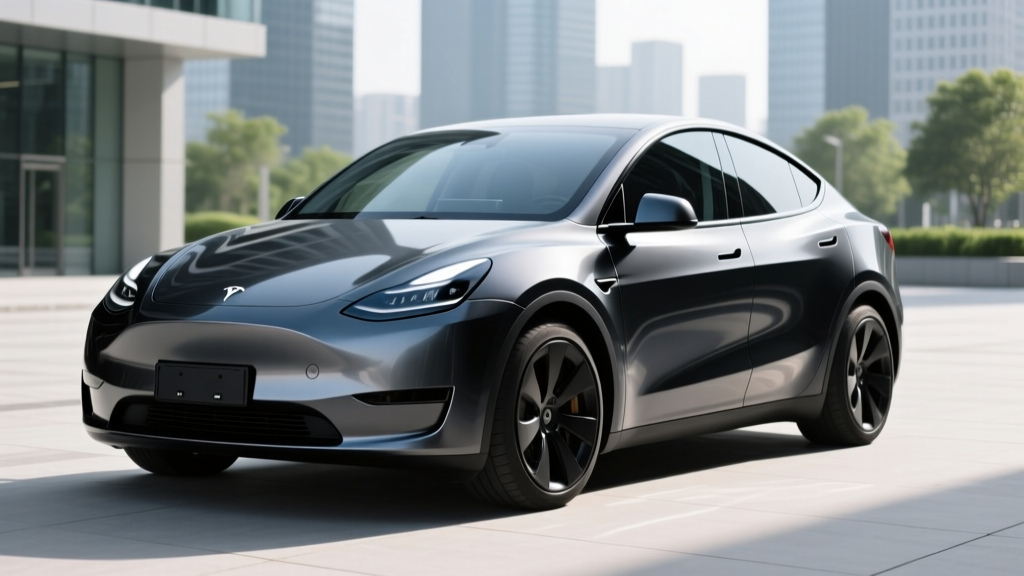
The Tesla Model Y remains the default answer for buyers who want a practical, tech-forward electric SUV without venturing into the unknown. For the 2026 model year, Tesla refreshed the Long Range and Performance trims with a revised interior, slightly improved efficiency, and the continuation of its Juniper-era styling. But if you've been browsing EV forums or Instagram, you've almost certainly seen the phrase chrome Tesla — shorthand for the chrome-delete vinyl wrap trend that strips the car's exterior brightwork for a stealthier, monochrome look. Whether you're researching the car itself or considering a post-purchase aesthetic mod, this review covers the hard specs that matter: real-world range, charging speed, pricing after tax credits, and whether the Model Y still earns its spot against rivals like the Hyundai Ioniq 5 and Ford Mustang Mach-E.
| Spec | Value |
|---|---|
| EPA Range | 320 miles |
| Battery (usable) | ~75 kWh, NMC chemistry |
| Drivetrain | Dual-motor AWD |
| Horsepower | 384 hp (combined) |
| 0-60 mph | 4.8 seconds |
| Max DC Fast Charge | 250 kW (peak) |
| 10-80% DC Charge Time | ~27 minutes |
| Level 2 Home Charge Rate | 11.5 kW (~44 mi/hr) |
| Efficiency | 122 MPGe combined / 28 kWh/100mi |
| Cargo Volume | 30.2 cu ft (rear seats up) / 72.0 cu ft (folded) |
| Rear Legroom | 38.4 inches |
| Base MSRP (Long Range AWD) | $46,630 |
| Battery Warranty | 8 years / 120,000 miles |
Real-World Range vs. the EPA Sticker
The EPA rates the 2026 Model Y Long Range AWD at 320 miles. That number is competitive, but as any seasoned EV owner knows, the sticker is a ceiling under ideal conditions — not a guarantee.
- Mixed city/suburban (65-75°F): 290-310 miles — close to EPA thanks to regen-heavy driving
- Sustained highway (75 mph, 70°F): 255-275 miles — aero drag dominates at speed
- Cold-weather highway (30°F): 210-240 miles — cabin heating and battery resistance cut range ~25-30%
- Cold city (30°F, stop-and-go): 245-265 miles — heat pump helps, but cold still bites
Source: Owner-reported data aggregated by fueleconomy.gov and real-world fleet testing.
The Model Y's heat pump (standard since the 2021 refresh) reduces cold-weather losses compared to resistive-heater EVs, but physics is physics. If your commute is 80 miles round-trip in a northern winter, you'll still have comfortable margin — but plan for ~230 usable miles on the coldest days rather than banking on 320.
Charging: How Fast Does the Model Y Actually Charge?
Tesla's Supercharger network remains the gold standard for DC fast-charging reliability, and the 2026 Model Y can accept up to 250 kW peak at a V3 or V4 Supercharger. However, peak rate is not sustained rate. Here's what a typical charging session looks like:
| Charging Level | Power (kW) | Speed | Notes |
|---|---|---|---|
| Level 1 (120V household) | ~1.4 kW | ~4 mi/hr | Emergency/trickle only |
| Level 2 (240V, 48A Wall Connector) | 11.5 kW | ~44 mi/hr | Full charge in ~7 hours |
| Level 2 (240V, 32A mobile connector) | 7.7 kW | ~30 mi/hr | Common with NEMA 14-50 |
| DC Fast (Supercharger V3/V4) | 250 kW peak | 10-80% in ~27 min | Tapers significantly above 80% |
| DC Fast (CCS adapter at EA/others) | ~150-200 kW typical | 10-80% in ~32-38 min | Depends on station output |
Charging-curve reality check: The Model Y hits 250 kW only briefly in the 10-30% SoC window. By 50%, you're closer to 150 kW, and above 80% the rate drops to under 40 kW as the battery management system protects cell longevity. This means a 10-80% session takes ~27 minutes, but pushing to 95% will add another 20+ minutes. On road trips, the car's navigation will precondition the battery when you set a Supercharger as your destination — warming the pack so it accepts peak power on arrival. Skip preconditioning and your first 5 minutes at the charger will be noticeably slower, especially in cold weather.
At home, Tesla's Wall Connector on a 60A circuit delivers 11.5 kW — enough to add ~44 miles per hour of charging, or fully replenish the battery overnight. Installation typically runs $800-$1,500 if your panel has capacity, or $2,000-$4,000+ if you need a panel upgrade. Always get a quote from a licensed electrician before committing.
Performance and Driving Dynamics
The Long Range AWD's dual-motor setup delivers 384 hp and a 4.8-second 0-60 mph time — brisk enough to merge confidently and pass without drama, if not quite the neck-snap of the Performance trim (3.5 seconds). The instant torque from the electric motors makes it feel quicker than the numbers suggest in everyday driving.
Ride quality improved with the Juniper refresh: Tesla softened the suspension tuning and added acoustic glass, reducing the harshness that plagued pre-2025 models. The steering remains precise but numb — this is a car optimized for efficiency and tech, not canyon carving. Regenerative braking is strong enough for one-pedal driving in most conditions, though Tesla removed the user-adjustable regen setting years ago; you get what the engineers decided, which is aggressive enough to rarely touch the brake pedal in city traffic.
Pricing, Trims, and Federal Tax Credit Eligibility
The 2026 Model Y is offered in three trims. Here's the pricing landscape, including how the federal §30D tax credit factors in:
| Trim | MSRP | Est. After §30D Credit | Credit Eligible? |
|---|---|---|---|
| Long Range RWD | $44,130 | ~$36,630 | Yes (if buyer qualifies) |
| Long Range AWD | $46,630 | ~$39,130 | Yes (if buyer qualifies) |
| Performance AWD | $51,630 | ~$44,130 | Yes (if buyer qualifies) |
Does the Model Y qualify for the federal EV tax credit? The answer depends on you, not just the car. Under current IRS §30D rules, the full $7,500 credit requires:
- MSRP cap: SUVs must be under $80,000 — all Model Y trims qualify.
- Buyer income cap: AGI ≤ $150,000 (single) / $300,000 (married filing jointly).
- Battery sourcing: Critical minerals and battery components must meet phased-in domestic/free-trade-agreement thresholds. Tesla's US-built batteries with LFP and NMC cells have generally met these requirements, but sourcing rules tighten annually — verify current-year compliance on Tesla's website or the IRS qualified vehicles list before purchasing.
- Point-of-sale transfer: As of 2024, you can transfer the credit to the dealer at purchase, reducing your out-of-pocket cost immediately rather than waiting for tax filing. Tesla supports this at delivery.
Consult a tax professional for your specific situation. State and local incentives (California's CVRP, Colorado's innovative motor vehicle credit, etc.) can stack on top but vary by jurisdiction — check your state energy office for current programs.
The Chrome Delete Trend: What "Chrome Tesla" Really Means
Search "chrome Tesla" and you'll find thousands of results showcasing Model Ys (and Model 3s) with chrome-delete vinyl wraps — a process where the factory chrome window surrounds, door handles, mirror caps, and sometimes badges are covered in satin or gloss black vinyl. The result is a monochromatic, stealth-fighter aesthetic that has become almost a rite of passage for Tesla owners.
What it costs: A professional full chrome delete runs $400-$800 depending on your market and the vinyl quality (3M or Avery Dennison films are the standard). DIY kits exist for $50-$150 but require patience and a heat gun to avoid bubbling.
Does it affect range or warranty? No measurable aero impact — it's purely cosmetic. Tesla's vehicle warranty is unaffected. However, if you plan to sell or trade in, some buyers prefer the factory chrome, and a poorly executed wrap can leave adhesive residue or damage trim on removal. A clean, professional job is typically neutral-to-positive for resale among the Tesla-enthusiast buyer pool.
Worth noting: The 2025 Juniper refresh already reduced exterior chrome compared to earlier Model Ys, with darker trim on many configurations. If you're ordering new, check whether your chosen color/trim combo already ships with the darker aesthetic before spending on an aftermarket delete.
Tech, Interior, and Driver Assistance
The Model Y's interior is minimalist to a fault — a single 15.4-inch touchscreen handles everything from climate to navigation to media. The 2026 refresh added ventilated front seats, ambient lighting, and a rear-seat touchscreen for passengers. Build quality has improved meaningfully since the Fremont early-production days, with tighter panel gaps and softer materials on the dashboard and door panels.
Autopilot and FSD (Supervised): Every Model Y ships with basic Autopilot (lane centering + adaptive cruise). Tesla's Full Self-Driving (Supervised) package remains a $8,000 add-on (or $99/month subscription). Despite the name, FSD is a SAE Level 2 system — meaning you must remain fully engaged, hands on or near the wheel, eyes on the road. It handles city streets, stoplights, and highway interchanges with increasing competence, but it is not autonomous driving. Treat it as a sophisticated co-pilot, not a chauffeur.
FSD is a Level 2 driver-assist system per SAE International. The driver must supervise at all times and be prepared to take over instantly. It does not make the vehicle self-driving. Misuse or inattention has contributed to NHTSA-investigated incidents. Never use FSD while fatigued, distracted, or impaired.
Pros, Cons, and Competitor Check
- Supercharger network reliability remains best-in-class for road trips
- 320-mile EPA range covers most commutes with multi-day margin
- Class-leading cargo space (72 cu ft with seats folded)
- OTA updates continuously add features post-purchase
- Strong resale value relative to most EVs
- Heat pump standard — better cold-weather efficiency
- Minimalist interior isn't for everyone — no physical buttons, no instrument cluster
- Ride quality improved but still firm on broken pavement
- FSD remains expensive and is NOT autonomous driving
- Non-Tesla DC charging requires a CCS adapter (included, but adds a step)
- Insurance premiums run 15-30% higher than comparable gas SUVs
- Service center wait times can stretch weeks in high-demand metro areas
Model Y vs. the competition: The Hyundai Ioniq 5 ($43,600, 310 mi EPA) offers faster 800V charging (10-80% in ~18 min) and a more conventional interior with physical buttons. The Ford Mustang Mach-E ($42,995, 320 mi EPA) delivers engaging driving dynamics and BlueCruise hands-free highway driving. The Model Y counters with the most mature charging ecosystem, the largest cargo area, and the strongest software ecosystem. If road-trip charging ease is your top priority, the Model Y still wins. If you value interior warmth and faster peak charging, the Ioniq 5 is a compelling alternative.
Who Should Buy the 2026 Tesla Model Y?
- You take regular road trips and want the most reliable DC fast-charging network
- You need maximum cargo flexibility for family gear, bikes, or dogs
- You value OTA software updates and a tech-forward cabin
- You live in a region with strong Supercharger coverage
- You prefer physical buttons and a traditional instrument cluster
- You want the absolute fastest DC charging (Ioniq 5 / Ioniq 6 at 800V)
- You need a third row (consider the Kia EV9)
- Your budget is under $40K before incentives (consider the Chevy Equinox EV or used Model Y)
Frequently Asked Questions
What is the real-world range of the 2026 Tesla Model Y?
The EPA rates it at 320 miles (Long Range AWD), but expect 255-275 miles on sustained highway drives at 75 mph, and 210-240 miles in cold-weather highway conditions around 30°F. City driving with regenerative braking gets you closer to the EPA number — typically 290-310 miles in mild weather.
How fast does the Model Y charge at home and on the road?
At home on a 240V/48A Tesla Wall Connector, it charges at 11.5 kW — roughly 44 miles of range per hour, or a full charge in about 7 hours. On a Tesla Supercharger (V3/V4), it peaks at 250 kW and charges from 10-80% in approximately 27 minutes. At non-Tesla DC chargers using the included CCS adapter, expect 150-200 kW typical, with 10-80% in 32-38 minutes.
Does the 2026 Model Y qualify for the $7,500 federal tax credit?
All trims fall under the $80,000 SUV MSRP cap, so the vehicle qualifies. However, you must also meet IRS income limits (≤$150K single / ≤$300K married filing jointly) and the battery must meet current-year critical-mineral and component sourcing thresholds. Tesla's US-built packs have generally qualified, but rules tighten annually — verify on the IRS qualified vehicles list before purchasing. The credit can be transferred at point of sale to reduce your purchase price immediately.
Is the Model Y worth buying over the Hyundai Ioniq 5 or Ford Mach-E?
It depends on your priorities. The Model Y wins on charging network reliability, cargo volume, and software maturity. The Ioniq 5 charges faster (800V architecture) and has a warmer interior. The Mach-E offers more engaging driving dynamics and BlueCruise hands-free capability. All three qualify for the federal credit (verify your eligibility). Test-drive all three before deciding — the minimalist Tesla cabin is a love-it-or-leave-it proposition.
What does "chrome Tesla" or "chrome delete" mean?
It refers to the popular aftermarket practice of applying black vinyl wrap over the Model Y's chrome window trim, door handles, and mirror caps for a monochromatic, stealthy look. A professional chrome delete costs $400-$800. It has no effect on range, warranty, or performance. The 2025+ Juniper refresh already ships with darker trim on many configurations, so check your build before adding an aftermarket wrap.
How long will the Model Y battery last, and what does replacement cost?
Tesla warranties the battery for 8 years or 120,000 miles (whichever comes first), guaranteeing at least 70% capacity retention. Real-world degradation data from fleet sources shows most Model Y packs retain 88-92% capacity at 100,000 miles. A full battery replacement outside warranty currently runs $12,000-$16,000 at a Tesla service center, though individual module repairs can be less. NMC chemistry in the Long Range degrades slightly faster than LFP in the first 20,000 miles but stabilizes afterward. Charging to 80% daily (rather than 100%) and avoiding frequent DC fast-charging extends long-term health.
Can I tow with the Model Y?
Yes — the Model Y is rated for 3,500 pounds of towing capacity when equipped with the factory tow hitch ($1,000 add-on). Towing at or near max capacity will cut range roughly in half, so plan accordingly for trailer trips. The heat pump and thermal management handle the load, but expect 150-170 miles of range when towing 3,000+ lbs at highway speed.