Quick Answer: Why Chinese EVs Dominate Nepal
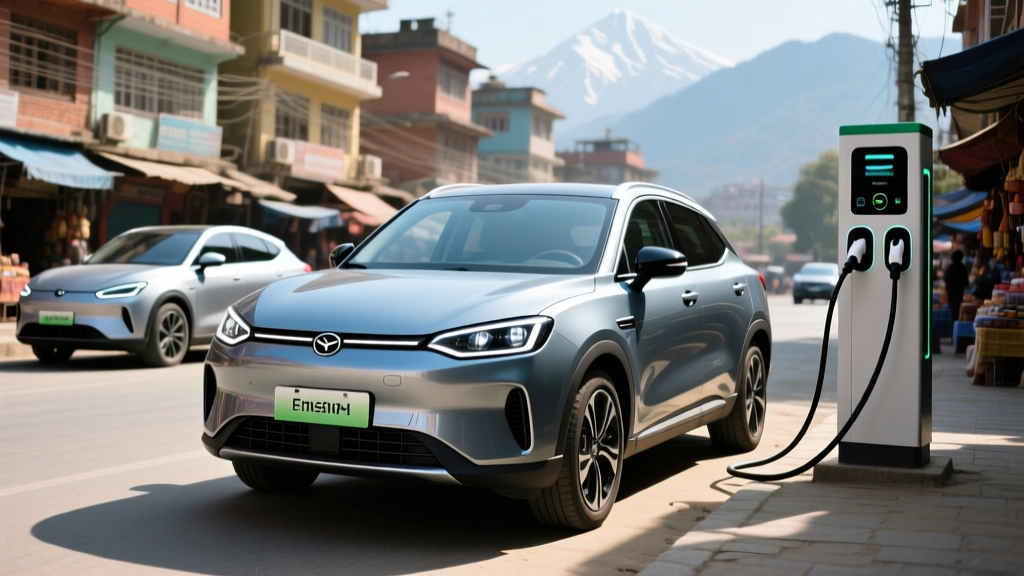
Chinese brands — led by BYD, MG (SAIC), and Tata (owned by India's Tata Group but sourcing Chinese battery cells and platforms) — hold an estimated 75–80% of Nepal's battery-electric vehicle market as of early 2026. The dominance stems from three factors: aggressive pricing (NPR 35–65 lakh / roughly $26,000–$49,000 USD equivalent for popular models), Nepal's steep 240%+ import tax on internal-combustion vehicles versus a reduced ~60% tax on EVs, and geographic proximity to Chinese supply chains via the northern border and Kolkata port. For a Nepali buyer, this means access to sub-400 km range city EVs at prices that undercut equivalent Toyota or Hyundai ICE models by 30–50%, but with real trade-offs in charging infrastructure, after-sales service, and highway range.
The Tax Arithmetic: Why EVs Are Suddenly Affordable in Nepal
Nepal's fiscal policy is the single biggest driver of Chinese EV adoption. The government imposes customs duty plus excise plus VAT that can total 240–300% on imported gasoline and diesel cars. A Toyota RAV4 that costs $30,000 in the US lands in Kathmandu at NPR 1.2 crore+ (~$90,000). The same buyer looking at a BYD Atto 3 (known as the Yuan Plus in China) faces a combined import tax burden closer to 60–80%, bringing a $35,000 vehicle to roughly NPR 55–65 lakh (~$41,000–$49,000).
This tax gap means Chinese EVs in Nepal aren't competing against other EVs — they're competing against gasoline cars that have been taxed into luxury pricing. The result is a market where a mid-tier Chinese crossover EV costs less than a base-model Toyota Corolla sedan.
| Vehicle | Powertrain | Approx. Nepal Price (NPR) | Approx. USD | Annual Fuel/Energy Cost |
|---|---|---|---|---|
| BYD Atto 3 (Extended Range) | BEV (60.5 kWh, LFP) | ~59,00,000 | ~$44,000 | ~NPR 45,000 (electricity) |
| MG ZS EV (2026 facelift) | BEV (51 kWh, NMC) | ~56,00,000 | ~$42,000 | ~NPR 42,000 |
| Tata Nexon EV Max | BEV (40.5 kWh, LFP) | ~48,00,000 | ~$36,000 | ~NPR 35,000 |
| Toyota Corolla Cross (Gasoline) | ICE (2.0L) | ~95,00,000 | ~$71,000 | ~NPR 2,80,000 (petrol) |
| Hyundai Creta (Gasoline) | ICE (1.5L) | ~78,00,000 | ~$58,000 | ~NPR 2,50,000 |
Sources: Authorized Nepal dealer price lists, fueleconomy.gov for baseline efficiency. Electricity cost assumes NPR 12/kWh NEA tariff; petrol at NPR 175/liter. Actual prices vary by dealer and tax-year budget adjustments.
Spec Showdown: The Three Best-Selling Chinese-Origin EVs in Nepal
Here's what the numbers actually look like for the models dominating Kathmandu, Pokhara, and Biratnagar showrooms. All figures reflect manufacturer-published specs cross-referenced with real-world owner reports.
| Spec | BYD Atto 3 (ER) | MG ZS EV (2026) | Tata Nexon EV Max |
|---|---|---|---|
| Battery (usable kWh) | 60.5 kWh (LFP Blade) | 51 kWh (NMC) | 40.5 kWh (LFP) |
| Claimed Range (NEDC/WLTP) | 420 km (WLTP) | 440 km (WLTP) | 437 km (NEDC) / ~325 km (WLTP est.) |
| Real-World Range (Kathmandu mixed) | ~340–360 km | ~330–350 km | ~260–290 km |
| Peak DC Fast Charge | 88 kW | 76 kW | 50 kW |
| 10–80% DC Charge Time | ~42 min | ~50 min | ~56 min |
| AC Level 2 (Home) | 7 kW (8.5 hr full) | 7 kW (7.5 hr full) | 3.3 kW (12 hr full) / 7 kW optional |
| Motor Output | 150 kW (201 hp) | 130 kW (174 hp) | 105 kW (141 hp) |
| 0–100 km/h | 7.3 sec | 8.5 sec | ~9.0 sec |
| Warranty (Battery) | 8 yr / 160,000 km | 8 yr / 150,000 km | 8 yr / 160,000 km |
| Approx. Price (Nepal) | NPR ~59 lakh | NPR ~56 lakh | NPR ~48 lakh |
Real-World Ownership in Nepal: What the Brochures Don't Tell You
Spec sheets are one thing. Owning a Chinese EV in Nepal's unique conditions is another. Here's what first-time buyers consistently discover after the first 6–12 months.
Range in Hill Terrain and Monsoon Conditions
Kathmandu sits at 1,400 meters, and many daily commutes involve steep climbs to areas like Budhanilkantha, Kirtipur, or Nagarkot. Climbing at gradient consumes 1.5–2x the energy per kilometer compared to flat driving. A BYD Atto 3 rated at 420 km WLTP may deliver only 250–280 km of real range on a hilly round-trip route with air conditioning running. Monsoon humidity and wiper/headlight use add a further 3–5% energy draw. Owners who commute exclusively within the Kathmandu Valley floor (Ring Road and inner city) report range much closer to WLTP figures — 350+ km is achievable at 40–60 km/h average speeds.
Charging Infrastructure: Improving but Concentrated
As of early 2026, the Nepal Electricity Authority (NEA) and private operators have deployed roughly 80–100 public DC fast chargers nationwide, heavily concentrated along the Kathmandu–Pokhara, Kathmandu–Chitwan, and Kathmandu–Bhaktapur corridors. Outside these routes, charging is sparse. A DC fast charger in Bharatpur or Mugling may be the only one for 50+ km.
Home charging remains the primary strategy. Most Nepali EV owners install a 16-amp, 3.3 kW single-phase wallbox on their existing NEA connection. The cost is typically NPR 25,000–60,000 ($190–$450) for the charger unit plus basic wiring. A dedicated 32-amp line for 7 kW charging requires a panel upgrade that can cost NPR 80,000–1,50,000 ($600–$1,100) depending on your existing wiring and NEA load-sanction process.
Critical limitation: Nepal's grid experiences load-shedding and voltage fluctuations in some areas, though the situation has improved dramatically since 2018. A voltage stabilizer or UPS for your charger is advisable and costs NPR 15,000–30,000.
After-Sales Service and Parts Availability
This is where Chinese EV ownership in Nepal diverges sharply from the US or European experience. Authorized dealers for BYD (Cipriani/Himalaya Motors), MG, and Tata exist in Kathmandu and major cities, but parts supply chains are thin. A replacement 12V auxiliary battery, brake pads, or suspension components may require a 2–6 week wait for shipment from China or India. Body panels after a collision can take months. Independent EV mechanics are emerging in Kathmandu, but diagnostic software for Chinese CAN-bus systems is not widely available.
5-Year Total Cost of Ownership: Chinese EV vs. Gasoline Car in Nepal
| Cost Category | BYD Atto 3 (EV) | Toyota Corolla Cross (Gasoline) |
|---|---|---|
| Purchase Price (incl. taxes) | 59,00,000 | 95,00,000 |
| Fuel / Electricity (75,000 km) | 2,25,000 (NPR 3/km avg) | 14,00,000 (NPR 18.7/km at 12 km/l, NPR 175/L) |
| Maintenance (5 years) | 1,20,000 (cabin filter, brake fluid, tires) | 4,50,000 (oil, filters, belts, spark plugs, transmission) |
| Insurance (5 years, comprehensive) | 5,50,000 | 7,50,000 |
| Home Charger Install | 60,000 | — |
| Estimated Resale Value (Year 5) | –25,00,000 (~42% retained) | –50,00,000 (~53% retained) |
| Net 5-Year Cost | ~44,55,000 | ~71,00,000 |
The EV saves roughly NPR 26 lakh (~$19,500) over 5 years, driven primarily by the massive purchase-price gap caused by ICE import taxes and the 6x lower per-km energy cost. Depreciation risk on the EV is higher due to uncertain long-term battery replacement economics in Nepal.
Common Misconceptions About Chinese EVs in Nepal
| Myth | Fact |
|---|---|
| "Chinese EV batteries degrade quickly and are expensive to replace." | LFP batteries (BYD Blade, Tata) are rated for 3,000+ charge cycles with 80% capacity retention. At 15,000 km/year, that's 20+ years of use. A full pack replacement is NPR 12–18 lakh ($9,000–$13,500) — expensive, but the warranty covers it for 8 years. |
| "You can't drive an EV from Kathmandu to Pokhara." | The 200 km Prithvi Highway route now has 3–4 operational DC fast chargers (Mugling, Abu Khaireni area). A BYD Atto 3 can make it on a single charge with careful driving, or stop once for a 30-minute top-up. |
| "EVs are slow and underpowered for Nepal's hills." | Electric motors deliver peak torque at 0 RPM. The Atto 3's 201 hp and 310 Nm outperform most 2.0L gasoline engines on hill climbs. Owners report confident overtaking on the Tribhuvan Highway. |
| "Charging takes too long." | At home on a 3.3 kW wallbox, overnight charging (10 PM–6 AM) adds ~30 kWh — enough for 200+ km. Most owners never visit a public charger for daily use. DC fast charging is only needed for intercity trips. |
| "Chinese EVs have no resale value." | Early data (2024–2025 models) shows 50–60% value retention at 3 years, lower than Toyota but improving as the market matures. The tax advantage means even a 40% retained value leaves the owner ahead on total cost. |
Charging at Home: Practical Setup for Nepali Buyers
Most Nepali EV owners charge at home. Here's what a realistic installation looks like:
- Level 1 (10A household outlet, ~2.3 kW): Comes with the car. Adds ~15 km of range per hour. Full charge in 20–26 hours. Fine for low-mileage users but slow for daily 80+ km commutes.
- Level 2 wallbox (16A / 3.3 kW): Most common setup. Adds ~22 km/hour. Full charge in 12–18 hours. Equipment cost: NPR 25,000–50,000. Installation by a licensed electrician: NPR 10,000–25,000.
- Level 2 wallbox (32A / 7 kW): Requires 32A dedicated MCB, 6 sq mm wiring, and NEA load sanction upgrade. Adds ~45 km/hour. Full charge in 7–9 hours. Total install cost: NPR 80,000–1,50,000 including panel work.
NEA electricity tariff for domestic use averages NPR 10–14 per kWh depending on slab. Charging a 60 kWh battery from 20–80% costs roughly NPR 360–500 ($2.70–$3.75) — compare that to NPR 3,500+ for a tank of petrol.
Decision Framework: Should You Buy a Chinese EV in Nepal?
Choose a Chinese EV (BYD, MG, Tata) if:
- Your daily commute is under 120 km round-trip and mostly within a single city or valley
- You have a dedicated parking spot at home where you can install a wallbox charger
- You want to avoid NPR 2–3 lakh/year in petrol costs and 240%+ ICE import taxes
- You primarily drive within the Kathmandu Valley, Pokhara, Chitwan, or other areas with growing charger access
- You can accept 2–6 week waits for specific replacement parts
Stick with gasoline or wait if:
- You regularly drive 300+ km intercity routes (Kathmandu–Biratnagar, Kathmandu–Nepalgunj) where DC chargers are sparse
- You live in a rented apartment with no charging access and no NEA-sanctioned EV charging point nearby
- You need guaranteed same-day parts availability for commercial or high-mileage use
- Your budget is under NPR 35 lakh — at this price point, the Tata Tiago EV or used ICE vehicles are the only options
What First-Time EV Buyers in Nepal Should Know
Based on ownership patterns from 2023–2026 Nepal EV adopters, here are the highest-value lessons:
- Buy based on your worst-case route, not your average commute. If you drive Kathmandu–Dhulikhel (30 km, 700m elevation gain) twice a week, test that exact route before purchasing. Elevation gain consumes energy fast.
- Get the NEA load sanction sorted before buying. Applying for a dedicated EV charging meter or load upgrade can take 2–6 weeks. Start this process early.
- Negotiate the charger into the deal. Many Nepal dealers include a basic 3.3 kW wallbox in the purchase price. Ask explicitly.
- Understand the battery chemistry you're buying. LFP (BYD, Tata) tolerates daily 100% charging and has longer cycle life. NMC (MG ZS EV) offers slightly more energy density but prefers 80% daily charge limits. This matters for your daily routine.
- Insurance costs 8–12% of vehicle value annually. Comprehensive EV insurance in Nepal is priced higher than ICE because repair costs (especially battery damage) are higher. Budget NPR 4–6 lakh over 5 years.
FAQ: Chinese EVs in Nepal
Is BYD officially sold in Nepal with warranty support?
Yes. BYD entered Nepal through authorized distribution partners. Warranty coverage (8 years/160,000 km on the battery) is honored through authorized service centers in Kathmandu. However, parts turnaround times are longer than for established Japanese brands — expect 2–4 weeks for non-stock components.
Can I charge my EV at any public station in Nepal, or are connectors brand-specific?
Nepal's public DC fast chargers predominantly use the CCS2 connector (same European standard). BYD, MG, and Tata EVs sold in Nepal all use CCS2 for DC and Type 2 for AC, so compatibility is not an issue. Avoid any grey-market EV imported with a Chinese GB/T connector — you'll need an adapter that costs NPR 30,000–50,000 and may not be certified.
How does cold weather affect EV range in Nepal?
Kathmandu winters (December–February) see temperatures of 2–8°C. At these temperatures, expect 10–15% range reduction compared to spring/autumn. This is moderate — far less than the 30–40% loss seen in sub-zero climates. Using the seat heater instead of cabin heating saves 1–2 kW of energy draw.
Are Chinese EVs safe? Do they have crash-test ratings?
The BYD Atto 3 scored 5 stars in Euro NCAP testing (2022 protocol). The MG ZS EV scored 5 stars in its segment. The Tata Nexon EV is not Euro NCAP tested but achieved 5 stars in Global NCAP for the Nexon platform. Chinese EVs from major OEMs (BYD, SAIC/MG) meet international safety standards. Lesser-known brands without crash-test data should be approached with caution.
What happens if the battery fails after the warranty expires?
A full battery pack replacement for a BYD Atto 3 costs approximately NPR 12–15 lakh ($9,000–$11,000) based on current pricing. However, LFP batteries rarely fail catastrophically — they gradually lose capacity. At 80% State of Health (SoH), you still have 80% of your original range. Most EV batteries outlast the vehicle's economic life. Individual module replacement (repairing a few degraded cells rather than the whole pack) is emerging as a lower-cost option through independent EV workshops in Kathmandu.
Is Nepal's electricity grid clean enough to make EVs environmentally worthwhile?
Yes — Nepal generates over 90% of its electricity from hydropower, making it one of the cleanest grids in the world for EV charging. A Chinese EV charged in Nepal produces dramatically lower lifecycle emissions than the same vehicle charged on a coal-heavy grid. This is a uniquely strong argument for EV adoption in Nepal compared to many other countries.