Does Tesla Make a Convertible Model 3?
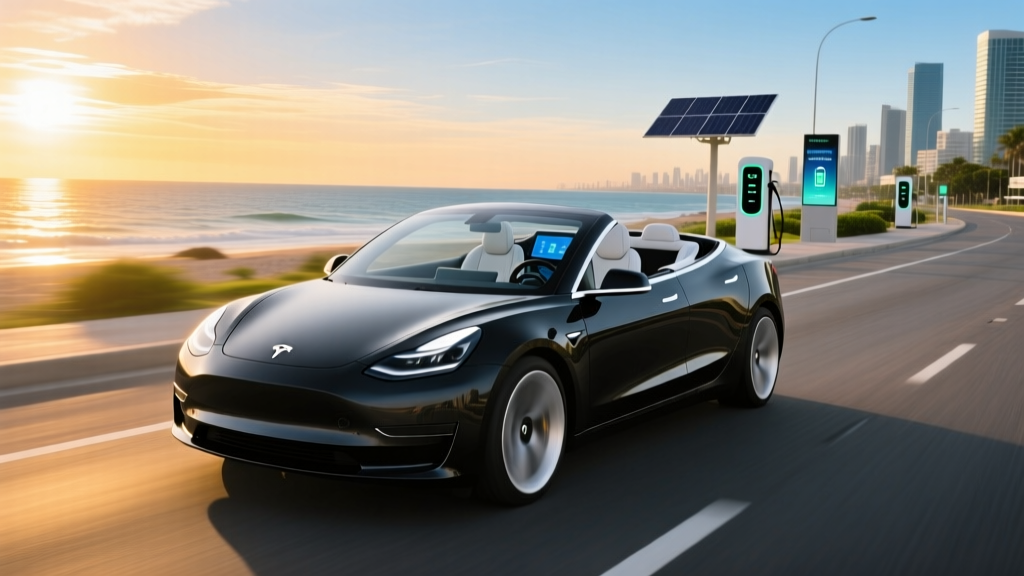
If you've been searching for a convertible Tesla Model 3, here's the direct answer: Tesla does not manufacture a factory convertible Model 3. As of 2026, no Tesla vehicle — Model 3, Model Y, Model S, or Model X — is available from the factory with a retractable soft top or hardtop roof. Tesla has never produced a convertible in its history.
That hasn't stopped the aftermarket. A small but persistent niche of third-party coachbuilders and custom shops have attempted Model 3 convertible conversions, and the idea continues to generate significant search interest. This review examines what's actually possible, what it costs, the engineering trade-offs, and which factory-built open-air EVs make more sense for most buyers.
Aftermarket Convertible Conversions: What Exists
Several specialty shops — primarily in Europe and the Middle East — have performed one-off or limited-run convertible conversions on the Tesla Model 3. The most publicized efforts include:
- Newport Convertible Engineering (NCE) — A California-based shop that historically offered conversion services for various vehicles, including early Tesla attempts. Pricing typically ranged from $25,000 to $40,000 on top of the vehicle's purchase price, though availability has been inconsistent and the company's current status with Model 3 Highland (2024+) conversions is unclear.
- European custom shops — A handful of Dutch and German coachbuilders have produced individual Model 3 cabriolet projects, mostly as one-off commissions rather than repeatable products.
- Independent fabricators — YouTube-documented DIY and small-shop conversions exist, typically involving cutting the roof structure and adding reinforcement braces.
The Engineering Problem
The Tesla Model 3's structural integrity relies heavily on its roof as part of a unibody design. The glass roof panel is bonded to high-strength steel pillars that contribute to the car's impressive IIHS Top Safety Pick+ rating. Removing the roof eliminates a critical load path, requiring substantial reinforcement — typically steel or aluminum braces running from the A-pillars to the rear deck — to prevent chassis flex.
The consequences are measurable:
| Factor | Stock Model 3 | Aftermarket Convertible Conversion |
|---|---|---|
| Torsional Rigidity | ~20,000+ Nm/degree (estimated) | Reduced 25-50% depending on reinforcement quality |
| Weight Added (reinforcement) | N/A | 80-200 lbs of bracing |
| Roof Crash Test Rating | IIHS Good (4x vehicle weight) | Untested / likely compromised |
| Tesla Warranty | Full 4yr/50k basic + 8yr battery | Voided on structure, potentially battery |
| Insurance | Standard EV rates | Significantly higher or uninsurable |
Stock Tesla Model 3 (2025-2026 Highland Refresh): Full Specs
For buyers considering a conversion, here's the baseline vehicle you'd be modifying. The current-generation Model 3 "Highland" refresh carries into the 2026 model year with minor updates.
| Specification | RWD (Standard) | Long Range AWD | Performance |
|---|---|---|---|
| EPA Range | 272 miles | 341 miles | 315 miles |
| Battery (usable) | ~57.5 kWh (LFP) | ~75 kWh (NMC) | ~75 kWh (NMC) |
| Drivetrain | RWD, single motor | AWD, dual motor | AWD, dual motor |
| Horsepower | 271 hp | 346 hp | ~510 hp |
| 0-60 mph | 5.8 sec | 4.2 sec | 2.9 sec |
| Efficiency (MPGe) | 132 MPGe combined | 125 MPGe combined | 113 MPGe combined |
| Base MSRP | $38,990 | $45,990 | $52,990 |
| Max DC Fast Charge | 170 kW | 250 kW | 250 kW |
| 10-80% DCFC Time | ~25 min | ~22 min | ~22 min |
Source: fueleconomy.gov and Tesla official specifications.
Charging: What You Need to Know
| Charging Level | Power / Rate | Speed (Miles Added) | Best For |
|---|---|---|---|
| Level 1 (120V household) | 1.4 kW | ~3-4 mi/hr | Overnight trickle, emergencies |
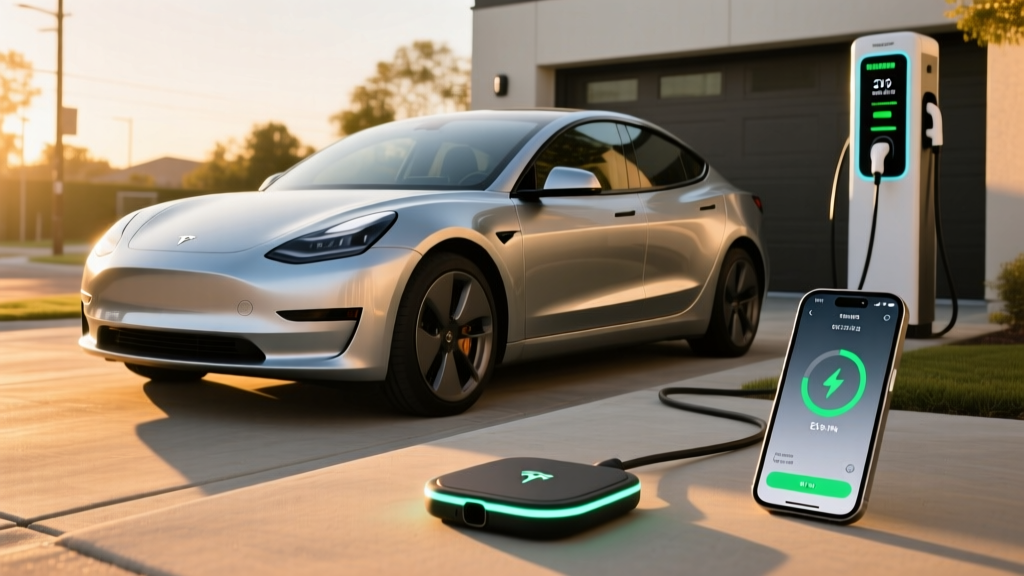
| Level 2 (240V home) | 7.6-11.5 kW | ~25-44 mi/hr | Daily home charging |
| DC Fast Charge (Long Range) | Peak 250 kW | 10-80% in ~22 min | Road trips, quick top-ups |
| Tesla Supercharger V4 | Up to 250 kW (Model 3) | ~200 mi in 15 min | Tesla network exclusive |
Charging curve reality: The Model 3 Long Range peaks at 250 kW but sustains that rate only between roughly 10-35% State of Charge (SoC). From 35-60%, it tapers to ~150 kW; from 60-80%, it drops further to ~80-100 kW. Above 80%, charging slows dramatically to protect the NMC battery — expect 80-100% to take as long as 10-80%. The LFP battery in the RWD trim can tolerate regular 100% charging, which partially offsets its smaller capacity.
The Model 3 uses the NACS (North American Charging Standard) connector natively, giving it seamless access to the entire Tesla Supercharger network — over 25,000 stalls in North America as of 2026.
Federal Tax Credit: Does the Model 3 Qualify?
The 2025-2026 Tesla Model 3 qualifies for the §30D federal EV tax credit, but the amount depends on trim and your specific situation:
| Trim | MSRP | Est. Credit | Effective Price |
|---|---|---|---|
| RWD (Standard) | $38,990 | $3,750* | ~$35,240 |
| Long Range AWD | $45,990 | $7,500* | ~$38,490 |
| Performance | $52,990 | $7,500* | ~$45,490 |
*Credit amounts are estimates based on 2026 IRS §30D rules. The RWD trim's LFP battery (sourced from CATL in China) may only qualify for the $3,750 half-credit due to critical mineral sourcing requirements. Long Range and Performance trims with NMC batteries assembled with compliant sourcing may qualify for the full $7,500. Battery sourcing rules are complex and subject to change — verify current eligibility at irs.gov.
- MSRP cap: Sedans must be under $55,000 — all Model 3 trims qualify ✓
- Buyer income cap: AGI ≤ $150,000 (single) / $300,000 (joint) ✓
- Battery sourcing: Critical minerals and battery component phase-in rules apply — varies by trim ✓ (partial)
- Point-of-sale transfer: Credit can be applied at purchase to reduce upfront cost (dealer must participate) ✓
- FEOC restriction: Vehicles with battery components from "foreign entities of concern" may be disqualified — check current IRS guidance ✓
Conversion cost warning: Adding a $25,000-$40,000 aftermarket convertible conversion on top of the vehicle price means you're spending $60,000-$90,000+ total — well beyond any reasonable tax credit benefit. The credit applies only to the original vehicle purchase, not aftermarket modifications.
Who Should Consider a Convertible Model 3 (And Who Shouldn't)
Choose the Convertible Conversion IF:
- You treat cars as hobby projects, not primary transportation
- You accept full financial responsibility for voided warranties
- You live in a warm, dry climate and drive mostly at lower speeds
- You understand resale value will be severely limited (niche market)
- You have access to a qualified fabricator and understand safety trade-offs
Choose a Stock Model 3 (or alternative) IF:
- You need a daily driver with full warranty coverage
- Safety ratings matter to you (they should)
- You want predictable insurance rates and insurability
- You plan to keep the car 5+ years and want factory support
- You value the 341-mile range and structural rigidity of the stock vehicle
Better Alternatives: Open-Air EVs You Can Actually Buy
If the open-air driving experience is your priority, several factory-built options exist in 2026 that don't require voiding warranties:
| Vehicle | Type | EPA Range | Starting Price | Notes |
|---|---|---|---|---|
| Jeep Wrangler 4xe | PHEV convertible | 22 mi electric / 49 MPGe | ~$51,000 | Removable top/doors, off-road capable |
| Ford Bronco (PHEV expected) | PHEV convertible | TBD (announced) | TBD | Removable roof panels |
| Mini Cooper SE Convertible | BEV convertible | ~150 mi (est.) | ~$38,000 | Limited availability, Europe-first |
| Tesla Model 3 + Panoramic Roof | BEV (glass roof) | 341 mi (LR AWD) | $45,990 | Open, airy feel; not a true convertible |
The Jeep Wrangler 4xe remains the only widely available electrified vehicle in the US market that combines plug-in hybrid capability with a true removable top and doors. It offers 22 miles of electric-only range for short commutes and a gasoline engine for longer trips — a practical compromise for open-air enthusiasts who also need range flexibility.
Warranty and Ownership Considerations
A stock 2026 Tesla Model 3 comes with:
- Basic vehicle warranty: 4 years / 50,000 miles
- Battery & drive unit warranty: 8 years / 100,000 miles (RWD) or 8 years / 120,000 miles (Long Range & Performance)
- Battery degradation guarantee: Tesla warrants minimum 70% capacity retention during the warranty period
An aftermarket convertible conversion voids the basic vehicle warranty entirely due to structural modification. Tesla may also deny battery warranty claims if they determine the modification affected the battery management system, thermal management, or electrical routing (roof-cutting can disturb wiring harnesses running through the roof pillars). You are effectively self-insuring a $40,000-$53,000 vehicle.
Pros and Cons: Convertible Model 3 Conversion
✅ Pros
- Unique — very few exist; guaranteed conversation starter
- Open-air driving with EV instant torque
- Retains Tesla Supercharger access and software ecosystem
- Model 3's low center of gravity partially compensates for lost roof rigidity
❌ Cons
- $25,000-$40,000 conversion cost on top of vehicle price
- Voided Tesla warranty (structural, potentially battery)
- Compromised crash safety — untested roof structure
- Reduced range from added weight and aerodynamic drag
- Near-zero resale market; difficult to insure
- Potential for water leaks, wind noise, and rattles
- Loss of Tesla's panoramic glass roof experience
Frequently Asked Questions
Does Tesla plan to release a factory convertible Model 3?
There is no indication from Tesla that a convertible Model 3 is in development. Tesla's product roadmap through 2026 focuses on the next-generation platform, Cybertruck production ramp, and Semi. A niche convertible variant would be an unusual strategic move for a company that prioritizes manufacturing scale and simplicity. Treat any rumor of a "Tesla Roadster convertible" as referring to the separate, long-delayed Roadster sports car — not a Model 3 variant.
How much does a convertible Tesla Model 3 conversion cost?
Aftermarket conversions typically cost $25,000 to $40,000 in addition to the vehicle purchase price. This means a total investment of $65,000 to $93,000 depending on trim and conversion quality. For that budget, you could purchase a high-end luxury convertible (BMW 4 Series, Mercedes CLE, Porsche 718 Boxster) with full factory warranty and certified safety.
Is a converted Model 3 convertible safe?
This is the most critical concern. The stock Model 3 earns top marks from NHTSA and IIHS partly because of its rigid roof structure and low rollover risk. Cutting the roof fundamentally alters crash dynamics. Unless the conversion shop performs independent crash testing (extremely rare and costly), you are driving a vehicle with unknown crashworthiness. Side-impact and rollover protection are particularly compromised.
What is the real-world range of a stock Tesla Model 3?
The Long Range AWD Model 3 carries an EPA rating of 341 miles. In real-world highway driving at 70-75 mph in moderate temperatures, expect 280-300 miles. In cold weather (below freezing), expect 220-260 miles. A convertible conversion would reduce these figures further due to added weight and, with the top down, increased aerodynamic drag.
Does the Tesla Model 3 qualify for the $7,500 federal tax credit?
The Long Range AWD and Performance trims may qualify for the full $7,500 credit under 2026 §30D rules, subject to buyer income limits ($150k single / $300k joint) and battery sourcing requirements. The RWD trim with its LFP battery may only qualify for $3,750 due to critical mineral sourcing from entities flagged under FEOC rules. Always verify current eligibility on irs.gov before purchasing. The credit can be transferred at point of sale to reduce your purchase price directly.
What's the best open-air EV I can actually buy in 2026?
For a true open-air electrified experience with factory support, the Jeep Wrangler 4xe (PHEV, removable top and doors) is the most practical choice in the US market. For a pure EV with an open, airy cabin (but no removable roof), the stock Tesla Model 3 with its panoramic glass roof provides significant sunlight and openness without the safety and warranty risks of a conversion.
Final Verdict: Skip the Conversion, Consider Your Options
The idea of a convertible Tesla Model 3 is undeniably appealing — silent, instant-torque cruising under open sky. But the reality of aftermarket conversions makes this a project for hobbyists with disposable income and high risk tolerance, not a practical vehicle choice. The safety compromises, warranty voids, insurance headaches, and extreme costs ($65k-$93k all-in) make it difficult to recommend over factory-built alternatives.
If open-air driving is a genuine priority, the Jeep Wrangler 4xe delivers a removable-top experience with electrified efficiency and full factory backing. If Tesla's technology, Supercharger network, and 341-mile range are what you're after, the stock Model 3 Long Range AWD — with its expansive glass roof — offers a bright, connected driving experience at $45,990 (roughly $38,490 after the federal credit). That's a compelling EV that works exactly as engineered, with full warranty protection and verified safety ratings.