Quick Answer: Is a Chevy Electric Truck Right for You?
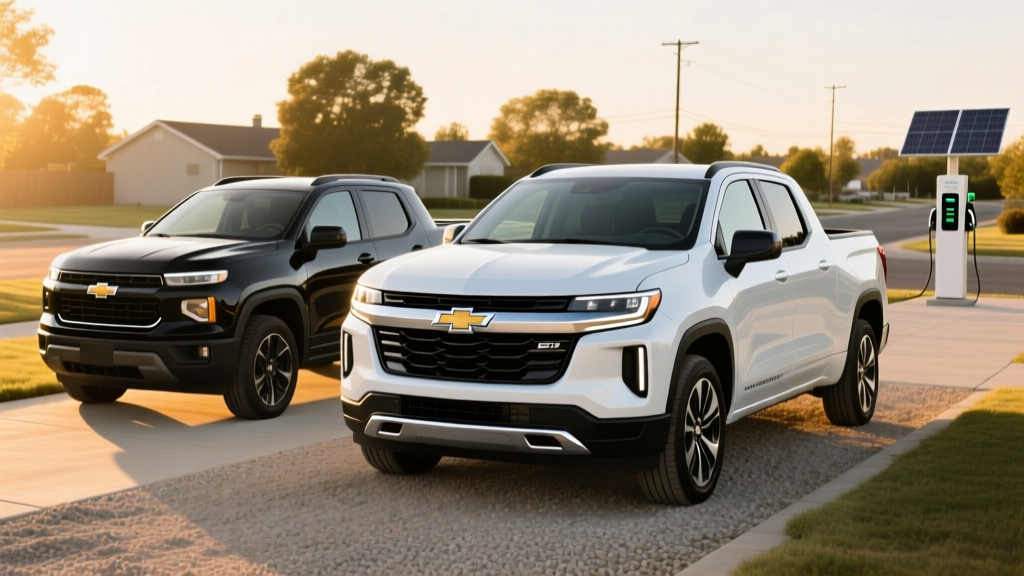
Chevrolet's electric truck lineup for 2026 centers on the Silverado EV (full-size, up to 492 miles EPA range, starting ~$57,900) and the newly introduced Colorado EV (mid-size, ~320 miles estimated range, starting ~$42,000). Both offer instant torque, lower per-mile fueling costs, and available four-wheel drive — but they demand home Level 2 charging access to unlock real convenience. If you drive under 250 miles daily, can install a 240V charger, and your typical towing stays under 8,000 lbs, a Chevy electric truck will likely save you $3,000–$6,000 over five years compared to a gas equivalent. If you regularly tow heavy trailers long distances or lack reliable charging access, a gas or diesel truck still holds the edge.
The 2026 Chevy Electric Truck Lineup at a Glance
Chevrolet now offers two distinct battery-electric trucks built on GM's Ultium platform. Understanding which one fits your needs starts with the hard specs.
| Spec | Silverado EV 3WT / 4WT | Silverado EV RST | Colorado EV (Announced) |
|---|---|---|---|
| EPA Range | 390–492 mi | 440 mi | ~320 mi (est.) |
| Battery Capacity | ~200 kWh (usable), NMC | ~200 kWh (usable), NMC | ~102 kWh (est.), NMC |
| Peak DC Fast Charge | 350 kW | 350 kW | ~190 kW (est.) |
| 10–80% Charge Time | ~25 min (ideal) | ~25 min (ideal) | ~30 min (est.) |
| Level 2 Charge Rate | 19.2 kW (80A) | 19.2 kW (80A) | 11.5 kW (48A) |
| Horsepower | 510 hp | 754 hp | ~340 hp (est.) |
| 0–60 mph | ~5.4 sec | ~4.5 sec | ~6.5 sec (est.) |
| Max Towing | 10,000 lbs (WT) | 10,000 lbs | ~7,500 lbs (est.) |
| Base MSRP | $57,900 | $87,300 | ~$42,000 (est.) |
| Battery Warranty | 8 yr / 100,000 mi | 8 yr / 100,000 mi | 8 yr / 100,000 mi |
Real-world range caveat: EPA estimates assume mixed driving at moderate temperatures. Expect highway-only range to drop 15–20% below the sticker (e.g., the 4WT's 492-mile EPA figure falls to roughly 390–420 miles at sustained 75 mph). In sub-freezing weather, plan for an additional 20–30% reduction. If your daily round trip is 200 miles, even the smaller Colorado EV battery provides a comfortable buffer in most conditions.
Silverado EV vs Gas Silverado: The Real Cost Comparison
Numbers, not marketing, decide this debate. Here's how a 2026 Silverado EV 4WT stacks up against a comparably equipped 2026 Silverado 1500 LTZ (5.3L V8, 4WD) over five years and 75,000 miles of mixed driving.
| Category | Silverado EV 4WT | Silverado 1500 Gas (5.3L V8) |
|---|---|---|
| Purchase Price (MSRP) | $67,900 | $55,200 |
| Federal Tax Credit (§30D) | –$7,500* | $0 |
| Effective Purchase | $60,400 | $55,200 |
| Fuel / Electricity (75k mi) | $3,750 (home L2, $0.15/kWh) | $11,250 (17 MPG, $3.40/gal) |
| Maintenance (5 yr) | $1,200 | $3,800 |
| Insurance (5 yr avg.) | $10,500 | $8,200 |
| Total 5-Year Cost | $75,850 | $78,450 |
*§30D credit eligibility requires meeting buyer income caps ($150k single / $300k joint), MSRP under $80,000 for trucks, and battery critical-mineral and component sourcing rules. Verify current-year rules at IRS.gov before purchasing. Point-of-sale transfer is available through registered dealers.
The Silverado EV breaks even within the first two years for most owners who charge primarily at home. The gap widens further if your local electricity rates are below the national average or if you have access to workplace or solar-subsidized charging. However, insurance premiums for the Silverado EV run 20–30% higher than the gas version — a reality driven by higher repair costs for battery-adjacent damage and limited collision-repair networks trained on Ultium platforms.
Charging a Chevy Electric Truck: What You Actually Need
The single biggest ownership variable is your charging setup. Here's the realistic breakdown by charging level, using the Silverado EV's ~200 kWh battery as the reference:
| Level | Power (kW) | Miles Added per Hour | 0–100% Time | Best For |
|---|---|---|---|---|
| Level 1 (120V outlet) | 1.4 kW | ~3 mi/hr | ~60+ hours | Emergency top-up only |
| Level 2 (240V, 48A) | 11.5 kW | ~28 mi/hr | ~17 hours | Daily overnight charging |
| Level 2 (240V, 80A) | 19.2 kW | ~45 mi/hr | ~10 hours | Fast home / depot charging |
| DC Fast (350 kW peak) | 350 kW (peak) | ~100 mi in 10 min | 10–80% in ~25 min | Road trips |
The charging curve reality: The Silverado EV's 350 kW peak rate is not sustained. Like all lithium-ion batteries, charge speed tapers significantly above 80% State of Charge to protect cell longevity. Expect the truck to hold 250–300 kW through roughly 40% SoC, then step down progressively. On a road trip, plan your stops around the 10–80% window — that's where the fastest charging happens.
Home installation costs: A Level 2 home charger (such as the ChargePoint Home Flex or Emporia V2) requires a 240V circuit. Installation costs vary widely based on your electrical panel's capacity and the run distance from panel to garage:
| Item | Cost Range |
|---|---|
| Level 2 Charger (hardware) | $400 – $700 |
| Electrician labor (standard 50A circuit) | $600 – $1,500 |
| Permit & inspection | $50 – $200 |
| Panel upgrade (if needed: 100A → 200A) | $1,500 – $3,500 |
| Total (no panel upgrade) | $1,050 – $2,400 |
| Total (with panel upgrade) | $2,550 – $5,900 |
For the Silverado EV's available 80A AC charging, you'll need a 100A dedicated circuit — which almost certainly requires a 200A (or larger) main panel. Get a licensed electrician to assess your panel capacity before purchasing the truck. The Colorado EV's lower 48A requirement is far more compatible with standard 200A residential panels.
Towing, Payload, and the Range Penalty
Electric trucks face a physics problem that no software update can fix: towing dramatically increases energy consumption. In testing and owner reports, towing a 5,000-lb enclosed trailer at highway speeds cuts Silverado EV range by roughly 40–50%. A 7,500-lb load can halve the EPA range entirely.
For context, a gas Silverado 1500 towing the same 7,500-lb trailer sees fuel economy drop from ~19 MPG to ~10–12 MPG — a similar proportional hit, but with a quick 5-minute refuel at any gas station. The Silverado EV's advantage is that you're "refueling" at a fraction of the per-mile cost when not towing. Its disadvantage is that a 30-minute fast-charge stop becomes a 45–60 minute stop when the battery is stressed from towing.
Practical guidance: If you tow a boat or camper under 5,000 lbs for weekend trips within 150 miles of home, the Silverado EV handles it well. If you regularly tow 8,000+ lbs over 300-mile routes, the charging logistics and range loss make a diesel or gas truck more practical for now.
Tax Credits and Incentives: What You Actually Qualify For
The federal §30D clean vehicle credit offers up to $7,500 for qualifying new EVs, but the rules are layered. Here's the current eligibility checklist:
- MSRP cap: Truck/van/SUV must be under $80,000 (Silverado EV WT qualifies; RST at $87,300 does not)
- Buyer income cap: Modified AGI under $150,000 (single) or $300,000 (married filing jointly)
- Battery sourcing: Critical minerals and battery components must meet escalating domestic/free-trade-partner percentages — verify per VIN at fueleconomy.gov
- Final assembly: Must occur in North America (both Chevy trucks qualify)
- Point-of-sale transfer: You can transfer the credit to the dealer at purchase to reduce the sale price directly, rather than waiting for tax filing
State and local incentives vary significantly. California, Colorado, and several other states offer additional rebates of $2,000–$7,500, but eligibility, income caps, and availability change frequently. Check your state energy office or the Alternative Fuels Data Center for current programs.
Common Chevy Electric Truck Misconceptions
| Myth | Fact |
|---|---|
| "The battery will need replacing in 5 years and cost $20,000" | GM's Ultium batteries are warrantied for 8 years / 100,000 miles with a 70% capacity retention guarantee. Industry data shows NMC packs losing roughly 10–15% capacity over 150,000 miles with proper care (avoiding frequent 100% charges and extreme heat exposure). |
| "Electric trucks can't tow anything useful" | The Silverado EV is rated for 10,000 lbs — matching many gas half-ton configurations. The limitation is range reduction while towing, not capability. |
| "There are no charging stations for trucks" | GM has partnered with EVgo, Electrify America, and Pilot/Flying J to add pull-through DC fast chargers designed for trucks and trailers. Over 500 truck-friendly stalls were operational by early 2026, concentrated along major interstates. |
| "You'll be stranded if the grid goes down" | The Silverado EV offers available V2H (vehicle-to-home) capability through GM's Energy Transfer Pro system, allowing the truck's 200 kWh battery to power an average home for 5–7 days during an outage. |
| "Electric trucks are slower and weaker" | The Silverado EV RST produces 754 hp and hits 60 mph in ~4.5 seconds with instant torque — faster than any gas Silverado short of the supercharged ZR2 variants. |
Decision Framework: Which Chevy Electric Truck Is Right for You?
Choose the Silverado EV 4WT if:
- You need maximum range (492 mi EPA) for long highway commutes or regional work routes
- You tow occasionally but under 8,000 lbs and within ~200-mile radii
- You have (or can install) an 80A Level 2 home charger with adequate panel capacity
- Your MSRP target stays under $80,000 to qualify for the §30D tax credit
Choose the Silverado EV RST if:
- Performance is a priority (754 hp, 4.5-second 0–60)
- You want premium interior features and Super Cruise hands-free driving (SAE Level 2 — you must remain attentive)
- The $87,300 MSRP (and loss of federal tax credit eligibility) fits your budget
Choose the Colorado EV if:
- You want a mid-size truck footprint for daily driving with occasional light hauling
- Your budget targets the low-$40,000s with tax credit eligibility
- You need a truck that fits a standard garage and doesn't require a panel upgrade for home charging
Stick with a gas or diesel Silverado/Colorado if:
- You regularly tow 8,000+ lbs on routes exceeding 250 miles between charging stops
- You live in an apartment or lack any viable home charging option
- You operate in extreme cold (below 0°F) for extended periods where range loss compounds with towing
Frequently Asked Questions
What's the real-world range of the Silverado EV in winter?
In sustained temperatures below 32°F, expect a 20–30% range reduction from the EPA figure. The 4WT's 492-mile rating drops to roughly 345–395 miles. GM's Ultium platform includes a heat pump and battery preconditioning to mitigate this — always precondition before fast-charging in cold weather to improve charge speed and protect cell health.
Can I charge a Chevy electric truck on a standard household outlet?
Yes, but only for emergency top-ups. A 120V Level 1 outlet delivers roughly 3 miles of range per hour — about 36 miles overnight. For a 200 kWh battery, a full charge from empty would take over 60 hours. Level 2 home charging is effectively mandatory for daily ownership.
How does Super Cruise work in the Silverado EV?
Super Cruise is GM's hands-free driver-assistance system, available on mapped divided highways. It is an SAE Level 2 system — you must remain attentive, and the driver-monitoring camera will alert you if your eyes leave the road. It does not make the truck self-driving. It handles steering, acceleration, and braking on compatible roads (over 750,000 miles mapped in the US and Canada as of 2026).
What does it cost to charge a Silverado EV at home vs. public DC fast chargers?
At home on a Level 2 charger with the US average electricity rate of ~$0.15/kWh, a full 200 kWh charge costs about $30 — roughly $0.06 per mile. Public DC fast chargers from networks like Electrify America or EVgo typically charge $0.35–$0.55/kWh, making a full charge $70–$110, or about $0.15–$0.22 per mile. Home charging is essential to realizing the cost advantage.
Will the Silverado EV battery last 200,000 miles?
Based on current NMC cell degradation data and GM's warranty (8 years/100,000 miles with 70% capacity retention), reaching 200,000 miles with 75–85% original capacity is realistic for owners who avoid habitual DC fast charging above 90% SoC and minimize prolonged storage at 100% charge. The battery is not a wear item like brake pads — it degrades gradually, and replacement is rarely needed within the vehicle's useful life.