The Real Question: Does Tesla's Insurance Premium Eat Your EV Savings?
Search "is insurance higher on a Tesla" and you'll find a chorus of forum complaints and headline-grabbing rate hikes. The short answer: yes, Teslas generally cost more to insure than comparable electric and gas sedans — but the full picture depends heavily on which Model 3 trim you choose, where you live, and whether you use Tesla's own insurance product. In this review, we break down the 2026 Tesla Model 3 as a complete ownership proposition, with insurance costs front and center alongside the range, charging, and performance data you need to make an informed decision.
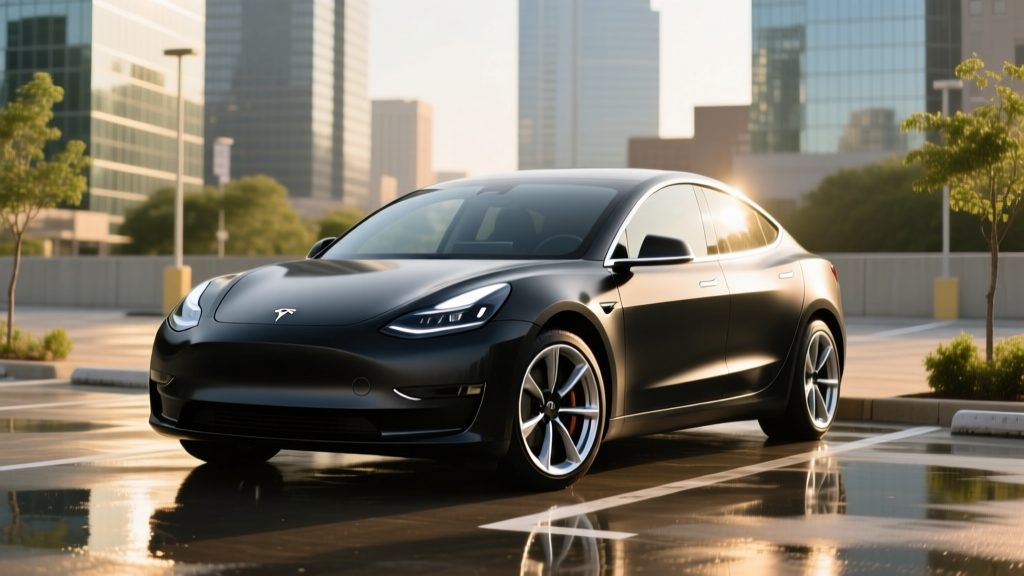
The 2026 Model 3 (refreshed under Tesla's "Highland" and subsequent updates) remains the default benchmark in the compact electric sedan segment. It's the EV against which the Hyundai Ioniq 6, BMW i4, and Polestar 2 are measured. But with insurance premiums that can run 20–45% higher than segment averages, buyers need to weigh the total cost of ownership — not just the sticker price.
2026 Tesla Model 3: Full Spec Sheet
| Spec | Model 3 RWD | Model 3 Long Range AWD | Model 3 Performance |
|---|---|---|---|
| EPA Range | 272 mi | 341 mi | 315 mi |
| Battery Capacity (usable) | ~57.5 kWh (LFP) | ~75 kWh (NMC) | ~75 kWh (NMC) |
| Drivetrain | RWD, single motor | AWD, dual motor | AWD, dual motor |
| Horsepower | 271 hp | 346 hp | 510 hp |
| 0–60 mph | 5.8 sec | 4.2 sec | 2.9 sec |
| MPGe (combined) | 132 MPGe | 124 MPGe | 115 MPGe |
| Efficiency | 25 kWh/100 mi | 27 kWh/100 mi | 29 kWh/100 mi |
| Max DC Fast Charge | 170 kW | 250 kW | 250 kW |
| 10–80% DC Charge Time | ~25 min | ~22 min | ~22 min |
| Level 2 Home Charge Rate | 11.5 kW (~44 mi/hr) | 11.5 kW (~44 mi/hr) | 11.5 kW (~44 mi/hr) |
| Cargo Volume | 23 cu ft (rear trunk + frunk combined) | ||
| Rear Legroom | 35.3 in | ||
| Base MSRP | $38,990 | $45,740 | $52,990 |
| Battery Warranty | 8 yr / 100,000 mi | 8 yr / 120,000 mi | |
Sources: EPA fueleconomy.gov, Tesla Model 3 official specs.
Real-World Range: What the EPA Sticker Doesn't Tell You
EPA Estimate: 341 mi (Long Range AWD)
Expect in real-world highway driving (70–80 mph): ~280–305 mi
Cold weather (below 32°F): ~230–270 mi depending on cabin heating use
City / moderate-speed driving: ~320–345 mi (regen braking recovers energy)
The 2026 Model 3 Long Range AWD carries an EPA rating of 341 miles, which is competitive with the best in its class. But EPA testing uses relatively low average speeds and includes substantial stop-and-go driving where regenerative braking recaptures energy. On a sustained 75-mph highway run in moderate temperatures (65–75°F), plan for roughly 280–305 miles before you need to plug in.
Cold weather hits all EVs, and the Model 3 is no exception. Tesla's heat pump — standard across all trims — helps mitigate cabin-heating energy draw, but in sub-freezing conditions you'll see a 15–25% range reduction. The LFP battery in the RWD trim is more resistant to cold-induced degradation over the long term but offers less total range to begin with.
One ownership advantage: Tesla's Supercharger network preconditioning. When you navigate to a Supercharger, the car automatically warms or cools the battery to optimize charge speed on arrival. This matters more than peak kW numbers suggest — a preconditioned battery at a 250 kW stall can sustain high charge rates longer than a cold battery at the same stall.
Charging Speed: DC Fast, Home Level 2, and the Charge Curve Reality
| Charging Level | Power / Rate | Miles Added per Hour | Notes |
|---|---|---|---|
| Level 1 (120V household) | ~1.4 kW | ~5 mi/hr | Emergency/top-up only |
| Level 2 (240V, 48A) | 11.5 kW | ~44 mi/hr | Full charge in ~7–8 hours |
| DC Fast (Long Range/Perf) | Peak 250 kW | ~1,000 mi/hr (peak) | 10–80% in ~22 min; tapers sharply above 80% |
| DC Fast (RWD / LFP) | Peak 170 kW | ~680 mi/hr (peak) | 10–80% in ~25 min; LFP can charge to 100% regularly |
The Long Range and Performance trims peak at 250 kW on a V3 (or newer V4) Supercharger. But peak kW is not sustained kW. The Model 3's charge curve is aggressive early — you'll see 250 kW between roughly 10–30% state of charge — then it tapers progressively. From 50–80%, expect sustained rates closer to 80–120 kW. This is why the 10–80% time of ~22 minutes is a more meaningful metric than the headline peak number.
The RWD trim's LFP battery charges at a lower 170 kW peak, but LFP chemistry offers a practical advantage: Tesla recommends charging LFP batteries to 100% at least once per week for accurate state-of-charge calibration. With NMC batteries (Long Range, Performance), daily charging to 80% is recommended for longevity, effectively giving you ~273 usable miles on the Long Range for daily use.
For home Level 2 charging, the Model 3's onboard charger accepts up to 11.5 kW (48 amps on a 60-amp circuit). A typical overnight session from 20% to 80% takes about 4–5 hours — more than adequate for daily driving. Installation of a 240V/60A circuit typically costs $800–$2,000 depending on your electrical panel's capacity and the run distance from panel to garage. If your home has a 100-amp main panel, a panel upgrade to 200 amps can add $1,500–$3,000.
Insurance Costs: Why Teslas Cost More to Insure
This is the crux of what brings most shoppers to this question: is insurance higher on a Tesla? Data from multiple insurance aggregators and industry analyses consistently show that Tesla vehicles carry premiums 20–45% higher than comparable non-Tesla EVs and 30–60% higher than equivalent gas sedans. For the 2026 Model 3, national average full-coverage premiums range from approximately $2,400 to $3,800 per year, depending on trim, driver profile, and state.
Why the premium gap?
- Repair costs: Tesla's unibody construction uses extensive aluminum and high-strength steel. Minor collision repairs often require specialized body shops with Tesla-certified technicians, and parts availability can extend repair timelines, driving up rental-car claims.
- Total-loss frequency: Teslas have a higher total-loss ratio after moderate collisions because battery-pack damage triggers conservative (and expensive) replacement protocols.
- Performance profile: The Performance trim's 2.9-second 0–60 time places it in sports-car territory for actuarial purposes, even though it's a sedan.
- Advanced tech replacement: The glass roof, 15.4-inch center display, and ADAS sensor suite are expensive to replace after front or side impacts.
Tesla Insurance as an alternative: Tesla offers its own insurance product in most U.S. states, priced using real-time driving data from the vehicle's telemetry. For drivers with clean records and moderate annual mileage, Tesla Insurance can be 10–25% cheaper than traditional carriers. However, it uses a monthly "Safety Score" that monitors hard braking, aggressive turning, and forced Autopilot disengagements — and rates can fluctuate month to month. Traditional insurers like GEICO, Progressive, and State Farm may offer more predictable annual rates, especially for multi-policy bundling.
Competitor insurance comparison (approximate annual full-coverage, national average):
- 2026 Tesla Model 3 Long Range: ~$2,900–$3,400
- 2026 Hyundai Ioniq 6 SEL: ~$1,900–$2,400
- 2026 BMW i4 eDrive40: ~$2,600–$3,100
- 2026 Toyota Camry (gas baseline): ~$1,600–$2,000
Pricing, Tax Credits, and True Cost After Incentives
| Trim | Base MSRP | §30D Federal Credit | Effective Price (if eligible) |
|---|---|---|---|
| RWD | $38,990 | Up to $7,500 | ~$31,490 |
| Long Range AWD | $45,740 | Up to $7,500 | ~$38,240 |
| Performance | $52,990 | Up to $7,500 | ~$45,490 |
All three 2026 Model 3 trims fall under the IRS §30D MSRP cap of $55,000 for sedans. However, qualifying for the full $7,500 credit requires meeting several conditions that change frequently and depend on battery-component and critical-mineral sourcing requirements. As of the current tax year:
- Buyer income caps: Modified adjusted gross income (MAGI) must not exceed $150,000 (single), $225,000 (head of household), or $300,000 (joint filing).
- Battery sourcing: A percentage of battery components must be manufactured or assembled in North America, and a percentage of critical minerals must be sourced from the U.S. or a free-trade-agreement country. These thresholds increase annually, and partial credits ($3,750) may apply if only one requirement is met.
- Point-of-sale transfer: Buyers can elect to transfer the credit to the dealer at purchase, reducing the upfront cost rather than waiting for a tax refund at filing.
Verify current eligibility at IRS.gov §30D clean vehicle credits before purchasing. Tax rules are subject to change and individual eligibility varies — consult a tax professional.
Five-Year Ownership Cost Snapshot (Model 3 Long Range AWD):
- Purchase (after credit): ~$38,240
- Insurance (5 years): ~$15,500–$17,000
- Home electricity (15,000 mi/yr, $0.14/kWh): ~$2,835
- Maintenance (tires, cabin filter, wipers): ~$1,500
- Estimated depreciation (5 yr): ~$18,000–$22,000
- Total 5-year cost: ~$76,000–$81,500
Compare this to a similarly equipped BMW i4 or Hyundai Ioniq 6, where lower insurance premiums ($3,000–$5,000 less over 5 years) can partially offset a higher purchase price or less favorable charging infrastructure.
Performance, Interior, and Technology
The Model 3 continues to set the performance benchmark in its price class. The Performance trim's 510 hp and 2.9-second 0–60 time rival a Porsche Taycan at half the price. Even the RWD trim's 5.8-second sprint is brisk for daily commuting. Dual-motor AWD on the Long Range and Performance trims provides confident traction in rain and light snow, though ground clearance (5.5 inches) limits deep-snow capability.
Interior and cargo: The minimalist cabin centers on a 15.4-inch touchscreen that controls virtually all vehicle functions — including glove-box release and mirror adjustment. This polarizes buyers: some find it clean and futuristic; others miss physical buttons for climate and volume. Rear-seat legroom at 35.3 inches is adequate for adults but tighter than the Hyundai Ioniq 6 (37.1 in). Cargo space totals 23 cubic feet between the rear trunk and front trunk (frunk), competitive with the segment.
Driver assistance: Tesla's Autopilot (standard) provides adaptive cruise control and lane-centering on highways. Full Self-Driving (Supervised), a $8,000 option or $99/month subscription, adds automated lane changes, traffic-light recognition, and city-street navigation. Crucially, FSD is an SAE Level 2 system — the driver must remain fully engaged and supervising at all times. It is not autonomous driving. NHTSA continues to monitor Tesla's Autopilot/FSD crash data and has issued standing general orders requiring incident reporting.
Tesla Autopilot and FSD (Supervised) are SAE Level 2 driver-assistance systems. They do not make the vehicle self-driving. The driver must keep hands on the wheel, eyes on the road, and be prepared to take over instantly. Misuse of these systems has been a factor in documented collisions investigated by NHTSA.
Standout tech: Tesla's over-the-air (OTA) update cadence remains unmatched — the car you buy today may gain new features, UI improvements, and efficiency optimizations months later. The Tesla app provides granular remote control (preconditioning, charging limits, Sentry Mode camera access). The built-in dashcam and Sentry Mode offer parking-surveillance functionality that most competitors still lack or charge extra for.
Pros and Cons at a Glance
- Best-in-class Supercharger network (20,000+ U.S. stalls)
- Class-leading efficiency (25–29 kWh/100 mi)
- Strong OTA update pipeline keeps car current
- 250 kW peak DC charging (Long Range/Performance)
- Sentry Mode and integrated dashcam
- All trims under $55K MSRP cap for §30D credit
- Insurance premiums 20–45% above segment average
- No physical buttons — all controls via touchscreen
- Rear legroom tighter than Ioniq 6, Polestar 2
- FSD (Supervised) is expensive and still Level 2
- RWD LFP trim has lower range and slower DC charging
- Build-quality inconsistency still reported by some owners
Who Should Buy the 2026 Tesla Model 3?
- You want access to the most reliable, widely available DC fast-charging network (Superchargers) for road trips
- You value OTA updates and integrated tech (Sentry Mode, app control, dashcam)
- You commute 30–80 miles daily and can charge at home overnight
- You want strong performance without paying luxury-brand premiums
- Insurance cost is a primary concern (Ioniq 6, Toyota bZ4X may be cheaper to insure)
- You need more rear-seat space for adult passengers or car seats
- You prefer physical climate/audio controls and a traditional instrument cluster
- You want a more luxurious interior at a similar price point (BMW i4, Genesis GV60)
Frequently Asked Questions
Is insurance really higher on a Tesla compared to other EVs?
Yes, on average. Industry data consistently shows Tesla premiums running 20–45% above comparable EVs like the Hyundai Ioniq 6 or Ford Mustang Mach-E. The primary drivers are higher collision repair costs, specialized body-shop requirements, and the Performance trim's sports-car-level acceleration. However, Tesla's own insurance product — available in most states — can narrow or close this gap for safe drivers who score well on the Safety Score metric.
What is the real-world range of the 2026 Model 3?
The EPA rates the Long Range AWD at 341 miles, but real-world highway driving at 70–80 mph typically yields 280–305 miles. In cold weather (below 32°F), expect 230–270 miles. The RWD trim's 272-mile EPA rating drops to roughly 220–245 miles on the highway. City driving with regenerative braking can approach or slightly exceed EPA estimates.
How fast does the Model 3 charge at home and on the road?
At home on a Level 2 (240V, 48A) charger, the Model 3 accepts up to 11.5 kW, adding roughly 44 miles of range per hour — a full overnight charge is realistic. On DC fast chargers, Long Range and Performance trims peak at 250 kW (10–80% in ~22 minutes), while the RWD LFP trim peaks at 170 kW (10–80% in ~25 minutes). Expect charge rates to taper significantly above 80% SoC.
Does the 2026 Model 3 qualify for the $7,500 federal EV tax credit?
All trims fall under the $55,000 MSRP cap for sedans under IRS §30D. However, the full $7,500 credit depends on battery-component and critical-mineral sourcing requirements that tighten annually, plus buyer income limits ($150K single / $300K joint MAGI). Partial credits of $3,750 may apply. The credit can be transferred to the dealer at point of sale. Always verify current eligibility at IRS.gov and consult a tax professional.
Is the Model 3 worth buying over the Hyundai Ioniq 6 or BMW i4?
The Model 3 wins on charging infrastructure (Supercharger access), efficiency, and software integration. The Ioniq 6 offers more rear-seat room, lower insurance costs, and comparable range at a lower price. The BMW i4 provides a more premium interior and traditional controls but costs more and charges slower. If road-trip charging reliability is your top priority, the Model 3's Supercharger advantage remains significant — though competitors are gaining access via NACS adapters.
How long will the Model 3 battery last?
Tesla warranties the LFP battery (RWD) for 8 years/100,000 miles and the NMC battery (Long Range, Performance) for 8 years/120,000 miles, guaranteeing at least 70% capacity retention. Real-world data from high-mileage Tesla owners suggests NMC batteries lose roughly 10–15% capacity over 150,000 miles, while LFP batteries show slower degradation but may require periodic 100% calibration charges. Replacement cost, if needed out of warranty, ranges from $12,000 to $16,000 depending on the pack.
Additional safety data: IIHS Model 3 ratings. Always check current model-year test results, as ratings can change with mid-cycle updates.