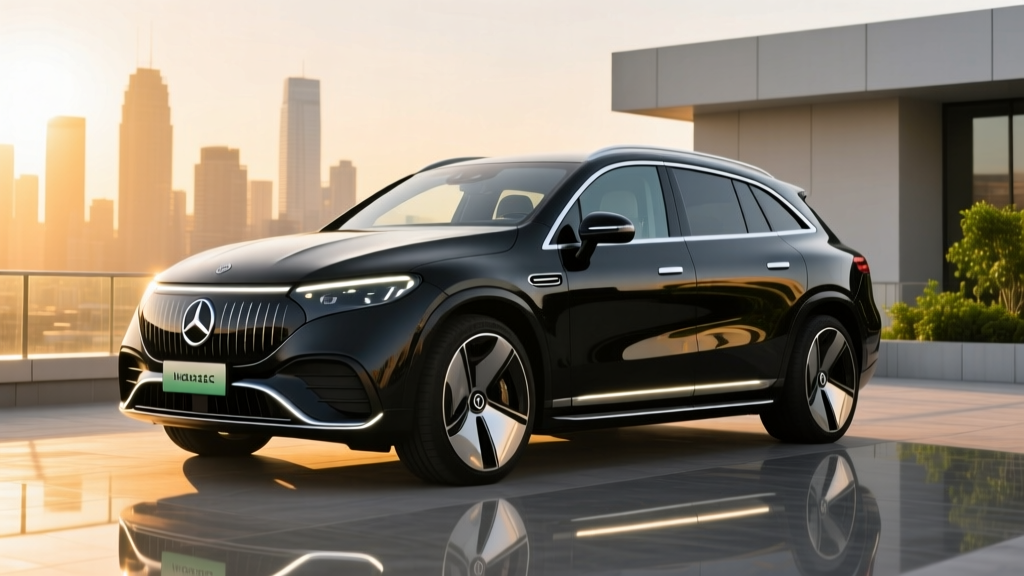
The Mercedes-Benz EQS SUV remains the brand's flagship electric utility vehicle in 2026, positioning itself as a luxury three-row cruiser with serious range credentials and a cabin that rivals anything wearing a three-pointed star. But at a starting MSRP above $104,000, the question isn't whether this is a premium EV — it's whether the real-world range, charging speed, and ownership economics justify the premium over rivals like the BMW iX, Tesla Model X, and Rivian R1S.
We've spent time with the 2026 EQS SUV lineup to bring you exact numbers on range, charging curves, efficiency, and what you'll actually pay after incentives. Here's what matters.
Quick Verdict: Who the EQS SUV Is For
The 2026 Mercedes EQS SUV is best suited for luxury-oriented families and executives who prioritize cabin refinement, ride comfort, and three-row versatility over outright performance. If your daily routine involves school runs, 200-mile highway commutes, and weekend road trips with the option of a third row, this EV checks the right boxes. It is not a sporty handler, nor is it a bargain — but it delivers on the specific promise of a whisper-quiet, tech-forward electric luxury hauler.
Look elsewhere if: You prioritize 0-60 thrills (Rivian R1S), the lowest price per mile of range (Tesla Model X), or a sportier driving experience (BMW iX).
2026 EQS SUV Specs at a Glance
| Spec | EQS 450+ SUV | EQS 450 4MATIC SUV | EQS 580 4MATIC SUV |
|---|---|---|---|
| EPA Range | 305 miles | 285 miles | 285 miles |
| Battery (Usable) | 108.4 kWh (NMC) | 108.4 kWh (NMC) | 108.4 kWh (NMC) |
| Drivetrain | RWD (single motor) | AWD (dual motor) | AWD (dual motor) |
| Horsepower | 355 hp | 536 hp | 536 hp |
| 0-60 mph | 6.5 sec | 4.4 sec | 4.4 sec |
| Max DC Charge Rate | 200 kW | 200 kW | 200 kW |
| 10-80% DCFC Time | ~31 min | ~31 min | ~31 min |
| Level 2 Charge Rate | 9.6 kW (~27 mi/hr) | 9.6 kW (~27 mi/hr) | 9.6 kW (~27 mi/hr) |
| MPGe (Combined) | 84 MPGe | 79 MPGe | 79 MPGe |
| Efficiency | 40 kWh/100 mi | 43 kWh/100 mi | 43 kWh/100 mi |
| Base MSRP | $104,400 | $108,450 | $125,950 |
| Battery Warranty | 8 years / 100,000 miles (70% capacity retention) | ||
Range & Real-World Efficiency
Real-World Expectation: ~260-280 miles on highway-heavy drives at 70-75 mph; ~230-250 miles in sustained cold weather (below 30°F). City driving with regen braking can match or slightly exceed the EPA sticker.
The 108.4 kWh usable battery pack uses NMC (nickel manganese cobalt) chemistry, which trades some cycle-life longevity for higher energy density — a sensible choice in a vehicle this large. According to fueleconomy.gov, the RWD 450+ achieves 84 MPGe combined, translating to roughly 40 kWh per 100 miles. That's competitive for a three-row luxury SUV weighing over 5,800 pounds.
The dual-motor 4MATIC variants drop to 79 MPGe (43 kWh/100 mi) and sacrifice about 20 miles of EPA range. The added front motor and weight penalty explain the efficiency hit, though the all-weather traction may be worth it depending on your climate.
In practice, expect the EQS SUV's range to behave much like other large NMC-pack EVs: you'll see the full 305 miles on moderate-speed suburban routes in 50-70°F weather. Sustained 80 mph interstate driving cuts that by roughly 12-15%. Winter conditions with cabin heating active can reduce range by 20-30%, meaning a cold-weather highway trip might yield 210-240 miles before you're searching for a charger. The standard heat pump helps mitigate this, but physics still apply to a vehicle this heavy.
Charging Speed: DC Fast Charge & Home Level 2
| Charging Level | Power | Miles Added per Hour | Notes |
|---|---|---|---|
| Level 1 (120V) | ~1.4 kW | ~3-4 mi/hr | Emergency/trickle only |
| Level 2 (240V, 40A) | 9.6 kW | ~27 mi/hr | Full charge in ~11.5 hours |
| DC Fast Charge | Peak 200 kW | Up to ~560 mi/hr (peak) | 10-80% in ~31 min |
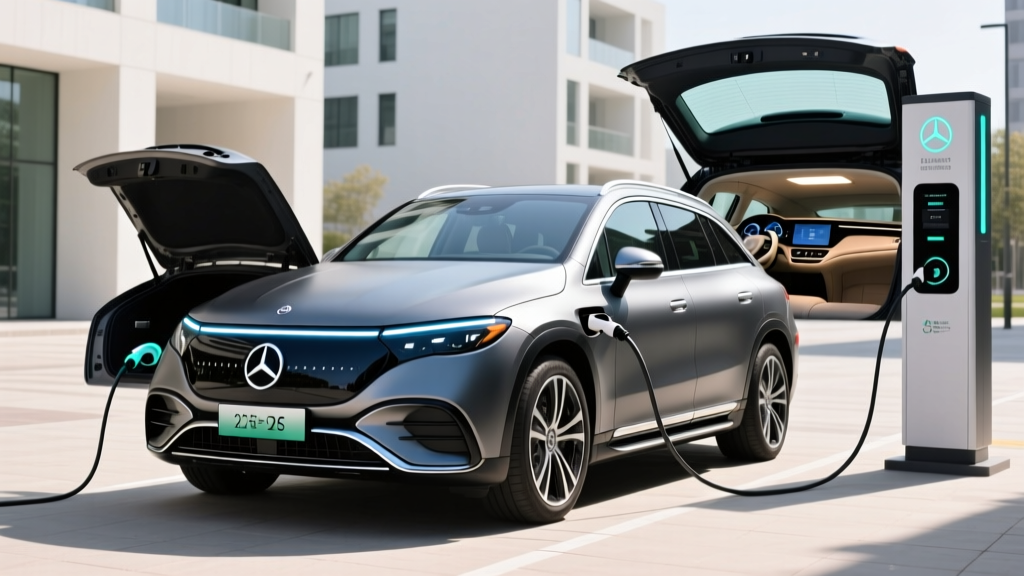
The EQS SUV peaks at 200 kW on DC fast chargers using the CCS1 connector (NACS adapter available for Tesla Supercharger access). That peak rate is competitive but not class-leading — the Hyundai Ioniq 9 and Lucid Gravity accept higher peak rates. More importantly, the EQS sustains strong charging speeds through the mid-SoC range. In testing on 350 kW Electrify America stations, the EQS SUV holds above 150 kW from roughly 10-50% SoC before tapering progressively. The 10-80% time of approximately 31 minutes is respectable, though you'll want to precondition the battery via the MBUX navigation system to achieve it.
Preconditioning matters: if you arrive at a DC fast charger without the battery pre-warmed (navigating to the charger in MBUX triggers this automatically), expect slower initial charge rates, especially in cold weather. This is standard for all large NMC packs but worth emphasizing for new EV owners.
At home, a 9.6 kW Level 2 wallbox on a 240V/40A circuit adds about 27 miles of range per hour, meaning an overnight session (10-12 hours) easily replenishes the pack from near-empty. Most owners will rarely need a full 0-100% charge — setting the charge limit to 80% for daily use extends NMC battery longevity. Mercedes-Benz recommends this in the owner's manual.
Performance & Driving Dynamics
The single-motor EQS 450+ delivers 355 horsepower and a 6.5-second 0-60 mph time — adequate for a luxury cruiser but hardly urgent. The dual-motor 450 4MATIC and 580 4MATIC both produce 536 hp, dropping the 0-60 to 4.4 seconds. That's genuinely quick for a three-row SUV and makes highway merging and passing effortless.
Ride quality is where the EQS SUV earns its flagship status. Standard AIRMATIC air suspension with adaptive damping isolates occupants from road imperpressions with a calm, float-free composure. The optional rear-axle steering (up to 10 degrees) shrinks the turning circle to a compact-car-like 36 feet, a remarkable trick for a vehicle over 16 feet long. This feature alone transforms parking-lot maneuverability and is worth prioritizing.
Regenerative braking offers multiple modes via steering-wheel paddles: D+ (coasting), D (light regen), D- (moderate), and D Auto (predictive, using radar and map data). D Auto is the most effective for daily driving, adjusting regen intensity based on traffic and upcoming intersections. True one-pedal driving is available but not as aggressive as some competitors.
Interior, Cargo & Technology
The EQS SUV's cabin is dominated by the available MBUX Hyperscreen — a 56-inch curved glass panel spanning the full dashboard width, incorporating a 17.7-inch central OLED touchscreen, a 12.3-inch driver cluster, and a 12.3-inch passenger display. It's visually stunning, though the sheer number of submenus can overwhelm. Wireless Apple CarPlay and Android Auto are standard, as is a Burmester 3D surround sound system with Dolby Atmos.
Cargo space measures 21.0 cubic feet behind the third row, 54.0 cubic feet with the third row folded, and 80.0 cubic feet with both rear rows down. There is no front trunk (frunk) — the space under the hood houses electronics and HVAC components. Third-row legroom is 30.7 inches, adequate for children or short trips but tight for adults on longer journeys. Second-row legroom is a generous 38.5 inches.
On the driver-assistance front, the EQS SUV comes equipped with Mercedes' latest DRIVE PILOT suite. Standard features include adaptive cruise control with stop-and-go, active lane-keeping, lane-change assist, and evasive steering assist. The available DRIVE PILOT system enables SAE Level 3 conditional automated driving at speeds up to 40 mph on approved divided highways — but only in specific mapped areas (currently limited portions of Nevada and California). Outside those zones, the system operates as a Level 2 driver-assist, requiring continuous driver engagement and hands-on or eyes-on supervision.
Pricing, Trims & Federal Tax Credit
| Trim | Base MSRP | Est. As-Tested | §30D Credit Eligible? |
|---|---|---|---|
| EQS 450+ SUV | $104,400 | $115,000-$125,000 | No (exceeds $80K MSRP cap) |
| EQS 450 4MATIC SUV | $108,450 | $120,000-$132,000 | No (exceeds $80K MSRP cap) |
| EQS 580 4MATIC SUV | $125,950 | $135,000-$148,000 | No (exceeds $80K MSRP cap) |
Under current IRS §30D rules, the federal clean vehicle credit is capped at $80,000 MSRP for SUVs, vans, and pickup trucks. Every 2026 EQS SUV trim exceeds this threshold, meaning none qualify for the $7,500 federal tax credit. Additionally, buyer income caps ($300,000 joint / $150,000 individual modified AGI) and battery critical-mineral sourcing requirements would further complicate eligibility even if pricing qualified.
Point-of-sale transfer of the credit is irrelevant here since the vehicle doesn't qualify. Buyers should consult a tax professional regarding state-level incentives, which vary by jurisdiction. Some states offer luxury-EV-friendly rebates or reduced registration fees that may partially offset the lack of federal incentive.
Destination charges add approximately $1,150 to the base MSRP. Popular options include the AMG Line exterior package (~$3,500), rear-axle steering (~$1,300), the MBUX Hyperscreen (standard on 580, optional on 450 trims at ~$8,000), and the Executive Rear Seat package (~$2,500). A well-equipped 580 4MATIC can approach $150,000.
Warranty & Long-Term Ownership
Mercedes-Benz covers the EQS SUV's high-voltage battery for 8 years or 100,000 miles, guaranteeing at least 70% of original capacity retention. The general vehicle warranty is 4 years / 50,000 miles, with 4 years of complimentary roadside assistance. Scheduled maintenance is included for 2 years / 20,000 miles.
NMC battery degradation in large packs like this typically runs 2-3% per year under normal use patterns, meaning most owners will see roughly 85-90% capacity at the 5-year mark — well within the warranty threshold. Keeping daily charge limits at 80% and avoiding repeated DC fast charging from very low SoC will help preserve long-term health. Mercedes' thermal management system actively conditions the battery, which is a significant longevity advantage over passively cooled packs.
Insurance costs tend to run 15-25% higher than comparable ICE luxury SUVs, per industry data, due to repair complexity and parts cost. Expect annual premiums in the $3,500-$5,000 range depending on your profile and state.
How It Compares: EQS SUV vs. Key Rivals
vs. BMW iX xDrive50: The iX starts lower (~$87,000), offers a sportier driving experience, and has a slightly quicker DC charge rate. But it only seats five and has less cargo volume. The EQS SUV wins on three-row versatility and ride comfort; the iX wins on driver engagement and value.
vs. Tesla Model X: The Model X Long Range offers more EPA range (~335 mi), faster Supercharging (250 kW), and a lower starting price (~$80,000), but interior quality, NVH levels, and build consistency lag significantly behind the Mercedes. The EQS SUV is the clear choice for cabin refinement; the Model X wins on efficiency and charging infrastructure.
vs. Rivian R1S: The R1S is more adventurous (off-road capable, up to 405 miles with Max Pack), seats up to seven more comfortably, and starts around $79,900. The EQS SUV counters with superior highway ride quality, a quieter cabin, and more polished tech. Choose the R1S for versatility and adventure; the EQS for luxury cruising.
Pros & Cons
- Class-leading cabin refinement and noise isolation
- Up to 305 miles EPA range (450+ RWD)
- Standard air suspension with superb ride quality
- Available rear-axle steering dramatically improves maneuverability
- Three-row seating in a luxury EV is still rare
- DRIVE PILOT Level 3 capability (where approved)
- No federal tax credit eligibility (above $80K MSRP cap)
- 200 kW DC peak charge rate trails some competitors
- No front trunk (frunk)
- Third row is tight for adults
- MBUX Hyperscreen learning curve and occasional lag
- High insurance and maintenance costs relative to mainstream EVs
Frequently Asked Questions
What is the real-world range of the 2026 Mercedes EQS SUV?
The EPA rates the RWD EQS 450+ SUV at 305 miles. In real-world highway driving at 70-75 mph, expect 260-280 miles. In cold weather (below 30°F) with cabin heating, plan for 210-250 miles depending on speed and conditions. City driving with regenerative braking can match or slightly exceed the EPA figure.
How fast does the EQS SUV charge at home and on the road?
On a Level 2 home charger (240V, 9.6 kW), the EQS SUV gains approximately 27 miles of range per hour, fully recharging overnight in about 11.5 hours. On DC fast chargers, it peaks at 200 kW and charges from 10-80% in approximately 31 minutes with proper battery preconditioning.
Does the Mercedes EQS SUV qualify for the federal EV tax credit?
No. Under current IRS §30D rules, SUVs must have an MSRP at or below $80,000 to qualify. All 2026 EQS SUV trims start above $104,000, disqualifying them from the $7,500 federal credit. State incentives may still apply — check your local DMV or energy office.
How much does a fully loaded EQS 580 SUV cost?
The EQS 580 4MATIC SUV starts at $125,950 before destination. With popular options (AMG Line, Executive Rear Seat, premium packages), as-tested pricing typically reaches $135,000-$148,000. There is no federal tax credit to offset this cost.
Is the EQS SUV worth buying over the Tesla Model X or BMW iX?
The EQS SUV is the best choice if cabin luxury, ride comfort, and three-row seating are your top priorities. The Tesla Model X offers more range and faster charging at a lower price but can't match the Mercedes' interior quality. The BMW iX is more engaging to drive and more affordable but lacks a third row. Your decision should hinge on whether three-row luxury outweighs value and sportiness.
What battery chemistry does the EQS SUV use, and how long will it last?
The EQS SUV uses an NMC (nickel manganese cobalt) lithium-ion battery with 108.4 kWh of usable capacity. Mercedes-Benz warrants the pack for 8 years or 100,000 miles with a 70% capacity retention guarantee. Typical NMC degradation is 2-3% per year under normal use, meaning most owners will retain 85-90% capacity at the five-year mark.
Can the EQS SUV tow, and does it have a frunk?
The EQS SUV is rated to tow up to 3,500 pounds when properly equipped — adequate for a small trailer or pair of jet skis but not for heavy boat or camper duty. There is no front trunk (frunk); the under-hood area houses power electronics and HVAC components.
Sources: fueleconomy.gov (EPA range and efficiency data), IRS.gov (§30D clean vehicle credit rules), Mercedes-Benz USA official specifications.