Quick Verdict: Is the Chevy Electric Blazer Worth It?
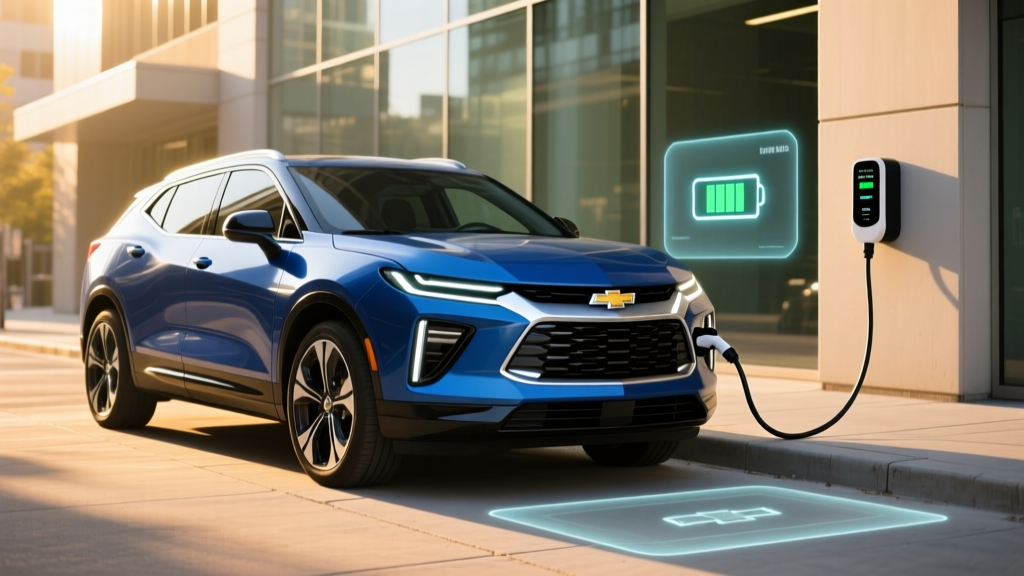
The 2026 Chevrolet Blazer EV is a midsize electric SUV with an EPA-estimated range of up to 324 miles (FWD trim), DC fast charging up to 190 kW (10–80% in roughly 28 minutes), and a starting MSRP around $44,600. It competes directly with the Hyundai Ioniq 5, Ford Mustang Mach-E, and Tesla Model Y. The Blazer EV makes the most sense for buyers who want a spacious two-row crossover with a comfortable ride, GM's Super Cruise hands-free driving option, and access to the Tesla Supercharger network via the NACS adapter. However, its charging speed trails the Ioniq 5's 800V architecture, and real-world highway range drops to approximately 260–280 miles. If you can charge at home and your daily driving stays under 60 miles, the Blazer EV delivers strong ownership economics with minimal compromises.
Range, Battery & Efficiency: EPA vs. Real World
The 2026 Blazer EV is built on GM's Ultium platform and is available with two battery pack sizes depending on drivetrain. The larger pack, paired with front-wheel drive, delivers the maximum EPA-estimated 324 miles. All-wheel-drive trims carry the same battery but sacrifice some efficiency for traction, landing at approximately 279–283 miles EPA. The RS AWD trim with the performance-oriented SS badge (557 hp) drops to an estimated 266 miles.
| Spec | 2LT FWD | RS AWD | SS AWD |
|---|---|---|---|
| EPA Range | 324 mi | ~283 mi | ~266 mi |
| Battery (usable) | 102 kWh (est.) | 102 kWh (est.) | 102 kWh (est.) |
| Chemistry | NMC (Nickel Manganese Cobalt) | NMC | NMC |
| Horsepower | 220 hp | 288 hp | 557 hp |
| 0–60 mph | ~7.8 sec | ~6.2 sec | ~3.9 sec |
| Efficiency (MPGe) | ~97 MPGe combined | ~89 MPGe combined | ~82 MPGe combined |
| Max DC Fast Charge | 190 kW | 190 kW | 190 kW |
| 10–80% DC Charge | ~28 min | ~28 min | ~28 min |
| Level 2 Charge Rate | 11.5 kW | 11.5 kW | 11.5 kW |
| Base MSRP | $44,600 | $50,300 | $60,600 |
| Battery Warranty | 8 yr / 100,000 mi | 8 yr / 100,000 mi | 8 yr / 100,000 mi |
Real-World Range Reality Check
EPA Sticker: 324 miles (2LT FWD)
Highway driving (70–75 mph): Expect ~260–280 miles
Cold weather (below 32°F): Expect ~220–250 miles (25–30% loss without preconditioning)
Mixed daily driving: ~290–310 miles achievable with regen and moderate speeds
Like all EVs, the Blazer EV loses range at sustained highway speeds and in cold temperatures. GM's battery preconditioning feature helps mitigate charging slowdowns in cold weather, but it does not fully eliminate range loss. If your commute involves long highway stretches in northern climates, plan for the lower end of these estimates.
Charging Speed & Network Access
The Blazer EV's 190 kW peak DC fast-charge rate is adequate but not class-leading. The Hyundai Ioniq 5, with its 800V architecture, peaks at 240 kW and can charge from 10–80% in roughly 18 minutes. The Blazer EV takes about 10 minutes longer for the same session. On a road trip, that difference adds up — roughly 20–30 extra minutes on a 600-mile drive with two charging stops.
| Charging Level | Power | Miles Added Per Hour | Typical Use Case |
|---|---|---|---|
| Level 1 (120V outlet) | ~1.4 kW | ~4–5 mi/hr | Overnight trickle; emergency only |
| Level 2 (240V home) | 11.5 kW | ~34 mi/hr | Daily home charging; full charge in ~9 hrs |
| DC Fast Charge | Up to 190 kW | ~180 mi in 30 min | Road trips; 10–80% in ~28 min |
A critical advantage for the 2026 model year: GM has transitioned to the NACS (North American Charging Standard) port, giving Blazer EV owners native access to the Tesla Supercharger network — over 20,000 stalls nationwide. This is arguably the most reliable public charging infrastructure in the U.S. and a significant practical edge over CCS-only vehicles that rely on Electrify America or EVgo.
Charging curve reality: The Blazer EV peaks near 190 kW only between roughly 10–30% state of charge. Above 50%, the rate tapers progressively — expect ~120 kW at 60% and ~60 kW by 80%. This is standard for NMC batteries but means the advertised peak rate is not sustained throughout the session.
Cost Breakdown: Blazer EV vs. Gas Blazer
One of the most common questions from prospective buyers is whether the higher upfront cost of an EV pays off. Here's a concrete comparison between the 2026 Blazer EV 2LT FWD ($44,600 MSRP) and the gas-powered 2025 Blazer 2LT FWD (approximately $38,400 MSRP).
| Cost Factor | Blazer EV 2LT FWD | Gas Blazer 2LT FWD |
|---|---|---|
| Base MSRP | $44,600 | $38,400 |
| Est. Federal Tax Credit (§30D)* | Up to $7,500 | $0 |
| Effective Purchase Price | ~$37,100 | $38,400 |
| Fuel / Electricity (5 yrs, 60,000 mi)** | ~$3,300 | ~$7,800 |
| Maintenance (5 yrs)*** | ~$1,500 | ~$3,800 |
| Insurance (5 yrs avg) | ~$9,500 | ~$8,200 |
| 5-Year Total Cost (est.) | ~$51,400 | ~$58,200 |
*Federal §30D tax credit eligibility depends on buyer income (AGI caps: $150K single, $300K joint), vehicle MSRP (SUVs capped at $80,000), and battery mineral/component sourcing. The Blazer EV has qualified for the full $7,500 in recent years, but always verify current eligibility on IRS.gov before purchasing. The credit can now be transferred to the dealer at point of sale, reducing your out-of-pocket cost immediately.
**Electricity cost based on $0.15/kWh national average and ~3.0 mi/kWh efficiency. Gas cost based on $3.50/gallon and 24 MPG combined (per fueleconomy.gov).
***EV maintenance savings come from no oil changes, no spark plugs, reduced brake wear (regen braking), and fewer moving parts. EVs are not maintenance-free — tires, cabin air filters, brake fluid, and coolant still need attention.
Decision Framework: Should You Buy the Blazer EV?
Choose the Blazer EV if:
- You can install a Level 2 home charger (240V) and your daily driving is under 80 miles round-trip
- You want access to the Tesla Supercharger network for road trips
- You qualify for the §30D federal tax credit (check income and sourcing rules)
- You prefer a comfortable, quiet ride over sporty handling
- You want optional Super Cruise hands-free driving on compatible highways
Look elsewhere if:
- You regularly drive 300+ miles in a single day in cold weather (consider a larger battery or a PHEV like the Hyundai Tucson Plug-in Hybrid)
- Fastest possible DC charging is a priority (the Ioniq 5 or Kia EV6 charge significantly faster)
- You live in an apartment without charging access and public chargers are sparse in your area
- You need three rows of seating (the Blazer EV is strictly a two-row SUV; look at the Kia EV9 or Tesla Model X)
Tax Credit, Incentives & Purchase Timing
The 2026 Blazer EV's eligibility for the federal §30D Clean Vehicle Credit is one of its strongest financial arguments — but it is not guaranteed for every buyer or every trim. Here's the current eligibility framework:
- MSRP cap: The Blazer EV qualifies as an SUV, so the cap is $80,000. All current trims fall well under this threshold.
- Buyer income cap: Modified AGI must not exceed $150,000 (single), $225,000 (head of household), or $300,000 (married filing jointly).
- Battery sourcing: A portion of the credit ($3,750) depends on critical minerals sourcing, and the other $3,750 on battery component manufacturing. GM's Ultium battery supply chain has largely met these requirements, but always confirm with your dealer at the time of purchase.
- Point-of-sale transfer: You can transfer the credit to the dealer, reducing your purchase price at the register rather than waiting for a tax refund.
- State incentives: Many states offer additional rebates (e.g., California's CVRP, Colorado's state credit, New York's Drive Clean rebate). Check your state energy office or AFDC state incentive database for current programs.
Real-World Ownership: What First-Time EV Buyers Need to Know
If you're coming from a gas vehicle, the Blazer EV ownership experience involves a few adjustments worth understanding before you sign:
Home charging is essential. The vast majority of EV owners do 85–95% of their charging at home. A Level 2 home charger (240V, ~11.5 kW) adds about 34 miles of range per hour and fully replenishes the Blazer EV overnight in roughly 9 hours. Expect to spend $600–$1,200 on the charger hardware and $800–$2,500 on professional installation by a licensed electrician, depending on your panel capacity and wiring distance. If your home has a 200-amp electrical panel, you're likely fine. A 100-amp panel may need an upgrade ($1,500–$3,500).
Tires wear faster on EVs. The Blazer EV weighs over 5,100 pounds, and instant electric torque accelerates tire wear. Expect to replace tires every 30,000–40,000 miles rather than the 50,000+ you might get on a gas crossover. Budget $800–$1,400 for a set of four all-season tires.
Insurance can be higher. EV insurance premiums tend to run 10–20% higher than equivalent gas vehicles due to higher repair costs (especially battery replacement). Get quotes before buying — some insurers offer EV-specific discounts.
Range planning for road trips. On trips over 250 miles, you'll need at least one DC fast-charging stop. With NACS access, you can use Tesla Superchargers, which are generally the most reliable and well-maintained network. The Blazer EV's built-in route planner will suggest charging stops and precondition the battery for faster charging on arrival.
| Myth | Fact |
|---|---|
| "The battery will need replacing in a few years" | GM warranties the Ultium battery for 8 years/100,000 miles with at least 60% capacity retention. Most NMC batteries lose only 10–15% capacity over 100,000 miles based on industry degradation data. |
| "EVs are worse in cold weather" | EVs do lose 20–30% range in sub-freezing temps, but they start instantly, cabin heating works immediately with a heat pump, and you can precondition the car while plugged in — no cold-start engine wear. |
| "Charging takes too long" | At home, charging happens while you sleep (you never visit a "station"). On road trips, a 25–30 minute DC fast charge every 2.5–3 hours aligns naturally with rest and food stops. |
| "The power grid can't handle EVs" | Most EV charging happens overnight during off-peak hours. A single Blazer EV charging at 11.5 kW draws roughly the same as an electric oven or central AC unit. |
Blazer EV vs. Competitors: How It Stacks Up
| Spec | Chevy Blazer EV 2LT | Hyundai Ioniq 5 SEL | Ford Mustang Mach-E Select | Tesla Model Y Long Range |
|---|---|---|---|---|
| EPA Range | 324 mi | 310 mi | 250 mi | 320 mi |
| Peak DC Charge | 190 kW | 240 kW | 150 kW | 250 kW |
| 10–80% Time | ~28 min | ~18 min | ~35 min | ~22 min |
| Horsepower | 220 hp | 225 hp | 266 hp | 384 hp |
| Cargo (rear seats up) | 26.5 cu ft | 27.2 cu ft | 29.7 cu ft | 30.2 cu ft |
| Base MSRP | $44,600 | $43,500 | $40,995 | $46,630 |
| Super Cruise / ADAS | Super Cruise (opt.) | Highway Driving Assist 2 | BlueCruise (opt.) | Autopilot (FSD opt.) |
| Charging Network | NACS (Supercharger) | CCS → NACS adapter | NACS (Supercharger) | Native NACS |
The Blazer EV's 324-mile range leads this group, and its NACS access is a major advantage. However, the Ioniq 5 charges significantly faster, the Mach-E starts at a lower price, and the Model Y offers more cargo space and performance. The Blazer EV's sweet spot is maximum range with a comfortable, traditional SUV driving feel and Super Cruise availability.
A Note on Super Cruise (SAE Level 2)
GM's Super Cruise is a hands-free driver-assistance system that works on over 750,000 miles of compatible divided highways in the U.S. and Canada. It uses LiDAR-mapped road data, a driver attention camera, and adaptive cruise + lane centering. However, it is classified as SAE Level 2 — you must remain alert, keep your eyes on the road, and be ready to take over at any time. It is not self-driving. The driver attention system will issue warnings and eventually slow the vehicle if it detects you are not paying attention.
Frequently Asked Questions
Does the 2026 Chevy Blazer EV qualify for the $7,500 federal tax credit?
The Blazer EV has qualified for up to the full $7,500 §30D Clean Vehicle Credit, but eligibility depends on your income (AGI caps apply), the battery's critical mineral and component sourcing at time of purchase, and the vehicle's MSRP (SUV cap is $80,000 — all trims qualify). Always verify current eligibility on IRS.gov or with your tax professional before purchasing.
Can I charge the Blazer EV at Tesla Superchargers?
Yes. The 2026 Blazer EV comes equipped with a NACS charge port, giving it native access to the Tesla Supercharger network without an adapter. This is one of its biggest practical advantages for road-trip charging.
How much does it cost to charge the Blazer EV at home?
A full charge (0–100%) of the ~102 kWh battery at the national average electricity rate of $0.15/kWh costs roughly $15.30 and provides about 300+ real-world miles. That works out to approximately $0.05 per mile — compared to roughly $0.13 per mile for the gas Blazer at $3.50/gallon and 24 MPG combined.
What happens if the battery degrades or fails?
GM covers the Ultium battery with an 8-year/100,000-mile warranty that guarantees at least 60% of original capacity retention. Industry data on NMC batteries suggests typical degradation of 10–15% over 100,000 miles, meaning most owners will retain 85–90% capacity well beyond the warranty period. A full battery replacement (out of warranty) currently costs approximately $12,000–$18,000, though prices are expected to decline as battery manufacturing scales.
Is the Blazer EV good in snow and cold weather?
The AWD trims (RS and SS) provide strong traction in snow, and the Blazer EV's weight (over 5,100 lbs) helps with stability. Cold weather will reduce range by 20–30% in sub-freezing temperatures — plan for ~220–250 miles in winter conditions. Using the seat heaters and steering wheel heater instead of cranking cabin heat can help preserve range. Preconditioning the battery while plugged in before a drive also mitigates cold-weather losses.
How does the Blazer EV compare to a plug-in hybrid (PHEV)?
A PHEV like the Toyota RAV4 Prime offers ~42 miles of electric-only range before the gas engine kicks in, giving unlimited total range. If you regularly drive 300+ miles without reliable charging access, a PHEV may be more practical. However, if you charge at home and your daily driving is under 60 miles, the Blazer EV's all-electric operation means lower fuel costs, less maintenance, and zero tailpipe emissions on nearly every trip.