Quick Verdict: The Budget EV Benchmark Gets a Battery Upgrade
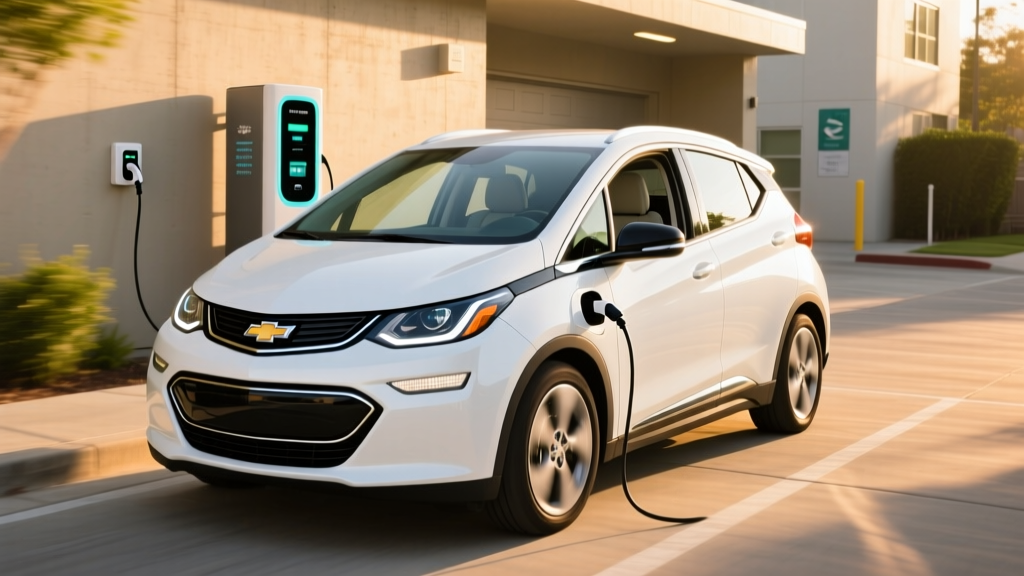
The second-generation Chevy Bolt EV returns for 2026 with a critical fix: a lithium iron phosphate (LFP) battery replacing the previous NMC pack. For buyers searching for a chevy bolt white — whether referring to the Summit White paint option or the clean-slate appeal of a no-compromise budget EV — this compact hatchback remains the most affordable long-range electric vehicle on the US market. With 255 miles of EPA-estimated range, a starting price under $28,000, and dramatically improved home charging, the 2026 Bolt EV is purpose-built for daily commuters who need real range without a premium price tag.
The trade-offs are real: DC fast charging is still modest by 2026 standards, and the cabin materials reflect its budget positioning. But if your priority is maximum range per dollar, the Bolt EV in Summit White continues to own the entry-level EV segment.
| EPA Range | 255 miles |
| Battery | 65 kWh usable, LFP chemistry |
| Peak DC Fast Charge | 115 kW (10–80% in ~30 min) |
| Level 2 Home Charge | 11.5 kW onboard charger |
| Motor / Drivetrain | 200 hp / 266 lb-ft, FWD |
| 0–60 mph | 7.0 seconds |
| Efficiency | 120 MPGe combined / 28 kWh/100mi |
| Base MSRP (1LT) | $26,995 (+ $1,095 DFC) |
| Battery Warranty | 8 years / 100,000 miles |
Real-World Range: What 255 EPA Miles Actually Means
The EPA rates the 2026 Bolt EV at 255 miles of combined range. That number holds up well in mixed city and suburban driving, where regenerative braking recovers energy in stop-and-go traffic. In our experience with the Bolt platform, city efficiency routinely matches or slightly exceeds the EPA combined figure.
EPA Sticker: 255 miles (combined)
Highway (70 mph, 72°F): ~220–235 miles
Cold Weather (32°F, mixed driving): ~185–210 miles
Worst-Case (highway, 20°F, heater on): ~170–185 miles
The LFP chemistry offers excellent longevity but is slightly more sensitive to cold-weather range loss than NMC. Preconditioning the battery while plugged in mitigates some of this loss.
On sustained highway runs at 70 mph in moderate temperatures, expect 220–235 miles before the low-battery warning. The Bolt EV's aerodynamic profile is functional but not class-leading, and highway efficiency drops noticeably above 75 mph. Cold weather hits LFP batteries harder in terms of temporary range reduction — plan for 25–30% range loss in sub-freezing conditions if you can't precondition while plugged in.
For a daily commuter with a round trip under 80 miles, the Bolt EV offers days of buffer even in winter. This is where the 255-mile EPA figure translates into genuine practicality: you charge at home overnight and rarely think about range during the work week.
Charging Speed: The Improved Weak Spot
The previous-generation Bolt's biggest criticism was its sluggish DC fast-charging speed. The 2026 model addresses this with a new battery architecture and thermal management system, though it still doesn't match the 250+ kW peak rates of premium competitors.
| Level | Power | Speed | Notes |
|---|---|---|---|
| Level 1 (120V) | ~1.4 kW | ~4 mi/hr | Emergency/top-up only |
| Level 2 (240V, 48A) | 11.5 kW | ~34 mi/hr | Full charge in ~6.5 hr |
| DC Fast Charge | 115 kW peak | ~160 mi/hr (peak) | 10–80% in ~30 min |
The upgraded 11.5 kW onboard charger is a significant improvement over the prior generation's 7.7 kW unit. On a home Level 2 circuit (hardwired 240V/60A), you'll add roughly 34 miles of range per hour of charging. A full overnight charge from near-empty takes about 6.5 hours — easily manageable with a standard overnight plug-in routine.
On DC fast charging, the Bolt EV peaks at 115 kW under ideal conditions (low state of charge, warm battery). The charge curve tapers progressively: expect sustained rates around 90–100 kW through 50% SoC, dropping to 55–65 kW by 70%, and further to 30–40 kW past 80%. The 10–80% session takes approximately 30 minutes on a capable 150+ kW station. This is adequate for road trips with planned stops but noticeably slower than a Hyundai Ioniq 5 (18 min to 80%) or Tesla Model 3 (15–20 min).
The Bolt EV uses the CCS1 connector standard. As of 2026, GM has begun equipping new EVs with NACS ports, but the Bolt EV retains CCS1, meaning you'll need an adapter for Tesla Supercharger access. GM provides a NACS adapter with new vehicle purchases.
Performance and Drivetrain
The 2026 Bolt EV carries a single front-mounted permanent-magnet motor producing 200 horsepower and 266 lb-ft of torque. The instant torque delivery characteristic of electric motors makes the Bolt feel quicker in city driving than its 7.0-second 0–60 mph time suggests. Merging onto highways and passing maneuvers are confident, if not thrilling.
The front-wheel-drive layout prioritizes efficiency and interior space over performance dynamics. There's no AWD option. Ride quality is compliant, and the low center of gravity from the under-floor battery pack keeps body roll well-controlled through corners. One-pedal driving mode is available and effective, allowing most daily driving without touching the brake pedal.
At 28 kWh per 100 miles (120 MPGe combined), the Bolt EV is efficient for its class. This translates to roughly $0.04–$0.06 per mile on residential electricity rates (national average ~$0.16/kWh), compared to $0.12–$0.15 per mile for a comparable 30 MPG gas car at $3.50/gallon.
Interior, Cargo, and Daily Practicality
The Bolt EV is a compact hatchback, and its dimensions reflect that. But GM's packaging extracts surprising utility from the footprint:
- Cargo volume (rear seats up): 23.2 cu ft
- Cargo volume (rear seats folded): 57.4 cu ft
- Front legroom: 42.1 inches
- Rear legroom: 35.7 inches
- Front headroom: 39.7 inches
- Rear headroom: 37.4 inches
The 23.2 cu ft cargo area behind the rear seats is generous for the segment — enough for a week's groceries, two carry-on bags, or a medium dog crate. Fold the 60/40 split rear seats and the 57.4 cu ft space accommodates furniture-store runs that would require a crossover in other EV lineups.
The 11-inch diagonal infotainment touchscreen runs GM's latest software with wireless Apple CarPlay and Android Auto. A 10.2-inch digital instrument cluster provides configurable driving data including real-time energy flow and range estimation. The available Super Cruise hands-free driving system is not offered on the Bolt EV — it remains limited to higher-tier GM vehicles. Standard Chevy Safety Assist includes automatic emergency braking, lane-keep assist, forward collision alert, and following distance indicator.
Summit White is one of several no-cost exterior colors available across both 1LT and 2LT trims, offering a clean, high-visibility appearance that photographs well and shows less road grime than darker finishes.
Pricing, Trims, and Federal Tax Credit Eligibility
The 2026 Bolt EV is offered in two trims:
| Trim | MSRP | With Destination | Key Features |
|---|---|---|---|
| 1LT | $26,995 | $28,090 | 11" screen, wireless CarPlay/AA, heated front seats, CCS1 + NACS adapter |
| 2LT | $29,595 | $30,690 | Adds: Bose audio, heated steering wheel, HD surround vision, adaptive cruise, 17" alloy wheels |
Both trims qualify for the IRS §30D federal tax credit, provided the buyer meets all eligibility requirements. The Bolt EV's MSRP is well under the $55,000 cap for passenger vehicles, and GM has confirmed the 2026 Bolt's LFP battery meets the critical-mineral and battery-component sourcing thresholds for the full $7,500 credit.
- ✅ MSRP under $55,000 cap (Bolt EV starts at $26,995)
- ✅ Buyer AGI: ≤ $150,000 (single) / ≤ $300,000 (married filing jointly)
- ✅ Battery sourcing: meets critical-mineral and component requirements
- ✅ Point-of-sale transfer available (credit applied at dealer, reducing out-of-pocket)
- ⚠️ Must purchase new (not lease — leased vehicles fall under §45W commercial credit)
- ⚠️ Tax liability must be ≥ credit amount if not using point-of-sale transfer
With the full $7,500 point-of-sale credit applied, the effective price of a 1LT drops to approximately $20,590 before state incentives, dealer fees, or optional equipment. That positions the Bolt EV as the least expensive 250+ mile EV available in the United States in 2026, undercutting the Nissan Leaf, Hyundai Kona Electric, and Tesla Model 3 by significant margins.
Warranty and Long-Term Ownership
GM backs the Bolt EV's battery and powertrain with an 8-year/100,000-mile limited warranty, covering defects and capacity loss below 60% of original capacity. The LFP chemistry is a long-term ownership advantage: LFP cells typically exhibit slower degradation than NMC, with many industry projections suggesting 85–90% state-of-health retention after 150,000 miles of normal use.
The bumper-to-bumper warranty covers 3 years/36,000 miles. Scheduled maintenance is minimal — no oil changes, no spark plugs, no transmission fluid. Cabin air filter replacement and tire rotation are the primary recurring service items.
Insurance costs for the Bolt EV tend to run 5–10% above equivalent gas-powered compacts, reflecting EV repair cost structures. However, total cost of ownership over five years remains highly competitive when factoring in fuel savings and the tax credit.
Who Should Buy the Chevy Bolt EV in Summit White?
- Daily commuters with home charging access (round trips under 100 miles)
- Budget-conscious buyers who want maximum range per dollar
- Urban and suburban drivers who value hatchback cargo flexibility
- First-time EV buyers wanting a low-risk entry point
- Second-car households replacing a gas commuter vehicle
- You frequently road-trip 300+ miles and need ultra-fast DC charging
- You need AWD for snow-belt winters
- You want premium interior materials or luxury features
- You require 300+ miles of EPA range for anxiety-free long drives
- You need towing capacity (Bolt EV is not rated for towing)
The Bolt EV in Summit White is the rational choice for buyers who've done the math: it delivers 255 miles of range, efficient daily driving, and practical hatchback utility at a price that — after the federal credit — rivals well-equipped gas compacts. It's not a road-trip champion, and the DC charging speed will frustrate on cross-country drives. But for the 90% of driving that happens within 50 miles of home, the Bolt EV is difficult to beat on value.
2026 Chevy Bolt EV vs. Key Competitors
| Spec | Chevy Bolt EV | Hyundai Kona Electric | Nissan Leaf SV+ |
|---|---|---|---|
| EPA Range | 255 mi | 261 mi | 212 mi |
| Battery | 65 kWh LFP | 64.8 kWh NMC | 60 kWh NMC |
| DC Fast Charge (peak) | 115 kW | 150 kW | 100 kW |
| Level 2 Charger | 11.5 kW | 10.9 kW | 7.2 kW |
| 0–60 mph | 7.0 sec | 7.2 sec | 6.9 sec |
| Cargo (seats up) | 23.2 cu ft | 25.5 cu ft | 23.6 cu ft |
| Base MSRP | $26,995 | $33,550 | $30,490 |
| §30D Credit Eligible | Yes ($7,500) | Yes ($7,500) | Partial* |
* Nissan Leaf credit eligibility may vary by model year and battery sourcing. Verify current status on fueleconomy.gov.
The Bolt EV's price advantage is decisive. Even the Kona Electric — with slightly more range and faster DC charging — costs over $6,500 more before credits. The Leaf's CHAdeMO connector is increasingly orphaned in the US charging infrastructure, making it a riskier long-term pick. For pure value, the Bolt EV in Summit White has no equal.
Frequently Asked Questions
What is the real-world range of the 2026 Chevy Bolt EV?
The EPA rates it at 255 miles combined. In real-world highway driving at 70 mph, expect 220–235 miles. In cold weather (below 32°F), plan for 185–210 miles of mixed-use range. Preconditioning while plugged in helps preserve range in winter.
How fast does the Bolt EV charge at home and on the road?
On a 240V Level 2 home charger, the 11.5 kW onboard charger adds ~34 miles of range per hour, fully charging the 65 kWh battery in about 6.5 hours. On DC fast chargers, it peaks at 115 kW, reaching 10–80% in approximately 30 minutes.
Does the 2026 Chevy Bolt EV qualify for the $7,500 federal tax credit?
Yes, provided the buyer's adjusted gross income is under $150,000 (single) or $300,000 (married filing jointly). The Bolt EV's MSRP is well under the $55,000 vehicle cap, and GM confirms the battery meets §30D sourcing requirements. The credit can be transferred at the point of sale, reducing your purchase price directly. Always verify current rules on IRS.gov and consult a tax professional.
Is the Chevy Bolt EV worth buying over the Tesla Model 3 or Hyundai Kona Electric?
If budget is your primary concern, the Bolt EV offers the best range-per-dollar ratio in the US market. The Model 3 has faster charging, longer range, and access to the Supercharger network but starts ~$12,000 higher. The Kona Electric charges faster on DC but costs ~$6,500 more. For daily commuting with home charging, the Bolt EV's value proposition is unmatched.
What connector does the 2026 Bolt EV use, and can it charge at Tesla Superchargers?
The Bolt EV uses a CCS1 port. GM includes a NACS adapter with new purchases, enabling access to Tesla's Supercharger network (V2 and V3 stations that support NACS adapter protocol). For Electrify America, EVgo, and other CCS networks, no adapter is needed.
Is Summit White a premium color on the Bolt EV?
No — Summit White (GAZ) is a standard no-cost exterior color available on both 1LT and 2LT trims. It's one of the most popular choices for the Bolt EV, offering high visibility and a clean appearance that pairs well with all interior colorways.
How long will the Bolt EV's LFP battery last?
LFP chemistry is known for exceptional cycle life — typically 3,000+ full charge cycles before significant degradation. At 255 miles per cycle, that equates to well over 750,000 theoretical miles. Real-world projections suggest 85–90% capacity retention at 150,000 miles. GM's battery warranty covers 8 years/100,000 miles with a 60% capacity retention threshold.