Quick Answer: What Electric Cars Does Toyota Offer?
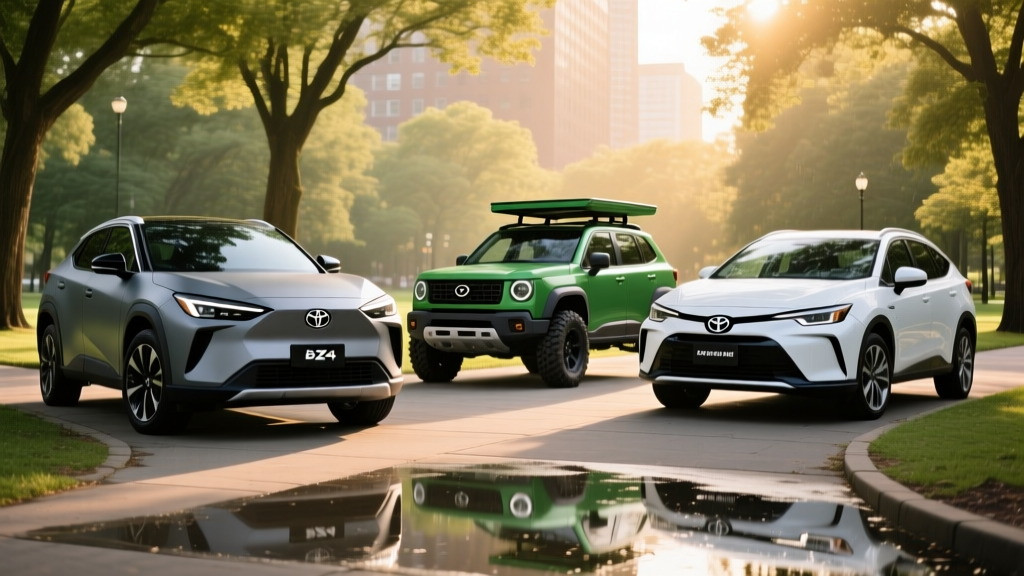
As of the 2026 model year, Toyota sells two battery-electric vehicles (BEVs) in the U.S.: the bZ4X compact SUV (EPA range up to 252 miles, starting at $38,465) and the newly launched bZ Woodland midsize SUV (EPA range up to 283 miles, starting at $46,700). Neither currently qualifies for the full $7,500 federal §30D tax credit due to battery-sourcing requirements. For buyers without reliable home charging or who regularly drive beyond 250 miles, Toyota's hybrid lineup (Prius, RAV4 Hybrid, Highlander Hybrid) remains a more practical electrified option.
Toyota's Electric Vehicle Lineup: The Full Picture
Toyota has been cautious with full battery-electric vehicles compared to rivals like Hyundai, Kia, and Tesla. The brand built its reputation on hybrid dominance — the Prius nameplate alone has sold millions — and only entered the dedicated BEV market in 2023 with the bZ4X. The 2026 lineup now includes two fully electric models, both riding on Toyota's e-TNGA platform with NMC (nickel manganese cobalt) lithium-ion battery packs.
Here's how the two electric cars Toyota currently sells stack up on paper and in practice:
| Spec | 2026 Toyota bZ4X XLE FWD | 2026 Toyota bZ4X Limited AWD | 2026 Toyota bZ Woodland AWD |
|---|---|---|---|
| Base MSRP | $38,465 | $44,115 | $46,700 |
| EPA Range | 252 mi | 228 mi | 283 mi |
| Battery (usable) | 64.8 kWh (NMC) | 64.8 kWh (NMC) | 72.8 kWh (NMC) |
| MPGe (combined) | 119 MPGe | 104 MPGe | 112 MPGe |
| Peak DC Fast Charge | 150 kW | 150 kW | 150 kW |
| 10–80% DCFC Time | ~30 min | ~30 min | ~32 min |
| Level 2 Charge Rate | 7.2 kW | 7.2 kW | 7.2 kW |
| Horsepower | 201 hp | 214 hp | 338 hp |
| 0–60 mph | 7.1 sec | 6.5 sec | 4.4 sec |
| Battery Warranty | 8 yr / 100,000 mi | 8 yr / 100,000 mi | 8 yr / 100,000 mi |
Real-World Range: What the EPA Sticker Doesn't Tell You
bZ4X XLE FWD: EPA 252 miles. Expect ~210–225 miles in mixed highway driving (70–75 mph), dropping to ~175–195 miles in freezing temperatures with cabin heat active.
bZ Woodland AWD: EPA 283 miles. Expect ~240–260 miles highway, ~200–220 miles in cold weather. The larger 72.8 kWh pack helps, but the taller, boxier body increases aerodynamic drag.
Toyota's bZ models use NMC chemistry, which delivers strong energy density but is more sensitive to extreme temperatures than LFP (lithium iron phosphate) packs found in some Tesla and Ford models. The bZ4X does include a battery preconditioning feature for DC fast charging — activate it via the navigation system when routing to a fast charger, and the pack will warm to optimal temperature, improving charge speed in cold conditions.
One area where the bZ platform falls short is DC fast-charging speed. At 150 kW peak, both models lag behind the Hyundai Ioniq 5 (up to 240 kW) and Tesla Model Y (up to 250 kW). In practice, the 150 kW peak is sustained only briefly between roughly 15–40% state of charge, tapering significantly above 60%. Plan for 30–35 minutes at a 150+ kW charger for a 10–80% session, not the sub-20-minute stops some competitors advertise.
EV vs Hybrid: Where Toyota's Strength Actually Lies
Toyota's hybrid lineup is arguably the strongest in the industry. If you're cross-shopping a Toyota EV against a Toyota hybrid, here's the data-driven comparison that matters:
| Factor | bZ4X XLE (BEV) | RAV4 Hybrid XLE (HEV) | Prius LE (HEV) |
|---|---|---|---|
| MSRP | $38,465 | $33,875 | $28,545 |
| Fuel/Energy Cost (annual, 15K mi) | ~$540 (electricity, $0.14/kWh avg) | ~$1,560 (gas, $3.20/gal) | ~$1,080 (gas, $3.20/gal) |
| EPA Efficiency | 119 MPGe | 39 MPG combined | 57 MPG combined |
| Annual Maintenance (est.) | ~$200 | ~$550 | ~$450 |
| Real-World Total Range | ~215 mi | ~500 mi | ~520 mi |
| Home Charging Needed? | Yes (practically required) | No | No |
| Road-Trip Convenience | 30-min DCFC stops every ~180 mi | 5-min gas stops every ~450 mi | 5-min gas stops every ~480 mi |
The financial case for the bZ4X over a RAV4 Hybrid narrows significantly when you factor in the higher purchase price and the lack of a federal tax credit. At current electricity and gas prices, the bZ4X saves roughly $1,000–$1,200 per year in fuel and maintenance — but the $4,590 MSRP premium over the RAV4 Hybrid means breakeven takes about four years. If you do qualify for a state-level EV rebate (California's CVRP offers up to $2,000 for income-qualified buyers, for example), the math improves.
The Real Costs of Owning a Toyota EV
Here's a five-year ownership cost projection for the bZ4X XLE FWD versus the RAV4 Hybrid XLE, assuming 15,000 miles per year, $0.14/kWh home electricity, and $3.20/gallon gas:
| Cost Category (5 Years) | bZ4X XLE FWD | RAV4 Hybrid XLE |
|---|---|---|
| Purchase Price (MSRP) | $38,465 | $33,875 |
| Federal Tax Credit (§30D) | $0 (battery sourcing) | N/A |
| Fuel/Energy | $2,700 | $7,800 |
| Maintenance | $1,000 | $2,750 |
| Insurance (avg) | $7,500 | $6,250 |
| Home Charger Install (Level 2) | $1,200–$2,500 | $0 |
| Estimated Depreciation | $16,500 | $12,200 |
| 5-Year Total (est.) | $67,365–$68,665 | $62,875 |
Key takeaway: The bZ4X costs roughly $4,500–$5,800 more to own over five years. The EV wins on fuel and maintenance, but loses on purchase price, insurance premiums (EVs typically cost 15–25% more to insure), and steeper depreciation. Without a tax credit, the economic argument for Toyota's EV over its own hybrid is difficult to justify purely on cost.
Federal Tax Credit: What You Need to Know
Under current IRS §30D rules, neither the bZ4X nor the bZ Woodland qualifies for the $7,500 federal tax credit. The reason: Toyota's battery cells and critical minerals do not yet meet the domestic-sourcing thresholds mandated by the Inflation Reduction Act.
Key §30D requirements for 2026:
- Vehicle MSRP cap: $80,000 for SUVs, $55,000 for sedans
- Buyer AGI cap: $150K single / $300K joint
- Battery components manufactured in North America (phased percentage thresholds)
- Critical minerals sourced from U.S. or FTA partners (phased percentage thresholds)
- Point-of-sale transfer available for eligible vehicles — reducing out-of-pocket at the dealer
Always verify current eligibility on fueleconomy.gov before purchasing, as sourcing rules tighten annually and automakers periodically requalify models.
Common Misconceptions About Toyota EVs
| Myth | Fact |
|---|---|
| "The bZ4X qualifies for the $7,500 tax credit" | It does not as of 2026. Battery sourcing rules disqualify it under §30D. |
| "Toyota doesn't make electric cars" | Toyota sells two BEVs (bZ4X, bZ Woodland) and has announced additional models for 2027+. |
| "EVs need no maintenance" | EVs skip oil changes and spark plugs, but still need tire rotations, cabin filters, brake fluid checks, and wiper fluid. Budget ~$200/year. |
| "The battery will need replacing in 5 years" | Toyota warranties the traction battery for 8 years/100,000 miles against failure or capacity loss below 70%. Industry data from Recurrent shows most modern NMC packs retain 90%+ capacity at 100K miles. |
| "All public chargers are broken" | Reliability varies by network. Tesla Superchargers (now open to bZ4X via adapter) average 95%+ uptime per ChargePoint and EVgo data. Electrify America and others have improved but remain less consistent. |
Decision Framework: Which Toyota Electrified Vehicle Is Right for You?
Choose the bZ4X if:
- You have Level 2 home charging (240V, 30–50 amp circuit)
- Your daily commute is under 80 miles round-trip
- You want zero tailpipe emissions and lower per-mile fuel cost
- You rarely drive more than 200 miles without stopping overnight
Choose the bZ Woodland if:
- You need AWD, more cargo space, and faster acceleration (4.4 sec 0–60)
- You can stretch to $46,700+ and value the longer 283-mile range
- You want a family-sized electric SUV with Toyota reliability
Choose a Toyota Hybrid (RAV4 Hybrid, Prius, Highlander Hybrid) if:
- You lack reliable home charging access (apartment, street parking)
- You regularly drive 300+ miles between stops
- You live in a region with extreme cold (below 10°F) where EV range drops 25–35%
- You want the lowest total cost of ownership without tax-credit dependency
- You tow regularly (bZ4X is rated for only 1,500 lbs; RAV4 Hybrid handles 1,750 lbs)
What First-Time Toyota EV Buyers Should Know
Home charging is the foundation. A Level 2 home charger (7.2 kW) fully replenishes the bZ4X's 64.8 kWh pack in roughly 9.5 hours — plug in at night, wake up full. Installation typically costs $1,200–$2,500 including a hardwired 40-amp charger and electrician labor, though older homes may need a $2,000–$4,000 panel upgrade to support a 50-amp circuit. Get a quote from a licensed electrician before committing to the car.
The NACS adapter matters. Toyota's 2026 bZ models ship with the CCS1 connector but include or offer a NACS adapter for access to Tesla's Supercharger network — the most reliable public DC fast-charging infrastructure in the U.S. This dramatically expands your road-trip charging options compared to CCS-only vehicles.
Cold weather is real range loss. NMC batteries lose efficiency in freezing temperatures. Expect 20–35% range reduction below 20°F, especially on short trips where the cabin heater cycles frequently. The bZ4X includes a heat pump (on most trims) that mitigates this compared to resistive heating, but the loss is still significant. If you live in Minnesota, Montana, or New England, plan routes with a 30% range buffer in winter.
Insurance costs more. EV insurance premiums run 15–25% higher than equivalent gas vehicles due to higher repair costs and battery replacement risk. Get quotes from your provider before purchasing — some insurers now offer specific EV policies with competitive rates.
Frequently Asked Questions
Does Toyota make a fully electric SUV?
Yes. Toyota currently sells the bZ4X (compact SUV, 252-mile range, $38,465) and the bZ Woodland (midsize SUV, 283-mile range, $46,700). Both are fully electric with no gas engine.
Is the Toyota bZ4X a good electric car?
It's competent but not class-leading. The bZ4X offers adequate range, comfortable ride quality, and Toyota's reputation for build quality. However, its 150 kW peak charge rate, lack of federal tax credit eligibility, and real-world range below 220 miles on the highway put it behind the Hyundai Ioniq 5, Kia EV6, and Tesla Model Y in overall value. It's a solid choice for Toyota-loyal buyers who prioritize brand trust over spec-sheet dominance.
How long does the Toyota bZ4X battery last?
Toyota warranties the battery for 8 years or 100,000 miles against defects and capacity loss below 70%. Based on industry degradation data, expect roughly 5–8% capacity loss over the first 100,000 miles with normal charging habits (avoiding frequent 100% charges and DC fast-charging exclusively).
Can I charge a Toyota bZ4X at a Tesla Supercharger?
Yes. The 2026 bZ4X can access Tesla's Supercharger network using a NACS adapter (included or available from Toyota). You'll need the Tesla app or a compatible charging card to initiate sessions at non-Tesla vehicles.
Should I buy a Toyota EV or a Toyota hybrid?
If you have home charging and a predictable commute under 80 miles, the EV offers lower per-mile energy costs and zero tailpipe emissions. If you lack home charging, drive long distances regularly, or live in extreme cold, a Toyota hybrid like the RAV4 Hybrid or Prius delivers 39–57 MPG with no charging infrastructure required and a lower purchase price.