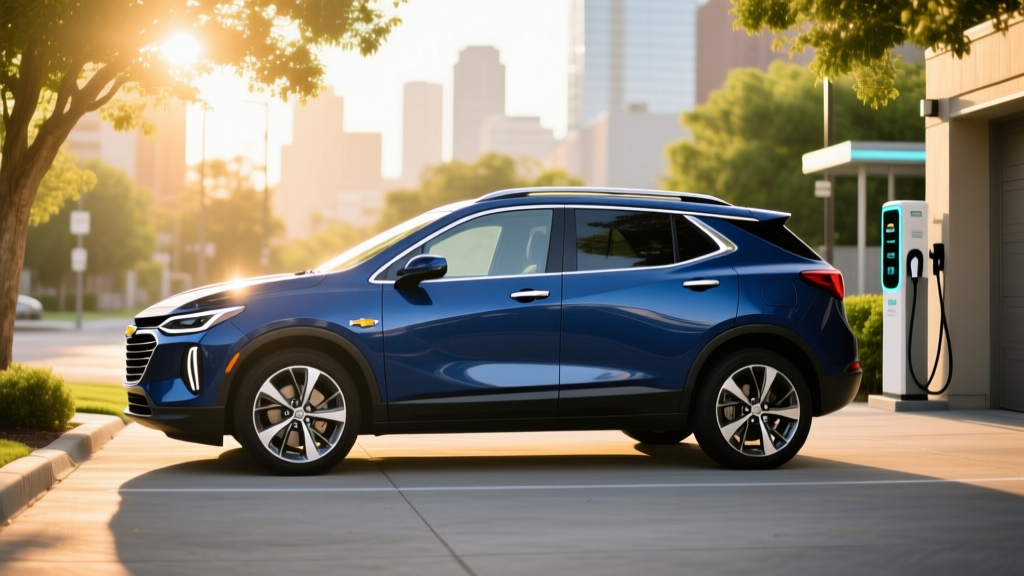
The 2026 Chevrolet Equinox EV occupies a rare position in the electric-vehicle market: a mainstream, sub-$40,000 crossover with over 300 miles of EPA-estimated range that also qualifies for the full federal tax credit. But sticker price is only the starting line. Real ownership economics depend on a web of incentives, charging costs, insurance premiums, maintenance savings, and depreciation curves that most buyers never fully untangle before signing.
This guide walks through every dollar — federal and state incentives, fuel savings, insurance realities, and five-year total cost of ownership — so you can decide whether the Equinox EV actually saves you money or just shifts where you spend it.
2026 Chevrolet Equinox EV: The Numbers That Matter
Before we calculate ownership cost, here are the baseline specifications for the current model year. The Equinox EV rides on GM's Ultium platform and uses an 85 kWh (usable) NMC lithium-ion battery pack.
| Spec | FWD (2LT / 3LT) | AWD (RS Launch Edition) |
|---|---|---|
| EPA Range | 319 mi | 285 mi |
| Real-World Highway/Cold | ~260–285 mi | ~230–255 mi |
| Battery (usable) | 85 kWh, NMC | 85 kWh, NMC |
| Peak DC Fast Charge | 150 kW | 150 kW |
| 10–80% DC Time | ~30 min | ~30 min |
| Level 2 (240V) Rate | 11.5 kW | 11.5 kW |
| Horsepower | 213 hp | 288 hp |
| 0–60 mph | ~8.3 sec | ~6.5 sec |
| Combined MPGe | 111 MPGe | 100 MPGe |
| Base MSRP | $33,600 (2LT) | $43,400 (RS) |
| Battery/Powertrain Warranty | 8 yr / 100,000 mi | 8 yr / 100,000 mi |
Federal Tax Credit: Does the Equinox EV Qualify for the Full $7,500?
The short answer: yes, the 2026 Chevrolet Equinox EV currently qualifies for the full $7,500 federal tax credit under IRS §30D — and it can be applied as a point-of-sale rebate, reducing your out-of-pocket cost at the dealership. But eligibility isn't automatic. You must meet specific income, vehicle price, and battery-sourcing requirements.
- Buyer Income Cap: Modified AGI ≤ $150,000 (single), ≤ $225,000 (head of household), ≤ $300,000 (married filing jointly)
- Vehicle MSRP Cap: ≤ $55,000 for SUVs/crossovers/vans; ≤ $25,000 for sedans (Equinox EV qualifies as an SUV)
- Battery Sourcing: Battery components must be manufactured or assembled in North America; critical minerals must meet escalating percentage thresholds from US or FTA-partner nations
- Point-of-Sale Transfer: You can elect to transfer the credit to the dealer at purchase, receiving $7,500 off the purchase price immediately rather than waiting to claim it on your tax return
- VIN Registration: Dealer must register the sale and your VIN on the IRS Energy Credits Online portal at time of purchase
- One Credit Per 3 Years: You can only claim one new EV credit every 3 years per taxpayer
Source: IRS §30D Clean Vehicle Credit. Rules are subject to change — verify current eligibility with a tax professional and the IRS portal before purchasing.
The critical detail most buyers miss: the battery sourcing and critical-mineral requirements have tightened annually. GM manufactures Ultium battery cells at its Ultium Cells plants in Ohio, Tennessee, and Michigan, which satisfies North American assembly. However, the critical-minerals threshold for 2026 is stringent, and supply-chain shifts can affect eligibility mid-year. Always confirm with your dealer that the specific VIN you're purchasing has been verified on the IRS portal as credit-eligible at the time of sale.
Point-of-Sale vs. Tax Return: Which Should You Choose?
If you transfer the credit at the point of sale, you immediately reduce your purchase price by $7,500. A $33,600 Equinox EV 2LT effectively becomes a $26,100 vehicle before any state incentives. This is almost always the better option unless your tax liability for the year is below $7,500 and you wouldn't be able to use the full credit on your return (the credit is non-refundable if claimed on taxes, but the point-of-sale transfer bypasses this limitation).
State, Local, and Utility Incentives: The Hidden Savings Layer
Federal credits are only part of the picture. Depending on where you live, state rebates, utility incentives, and local programs can stack on top of the $7,500 federal credit — sometimes bringing a base Equinox EV 2LT below $20,000 net.
- Colorado: Up to $5,000 state tax credit for new EVs under $50,000 MSRP, stackable with federal
- California (CVRP): Up to $7,000 for income-qualified buyers (program funding varies — check California Energy Commission)
- Maryland: Up to $3,000 state excise tax credit (first-come, first-served annual cap)
- Utility Rebates: Many utilities (e.g., Xcel Energy, ConEdison, PG&E) offer $500–$1,500 rebates for purchasing an EV and/or installing a Level 2 home charger
- HOV Lane Access: Several states grant free or discounted carpool-lane stickers for EV owners (California, Colorado, Virginia, Maryland, others)
These programs change frequently and often have income qualifications, annual funding caps, or application deadlines. Check your state energy office and local utility for current availability.
Charging vs. Gasoline: The Per-Mile Cost Reality
This is where EV ownership economics either shine or disappoint — and the answer depends almost entirely on where and when you charge. Let's run the math on the Equinox EV FWD (111 MPGe combined, or roughly 3.0 miles per kWh) against a comparable gas compact SUV averaging 28 MPG combined.
| Scenario | Equinox EV ($/mi) | Gas SUV ($/mi) | Savings per 15,000 mi/yr |
|---|---|---|---|
| Home charging @ $0.14/kWh (US avg) | $0.047 | $0.125 (gas @ $3.50/gal) | $1,175/yr |
| Home charging @ $0.22/kWh (CA, Northeast) | $0.073 | $0.143 (gas @ $4.00/gal) | $1,045/yr |
| Time-of-use off-peak @ $0.08/kWh | $0.027 | $0.125 | $1,475/yr |
| Public DC fast charging @ $0.40/kWh | $0.133 | $0.125 | −$120/yr (EV costs more) |
The takeaway is stark: if you charge primarily at home on a standard or off-peak rate, the Equinox EV saves $1,000–$1,500 per year on fuel. If you rely exclusively on public DC fast charging at $0.35–$0.45/kWh, you may actually spend more per mile than a gas vehicle. Home charging access is the single biggest variable in EV ownership economics.
At 15,000 miles per year over 5 years, a home-charging Equinox EV owner saves roughly $5,000–$7,500 in fuel costs compared to the gas alternative, depending on local electricity rates and gasoline prices.
Maintenance Savings: Where EVs Quietly Win
Electric vehicles eliminate many of the recurring maintenance items that plague internal-combustion vehicles. The Equinox EV has no engine oil, no transmission fluid, no spark plugs, no exhaust system, and no timing belt. Regenerative braking significantly extends brake pad life — many EV owners report original brake pads lasting 80,000–100,000+ miles.
| Service Item | Gas SUV (5 yr / 75k mi) | Equinox EV (5 yr / 75k mi) |
|---|---|---|
| Oil changes (6–8 over 5 yr) | $450–$720 | $0 |
| Transmission fluid | $150–$300 | $0 (single-speed reducer) |
| Brake pads (1–2 replacements) | $400–$800 | $0 (regen extends life) |
| Engine air filter | $75–$150 | $0 (no engine) |
| Cabin air filter | $100–$200 | $100–$200 |
| Tire rotation/replacement | $600–$1,200 | $700–$1,400 (EVs wear tires faster due to weight/torque) |
| Coolant / misc. | $200–$400 | $100–$200 |
| Total estimated | $1,975–$3,770 | $900–$1,800 |
Net maintenance savings over five years: roughly $1,000–$2,000. The one area where EVs can cost more is tires — the Equinox EV's curb weight (approximately 4,400 lbs for AWD) and instant torque can accelerate tire wear by 10–20% compared to a lighter gas crossover. Budget for a set of EV-rated touring tires around year 3–4.
Insurance Cost Reality: The Expense Buyers Overlook
Here's the part most EV cost calculators gloss over: EV insurance premiums are typically 15–30% higher than comparable gas vehicles. According to industry data, the national average annual premium for a compact EV crossover runs $1,800–$2,400 depending on driver profile, location, and coverage level — compared to $1,400–$1,900 for a gas equivalent.
Why the premium?
- Higher repair costs: Battery pack damage, even minor, often triggers expensive high-voltage safety protocols and specialized labor
- Vehicle value: Even after incentives, the insured value reflects the pre-credit MSRP in many policies
- Specialized parts and labor: Fewer certified EV body shops mean higher labor rates and longer repair times
- Claim severity data: Insurers are still building actuarial models for EVs, and early data shows higher average claim costs
Over five years, expect to pay an additional $1,500–$3,000 in insurance premiums compared to a gas compact SUV. Always get insurance quotes for the specific Equinox EV trim before purchase — premiums vary significantly by insurer, and some companies now offer EV-specific discounts that narrow the gap.
Depreciation and Resale Value: The Evolving Picture
EV depreciation has been volatile. In 2023–2024, aggressive price cuts by Tesla and others hammered used EV values across the board. By 2025–2026, the market has stabilized somewhat, but EVs still tend to depreciate faster than comparable gas vehicles in the first three years.
For the Equinox EV specifically:
- 5-year projected depreciation: 45–55% (compared to 35–45% for a gas Equinox)
- Key depreciation factor: Federal and state incentives effectively lower your cost basis — if you paid $26,100 net for a $33,600 vehicle, a 50% depreciation means you've lost ~$13,000, not ~$16,800
- Battery warranty backstop: GM's 8-year/100,000-mile battery warranty (covering capacity below 70% of original) provides resale confidence for second owners
- NACS adoption tailwind: The Equinox EV uses the NACS (Tesla Supercharger-compatible) connector natively, which should support stronger resale demand as the Supercharger network becomes the de facto standard
Leasing can be a smart hedge against depreciation risk — and the Equinox EV qualifies for the $7,500 credit via the commercial-vehicle leasing loophole (§45W) regardless of battery sourcing or buyer income, making lease deals particularly attractive.
Five-Year Total Cost of Ownership: The Full Picture
Here's the comprehensive five-year TCO for the Equinox EV 2LT FWD vs. a comparably equipped gas compact SUV (MSRP ~$31,000, 28 MPG combined), assuming 15,000 miles/year, home charging at $0.14/kWh, and gas at $3.50/gallon.
| Cost Category | Equinox EV 2LT FWD | Gas Compact SUV |
|---|---|---|
| Purchase price (MSRP) | $33,600 | $31,000 |
| Federal tax credit (§30D) | −$7,500 | $0 |
| State incentive (avg. estimate) | −$2,000 | $0 |
| Net purchase price | $24,100 | $31,000 |
| Fuel / electricity (5 yr) | $3,500 | $9,375 |
| Maintenance (5 yr) | $1,350 | $2,870 |
| Insurance premium (5 yr) | $10,500 | $8,250 |
| Depreciation (net of incentives) | $12,050 | $12,400 |
| Total 5-Year Cost | $51,500 | $63,895 |
| Net Savings (EV vs Gas) | ~$12,400 over 5 years | |
This model shows approximately $12,000–$13,000 in savings over five years for the Equinox EV when the full federal credit is applied and charging is done primarily at home. Remove the federal credit (if you exceed income caps) or rely on public fast charging, and the savings narrow to $3,000–$5,000 — still positive, but less dramatic.
Frequently Asked Questions
How much does it really cost to own an Equinox EV over 5 years?
With the full $7,500 federal credit, a modest state incentive, and home charging, the 5-year total cost of ownership for an Equinox EV 2LT FWD is approximately $51,000–$53,000 including depreciation, fuel, insurance, and maintenance. That's roughly $10,000–$13,000 less than a comparably priced gas SUV over the same period. Without the federal credit, expect the gap to narrow to $3,000–$5,000.
Do I qualify for the $7,500 federal tax credit on the Equinox EV?
You likely qualify if your modified AGI is under $150,000 (single) or $300,000 (married filing jointly), you haven't claimed a new EV credit in the past 3 years, and the vehicle's battery sourcing meets current-year requirements. The Equinox EV's MSRP (under $44,000 for all trims) falls well below the $55,000 SUV cap. Confirm your specific eligibility on the IRS Clean Vehicle Credit page and through your dealer's IRS portal registration at time of purchase.
How much do I save on fuel and maintenance?
Home-charging Equinox EV owners save approximately $1,000–$1,500 per year on fuel compared to a 28-MPG gas SUV, and $200–$400 per year on maintenance (no oil changes, reduced brake wear). Combined, that's $1,200–$1,900 in annual operating savings. Over five years: $6,000–$9,500.
Are EVs more expensive to insure?
Yes, typically 15–30% more expensive. Expect to pay $300–$500 more per year in insurance premiums for the Equinox EV compared to a gas compact SUV. Over five years, that's an additional $1,500–$2,500. Get quotes from multiple insurers before purchase — some now offer EV-specific rates that are more competitive.
How well does the Equinox EV hold its value?
EVs currently depreciate 45–55% over five years, somewhat faster than gas equivalents (35–45%). However, because incentives lower your effective purchase price, your actual dollar loss may be comparable or even lower. The NACS connector compatibility and GM's 8-year battery warranty support reasonable resale demand. Leasing is a viable strategy if depreciation risk concerns you.
What happens if I can't charge at home?
Public DC fast charging at $0.35–$0.45/kWh erases most or all of the fuel cost advantage. If you live in an apartment or lack home charging access, consider whether workplace charging is available, or whether a plug-in hybrid (like the upcoming Equinox PHEV variants) might better suit your situation until home charging becomes feasible.
Sources: EPA Fuel Economy, IRS §30D Clean Vehicle Credit, Chevrolet media specifications. All figures are estimates based on current data as of 2026 and are subject to change. Consult a tax professional for credit eligibility.