Quick Verdict: Are Cadillac EV Deals Worth the Price Tag?
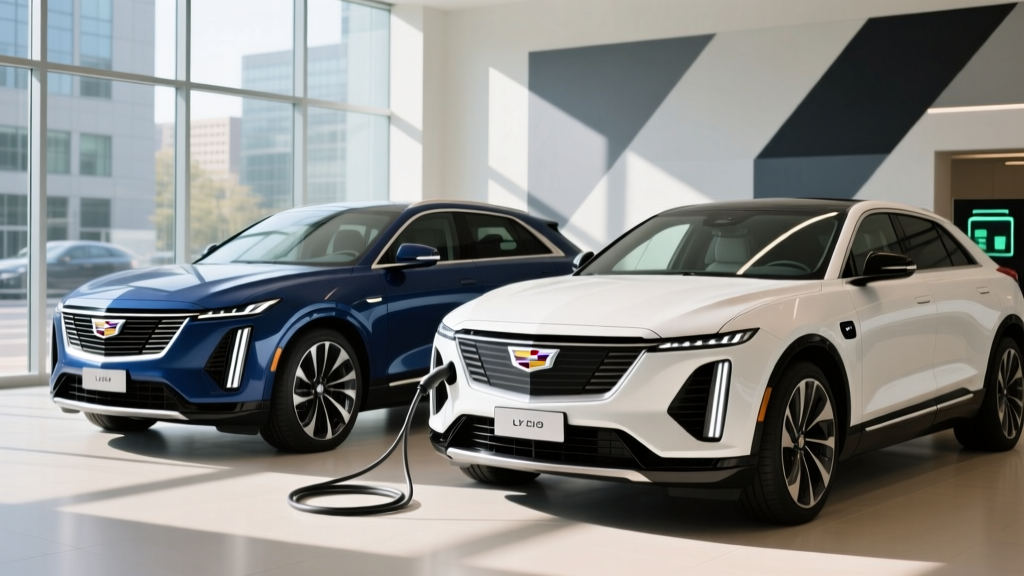
Cadillac's electric lineup has expanded significantly by 2026, with the Lyriq midsize SUV now a proven commodity and the compact Optiq offering a more accessible entry point. But luxury EV pricing demands scrutiny: a fully loaded Lyriq can crest $70,000, while the Optiq starts closer to $53,000. So when a dealer advertises "Cadillac EV deals," what does the math actually look like over five years of ownership?
We ran the numbers on purchase price, federal and state incentives, home and public charging costs, insurance premiums, maintenance savings, and projected depreciation. The short answer: Cadillac EVs can save you meaningful money on fuel and maintenance compared to a gas-powered XT5 or XT4, but higher insurance costs and steeper luxury-EV depreciation narrow the gap. The federal tax credit — when you qualify — is the single biggest lever for making the deal pencil out.
2026 Cadillac EV Lineup: Specs That Affect Your Wallet
Before calculating ownership costs, here are the hard numbers for Cadillac's current EV models. These specs directly determine your charging bills, range confidence, and ultimately what you'll pay at the dealer and at the plug.
| Spec | Lyriq (RWD) | Lyriq (AWD) | Optiq (AWD) |
|---|---|---|---|
| Base MSRP | $58,590 | $62,090 | $53,990 |
| Battery (usable) | 102 kWh (NMC) | 102 kWh (NMC) | 85 kWh (NMC) |
| EPA Range | 314 mi | 307 mi | 300 mi (est.) |
| Real-World Highway Range | ~260–275 mi | ~255–270 mi | ~245–260 mi |
| Efficiency (MPGe) | 89 MPGe combined | 87 MPGe combined | ~90 MPGe (est.) |
| Peak DC Fast Charge | 190 kW | 190 kW | 150 kW |
| 10–80% DC Charge Time | ~34 min | ~34 min | ~37 min |
| Level 2 Charge Rate | 19.2 kW | 19.2 kW | 11.5 kW |
| Horsepower | 365 hp | 515 hp | 340 hp |
| 0–60 mph | 6.35 sec | 4.6 sec | 5.8 sec (est.) |
| Battery Warranty | 8 yr / 100,000 mi | 8 yr / 100,000 mi | 8 yr / 100,000 mi |
Federal Tax Credit: Do You Qualify for Up to $7,500?
The IRS §30D Clean Vehicle Credit remains the most impactful financial factor in any Cadillac EV deal. For 2026, the credit is available as a point-of-sale transfer, meaning the dealer applies it directly to your purchase price (or down payment) rather than waiting for a tax refund. But qualification depends on a web of requirements that trip up many buyers.
- Income caps: Modified adjusted gross income (MAGI) must not exceed $150,000 (single), $225,000 (head of household), or $300,000 (married filing jointly)
- MSRP caps: Vehicle MSRP must not exceed $80,000 for SUVs/pickups/vans or $55,000 for sedans — the Lyriq and Optiq qualify as SUVs
- Battery sourcing: Battery components must be manufactured or assembled in North America (phased percentages increase annually); critical minerals must be sourced from the U.S. or free-trade-agreement partners
- Credit amount: Up to $3,750 for meeting battery-component requirements + up to $3,750 for meeting critical-mineral requirements = up to $7,500 total
- Transfer option: You may transfer the credit to the dealer at point of sale as an immediate price reduction, even if you have no tax liability
- VIN registration: Dealer must report the sale and your VIN to the IRS via the Energy Credits portal before delivery
The Cadillac complication: Because GM battery sourcing and assembly have evolved through 2025–2026, the exact credit amount varies by model and build date. The Lyriq (built in Spring Hill, Tennessee, on the Ultium platform) has generally qualified for the full $7,500, but you must verify the specific VIN's eligibility on fueleconomy.gov before signing. The Optiq's credit status depends on its battery pack sourcing — confirm with your dealer and cross-reference the IRS portal.
Always consult a tax professional regarding your specific eligibility. Rules are subject to legislative changes, and the IRS §30D guidance is the authoritative source.
5-Year Total Cost of Ownership: Cadillac EV vs. Gas Equivalent
To understand whether a Cadillac EV deal saves or costs you money, we compared a 2026 Lyriq RWD ($58,590 MSRP, minus $7,500 federal credit = $51,090 effective) against a comparably equipped 2026 Cadillac XT5 Premium Luxury AWD (~$55,000 MSRP). Both are midsize luxury SUVs targeting similar buyers.
| Cost Category | Lyriq RWD (EV) | XT5 Premium Luxury (Gas) |
|---|---|---|
| Purchase Price (after credit) | $51,090 | $55,000 |
| Fuel / Charging (5 years) | $4,725 | $12,375 |
| Maintenance (5 years) | $1,800 | $4,500 |
| Insurance (5 years) | $14,250 | $10,500 |
| Estimated Depreciation | $24,500 | $19,250 |
| 5-Year Total | $96,365 | $101,625 |
Net 5-year savings with the Lyriq: approximately $5,260 — but only if you qualify for the full $7,500 credit and primarily charge at home. Without the credit, the Lyriq costs roughly $2,240 more over five years.
Charging Costs vs. Gas: The $/Mile Reality
The single largest operational savings for any EV comes from fuel substitution. But the actual savings depend entirely on how and where you charge. Here's the math using the Lyriq RWD's EPA-rated efficiency of approximately 34 kWh per 100 miles (derived from its 89 MPGe combined rating).
| Scenario | Cost per Mile | Annual Cost (15k mi) |
|---|---|---|
| Lyriq — Home L2 charging ($0.13/kWh national avg) | $0.044 | $663 |
| Lyriq — Home L2 off-peak ($0.08/kWh) | $0.027 | $408 |
| Lyriq — Public DC fast charging ($0.48/kWh avg) | $0.163 | $2,448 |
| Lyriq — Blended (80% home / 20% public) | $0.063 | $945 |
| XT5 Gas (24 MPG combined, $3.30/gal) | $0.138 | $2,063 |
Key takeaway: If you charge at home 80% of the time at the national average electricity rate, the Lyriq saves roughly $1,118/year on fuel vs. the XT5. Over five years, that's $5,590. But if you rely entirely on public DC fast chargers at $0.48/kWh, you'd actually spend more per mile than the gas XT5. Home charging access is the economic linchpin of EV ownership.
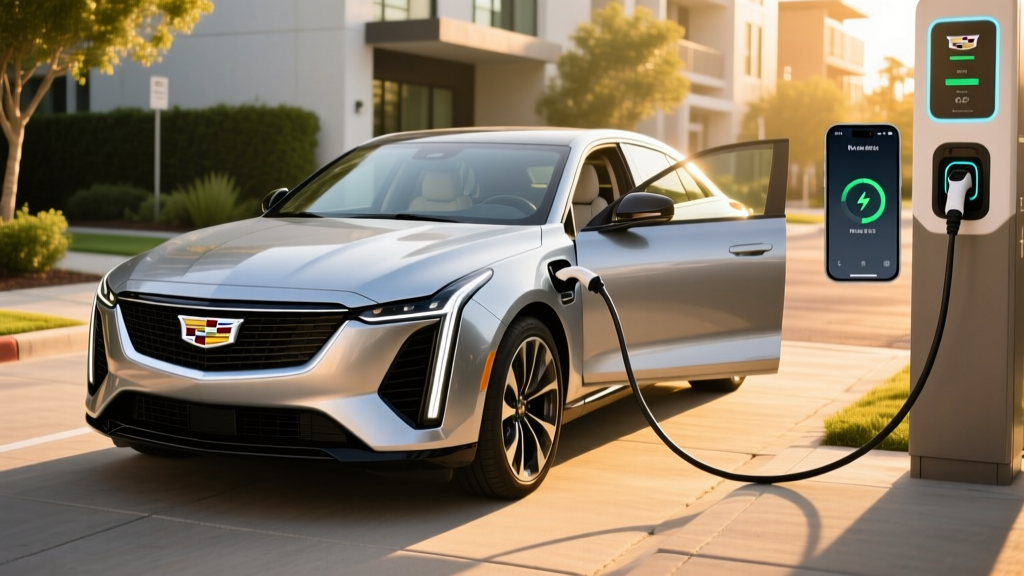
A note on charging hardware: the Lyriq's 19.2 kW Level 2 onboard charger is among the fastest in its class. On a 48-amp home circuit, you can add roughly 52 miles of range per hour of charging — meaning a full overnight session easily replenishes a depleted battery. The Optiq's 11.5 kW charger adds about 31 miles per hour, which is adequate for most daily needs but slower for high-mileage drivers.
Maintenance Savings: Fewer Parts, Real Dollars
EVs eliminate the most common recurring maintenance items of internal-combustion vehicles. No engine oil, no oil filters, no spark plugs, no transmission fluid, no exhaust system repairs. Regenerative braking dramatically extends brake pad life — many EV owners report original brake pads at 60,000+ miles.
| Service Item | Lyriq (EV) | XT5 (Gas) |
|---|---|---|
| Oil changes (synthetic, ~$85 each) | $0 | $680 (8 changes) |
| Brake pads (front & rear) | $0–$300 | $800–$1,200 |
| Transmission fluid service | $0 | $250–$400 |
| Air filters (engine + cabin) | $120 (cabin only) | $400 |
| Tire rotation & replacement | $1,200 (EV tires wear faster) | $900 |
| Coolant / misc. fluids | $180 | $350 |
| Total (5 years) | ~$1,800 | ~$4,500 |
Net maintenance savings: ~$2,700 over five years. One caveat: EV tires tend to wear 15–20% faster than equivalent gas-vehicle tires due to higher curb weight (the Lyriq weighs 5,765 lbs) and instant torque. Budget for premium all-season or EV-specific tires (like the Michelin Pilot Sport EV or Continental CrossContact LX Sport) at $250–$350 per corner when the time comes.
Insurance: The Cost You Can't Ignore
Here's where EV ownership costs bite. Insurance premiums for electric vehicles are typically 15–30% higher than comparable gas vehicles, and luxury EVs sit at the upper end of that range. Industry data from AAA and major insurers shows the average EV insurance premium runs $2,600–$3,100 annually for a vehicle in the Lyriq's price class, compared to $1,900–$2,300 for a gas XT5.
Why the premium gap?
- Higher repair costs: EV battery packs and specialized high-voltage components are expensive to repair or replace after collision damage. Even minor rear-end damage can total a vehicle if the battery enclosure is compromised.
- Fewer qualified body shops: Not all collision centers have EV-certified technicians, which drives up labor rates and repair timelines.
- Higher vehicle cost: Even after tax credits, the Lyriq's MSRP places it in a higher insurance tier than many mainstream vehicles.
- Parts availability: EV-specific parts (charge port assemblies, power electronics, battery modules) have longer lead times, increasing rental-car reimbursements.
Our estimate: Budget $2,850/year for Lyriq insurance (national average, good-driving-record profile). That's roughly $750/year more than the XT5, or $3,750 over five years. Always get quotes from at least three insurers before purchasing — some carriers (notably Geico, Progressive, and EV-focused startups) have narrowed the premium gap as their actuaries accumulate more EV claims data.
Depreciation & Resale Value: The Luxury EV Challenge
Depreciation is the largest hidden cost of any vehicle, and luxury EVs have historically depreciated faster than their gas counterparts. According to iSeeCars and Kelley Blue Book data through 2025, luxury electric SUVs lose an average of 49–55% of their value over five years, compared to 40–45% for luxury gas SUVs.
For the Lyriq, we project 5-year depreciation of approximately $24,500 (roughly 48% of the $51,090 post-credit purchase price), assuming 75,000 miles and good condition. The XT5, purchased at $55,000, would depreciate approximately $19,250 (35%).
Several factors are shifting this dynamic in 2026:
- NACS adoption: GM's switch to the North American Charging Standard (NACS) for all 2025+ models means the Lyriq has native Tesla Supercharger access — a significant resale-value positive, as buyers increasingly expect it.
- Used EV tax credit (§25E): The up-to-$4,000 used clean vehicle credit makes 2–3 year old Lyriqs more attractive on the secondary market, supporting residual values.
- Battery health transparency: GM's Ultium platform includes detailed State of Health (SoH) reporting, which gives used buyers confidence. Vehicles with verified 90%+ SoH at trade-in command stronger resale prices.
- Market normalization: As EVs become mainstream, the "early adopter penalty" on resale is diminishing — but luxury EVs still face steeper depreciation curves than mainstream models like the Tesla Model Y or Hyundai Ioniq 5.
Bottom line: Plan for ~$5,250 more in depreciation with the Lyriq vs. the XT5 over five years. This is the primary reason the 5-year TCO advantage for the EV is modest rather than dramatic.
The Decision Framework: When Does a Cadillac EV Deal Make Sense?
- You qualify for the full $7,500 federal tax credit (income and MSRP requirements met)
- You can install a Level 2 home charger (240V, 48-amp preferred) and will charge at home ≥80% of the time
- Your daily commute is under 100 miles round-trip, minimizing public charging dependency
- You value cabin quietness, instant torque, and one-pedal driving in stop-and-go traffic
- Your state offers additional EV incentives (CO, CA, NJ, MA, and others stack meaningfully)
- You cannot install home charging (apartment, street parking, or HOA restrictions)
- You regularly drive 300+ miles in a single trip in cold climates (sub-30°F highway range drops significantly)
- Your MAGI exceeds the §30D income caps ($300k MFJ / $150k single)
- You plan to keep the vehicle only 2–3 years (depreciation gap hurts more in short ownership)
- You tow frequently — the Lyriq's 1,500-lb tow rating is modest vs. the XT5's 3,500-lb capacity
Frequently Asked Questions
How much does it really cost to own a Cadillac Lyriq over 5 years?
Based on our analysis, a 2026 Lyriq RWD costs approximately $96,365 over five years (75,000 miles) when you qualify for the full $7,500 federal tax credit and charge primarily at home. This includes purchase price, charging, insurance, maintenance, and depreciation. Without the credit, expect closer to $103,865. The comparable gas XT5 costs about $101,625 over the same period.
Do I qualify for the $7,500 federal EV tax credit on a Cadillac?
You may qualify if your modified adjusted gross income is under $150,000 (single) or $300,000 (married filing jointly), the vehicle MSRP is under $80,000 (Cadillac SUVs qualify), and the battery meets North American sourcing requirements. The credit can be transferred to the dealer at point of sale. Verify your specific VIN's eligibility on fueleconomy.gov and consult a tax professional — rules change and individual circumstances vary.
How much do I save on fuel and maintenance with a Cadillac EV?
Fuel savings range from $1,100–$1,650 per year if you charge at home at average electricity rates ($0.08–$0.13/kWh), totaling $5,500–$8,250 over five years. Maintenance savings average $2,700 over five years due to eliminated oil changes, reduced brake wear from regenerative braking, and fewer mechanical components. Combined operational savings: roughly $8,200–$10,950 over five years.
Are Cadillac EVs more expensive to insure than gas models?
Yes. Expect to pay approximately $750–$950 more per year to insure a Lyriq compared to a gas XT5, totaling $3,750–$4,750 more over five years. Higher repair costs for battery and high-voltage components, fewer EV-certified body shops, and the vehicle's higher MSRP all contribute. Get quotes from multiple insurers — the premium gap is narrowing as the market matures.
How well do Cadillac EVs hold their resale value?
Luxury EVs depreciate faster than gas equivalents, though the gap is narrowing. Expect the Lyriq to lose approximately 48% of its post-credit value over five years (~$24,500), compared to ~35% for the XT5 (~$19,250). Factors helping Cadillac EV residuals in 2026 include NACS Supercharger access, the used-EV §25E credit boosting secondary demand, and GM's Ultium battery health reporting giving used buyers more confidence.
What Cadillac EV incentives exist beyond the federal credit?
State and utility incentives vary enormously by location. Examples include Colorado's $5,000 state tax credit, various California programs for income-qualified buyers, and utility rebates of $500–$1,500 for home charger installation from providers like ConEdison, PG&E, and Xcel Energy. Off-peak electricity rates offered by many utilities can further reduce your per-mile charging cost to $0.03–$0.04/mile. Check the AFDC state laws database and your local utility's EV program page for current offerings in your ZIP code.