Quick Answer: Which Chevrolet EV Is Right for You?
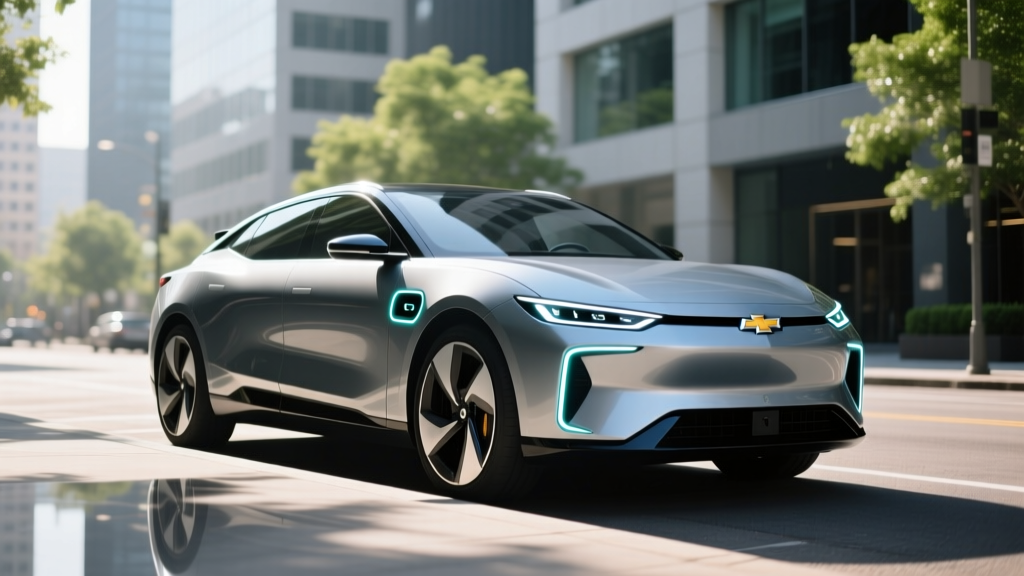
Chevrolet's 2026 electric lineup spans three core models: the Equinox EV (EPA range up to 319 miles, starting ~$33,600), the Blazer EV (up to 324 miles, starting ~$44,600), and the Silverado EV (up to 492 miles on the 4WT Max Range trim, starting ~$55,000 for fleet-oriented trims, with consumer trims higher). All three ride on GM's Ultium battery platform using NMC (nickel manganese cobalt) chemistry, support DC fast charging at up to 190–350 kW depending on the model, and may qualify for a federal tax credit of up to $7,500 under IRS §30D — though eligibility depends on your income, the vehicle's MSRP, and battery-component/critical-mineral sourcing requirements that shift annually. If you drive under 40 miles daily and have home charging access, any of these models eliminates most fuel costs. If you tow frequently or lack reliable home charging, a Chevrolet PHEV or hybrid may still be the smarter buy.
The 2026 Chevrolet EV Lineup at a Glance
Chevrolet has streamlined its EV portfolio around the Ultium platform after discontinuing the Bolt EV and Bolt EUV following the 2023 model year. Here's how the current lineup stacks up on the numbers that matter most:
| Spec | Equinox EV (2LT AWD) | Blazer EV (2LT AWD) | Silverado EV (4WT Max Range) |
|---|---|---|---|
| EPA Range | ~315 mi | ~283 mi (AWD); ~324 mi (RSD FWD) | ~492 mi |
| Battery (usable) | ~85 kWh, NMC | ~102 kWh, NMC | ~200 kWh, NMC |
| Peak DC Fast Charge | ~150 kW | ~190 kW | ~350 kW |
| 10–80% DC Charge Time | ~30 min | ~24 min | ~45 min (large pack) |
| Level 2 Rate | 11.5 kW | 11.5 kW | 19.2 kW (optional) |
| Horsepower | 288 hp | 288 hp (2LT) | 510 hp (4WT) |
| 0–60 mph | ~8.0 sec | ~7.9 sec (2LT) | ~4.5 sec (est.) |
| Starting MSRP | ~$33,600 | ~$44,600 | ~$55,000 (4WT) |
| Cargo Volume | 26.4 cu ft (rear seats up) | 25.5 cu ft | Bed + ~10.7 cu ft eTrunk |
| Battery Warranty | 8 yr / 100,000 mi | 8 yr / 100,000 mi | 8 yr / 100,000 mi |
Sources: fueleconomy.gov, Chevrolet.com. Specs reflect 2025–2026 model-year data; verify trim-specific numbers before purchasing.
Real-World Range vs. EPA Sticker
EPA range estimates assume a controlled mix of city and highway driving at moderate temperatures. In real-world ownership:
- Highway-heavy driving (70–80 mph): Expect 85–90% of EPA range. A 315-mile Equinox EV may deliver ~265–285 miles at sustained interstate speeds.
- Cold weather (below 32°F / 0°C): Range can drop 20–35% depending on severity and whether you precondition the battery. The Equinox EV may drop to ~210–250 miles in deep winter.
- Towing (Silverado EV): Towing a 7,000-lb trailer can cut range by 40–50%. A 492-mile Silverado EV towing at highway speed may see ~250–300 real miles.
All Ultium-platform Chevrolets include a heat pump for improved cold-weather efficiency, which partially mitigates winter losses compared to resistive-heating systems.
Chevrolet EV vs. Gas: The True Cost of Ownership
Sticker price is only part of the equation. Here's how a 5-year ownership cycle for the Equinox EV compares to a similarly equipped gas-powered Equinox AWD (2.0L turbo, ~26 MPG combined), assuming 15,000 miles per year and national-average energy prices:
| Cost Category (5 Years) | Equinox EV (2LT AWD) | Gas Equinox (AWD, ~26 MPG) |
|---|---|---|
| Purchase Price (MSRP) | $33,600 | $32,500 |
| Federal Tax Credit (§30D) | Up to −$7,500* | $0 |
| Net Purchase Cost | ~$26,100 | $32,500 |
| Fuel / Electricity (75,000 mi) | ~$3,750 (home L2 @ $0.14/kWh) | ~$9,900 (@ $3.43/gal) |
| Maintenance | ~$1,800 | ~$3,500 |
| Insurance (avg.) | ~$9,500 | ~$7,800 |
| Total 5-Year Cost | ~$41,150 | ~$53,700 |
*Tax credit eligibility requires meeting IRS §30D rules: buyer AGI under $150,000 (single) / $300,000 (joint), vehicle MSRP under $80,000 (SUVs), and battery-component/critical-mineral sourcing thresholds. Credit can be transferred to the dealer as a point-of-sale discount. Verify current-year rules at IRS.gov.
The EV wins on net purchase cost (after credit) and energy/maintenance savings — roughly $6,150 less in fuel and $1,700 less in maintenance over five years (no oil changes, fewer brake replacements due to regenerative braking). The gas model wins on insurance, which runs 15–25% higher for EVs due to repair-cost data. If you don't qualify for the tax credit, the gap narrows substantially.
Charging at Home and on the Road: What You Need to Know
Chevrolet's Ultium vehicles use the NACS (North American Charging Standard) connector as of the 2025 model year, giving you native access to Tesla Supercharger stations — a significant infrastructure advantage over CCS-only vehicles.
| Level | Power | Miles Added/Hour | Where |
|---|---|---|---|
| Level 1 (120V) | ~1.4 kW | ~3–5 mi/hr | Standard household outlet |
| Level 2 (240V) | 11.5–19.2 kW | ~30–55 mi/hr | Home wallbox, public L2 |
| DC Fast Charge | 150–350 kW | ~600–1,200+ mi/hr | Supercharger, Electrify America, EVgo |
Home Charging Installation: Real Costs
Most Chevrolet EV owners install a Level 2 home charger. Here's what to budget:
| Item | Low Estimate | High Estimate |
|---|---|---|
| Level 2 Charger (hardwired, 48A) | $400 | $700 |
| Electrician labor | $500 | $2,000 |
| Electrical permit | $50 | $250 |
| Panel upgrade (if needed, 100A → 200A) | $1,500 | $4,000 |
| Total (no panel upgrade) | $950 | $2,950 |
| Total (with panel upgrade) | $2,450 | $6,950 |
Always get a licensed electrician's assessment before purchasing equipment. Homes with a 200-amp panel and a nearby 240V circuit (like a dryer outlet) can sometimes be set up for under $1,000. Older homes with 100-amp service may require the panel upgrade, pushing costs toward $5,000+. Chevrolet has occasionally offered home-charger rebates or bundled charger deals — check current promotions on Chevrolet.com.
Understanding the Charge Curve
Peak DC fast-charge rates (e.g., 190 kW on the Blazer EV) are not sustained across the entire session. Ultium batteries typically hold peak rate from roughly 10–40% State of Charge, then taper progressively. The published 10–80% time accounts for this taper. Charging from 80–100% on DC is dramatically slower — plan to unplug at 80% on road trips for the best time-to-range ratio.
Tax Credits and Incentives: What Actually Applies
The federal §30D Clean Vehicle Credit offers up to $7,500, split between a battery-component requirement ($3,750) and a critical-minerals requirement ($3,750). For 2026, both thresholds have tightened compared to earlier years. Key rules:
- Buyer income cap: AGI must not exceed $150,000 (single filer), $225,000 (head of household), or $300,000 (married filing jointly)
- Vehicle MSRP cap: $80,000 for SUVs and pickups (covers all three Chevrolet EVs); $55,000 for sedans
- Battery components: A specified percentage must be manufactured or assembled in North America (threshold increases annually)
- Critical minerals: A specified percentage must be sourced from the U.S. or a free-trade-agreement partner (threshold increases annually)
- Point-of-sale transfer: You can elect to transfer the credit to the dealer, reducing your purchase price at signing rather than waiting for a tax refund
- Foreign entity of concern (FEOC): Vehicles with battery components from a FEOC are disqualified — this restriction has tightened significantly since 2024
Chevrolet's Ultium batteries are assembled in the U.S. (at plants in Ohio and Tennessee), which historically positioned them well for the battery-component prong. However, critical-mineral sourcing can vary by production batch. Always verify the specific VIN's eligibility using the IRS tool at fueleconomy.gov before finalizing a purchase. State and local incentives (e.g., utility rebates for home charger installation, state purchase rebates) vary by jurisdiction — check your state's energy office or utility provider.
Real-World Ownership: Who Should Buy a Chevrolet EV?
EV ownership isn't universally optimal. Your daily routine, climate, and housing situation determine whether a Chevrolet EV saves you money or creates friction.
Decision Framework: Should You Go Electric?
Choose a Chevrolet EV if:
- You have access to Level 2 home charging (garage, driveway, or workplace)
- Your daily round-trip commute is under 100 miles (covers ~90% of U.S. drivers)
- You qualify for the federal tax credit, reducing net cost below a gas equivalent
- You want lower per-mile energy costs (~$0.05/mi on home electricity vs. ~$0.13/mi on gas)
- You live in a moderate or warm climate, or are willing to precondition the battery in cold weather
Stick with a hybrid or gas vehicle if:
- You live in an apartment or street-park with no viable home charging option
- You regularly tow heavy loads over long distances (Silverado EV range drops steeply under load)
- Your area has sparse public DC fast-charging infrastructure
- You don't qualify for the tax credit and the EV's higher MSRP and insurance aren't offset by fuel savings
- You frequently drive in sub-zero temperatures where range loss exceeds 30%
Maintenance and Longevity
Chevrolet's Ultium battery warranty covers 8 years or 100,000 miles against defects and excessive capacity loss (GM defines the threshold as falling below a specified retention percentage — typically around 60–70% of original capacity, though exact terms vary by model year). Real-world NMC degradation data from GM's earlier BEVs suggests most packs retain 90%+ capacity at 100,000 miles under normal use. Beyond the battery, EVs eliminate oil changes, spark plugs, transmission fluid, and most brake wear (regenerative braking handles the majority of deceleration). Budget for cabin air filters, tire rotation, wiper fluid, and eventual tire replacement — EVs tend to wear tires 15–25% faster due to instant torque and higher vehicle weight.
Common Misconceptions About Chevrolet EVs
| Myth | Fact |
|---|---|
| "The battery will need replacing in 5 years." | GM warrants the Ultium pack for 8 years / 100,000 miles. NMC packs are engineered for 150,000–200,000+ miles before significant degradation. Replacement cost, if ever needed, is estimated at $12,000–$20,000 depending on pack size — but most packs outlast the vehicle. |
| "You can't drive a Chevrolet EV in winter." | You can, but range drops 20–35%. Preconditioning the battery while plugged in (via the myChevrolet app) recovers significant range and improves charging speed. The heat pump in all Ultium vehicles helps. |
| "Charging takes too long for road trips." | A 10–80% DC fast charge takes ~24–30 minutes for the Blazer and Equinox EV — comparable to a rest stop with food and a bathroom break. Plan charging around natural stops. |
| "The Supercharger network isn't compatible." | Since 2025, Chevrolet EVs ship with a native NACS port, granting direct access to Tesla Supercharger V3 and V4 stations — no adapter required for newer vehicles. |
| "Every Chevrolet EV gets the full $7,500 tax credit." | Credit eligibility depends on your income, the vehicle's MSRP, and battery-sourcing rules that change yearly. Some trims or production batches may qualify for only $3,750 or $0. Always verify by VIN. |
Frequently Asked Questions
What happened to the Chevrolet Bolt EV?
Chevrolet discontinued the Bolt EV and Bolt EUV after the 2023 model year. The Bolt used GM's older BEV2 platform with CCS charging and a smaller 65 kWh battery. The current Ultium-platform lineup (Equinox EV, Blazer EV, Silverado EV) offers more range, faster charging, and NACS compatibility, albeit at higher price points.
Can I charge a Chevrolet EV at Tesla Superchargers?
Yes. Starting with the 2025 model year, Chevrolet EVs are equipped with a native NACS charge port, making them compatible with Tesla Supercharger V3 (up to 150 kW) and V4 stations without an adapter. Older model-year Chevrolets with CCS ports can use an approved adapter for Supercharger access, though charging speed may be limited.
How much does it cost to charge a Chevrolet EV at home?
At the U.S. national average residential electricity rate of ~$0.16/kWh (2025 EIA data), fully charging an 85 kWh Equinox EV battery from empty costs roughly $13.60, translating to about $0.04–0.05 per mile. Compare that to ~$0.12–0.14 per mile for a 26 MPG gas vehicle at $3.40/gallon. Your actual rate depends on your utility, time-of-use plan, and whether you have solar.
Is the Silverado EV practical for daily use?
It depends on your needs. The Silverado EV offers exceptional range (up to 492 miles EPA on the Max Range trim), an eTrunk (front trunk) for secure storage, and strong towing capacity. However, it's a large vehicle that may not fit standard garages, its price is significantly higher than the Equinox or Blazer EV, and real-world towing range drops dramatically. For daily commuting without towing, it's perfectly usable and efficient for a truck. For frequent heavy towing over long distances, plan charging carefully.
Do Chevrolet EVs qualify for the federal tax credit in 2026?
Potentially — but it's not automatic. Under IRS §30D, eligibility requires meeting buyer income caps, MSRP caps, and battery-component/critical-mineral sourcing thresholds. GM's U.S.-based Ultium battery assembly has historically supported the component requirement, but critical-mineral sourcing rules tighten each year. Use the VIN-lookup tool at fueleconomy.gov and consult a tax professional for your specific situation. The credit can be applied as a point-of-sale discount at the dealership.