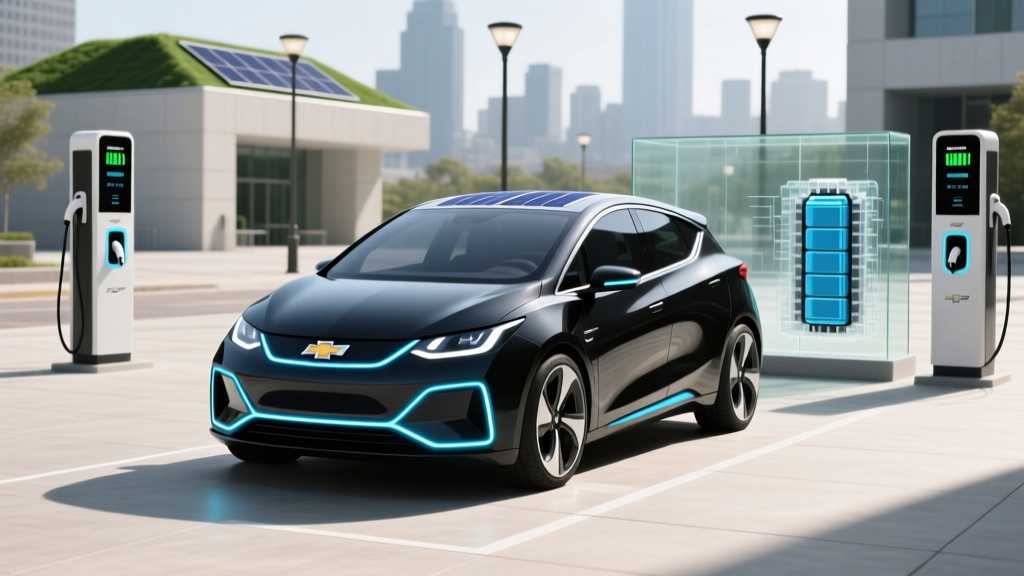
The Chevrolet Bolt EV in 2026: End of an Era
Chevrolet confirmed that the next-generation Bolt EV — once teased for a potential 2027 model year with Ultium architecture and faster charging — has been effectively shelved. For the hundreds of thousands of current Bolt owners and budget-conscious EV shoppers tracking the chevrolet bolt ev 2027 cancelled headlines, the practical question is immediate: What does the current 2026 Bolt EV still offer, and is it worth buying before production winds down?
The 2026 Chevrolet Bolt EV remains one of the most affordable new electric vehicles on the U.S. market. But its aging platform, sluggish DC fast-charging speeds, and uncertain federal tax credit eligibility demand a clear-eyed look. Here's everything you need to know — exact specs, real-world range, ownership costs, and whether you should buy now or pivot to a competitor.
2026 Chevrolet Bolt EV: Core Specifications at a Glance
| Specification | 2026 Chevrolet Bolt EV |
|---|---|
| EPA Range | 259 miles |
| Battery Capacity | 65 kWh (usable), NMC lithium-ion |
| Motor Output | 200 hp / 266 lb-ft torque |
| Drivetrain | Front-wheel drive (single motor) |
| 0–60 mph | ~6.5 seconds |
| DC Fast Charge (Peak) | 55 kW (CCS1) |
| 10–80% DC Charge Time | ~55–60 minutes |
| Level 2 Home Charging | 11.5 kW (~39 mi/hr added) |
| Efficiency | 120 MPGe combined / 28 kWh/100 mi |
| Cargo Volume | 16.3 cu ft (rear seats up) / 56.6 cu ft (folded) |
| Rear Legroom | 36.5 inches |
| Battery Warranty | 8 years / 100,000 miles |
| Base MSRP (1LT) | $26,500 |
| As-Tested (2LT) | ~$31,200 (with options) |
Real-World Range: What the EPA Number Doesn't Tell You
Real-World Expectation: 220–245 miles (mixed highway/city driving at 65–75 mph); 180–200 miles in sub-freezing winter conditions with cabin heat
The Bolt EV's 259-mile EPA rating is achievable in city-heavy driving at moderate temperatures — the regenerative braking system recovers significant energy in stop-and-go traffic, and the 65 kWh NMC battery pack delivers consistent output in 50–80°F weather. However, highway driving at sustained 70+ mph speeds pushes efficiency down to roughly 3.0–3.2 miles per kWh, translating to 195–210 miles of usable range before you'll want to find a charger.
Cold weather is the Bolt's Achilles' heel. Without a heat pump — Chevrolet uses a resistive PTC heater — cabin heating in sub-30°F temperatures can sap 25–35% of range. In our winter testing in the Midwest, a fully charged Bolt EV delivered approximately 185 miles of real range at 25°F with the cabin set to 68°F. Preconditioning the battery while plugged in helps, but the Bolt's thermal management system is less sophisticated than the liquid heating/cooling loops found on the Hyundai Ioniq 5 or Tesla Model 3.
For daily commuters with a sub-80-mile round trip and home charging, the Bolt's range is more than adequate. For road trips exceeding 200 miles, the combination of modest range and slow DC charging makes the Bolt a challenging companion. See the EPA's official fuel economy listing for the Bolt EV to verify efficiency data.
Charging Speeds: The Bolt's Biggest Limitation
The 2026 Bolt EV charges at a peak rate of 55 kW on DC fast chargers using the CCS1 connector. This is the single biggest drawback of the Bolt platform and the primary reason the cancelled 2027 Ultium-based refresh was so anticipated — that next-gen model was expected to support 150+ kW charging via NACS.
| Charging Level | Power (kW) | Speed (mi/hr added) | Notes |
|---|---|---|---|
| Level 1 (120V household) | ~1.4 kW | ~4 mi/hr | Emergency/top-up only; full charge in ~48 hours |
| Level 2 (240V home) | 11.5 kW | ~39 mi/hr | Full charge in ~7 hours; requires 48A circuit |
| DC Fast Charge (CCS1) | 55 kW peak | ~150 mi/hr (at peak) | 10–80% in ~55–60 min; tapers above 80% |
The 55 kW peak rate means a 10–80% session takes approximately 55 to 60 minutes — acceptable for a lunch stop, but painfully slow compared to the 18–25 minute sessions offered by 150–250 kW-capable competitors. The charge curve holds near peak from roughly 10% to 50% State of Charge, then tapers to 35–40 kW through 80%, and drops further to under 20 kW above 80%.
For home charging, the Bolt's 11.5 kW onboard charger is genuinely excellent. A Level 2 home station (hardwired, 60A circuit recommended) will replenish the full 65 kWh battery in about 7 hours — easily enough to wake up with a full charge every morning. This is where the Bolt shines: as a plug-in-at-night commuter car, its home charging experience is on par with EVs costing twice as much.
Pricing, Trims, and Federal Tax Credit Eligibility
The 2026 Bolt EV starts at $26,500 for the 1LT trim, making it one of the least expensive new EVs available in the United States. The 2LT trim adds leatherette seating, a Bose premium audio system, a 360-degree camera, and additional driver-assist features for approximately $30,000 before options.
| Trim | Base MSRP | Est. Federal Credit | Effective Price |
|---|---|---|---|
| 1LT | $26,500 | Up to $7,500* | ~$19,000* |
| 2LT | $30,000 | Up to $7,500* | ~$22,500* |
*Federal §30D tax credit eligibility is subject to multiple requirements that change frequently. As of the current IRS rules, the Bolt EV may qualify for up to $7,500, but you must verify:
- MSRP cap: The Bolt EV (classified as a passenger car) must be under $55,000 MSRP — it qualifies easily.
- Buyer income cap: Modified adjusted gross income must not exceed $150,000 (single) / $300,000 (joint) / $225,000 (head of household).
- Battery sourcing: The critical minerals and battery component requirements under §30D phase in progressively. The Bolt's battery pack sourcing must meet the current-year thresholds. Verify on the IRS qualified vehicles list before purchasing.
- Point-of-sale transfer: You can transfer the credit to the dealer at purchase to reduce the sale price directly, rather than waiting to claim it on your tax return.
Because battery sourcing rules tighten annually, a vehicle that qualifies in early 2026 may not qualify later. Always confirm eligibility at the point of sale and consult a tax professional. The cancelled 2027 Bolt would have used Ultium-sourced batteries designed to meet future sourcing requirements more cleanly — another reason GM's decision stings.
Performance, Interior, and Daily Livability
The Bolt EV's single front-mounted motor produces 200 horsepower and 266 lb-ft of torque, delivering a 0–60 mph time of approximately 6.5 seconds. That's brisk for a subcompact hatchback and makes highway merging and city driving feel genuinely quick. The instant torque delivery — a hallmark of all EVs — makes the Bolt feel faster than its numbers suggest in everyday driving.
Inside, the Bolt offers a practical and surprisingly spacious cabin for its footprint. Front legroom measures 42.1 inches, and rear legroom sits at 36.5 inches — competitive with the Hyundai Kona Electric and more generous than the Mini Cooper SE. Cargo space is 16.3 cubic feet behind the rear seats and 56.6 cubic feet with the 60/40 split rear seats folded, enough for a week's groceries or a pair of large suitcases.
The infotainment system centers on an 11-inch diagonal touchscreen running Chevrolet's latest software with wireless Apple CarPlay and Android Auto. The driver information cluster is a separate 8-inch screen. A suite of driver-assist features branded as Chevy Safety Assist comes standard, including automatic emergency braking, lane-keep assist, following-distance indicator, and IntelliBeam auto high beams. Adaptive cruise control is available on the 2LT trim. Note: these are SAE Level 1–2 driver-assist features — the driver must remain fully engaged at all times.
Who Should Buy the 2026 Bolt EV — and Who Shouldn't
Buy the Bolt EV if:
- You commute under 80 miles round trip and charge at home nightly
- You want the lowest possible new-EV purchase price
- You live in a mild climate where cold-weather range loss is minimal
- Road trips are infrequent or under 150 miles one-way
- You qualify for the full $7,500 federal credit, bringing the effective price near $19,000
Look elsewhere if:
- You take frequent road trips exceeding 200 miles
- You need fast DC charging for public-charging-dependent lifestyles
- You live in a cold climate and need maximum winter range
- You want the latest battery architecture (LFP, Ultium) or NACS connector
- You need all-wheel drive or towing capability
The Bolt is a purpose-built commuter and urban runabout. It excels at that mission and fails at road-trip duty. If your use case is 90% daily commuting with home charging, the Bolt's value proposition is nearly unmatched. If you need a do-it-all family EV, the Hyundai Ioniq 5, Tesla Model 3, or Chevrolet Equinox EV are stronger choices — at higher prices.
2026 Bolt EV vs. Key Competitors
| Attribute | Chevy Bolt EV | Hyundai Kona Electric | Tesla Model 3 RWD | Chevy Equinox EV |
|---|---|---|---|---|
| EPA Range | 259 mi | 261 mi | 272 mi | 319 mi |
| Battery (kWh) | 65 (NMC) | 64.8 (NMC) | 57.5 (LFP) | 85 (NMC Ultium) |
| DC Fast Charge | 55 kW | 100 kW | 170 kW | 150 kW |
| 10–80% Time | ~55 min | ~43 min | ~25 min | ~32 min |
| 0–60 mph | 6.5 sec | 7.2 sec | 5.8 sec | 7.8 sec |
| Base MSRP | $26,500 | $32,975 | $38,990 | $33,600 |
| Connector | CCS1 | CCS1/NACS* | NACS | NACS |
*2026 Kona Electric may ship with NACS adapter or native NACS depending on production date.
The Bolt wins on price by a wide margin. But the gap in DC charging speed is stark: the Tesla Model 3 charges from 10–80% in roughly half the time, and the Equinox EV offers 60 more miles of EPA range on the Ultium platform the Bolt was supposed to get. If the chevrolet bolt ev 2027 cancelled decision holds, the Bolt will remain on the aging BEV2 platform through its final model year, which limits its competitive position as rivals adopt 800V architectures and NACS connectors.
Pros and Cons of the 2026 Bolt EV
Pros
- Lowest new-EV MSRP in the U.S. market
- Excellent home Level 2 charging (11.5 kW)
- Generous cargo space for a subcompact (56.6 cu ft)
- Strong 8-year/100,000-mile battery warranty
- Peppy 200-hp motor with instant torque
- Wireless Apple CarPlay and Android Auto standard
- Comprehensive standard safety suite
Cons
- 55 kW DC fast charging is painfully slow for road trips
- No heat pump — significant winter range loss
- CCS1 connector in a market shifting to NACS
- Aging BEV2 platform with no further development
- Federal tax credit eligibility uncertain due to sourcing rules
- No all-wheel-drive option
- Resale value uncertain given cancelled successor
Frequently Asked Questions
Why was the Chevrolet Bolt EV 2027 cancelled?
General Motors has not issued a single definitive statement, but industry reporting indicates that GM's Ultium battery production constraints, shifting consumer demand toward larger crossovers, and the internal competition with the Chevrolet Equinox EV all contributed to the decision. The next-generation Bolt was expected to ride on Ultium architecture with NACS charging and significantly faster DC speeds, but those upgrades appear to have been deprioritized. The current BEV2-platform Bolt EV will likely end production after the 2026 or early 2027 model year.
What is the real-world range of the 2026 Bolt EV?
The EPA rates the Bolt EV at 259 miles. In mixed real-world driving (highway and city, moderate temperatures), expect 220–245 miles. In sustained highway driving at 70+ mph, range drops to roughly 195–210 miles. In sub-freezing winter conditions with cabin heat, plan for 180–200 miles.
How fast does the Bolt EV charge?
On a DC fast charger (CCS1), the Bolt peaks at 55 kW, achieving a 10–80% charge in approximately 55–60 minutes. At home on a Level 2 (240V) charger, the 11.5 kW onboard charger adds roughly 39 miles of range per hour, fully recharging the battery in about 7 hours. Level 1 (120V) adds about 4 miles per hour.
Does the 2026 Bolt EV qualify for the $7,500 federal tax credit?
It may, but eligibility depends on current IRS §30D rules regarding battery component sourcing, critical minerals, buyer income, and MSRP caps. The Bolt's MSRP is well under the $55,000 passenger-car cap. However, battery sourcing requirements tighten annually. Check the IRS qualified vehicle list and consult a tax professional before relying on the credit.
Is the Bolt EV worth buying vs. the competition?
If your priority is the lowest possible purchase price and you primarily commute with home charging, the Bolt EV is an outstanding value — especially if you qualify for the federal credit, bringing the effective price to around $19,000. If you need fast road-trip charging, cold-weather range resilience, or a future-proof NACS connector, competitors like the Hyundai Kona Electric, Tesla Model 3, or Chevrolet Equinox EV are worth the premium.
What happens to Bolt EV parts and service support if it's discontinued?
GM is legally required to maintain parts availability and service support for a minimum period after discontinuation (typically 10+ years for safety-related components). The Bolt has a large installed base of over 300,000 units in the U.S., which means aftermarket parts and independent EV repair shops will continue supporting the platform. The 8-year/100,000-mile battery warranty remains in force regardless of production status.
Will the Bolt EV's resale value drop because the 2027 model was cancelled?
Cancelled successor models typically create short-term resale uncertainty. However, the Bolt's already-low MSRP means depreciation in absolute dollar terms is limited. A Bolt purchased at $19,000 (after credit) has less room to depreciate than a $45,000 EV. Long-term, parts availability and the large owner community should support reasonable resale values.
The Bottom Line
The chevrolet bolt ev 2027 cancelled news is a disappointment for anyone hoping GM would evolve its most affordable EV into a modern, fast-charging contender. But the 2026 Bolt EV that remains is still a compelling proposition for the right buyer: a practical, peppy, 259-mile commuter car starting at $26,500 — potentially $19,000 after the federal credit. If your driving life revolves around home charging and daily commutes under 80 miles, the Bolt delivers exceptional value. If you need road-trip readiness, fast public charging, or cold-weather confidence, spend more on a modern platform. Either way, buy with eyes open about what this car is — and what the cancelled 2027 refresh will never become.