What You Need to Know About the Volkswagen Golf EV in 2026
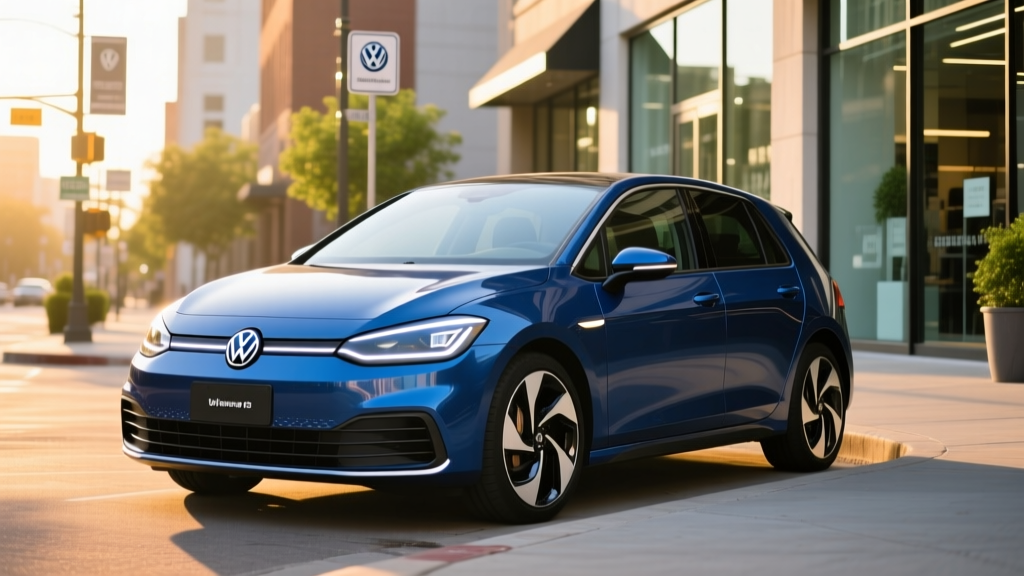
The short answer: The Volkswagen Golf EV (known globally as the ID.3 and marketed in North America as the ID.4's smaller sibling) remains a compact electric hatchback aimed at urban commuters and practical buyers. For 2026, the North American–available equivalent is the Volkswagen ID.4, as VW has not reintroduced a dedicated "Golf EV" (e-Golf successor) to the U.S. market. The e-Golf was discontinued after the 2019 model year. If you're searching for a "Volkswagen Golf EV" in 2026, you're likely looking at either the used e-Golf market, the European ID.3, or the closely related ID.4 crossover. This guide covers all three paths with real numbers so you can make an informed decision.
Let's be direct: Volkswagen does not currently sell a new vehicle badged "Golf EV" in the United States. The 2026 VW U.S. lineup includes the ID.4 electric crossover and the ID. Buzz electric van, but no compact electric hatchback wearing the Golf name. European buyers have the ID.3, which is the spiritual successor to the e-Golf, but it is not sold in North America.
If your search for a "Volkswagen Golf EV" is driven by wanting a practical, affordable, compact VW electric vehicle, here are your real options in 2026 and what each one costs to buy and own.
Your Three Paths to a Volkswagen Golf EV in 2026
| Option | Type | Battery (kWh) | EPA / WLTP Range | Peak DC Charge (kW) | Starting Price |
|---|---|---|---|---|---|
| Used VW e-Golf (2017–2019) | BEV (used) | 35.8 kWh usable | EPA 125 mi (2019) | 50 kW (CCS) | $12,000–$18,000 |
| 2026 VW ID.4 (U.S.) | BEV (new) | 82 kWh usable (Pro) | EPA 291 mi (Pro RWD) | 175 kW | $40,790 (Pro) |
| VW ID.3 (Europe only) | BEV (new) | 58–77 kWh usable | WLTP 263–345 mi | 135–170 kW | Not sold in U.S. |
The used e-Golf is the only way to get a literal "Golf EV" in America today. The ID.4 is the practical new-vehicle alternative for U.S. buyers. The ID.3 is relevant only if you're importing or comparing specs internationally.
Used e-Golf: Real-World Ownership Numbers
The 2017–2019 e-Golf used a 35.8 kWh lithium-ion (NMC) battery and was rated by the EPA at 125 miles of range for the 2019 model year, per fueleconomy.gov. That was modest when new; in 2026, with battery degradation factored in, expect 105–115 miles of real-world range depending on the pack's state of health.
Here's what ownership actually looks like:
| Cost Factor | Used e-Golf (2019) | 2026 Gas Golf (European baseline) |
|---|---|---|
| Purchase price | $12,000–$18,000 | N/A (not sold in U.S.) |
| Home charging cost (full charge, $0.14/kWh avg) | ~$5.01 | N/A |
| Cost per mile (electricity, home charging) | ~$0.04 | N/A |
| DC fast charge time (10–80%) | ~45 min at 50 kW | N/A |
| Annual maintenance | ~$300–$500 | N/A |
| Federal used-EV tax credit (§25E) | Up to $4,000 (30% of sale price, max $4,000) | $0 |
The e-Golf's 50 kW DC fast-charging peak means road trips require patience. On a 50 kW CCS charger, you'll add roughly 100 miles in about 30 minutes under ideal conditions — but real-world charging curves taper, so budget 45 minutes for a 10–80% session. Level 2 home charging at 7.2 kW refills the pack in about 5 hours, which is fine for daily commuting.
Cold-weather reality: In sub-freezing temperatures, expect 20–30% range loss. A 125-mile EPA sticker becomes roughly 88–100 miles in winter. The e-Golf lacks a heat pump (it uses resistive cabin heating), which is a significant efficiency penalty in cold climates.
2026 VW ID.4: The Practical U.S. Alternative
If 125 miles of range isn't enough, the 2026 Volkswagen ID.4 is VW's current compact electric offering in the U.S. It's a crossover rather than a hatchback, but it fills the same practical-transportation role the Golf EV once did — with dramatically better specs.
| Spec | 2026 ID.4 Pro (RWD) | 2026 ID.4 Pro S AWD |
|---|---|---|
| Battery | 82 kWh usable (NMC) | 82 kWh usable (NMC) |
| EPA range | 291 mi | 263 mi |
| Real-world highway range (est.) | ~245–265 mi | ~220–240 mi |
| Peak DC fast charge | 175 kW | 175 kW |
| 10–80% DC charge time | ~28 min | ~28 min |
| Level 2 charge rate | 11 kW | 11 kW |
| 0–60 mph | 7.7 sec | 5.7 sec |
| Horsepower | 282 hp | 335 hp |
| MPGe (combined) | 107 MPGe | 98 MPGe |
| Base MSRP | $40,790 | $48,790 |
| Battery/powertrain warranty | 8 yr / 100,000 mi | 8 yr / 100,000 mi |
Real-world range note: The EPA's 291-mile figure assumes mixed driving. On sustained highway trips at 70+ mph, expect closer to 245–265 miles. In winter, that drops to roughly 210–230 miles. The ID.4 does include a heat pump on 2026 models, which mitigates cold-weather losses compared to the e-Golf.
Charging curve reality: The ID.4 peaks at 175 kW but only sustains that rate briefly between roughly 10–30% state of charge. Above 50%, the rate tapers to ~100 kW, and above 80% it drops further to ~50 kW. This is normal lithium-ion behavior, but it means your average charging speed over a 10–80% session is closer to 120 kW, not 175 kW.
Federal Tax Credits: What You Actually Qualify For
Tax credit eligibility depends heavily on which path you take, and the rules are specific. Per IRS §30D guidelines, here's the breakdown:
- New ID.4 (§30D new-vehicle credit): Up to $7,500 if the vehicle meets critical-mineral and battery-component sourcing requirements. The ID.4 is built in Chattanooga, TN, which helps domestic-content compliance, but critical-mineral sourcing rules may reduce the credit to $3,750 or eliminate it depending on the model year's supply chain. MSRP must be under $80,000 (SUVs/crossovers). Buyer AGI must be under $150,000 (single) / $300,000 (joint). Point-of-sale transfer is available at participating dealers.
- Used e-Golf (§25E used-EV credit): 30% of the sale price, up to $4,000 maximum. The vehicle must be at least 2 model years old, sold for $25,000 or less, and purchased from a licensed dealer. Buyer AGI limits: $75,000 (single) / $150,000 (joint). This credit can significantly reduce the effective cost of a used e-Golf — a $15,000 e-Golf could net a $4,000 credit, bringing effective cost to $11,000.
- ID.3 (Europe): Not eligible for U.S. federal credits. European incentive programs vary by country.
Important: Tax credit rules change frequently. Always verify current eligibility on IRS.gov and consult a tax professional before relying on credit amounts in your purchase decision.
Total Cost of Ownership: 5-Year Breakdown
Here's how the numbers stack up over five years and 60,000 miles, comparing a used e-Golf, a new ID.4, and a gas-powered compact hatchback as a baseline:
| Cost Category | Used e-Golf (2019) | New ID.4 Pro (2026) | Gas Compact Hatchback (baseline) |
|---|---|---|---|
| Purchase price (after credits) | $11,000–$14,000 | $33,290–$40,790 | $28,000 |
| Fuel/energy (60k mi) | $2,400 (home charging) | $4,200 (home + some DCFC) | $7,200 ($3.50/gal, 30 MPG) |
| Maintenance (5 yr) | $2,000 | $1,500 | $3,500 |
| Insurance (5 yr est.) | $5,500 | $7,500 | $6,000 |
| Depreciation (est.) | $3,000 | $12,000 | $9,000 |
| 5-year total (est.) | $23,900–$26,900 | $58,490–$65,990 | $53,700 |
The used e-Golf wins on pure economics if your commute fits within its range. The new ID.4 costs more upfront but offers modern range, fast charging, and warranty coverage. Insurance for EVs tends to run 10–20% higher than gas equivalents due to repair costs and battery replacement risk — factor this into your budget.
Real-World Ownership: What First-Time EV Buyers Must Know
| Myth | Fact |
|---|---|
| "I can charge anywhere, anytime." | Public DC fast-charger reliability varies. Electrify America, EVgo, and ChargePoint networks have improved, but expect 5–15% of stalls to be out of order on any given trip. Plan backups. |
| "The battery will need replacing soon." | NMC batteries typically retain 85–90% capacity after 100,000 miles. VW's 8-year/100,000-mile battery warranty covers drops below 70% capacity. Full replacement costs $8,000–$15,000 but is rarely needed within the warranty period. |
| "EVs are always cheaper to own." | Not always. Higher purchase prices, insurance premiums, and potential home-charging installation costs ($500–$2,500 for Level 2) can offset fuel savings, especially for low-mileage drivers. |
| "125 miles of range is enough for anyone." | It's enough for a 40-mile round-trip commute with home charging. It is NOT enough for regular 100+ mile trips, road trips, or drivers without reliable home or workplace charging. |
| "Fast charging is always fast." | Peak kW is not sustained kW. The e-Golf's 50 kW peak means a 30–45 minute stop for ~80 miles of range. The ID.4's 175 kW peak delivers ~170 miles in 28 minutes — but only under ideal battery-temperature and SoC conditions. |
Home Charging Access Is the Deciding Factor
If you can install a Level 2 (240V) home charger, EV ownership is dramatically more convenient. A Level 2 charger at 7.2 kW refills the e-Golf overnight (~5 hours). The ID.4 at 11 kW takes about 7.5 hours for a full charge — still overnight-friendly.
Installation costs vary widely:
- Simple install (charger near panel, no upgrade): $500–$1,200
- Moderate install (50+ ft run, new circuit): $1,200–$2,500
- Complex install (panel upgrade from 100A to 200A): $2,500–$5,000+
If you cannot charge at home — apartment living, street parking, no garage — the e-Golf's 125-mile range becomes a significant constraint. You'd need reliable access to workplace or public charging, and you'd be DC fast-charging regularly, which accelerates battery degradation and costs $0.25–$0.48/kWh (versus ~$0.14/kWh at home).
Decision Framework: Which Volkswagen Golf EV Path Is Right for You?
Choose the used e-Golf if:
- Your daily driving is under 60 miles round-trip
- You have home Level 2 charging or reliable workplace charging
- You want the lowest possible EV entry cost ($11,000–$18,000 after credits)
- You rarely take road trips over 150 miles
- You live in a mild climate (less cold-weather range penalty)
Choose the new ID.4 if:
- You need 250+ miles of real-world range for highway trips
- You want modern DC fast charging (175 kW, ~28 min 10–80%)
- You want a full factory warranty (8 yr / 100,000 mi battery)
- You qualify for the §30D new-vehicle credit (up to $7,500)
- You need AWD, more cargo space, or towing capability
Look outside Volkswagen entirely if:
- You want a true compact electric hatchback in the U.S. — consider the Hyundai Kona Electric (EPA 261 mi, ~$34,000) or the Chevrolet Bolt EV/EUV on the used market
- You need a sub-$30,000 new EV with 250+ miles of range — options are limited but check the Nissan Leaf (note: CHAdeMO connector, limited DCFC network)
- You want the Golf-hatchback experience with electrification — the Golf GTE (PHEV) is available in Europe but not the U.S.
Frequently Asked Questions
Is Volkswagen bringing back the Golf EV or e-Golf to the U.S.?
As of 2026, Volkswagen has not announced a U.S.-market electric Golf or direct e-Golf successor. The ID.3 fills that role in Europe, but VW's U.S. EV strategy has focused on the ID.4 crossover and ID. Buzz van. If VW does introduce a compact electric hatchback for North America, it would likely use the MEB platform and share components with the ID.3.
How long will a used e-Golf battery last?
The 35.8 kWh NMC battery in the 2017–2019 e-Golf was well-engineered with liquid thermal management. Real-world data from high-mileage owners shows approximately 10–15% degradation after 80,000–100,000 miles. Expect a well-maintained e-Golf battery to provide usable service for 150,000+ miles before capacity drops below 70%. Replacement, if needed, costs approximately $8,000–$12,000 including labor.
Can I use the §25E used-EV tax credit on an e-Golf?
Yes, if you meet the requirements: buyer AGI under $75,000 (single) or $150,000 (joint), purchase from a licensed dealer, sale price $25,000 or less, and the vehicle is at least 2 model years old. The credit is 30% of the sale price up to $4,000. A $15,000 e-Golf would qualify for the full $4,000 credit. Verify current rules at IRS.gov §25E.
Is the ID.4 really a substitute for a Golf EV?
In terms of practical transportation, yes — it seats five, has ample cargo room (30.3 cu ft behind the rear seats), and offers far more range. But it's a crossover, not a hatchback. If you specifically want a low-slung, car-like driving position in a compact footprint, the ID.4 won't feel the same as a Golf. The driving dynamics are competent but oriented toward comfort, not the sporty feel the GTI or e-Golf provided.
What's the real cost to charge an e-Golf vs. fueling a gas car?
At the U.S. average residential electricity rate of ~$0.16/kWh (2025 EIA data), fully charging the e-Golf's 35.8 kWh battery costs about $5.73 and delivers roughly 100–115 real-world miles. That's approximately $0.05/mile. A gas car getting 30 MPG at $3.50/gallon costs $0.12/mile. Over 12,000 annual miles, the e-Golf saves roughly $840/year in fuel — but only if you charge primarily at home. Public DC fast charging at $0.35–$0.48/kWh narrows or eliminates that savings.
Does the e-Golf support NACS (Tesla connector)?
No. The e-Golf uses CCS1 for DC fast charging and J1772 for Level 1/2 AC charging. You cannot use a Tesla Supercharger directly. However, CCS-to-NACS adapters are becoming available, and some Electrify America and third-party networks are adding NACS cables alongside CCS.