Quick Answer: Is the Ford F-150 Lightning Being Cancelled?
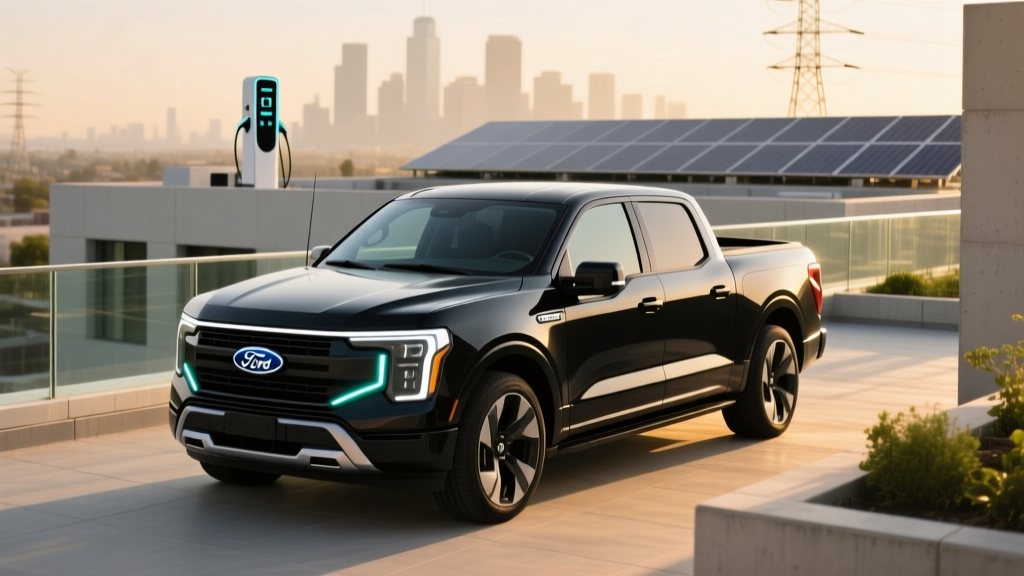
No — as of early 2026, Ford has not cancelled the F-150 Lightning. However, Ford significantly scaled back Lightning production at its Rouge Electric Vehicle Center in late 2024 and throughout 2025, cutting shifts and reducing output in response to softer-than-expected EV truck demand and rising competition. Searches for "Ford F-150 EV cancellation" stem from these production cuts, not a full model discontinuation. The Lightning remains in Ford's 2026 lineup, but buyers should expect longer lead times on certain trims and a shifting incentive landscape. Ford's next-generation electric truck (built on a new flexible architecture) is expected for the 2027 model year.
Why "Ford F-150 EV Cancellation" Is Trending
The rumor mill around a potential F-150 Lightning cancellation gained traction after Ford announced several strategic pivots between late 2024 and mid-2025:
- Production cuts: Ford reduced Lightning output from a planned ~150,000 annual units to roughly 80,000, idling shifts at the Dearborn plant.
- Super Duty EV delay: Ford pushed back its electric Super Duty timeline and redirected some battery investment toward hybrid powertrains.
- Hybrid pivot messaging: CEO Jim Farley publicly stated Ford would lean harder into hybrids and range-extended EVs, causing headlines to speculate the Lightning was on the chopping block.
- $5 billion EV division loss: Ford's Model e unit reported cumulative losses exceeding $5 billion through 2024, fueling speculation about which EV models might get axed.
None of these moves constitute a cancellation. What they signal is a recalibration — Ford is keeping the Lightning alive while redirecting capital toward more profitable electrified products, including the F-150 PowerBoost hybrid and upcoming range-extended trucks.
2026 Ford F-150 Lightning: Current Specs at a Glance
If you're shopping for a Lightning today or considering a 2026 order, here's what you're working with:
| Spec | Standard Range | Extended Range |
|---|---|---|
| EPA Range | 240 miles | 320 miles |
| Battery Capacity (usable) | 98 kWh (LFP) | 131 kWh (NMC) |
| Horsepower | 563 hp | 563 hp |
| Torque | 775 lb-ft | 775 lb-ft |
| 0-60 mph | ~3.8 sec | |
| Max Towing | 7,700 lbs | 10,000 lbs |
| Peak DC Fast Charge | 120 kW | 150 kW |
| 10-80% DC Charge Time | ~44 min | ~41 min |
| Level 2 Charge Rate | 11.3 kW | 19.2 kW (w/ 80A charger) |
| Starting MSRP (2026) | $54,995 | $69,995 |
| Battery Warranty | 8 years / 100,000 miles (≥70% retention) | |
Real-World Range Reality: The EPA rates the Extended Range Lightning at 320 miles, but expect 240-270 miles on the highway at 70+ mph, and as low as 190-220 miles in freezing temperatures with cabin heat running. Towing a 6,000-lb trailer can cut range to 130-160 miles. The Standard Range model's LFP battery handles cold slightly better percentage-wise but starts from a lower baseline — plan for ~180 miles real-world in winter conditions.
F-150 Lightning vs. Gas F-150 vs. F-150 PowerBoost Hybrid: Cost Breakdown
The most common question from truck buyers isn't just whether the Lightning exists — it's whether it makes financial sense compared to a gas or hybrid F-150. Here's a 5-year total cost of ownership comparison based on 15,000 miles/year, national average energy prices, and typical insurance rates:
| Cost Factor (5 Years) | F-150 Lightning Ext. Range | F-150 Gas (3.5L EcoBoost) | F-150 PowerBoost Hybrid |
|---|---|---|---|
| Starting MSRP | $69,995 | $52,495 | $60,495 |
| Federal Tax Credit (§30D) | Up to $7,500* | $0 | $0 |
| Fuel/Energy Cost | $5,250 (home charging) | $14,625 (20 mpg, $3.90/gal) | $9,750 (25 mpg, $3.90/gal) |
| Maintenance | $1,800 | $4,200 | $3,800 |
| Insurance (avg) | $11,500 | $8,750 | $9,500 |
| Estimated Depreciation | $28,000 | $18,500 | $21,000 |
| 5-Year Total | ~$115,545 | ~$98,570 | ~$104,545 |
*§30D tax credit eligibility depends on buyer income caps ($150K single / $300K joint), vehicle MSRP caps ($80K for trucks), and battery critical-mineral sourcing requirements. Always verify current eligibility via IRS.gov before purchasing. The credit can now be transferred at point of sale as an upfront discount.
Key takeaway: The Lightning saves roughly $9,000-$12,000 on fuel and maintenance over five years compared to the gas F-150, but higher depreciation and insurance premiums eat into those savings. Buyers with home solar or cheap utility rates (under $0.10/kWh) will see the math swing further in the Lightning's favor. Those who tow frequently or drive in extreme cold will see less benefit.
Real-World Ownership: What First-Time EV Truck Buyers Must Know
Home Charging Is Nearly Mandatory
The Lightning's 131 kWh Extended Range battery is enormous. On a standard 120V Level 1 outlet, you'd add roughly 2-3 miles per hour — meaning a full recharge from empty would take over 50 hours. To make ownership practical, you need a Level 2 home charger:
- 48A / 11.5 kW circuit: Adds ~23 miles/hour; full charge in ~14 hours. Install cost: $800-$1,500.
- 80A / 19.2 kW circuit (Extended Range): Adds ~38 miles/hour; full charge in ~8 hours. Install cost: $1,500-$3,000, and may require a panel upgrade to 200A service ($2,000-$4,000 additional).
If you live in an apartment, rely on street parking, or lack a dedicated 240V circuit, Lightning ownership becomes significantly more challenging. Public DC fast charging the 131 kWh battery from 10-80% takes 41 minutes at peak rate — but the charge curve tapers sharply above 80%, and 150 kW peak is rarely sustained for the full session.
Towing and Payload: The Range Penalty Is Real
Ford rates the Lightning Extended Range for up to 10,000 lbs of towing. But towing that weight at highway speeds will consume energy at roughly double the normal rate. Expect 1.8-2.5 kWh/mile while towing versus the normal 0.48 kWh/mile. That turns 320 miles of EPA range into 130-160 miles of practical towing range — which means planning charging stops every 90-100 miles on a towing trip.
Climate Considerations
The Lightning's liquid-cooled battery thermal management system handles heat well, but cold weather remains a challenge. At 20°F:
- Range drops 25-35% due to battery chemistry resistance and cabin heating load.
- DC fast charging speeds are reduced until the battery warms — preconditioning via the FordPass app before arriving at a charger recovers ~10-15% of lost speed.
- The heat pump (standard on 2025+ models) reduces cabin-heating energy draw by roughly 30% compared to resistive heating.
Common Misconceptions About the F-150 Lightning
| Myth | Fact |
|---|---|
| "Ford cancelled the Lightning." | Ford cut production volume but the model remains in the 2026 lineup. A next-gen electric truck is planned for 2027. |
| "The Lightning can't tow as much as a gas F-150." | Max towing is 10,000 lbs (Extended Range), competitive with many gas F-150 configurations. The issue is range loss while towing, not capability. |
| "EV trucks don't qualify for tax credits." | The Lightning qualifies for up to $7,500 under §30D, subject to MSRP caps ($80K for trucks), income limits, and battery sourcing rules. The credit applies at point of sale. |
| "The battery will need replacing in 5 years." | Ford warranties the battery for 8 years/100,000 miles at ≥70% capacity retention. Industry data shows NMC and LFP packs typically retain 85-90% capacity at 100K miles with normal use. |
| "You can charge it at any public charger." | The 2026 Lightning uses the NACS connector natively, giving access to Tesla Superchargers (via Ford's adapter program) and all major networks. Older 2022-2024 models with CCS require a NACS adapter for Supercharger access. |
Decision Framework: Should You Buy the Lightning, Go Hybrid, or Wait?
Buy the F-150 Lightning Now If:
- You have reliable home Level 2 charging (or can install it).
- Your daily driving is under 200 miles round-trip, with occasional longer road trips.
- You rarely tow more than 5,000 lbs, or you tow short distances.
- You qualify for the §30D credit and your chosen trim stays under the $80K MSRP cap.
- You value instant torque, quiet operation, Pro Power Onboard (up to 9.6 kW V2L for job-site power), and lower per-mile fueling costs.
Choose the F-150 PowerBoost Hybrid Instead If:
- You tow heavy loads (8,000+ lbs) on long trips regularly.
- You lack home charging access or live in a region with sparse DC fast-charging infrastructure.
- You drive in extreme cold for extended periods and can't tolerate 30%+ range loss.
- Your budget is under $55,000 and you don't want to stretch for the Lightning's higher entry price.
- You want 25 mpg combined without any lifestyle adaptation.
Wait for the Next-Gen Electric Truck If:
- You want 400+ miles of range, faster 350 kW charging, and a potentially lower price point.
- You're not in a rush — Ford's flexible-architecture electric truck is expected for the 2027 model year.
- You want to see how the Chevrolet Silverado EV and Ram 1500 REV (range-extended) shake out in the market first.
What Ford's Production Cuts Mean for Buyers and Resale Value
Ford's decision to cut Lightning production has two practical effects for 2026 buyers:
- Dealer inventory is tighter. You may face longer wait times for specific trim/color combinations, particularly the Extended Range Lariat and Platinum trims. Base Pro and XLT Standard Range models tend to have better availability.
- Depreciation risk is elevated. With Ford signaling uncertainty about the Lightning's long-term future and next-gen trucks on the horizon, resale values could soften further. Current 3-year-old Lightnings are depreciating at roughly 45-55% — worse than gas F-150s at 30-35%. If you plan to keep the truck 7+ years, this matters less. If you trade in every 3 years, factor aggressive depreciation into your math.
On the positive side, tighter supply means dealers may be less likely to add market adjustments above MSRP, and Ford has offered lease incentives (often $7,500 passed through the leasing company) that can make monthly payments surprisingly competitive.
Frequently Asked Questions
Has Ford officially announced an F-150 Lightning cancellation date?
No. As of early 2026, Ford continues to build and sell the F-150 Lightning. The company has reduced production shifts and redirected some EV investment toward hybrids, but no end-of-production date has been announced. Ford has confirmed a next-generation electric truck on a new platform targeting the 2027 model year.
Will I still be able to get parts and service if Ford discontinues the Lightning?
Yes. Federal law requires manufacturers to maintain parts availability for at least 10 years after a model's final production year. Ford's dealer network is the largest in the US, and the Lightning shares many components (suspension, interior, body panels forward of the bed) with the conventional F-150. Long-term service support is not a significant concern.
Does the 2026 F-150 Lightning qualify for the $7,500 federal tax credit?
It can, but eligibility is not universal. Under current IRS §30D rules, you must meet income caps ($150K single / $225K head of household / $300K joint), the truck's MSRP must not exceed $80,000, and the vehicle must meet critical-mineral and battery-component sourcing thresholds that change annually. The credit can be applied as a point-of-sale reduction. Verify eligibility at IRS.gov or with a tax professional before committing.
How much does it cost to charge a Lightning at home vs. public DC fast chargers?
At the national average residential rate of ~$0.16/kWh, fully charging the 131 kWh Extended Range battery costs roughly $21 — yielding about $0.065/mile. Public DC fast charging averages $0.35-$0.50/kWh depending on network and time of day, pushing costs to $46-$66 per full charge or $0.14-$0.20/mile. Home charging is dramatically cheaper, which is why Level 2 access is critical for ownership economics.
Is the Lightning good for job-site use with power tools?
This is where the Lightning genuinely outperforms gas trucks. Pro Power Onboard offers up to 9.6 kW of 120V/240V output (Extended Range, higher trims), enough to run compressors, miter saws, welders, and lighting simultaneously — without a separate generator. Many contractors report eliminating $50-$100/week in fuel costs for standalone generators.
Should I buy now or wait for the next-generation electric F-150?
If you need a truck now and the Lightning fits your driving pattern, buying in 2026 gives you access to current incentives and a proven platform. If you can wait 18-24 months, Ford's next-gen truck should offer substantially improved range, faster charging (potentially 350 kW+), and a lower starting price thanks to a new dedicated EV architecture. The tradeoff is uncertainty — next-gen specs and pricing won't be confirmed until late 2026 or early 2027.