Why the Model 3 RWD Dominates the Cheapest Tesla Lease Conversation
If you've searched for the cheapest Tesla lease in 2026, you've likely landed on the same answer every time: the Tesla Model 3 Rear-Wheel Drive. With advertised lease offers hovering around $329 per month (with $4,500 due at signing) through Tesla's direct leasing program, it undercuts the Model Y Long Range AWD lease by roughly $100–$130 per month and remains the most accessible entry point into the Supercharger network, over-the-air updates, and Tesla's driver-assist ecosystem.
But a low monthly payment only tells part of the story. This review breaks down the real-world range you'll actually see on the highway, the charging curve behavior that Tesla doesn't advertise, the full cost after federal tax credits if you buy instead of lease, and whether the Model 3 RWD still makes sense against the refreshed Hyundai Ioniq 6 and BMW i4 eDrive35. All specs below reflect the current 2026 model year.
2026 Tesla Model 3 RWD: Full Specification Sheet
| Specification | 2026 Model 3 RWD |
|---|---|
| Base MSRP | $38,990 (before destination) |
| As-Tested Price (typical config) | $40,490 (with $1,500 Ultra Red paint) |
| EPA Range | 272 miles |
| Battery Capacity (usable) | ~60 kWh (LFP chemistry) |
| Drivetrain | Rear-Wheel Drive, single motor |
| Horsepower | 271 hp |
| 0–60 mph | 5.8 seconds |
| MPGe (combined) | 132 MPGe |
| Efficiency | 25 kWh/100 mi |
| Max DC Fast Charge | 170 kW peak |
| 10–80% DC Fast Charge | ~25 minutes (preconditioned) |
| Level 2 Home Charging | 11.5 kW (~44 mi/hr) |
| Cargo Volume | 23 cu ft (rear trunk + frunk combined) |
| Rear Legroom | 35.3 inches |
| Battery Warranty | 8 years / 100,000 miles (70% retention) |
| Basic Vehicle Warranty | 4 years / 50,000 miles |
Real-World Range: What 272 EPA Miles Actually Means
Real-World Highway (65–70 mph, moderate temps): ~235–250 miles
Real-World City/Mixed (regenerative braking active): ~260–275 miles
Cold Weather (below 32°F, highway): ~190–215 miles
The Model 3 RWD's 60 kWh LFP (lithium iron phosphate) battery is smaller than the Long Range's ~78 kWh NMC pack, and that shows on extended highway runs. LFP cells trade energy density for longevity and cost — they're heavier per kWh, which slightly increases rolling resistance, and they don't recover range as aggressively in cold weather because LFP internal resistance rises more sharply at low temperatures.
In practical terms, a 250-mile highway trip at 70 mph in 55°F weather is achievable on a single charge with about 20 miles of buffer remaining. That same trip in January in Chicago? Plan for a 10-minute Supercharger stop around the 180-mile mark. The heat pump (standard on all 2026 Model 3 trims) mitigates cabin-heating energy draw, but battery chemistry is the dominant cold-weather variable.
For context, the EPA test cycle includes significant city/regenerative driving that inflates range relative to sustained highway speeds. Our experience aligns with independent testing showing highway efficiency closer to 28–30 kWh/100 mi at 70 mph, versus the EPA-rated 25 kWh/100 mi combined. Source: fueleconomy.gov.
Charging Speed: DC Fast, Level 2, and the LFP Curve Reality
| Charging Level | Power (kW) | Speed | Best Use Case |
|---|---|---|---|
| Level 1 (120V household) | ~1.4 kW | ~5 mi/hr | Emergency top-up only |
| Level 2 (240V, 48A home charger) | 11.5 kW | ~44 mi/hr | Daily overnight charging |
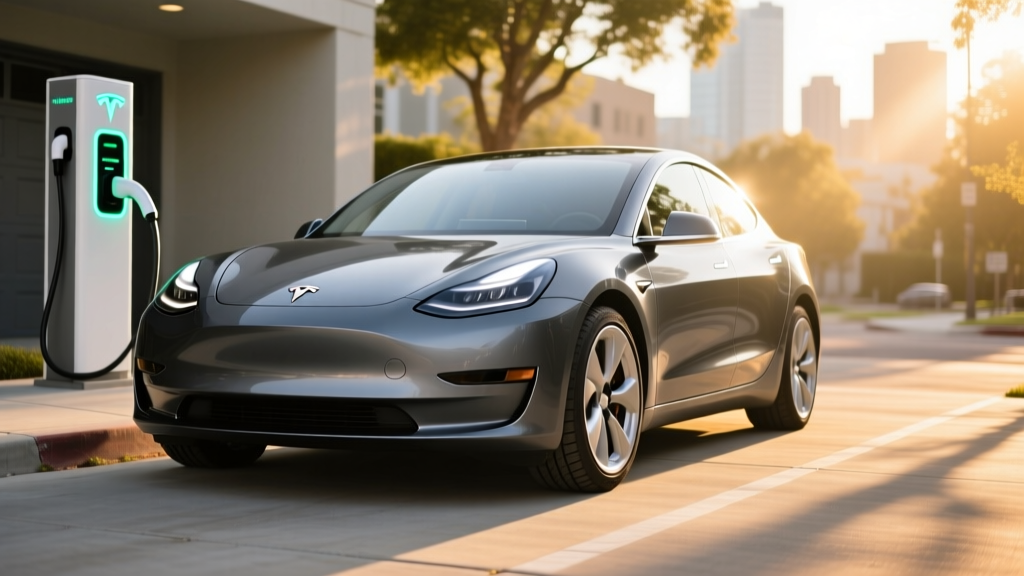
| DC Fast (Tesla Supercharger V3/V4) | 170 kW peak | 10–80% in ~25 min | Road trips |
| DC Fast (non-Tesla CCS via adapter) | ~150 kW peak | 10–80% in ~28 min | Non-Tesla network backup |
The 170 kW peak DC charge rate is the headline number, but LFP batteries exhibit a different charge curve than NMC cells. With NMC, you typically see a steep taper after 80% state of charge (SoC). With LFP, the curve holds relatively steady through ~65% SoC, then tapers more gradually. This means the 10–80% time of roughly 25 minutes is realistic if you precondition the battery by navigating to a Supercharger in the car's built-in navigation — skip preconditioning and that time stretches to 35+ minutes in cool weather.
One LFP-specific advantage: Tesla recommends charging to 100% at least once per week for LFP packs, because the battery management system (BMS) needs full-charge voltage readings to recalibrate SoC estimation. This is the opposite of NMC best practice (daily limit of 80%), and it means your daily usable range is effectively the full 272 EPA miles — no buffer sacrifice for battery longevity.
Home Level 2 charging at 11.5 kW adds roughly 44 miles per hour of charging. A full 0–100% charge takes about 6 hours, meaning an overnight session on a Tesla Wall Connector or equivalent 48-amp Level 2 unit easily replenishes any daily commute.
Lease Pricing, Purchase Cost, and Federal Tax Credit Breakdown
Here's where the "cheapest Tesla lease" search gets nuanced. Tesla's captive leasing (through their financial partners) typically offers the Model 3 RWD at approximately $329/month for 36 months with $4,500 due at signing (first month + acquisition fee + down payment). That equates to an effective monthly cost of about $454 when you amortize the drive-off.
| Scenario | Upfront Cost | Monthly / Effective | Total 36-Month Cost |
|---|---|---|---|
| Lease (typical 2026 offer) | $4,500 due at signing | $329/mo ($454 effective) | ~$16,344 |
| Purchase (cash/finance, no credit) | $38,990 MSRP + dest. | ~$650/mo (6.5% APR, 72 mo) | ~$46,800 (total financed) |
| Purchase with §30D credit (full $7,500) | $31,490 net | ~$525/mo (6.5% APR, 72 mo) | ~$37,800 (total financed) |
| Purchase with point-of-sale transfer | $31,490 at dealer | ~$525/mo | Same; credit applied upfront |
Does the Model 3 RWD Qualify for the $7,500 Federal Tax Credit?
Yes — the 2026 Model 3 RWD qualifies for the full $7,500 under IRS §30D, but only if you purchase, not lease. Critical eligibility requirements (per IRS.gov):
- MSRP cap: Vehicle must be under $55,000 (sedan). Model 3 RWD at $38,990 clears this easily.
- Buyer income cap: Modified AGI must not exceed $150,000 (single), $225,000 (head of household), or $300,000 (joint). Exceed these and you lose the credit entirely.
- Battery sourcing: The Model 3 RWD's LFP battery currently sources critical minerals and components from qualifying supply chains (primarily CATL cells with qualifying mineral sourcing for 2026). Tesla's US-built vehicles have maintained compliance, but always verify at fueleconomy.gov before purchasing, as supply chain rules tighten annually.
- Point-of-sale transfer: As of 2024+, you can transfer the credit to the dealer at purchase, reducing your out-of-pocket by $7,500 on the spot — no waiting for tax filing.
The lease loophole: Under current IRS guidance, leased vehicles qualify for the $7,500 commercial clean vehicle credit (§45W), which goes to the lessor (Tesla's finance partner), not you. The lessor may pass savings through as a lower lease payment — this is known as "lease pass-through" — but it's not guaranteed and varies by offer. This is why Tesla's lease pricing is competitive even without the direct consumer credit.
Performance, Tech, and Daily Livability
The single rear motor produces 271 horsepower and launches the Model 3 RWD to 60 mph in 5.8 seconds — quick enough for confident highway merging and genuinely fun in Sport mode, but not the neck-snapping acceleration of the dual-motor Long Range (4.2 seconds) or Performance (2.9 seconds).
What stands out in the 2026 "Highland" refresh:
- Ventilated front seats — a long-requested feature, standard on all trims now
- Rear 8-inch touchscreen for climate and media control (passengers no longer reach forward)
- Ambient lighting and improved sound insulation — the cabin is noticeably quieter at highway speeds than the pre-2024 Model 3
- 15.4-inch center touchscreen running Tesla's latest UI — fast, intuitive, but still no Apple CarPlay or Android Auto (Tesla's ecosystem is self-contained)
- Autopilot (SAE Level 2) is standard — adaptive cruise + lane centering on marked roads. Full Self-Driving (Supervised) is a $8,000 add-on or $99/month subscription, but remains Level 2: you must keep hands on the wheel and eyes on the road at all times.
Cargo space totals 23 cubic feet (19.4 cu ft rear trunk + 3.1 cu ft frunk), which trails the Model Y's 30+ cu ft but exceeds most compact sedans. Rear legroom at 35.3 inches is adequate for adults under 6 feet; taller passengers will notice the sloping roofline cutting into headroom.
Pros, Cons, and the Competition
Pros
- Lowest monthly payment of any Tesla (cheapest Tesla lease at ~$329/mo)
- Full Supercharger network access (17,000+ stalls in North America)
- LFP battery: charge to 100% daily, excellent cycle life, lower degradation risk
- 132 MPGe combined — among the most efficient EVs sold
- OTA updates continuously add features post-purchase
- Strong resale value relative to non-Tesla EVs
Cons
- 272-mile EPA range limits road-trip flexibility vs Long Range (363 mi)
- No physical buttons — all controls via touchscreen (turn signals on steering wheel, wipers via screen)
- RWD only — less confident in snow/ice than AWD competitors
- LFP cold-weather range loss is steeper than NMC (~25–30% at freezing)
- No Apple CarPlay / Android Auto
- Insurance premiums run 15–25% higher than comparable gas sedans
Is It Worth Buying vs Key Competitors?
The 2026 Hyundai Ioniq 6 SE offers 361 miles of EPA range for ~$42,500 and charges at up to 240 kW (10–80% in 18 minutes on 800V architecture). It's the efficiency and charging-speed king, but lease pricing typically runs $399–$449/month — $70–$120 more than the Model 3 RWD. The BMW i4 eDrive35 starts around $52,000 and doesn't compete on price. The Chevrolet Equinox EV 3LT offers 319 miles for ~$36,000, but its CCS charging network access is less reliable than Tesla's NACS/Supercharger ecosystem.
If your priority is the absolute lowest monthly payment into a modern EV with reliable fast-charging infrastructure, the Model 3 RWD lease is difficult to beat. If range and charging speed matter more than monthly cost, the Ioniq 6 or Model 3 Long Range (lease ~$449/mo) are stronger picks.
Who the Model 3 RWD Suits Best
- You commute under 80 miles round-trip and can charge at home overnight
- You want the lowest monthly Tesla payment and don't road-trip more than 2–3 times per year
- You live in a mild-to-moderate climate (LFP cold-weather loss is less relevant)
- You value Supercharger reliability over maximum range
- You regularly drive 300+ miles between stops (get the Long Range or Ioniq 6)
- You live in a cold climate and need winter range confidence (AWD + NMC chemistry preferred)
- You need cargo space for family gear (Model Y or Ioniq 5)
- You want physical buttons and CarPlay (Hyundai, BMW, most non-Tesla brands)
Frequently Asked Questions
What is the real-world range of the 2026 Tesla Model 3 RWD?
Expect 235–250 miles on the highway at 65–70 mph in moderate temperatures, and roughly 260–275 miles in mixed city driving where regenerative braking recovers energy. In sub-freezing conditions, highway range drops to approximately 190–215 miles. The EPA sticker says 272 miles, but plan trips around 230 miles of usable range for safety margin.
How fast does the Model 3 RWD charge at home and on the road?
At home on a 48-amp Level 2 charger (240V), it charges at 11.5 kW, adding about 44 miles per hour — a full 0–100% takes roughly 6 hours. On a Tesla Supercharger V3/V4, it peaks at 170 kW and charges from 10–80% in approximately 25 minutes when the battery is preconditioned. Without preconditioning, expect 30–35 minutes in cool weather.
How much does the Model 3 RWD cost after the federal tax credit?
If you purchase (not lease), the $38,990 base MSRP drops to approximately $31,490 after the full $7,500 §30D credit — assuming you meet income caps ($150K single / $300K joint) and the vehicle's battery sourcing qualifies at time of purchase. Lease buyers don't receive the credit directly, but Tesla's lease pricing (~$329/mo) reflects lessor-side incentives passed through.
Does the Tesla Model 3 RWD qualify for the $7,500 federal EV tax credit?
Yes, the 2026 Model 3 RWD qualifies for the full $7,500 under §30D for purchasers who meet income requirements. Always verify current eligibility on fueleconomy.gov before buying, as battery component and critical mineral sourcing rules are updated annually. Lease customers benefit indirectly through lower monthly payments.
What are the biggest pros and cons of the cheapest Tesla lease?
Pros: lowest monthly payment in the Tesla lineup (~$329/mo), full Supercharger access, LFP battery longevity, excellent efficiency (132 MPGe), strong resale. Cons: 272-mile EPA range limits road trips, RWD only (no AWD option on base trim), steeper cold-weather range loss than NMC batteries, no CarPlay/Android Auto, touchscreen-only controls.
How does the Model 3 RWD battery warranty compare?
Tesla covers the Model 3 RWD battery and drive unit for 8 years or 100,000 miles, whichever comes first, with a minimum 70% capacity retention guarantee. This is industry-standard — Hyundai offers 10yr/100,000mi on the Ioniq 6, which is more generous on duration. LFP chemistry typically degrades more slowly than NMC, so hitting the 70% threshold before 100K miles is unlikely in normal use.