Lucid Motors enters 2026 at an inflection point. After years of low-volume sedan production, the launch of the Gravity three-row SUV and the more accessible Air Pure trim have pushed the automaker toward a revised annual production target that analysts and investors are watching closely. But beyond the factory output numbers, what matters to buyers is whether Lucid's vehicles deliver on their spec-sheet promises: class-leading efficiency, 500-mile range potential, and luxury EV tech that justifies a six-figure price tag.
This review covers the current 2026 Lucid Air lineup and the newly ramping Gravity SUV, with exact EPA range figures, charging speeds, real-world caveats, pricing, and federal tax credit eligibility under current IRS §30D rules.
Lucid Motors Production Target: Where Output Stands in 2026
Lucid's Arizona manufacturing facility was designed with an annual capacity of approximately 400,000 vehicles, though actual output has remained well below that ceiling. For 2026, the company's production target reflects a significant ramp driven by Gravity volume alongside continued Air sedan manufacturing. Industry estimates place Lucid's 2026 production target in the range of 20,000–30,000 vehicles, a meaningful increase from prior years but still a fraction of Tesla or Rivian volumes.
For buyers, the production target matters practically: higher output means shorter delivery wait times, improved parts availability, and greater service-center coverage. Lucid has been expanding its service and delivery network, but low production volumes have historically meant longer repair wait times compared to established luxury brands. If you're ordering a Gravity in early 2026, expect a delivery window of 8–16 weeks depending on trim and configuration.
2026 Lucid Air: Range, Battery, and Efficiency Breakdown
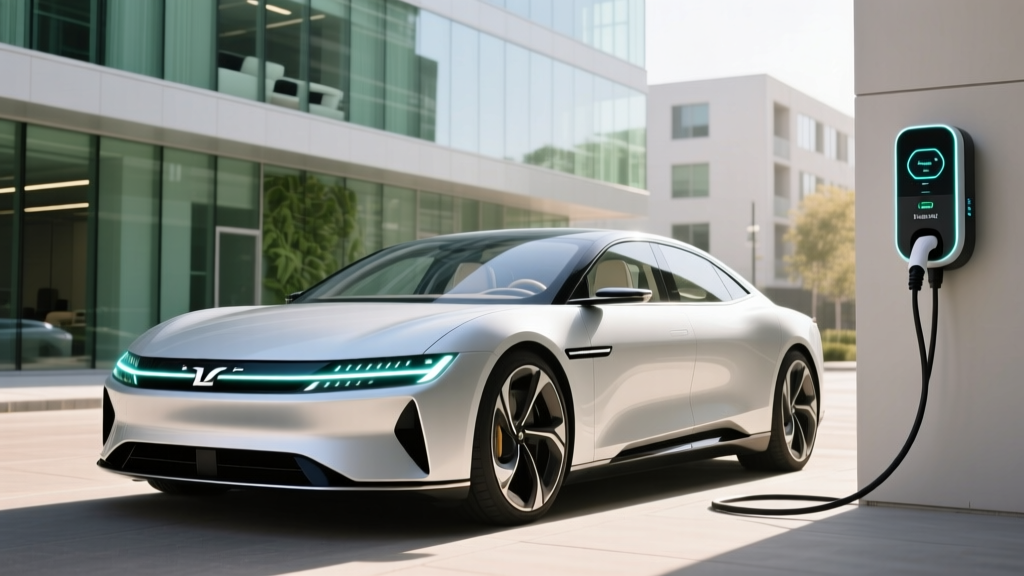
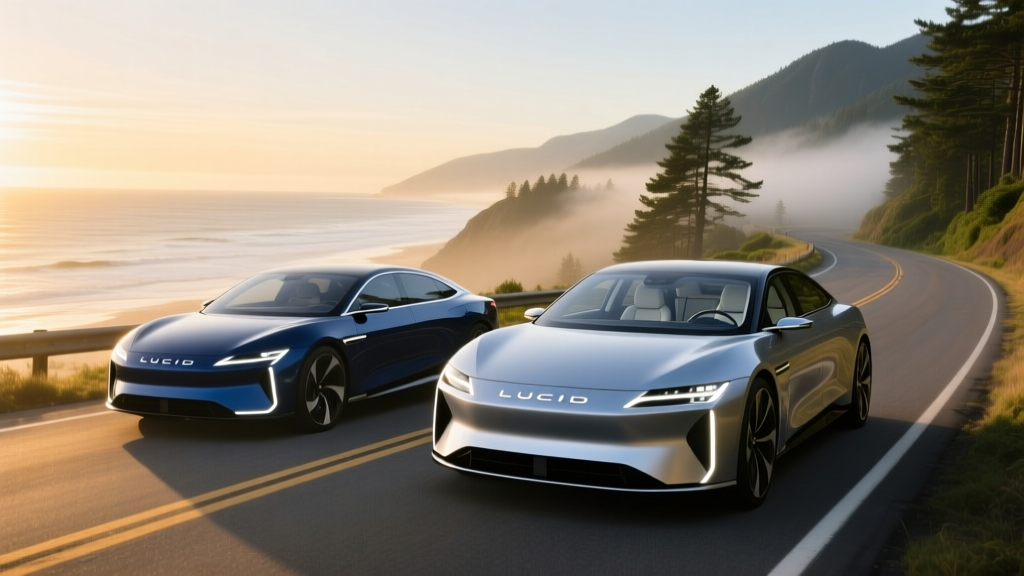
The Lucid Air lineup in 2026 spans from the entry-level Pure to the performance-oriented Sapphire. Lucid's hallmark remains its powertrain efficiency — the Air achieves more miles per kWh than nearly any competing luxury sedan, thanks to proprietary miniaturized drive units and advanced thermal management.
| Spec | Air Pure | Air Touring | Air Grand Touring | Air Sapphire |
|---|---|---|---|---|
| EPA Range | 419 mi | 425 mi | 516 mi | 427 mi |
| Battery (usable) | 88 kWh (NMC) | 92 kWh (NMC) | 112 kWh (NMC) | 118 kWh (NMC) |
| Drivetrain | RWD | AWD Dual-Motor | AWD Dual-Motor | AWD Tri-Motor |
| Horsepower | 430 hp | 620 hp | 819 hp | 1,234 hp |
| 0–60 mph | 5.0 sec | 3.4 sec | 3.0 sec | 1.89 sec |
| Efficiency (MPGe) | 146 MPGe | 140 MPGe | 131 MPGe | 110 MPGe |
| Efficiency (kWh/100mi) | 23 | 24 | 26 | 31 |
| Base MSRP | $69,900 | $87,400 | $125,600 | $249,000 |
All Air trims use nickel-manganese-cobalt (NMC) lithium-ion cells. Lucid has not adopted LFP (lithium iron phosphate) chemistry in the Air, opting for NMC's higher energy density to achieve its range targets. NMC cells offer superior energy-per-kilogram but are more sensitive to sustained 100% state-of-charge storage and extreme heat — Lucid's battery management system and liquid thermal management mitigate this, but owners should follow the 80% daily charge recommendation for longevity.
Charging Speed: DC Fast Charge and Home Level 2
Lucid's 900-volt electrical architecture enables fast DC charging, though peak rates vary by battery pack size. The larger packs in the Grand Touring and Sapphire sustain higher charge rates for longer portions of the curve.
| Charging Level | Air Pure / Touring | Air Grand Touring / Sapphire | Gravity |
|---|---|---|---|
| Max DC Fast Charge | 200 kW peak | 300 kW peak | 300 kW peak |
| 10–80% DCFC Time | ~25 min | ~20 min | ~22 min |
| Sustained Rate (10–50%) | ~170 kW | ~250 kW | ~240 kW |
| Level 2 (Home, 48A) | 11.5 kW (~46 mi/hr) | 11.5 kW (~46 mi/hr) | 11.5 kW (~40 mi/hr) |
| Level 2 (19.2 kW option) | ~76 mi/hr | ~76 mi/hr | ~65 mi/hr |
| Connector (2026) | NACS (native) | NACS (native) | NACS (native) |
A critical detail for road-trippers: Lucid's charge curve tapers significantly above 80% state of charge. Charging from 80–100% can add 15–20 minutes at a DC fast charger, so plan stops to 80% unless you need the full battery for the next leg. The 900V architecture means Lucid vehicles charge efficiently at Electrify America's 350 kW stalls and Tesla Superchargers (via Lucid's native NACS port or included adapter, depending on production date).
For home charging, a 48-amp Level 2 station on a 60-amp circuit adds roughly 46 miles of range per hour for the Air — an overnight charge from 20% to 80% takes about 7–8 hours. Lucid's optional 19.2 kW onboard charger (requires a 100-amp circuit and hardwired station) cuts this substantially but demands a significant electrical panel investment. Most owners find 11.5 kW / 48A perfectly adequate for daily use.
Lucid Gravity: The Three-Row SUV Enters Production
The Gravity is Lucid's volume play — the model most directly tied to the company's 2026 production target ramp. As a three-row luxury electric SUV, it competes with the Tesla Model X, Rivian R1S, and BMW iX (though the iX is two-row).
| Spec | Gravity Pure (est.) | Gravity Touring | Gravity Grand Touring |
|---|---|---|---|
| EPA Range | ~400 mi | 440 mi | 446 mi |
| Battery (usable) | ~100 kWh (NMC) | 112 kWh (NMC) | 112 kWh (NMC) |
| Drivetrain | RWD | AWD Dual-Motor | AWD Dual-Motor |
| Horsepower | ~430 hp | 620 hp | 823 hp |
| 0–60 mph | ~5.5 sec | 3.5 sec | 3.3 sec |
| Towing Capacity | 6,000 lbs | 6,000 lbs | 6,000 lbs |
| Cargo (behind 3rd row) | ~20 cu ft | ~20 cu ft | ~20 cu ft |
| Cargo (all seats folded) | ~80 cu ft | ~80 cu ft | ~80 cu ft |
| Base MSRP | $79,900 | $94,900 | $119,900 |
The Gravity shares Lucid's 900V platform and miniaturized drive-unit philosophy. Interior space is a highlight: with a flat floor and compact powertrain components, third-row legroom is genuinely usable for adults on shorter trips — a rarity in the segment. The glass canopy roof creates an airy cabin, though it reduces roof-rack utility.
Pricing, Tax Credits, and Ownership Costs
Lucid's pricing places the Air Pure just under the luxury EV threshold, while the Grand Touring and Sapphire occupy true luxury territory. The federal EV tax credit under IRS §30D has specific eligibility rules that affect which Lucid models qualify.
| Model / Trim | Base MSRP | §30D MSRP Cap | Credit Eligible? | Effective Price (est.) |
|---|---|---|---|---|
| Air Pure | $69,900 | $55,000 (sedans) | No — exceeds sedan cap | $69,900 |
| Air Touring | $87,400 | $55,000 (sedans) | No — exceeds sedan cap | $87,400 |
| Air Grand Touring | $125,600 | $55,000 (sedans) | No — exceeds sedan cap | $125,600 |
| Gravity Pure | $79,900 | $80,000 (SUVs/trucks) | Potentially — under SUV cap | ~$72,400* |
| Gravity Touring | $94,900 | $80,000 (SUVs/trucks) | No — exceeds SUV cap | $94,900 |
*Gravity Pure eligibility depends on battery critical-mineral and component sourcing requirements per IRS §30D rules, buyer income caps ($150K single / $300K joint AGI), and the vehicle meeting the $80,000 SUV MSRP cap. Always verify current eligibility with a tax professional and the IRS source lists before purchase.
Lucid has also offered lease-based incentives and point-of-sale price reductions that can effectively function as discounts even when the federal credit doesn't apply. Check Lucid's current offers page and your state's incentive programs (California's CVRP, for instance, has separate income-based rebates).
Interior, Tech, and Driver Assistance
The Lucid Air's interior emphasizes minimalist luxury — a curved glass cockpit display spans the dashboard, with a retractable lower touchscreen for climate and media controls. Build quality in 2026-production vehicles has improved notably over early 2022–2023 units, with tighter panel gaps and more consistent material finishing.
Standout tech features:
- Lucid's Surreal Sound Pro audio system (21 speakers, Dolby Atmos)
- DreamDrive Pro ADAS suite (32 sensors including LiDAR) — SAE Level 2, requiring full driver engagement
- Over-the-air updates adding features post-purchase
- Frunk (front trunk) with approximately 10 cu ft of space on Air models
- Vehicle-to-load (V2L) capability via adapter for powering external devices
Notable drawbacks:
- DreamDrive Pro lags behind Tesla's FSD (Supervised) and GM's Super Cruise in highway lane-change confidence and hands-free mapping coverage
- Infotainment app ecosystem is thinner than Tesla's or Android Automotive-based systems
- Service center density remains limited outside major metros — mobile service covers some areas but not all
- Rear-seat headroom in the Air sedan is compromised by the sloping roofline for taller passengers
Warranty and Long-Term Ownership
| Coverage | Term |
|---|---|
| Basic Vehicle | 4 years / 50,000 miles |
| Battery & Powertrain | 8 years / 100,000 miles |
| Battery Capacity Retention | ≥70% over 8 yr / 100,000 mi |
| Roadside Assistance | 4 years / 50,000 miles |
Lucid's battery warranty matches the industry standard set by Tesla and Rivian. The 70% capacity retention threshold over 8 years is typical; real-world degradation data from early Air owners (2022–2024 models) suggests NMC packs lose approximately 5–8% capacity in the first 50,000 miles before the curve flattens — consistent with well-managed NMC chemistry. If you're buying a Grand Touring with 112 kWh, even 8% loss still leaves you with over 103 kWh usable and well over 450 miles of range.
Long-term ownership considerations include insurance costs (luxury EV premiums run 20–40% above comparable ICE luxury sedans), tire wear (EVs are heavier and deliver instant torque, wearing tires 20–30% faster), and Lucid's still-growing service network. If you live in a metro area with a Lucid service center, ownership is straightforward; if not, mobile service and tow-to-center logistics can add inconvenience.
Who Should Buy a Lucid in 2026?
Choose the Lucid Air if:
- You prioritize maximum range per charge above all else (Grand Touring's 516 mi EPA is best-in-class)
- You want a luxury sedan with genuine 400+ mile real-world road-trip capability
- Efficiency (kWh/100mi) matters to you — the Air Pure's 23 kWh/100mi is exceptional
- You have reliable home Level 2 charging and access to DC fast chargers on common routes
Choose the Lucid Gravity if:
- You need three rows and family-hauler cargo space with 440+ mile range
- You want 6,000-lb towing capability in an electric SUV
- You're upgrading from a Model X or considering an R1S but prefer car-based ride quality
Look elsewhere if:
- You need the most mature ADAS / hands-free highway driving (GM Super Cruise or Tesla FSD Supervised lead here)
- Service-center proximity is critical and you're outside a major metro
- Budget is under $65,000 — consider the Hyundai Ioniq 6, Tesla Model 3, or Chevrolet Equinox EV instead
Frequently Asked Questions
What is the real-world range of the Lucid Air?
The Air Grand Touring's EPA rating is 516 miles. In real-world highway driving at 70–75 mph, expect 400–440 miles. The Air Pure (419 mi EPA) delivers roughly 330–360 miles on the highway. Cold weather (below freezing) reduces range 15–25% across all trims.
How fast does a Lucid charge on DC fast chargers and at home?
The Air Grand Touring and Gravity peak at 300 kW DC fast charging, reaching 10–80% in approximately 20–22 minutes. The Air Pure peaks at 200 kW with a 10–80% time of ~25 minutes. At home on a 48-amp Level 2 station, the Air adds about 46 miles of range per hour; the Gravity adds about 40 miles per hour.
Does the Lucid Air or Gravity qualify for the federal EV tax credit?
Under current IRS §30D rules, the Air sedan does not qualify because all trims exceed the $55,000 MSRP cap for sedans. The Gravity Pure ($79,900) falls under the $80,000 SUV/truck cap and may qualify for up to $7,500, subject to battery sourcing requirements, buyer income limits ($150K single / $300K joint), and point-of-sale transfer rules. Verify current eligibility with the IRS and a tax professional.
Is Lucid worth buying vs. Tesla, BMW, or Mercedes?
The Air Grand Touring offers range and efficiency no competitor matches — 516 EPA miles at 26 kWh/100mi is best-in-class. However, Tesla's Supercharger network maturity, software ecosystem, and service density remain advantages. The BMW i5 and Mercedes EQE offer more traditional luxury interiors and broader dealer networks but sacrifice 100+ miles of range. If range and efficiency are your top priorities, Lucid wins; if service infrastructure and ADAS maturity matter more, Tesla or BMW may be the safer choice.
What are the biggest pros and cons of owning a Lucid?
Pros: Best-in-class range and efficiency, spacious interiors (especially Gravity), 900V fast-charging architecture, NACS native connector, distinctive design.
Cons: Limited service-center network, DreamDrive ADAS lags competitors, infotainment app selection is thin, high insurance costs, low production volume can mean longer parts wait times.
What is Lucid Motors' production target for 2026?
Lucid has not published a single official public production number for 2026, but the company has signaled a significant ramp driven by Gravity volume alongside Air production. Industry analysts estimate 20,000–30,000 units for 2026. The Arizona factory's installed capacity is approximately 400,000 annually, leaving substantial room for future growth as additional models (a mid-size platform codenamed "Midsize") enter production in later years.