The Cheap Tesla Lease: What You're Actually Getting in 2026
If you've searched for a "cheap Tesla lease" lately, you've probably seen ads touting sub-$300 monthly payments on the Model 3. On paper, it looks like the easiest way into a premium electric sedan without the commitment of ownership. But leasing an EV involves trade-offs that differ fundamentally from leasing a gas car — from federal tax credit mechanics to mileage caps that can silently wreck your budget.
This review dissects the 2026 Tesla Model 3 as a lease proposition. We'll cover the real specs, the real costs, and the real limitations — so you can decide whether that headline monthly payment actually pencils out over 36 months.
| Spec | Value |
|---|---|
| EPA Range | 363 miles |
| Real-World Range (highway/cold) | ~280–310 miles |
| Battery Capacity | 79 kWh usable (NMC) |
| Max DC Fast Charge | 250 kW peak |
| 10–80% DC Charge Time | ~27 minutes |
| Level 2 Home Charge (11.5 kW) | ~44 miles/hour |
| 0–60 mph | 5.8 seconds |
| Horsepower | 271 hp |
| Drivetrain | Rear-Wheel Drive (single motor) |
| MPGe (combined) | 132 MPGe |
| Efficiency | 25 kWh/100 mi |
| Cargo Volume | 23 cu ft (trunk + frunk) |
| Rear Legroom | 35.2 inches |
| Battery Warranty | 8 years / 120,000 miles |
| Base MSRP | $44,130 (Long Range RWD) |
Real-World Range: Beyond the EPA Sticker
The 2026 Model 3 Long Range RWD carries an EPA-estimated 363 miles of range — among the best in its class. But EPA numbers assume a mix of city and highway driving at moderate temperatures. Real-world conditions tell a different story.
- EPA Sticker: 363 miles
- Highway (70–80 mph, fair weather): ~300–320 miles
- Cold weather (below 32°F, highway): ~250–280 miles
- City/regenerative driving: Can meet or exceed 363 miles
The Model 3's heat pump helps mitigate cold-weather losses compared to older EVs, but expect a 20–30% reduction in deep winter. On long road trips at sustained 75+ mph, plan charging stops around the 280-mile mark for comfort.
The RWD base model (now badged simply "Model 3" with the LFP battery) delivers an EPA-estimated 272 miles from its ~60 kWh lithium iron phosphate pack. That's the trim most commonly advertised in cheap lease deals — and the range gap matters if you road-trip.
Charging Speed: DC Fast, Level 2, and the Curve
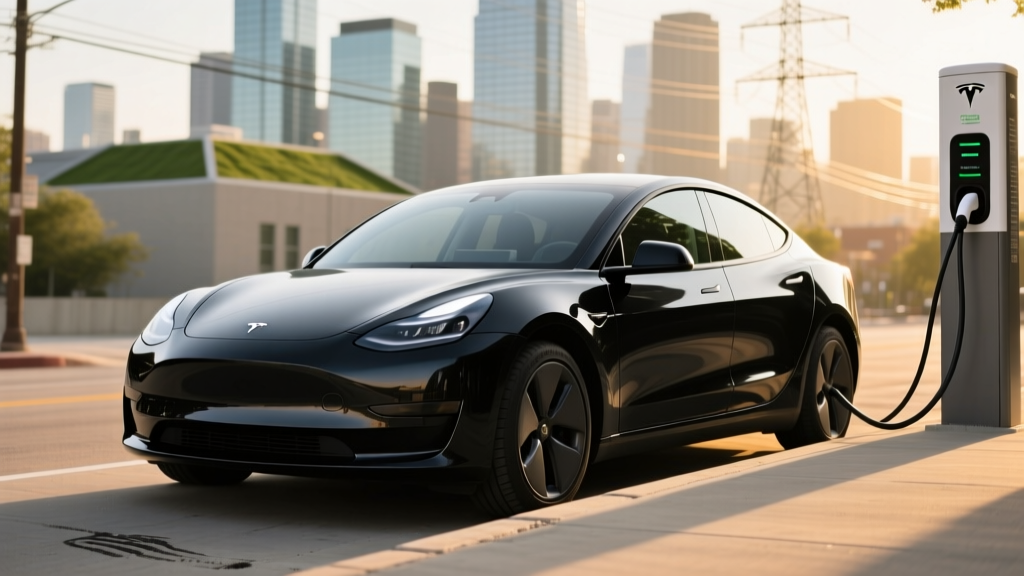
Charging speed is where Tesla still holds an edge over most competitors, thanks to both hardware capability and access to the Supercharger network (now open to other brands via NACS adoption, but still most seamless for Tesla owners).
| Charge Level | Power / Rate | Time / Speed |
|---|---|---|
| Level 1 (120V household) | ~1.2 kW | ~3–4 miles/hour |
| Level 2 (240V home, 48A) | 11.5 kW | ~44 miles/hour; full charge ~8 hrs |
| DC Fast (Supercharger V3) | 250 kW peak | 10–80% in ~27 min |
| DC Fast (V4 Supercharger) | Up to 250 kW | Similar curve, improved availability |
A critical nuance: the 250 kW figure is a peak, not a sustained rate. The charge curve tapers significantly above 60% state of charge. In practice, you'll see 200–250 kW between 10–40% SoC, dropping to ~100 kW by 70%, and ~50 kW above 85%. This is normal lithium-ion behavior, but it means the last 20% takes nearly as long as the first 60%.
The base RWD model with the LFP battery peaks at a lower ~170 kW on DC fast charging. LFP chemistry also allows (and Tesla recommends) regular charging to 100% — a genuine daily-use advantage over NMC, which Tesla recommends keeping at 80% for daily driving to preserve long-term health.
Pricing, Lease Economics, and the Tax Credit Question
Here's where the "cheap Tesla lease" proposition gets complicated. Tesla does not offer traditional leases through most dealerships the way legacy automakers do. Instead, Tesla has periodically offered lease programs directly, and third-party lessors sometimes acquire Model 3s for lease inventory. The economics work differently than a purchase.
| Factor | Purchase (Long Range RWD) | Typical Lease (Base RWD) |
|---|---|---|
| Base MSRP | $44,130 | $38,990 |
| Federal §30D Tax Credit | Up to $7,500 (point-of-sale) | Passed to lessor; may reduce payment |
| Effective Price / Cap Cost | ~$36,630 | Varies; often ~$35,000–$37,000 |
| Estimated Monthly (36 mo) | N/A (financing dependent) | $299–$449/mo (depending on terms) |
| Mileage Allowance | Unlimited | Typically 10,000–12,000 mi/yr |
| End-of-Term | You own the asset | Return or buy at residual |
Federal Tax Credit Eligibility (§30D)
Per current IRS rules, the §30D clean vehicle credit offers up to $7,500 for eligible new EVs. But eligibility hinges on three moving targets:
- MSRP Cap: Sedans must be under $55,000 (the Model 3 qualifies in all trims).
- Buyer Income Cap: Modified AGI must not exceed $150,000 (single), $225,000 (head of household), or $300,000 (joint).
- Battery Sourcing: Critical minerals and battery components must meet phased-in domestic/free-trade-partner thresholds. Tesla's US-built Model 3 has generally qualified for the full $7,500, but component sourcing rules tighten annually — verify current eligibility on the IRS portal before committing.
The lease loophole: Under §45W (commercial clean vehicle credit), the leasing company — not you — claims the $7,500 credit. Reputable lessors pass this through as a "capitalized cost reduction," lowering your monthly payment. Always confirm in writing that the credit is applied to your lease's cap cost; some lessors absorb it as profit.
Performance and Driving Impressions
The Long Range RWD Model 3 delivers 271 horsepower and a 5.8-second 0–60 mph time — brisk for a daily commuter, if not the head-snapping acceleration of the dual-motor Performance variant (346 hp, 4.2 seconds). The single-motor RWD setup keeps weight down and efficiency up, contributing to that class-leading 132 MPGe combined.
The 2026 "Highland" refresh brought meaningful improvements: a quieter cabin (acoustic glass all around), ventilated front seats, a rear touchscreen for passengers, and retuned suspension that absorbs sharp impacts without losing composure on sweepers. It's a noticeably more refined car than the pre-2024 Model 3.
Tesla's Autopilot comes standard — adaptive cruise and lane-keeping that constitute SAE Level 2 driver assistance. Full Self-Driving (Supervised) remains a $8,000 add-on or $99/month subscription, and despite the name, it is still Level 2: you must remain engaged, hands on or near the wheel, eyes on the road. It is not autonomous driving.
Interior, Cargo, and Daily Livability
The Model 3's minimalist interior remains polarizing. There are no physical stalks (turn signals are steering-wheel buttons), no instrument cluster, and virtually every control routes through the 15.4-inch central touchscreen. For tech-forward buyers, it's clean and responsive. For traditionalists, the lack of redundant physical controls for wipers, mirrors, and glovebox remains a friction point.
Practical dimensions:
- Trunk: 21 cu ft (competitive with midsize sedans like the Camry)
- Frunk: ~2 cu ft (useful for charging cables, small bags)
- Rear legroom: 35.2 inches (tight for tall adults on long trips)
- Front headroom: 40.3 inches (generous, thanks to the glass roof)
The glass roof provides an airy feel but no shade — in hot climates, aftermarket tinting or a sunshade insert is a near-universal owner upgrade. Cabin noise at highway speeds has improved dramatically with the Highland refresh, dropping roughly 3–4 dB at 70 mph compared to the previous generation.
Warranty and Long-Term Ownership
Tesla's warranty structure is straightforward:
- Basic Vehicle: 4 years / 50,000 miles
- Battery & Drive Unit (Long Range/Performance): 8 years / 120,000 miles
- Battery & Drive Unit (Base RWD/LFP): 8 years / 100,000 miles
- Battery degradation guarantee: Tesla warrants the battery will retain at least 70% of original capacity during the warranty period
For lessees, the 4-year basic warranty covers the full typical lease term (36 months). Battery degradation is a non-issue on a lease — you'll return the car before it matters. But if you plan to exercise a purchase option at lease-end, understand that the battery warranty mileage clock starts at the vehicle's original in-service date, not your purchase date.
Competitor Check: Model 3 vs. the Alternatives
Before locking in a Model 3 lease, consider what else $300–$450/month gets you in 2026:
- Hyundai Ioniq 6 SE Long Range: EPA 361 miles, 800V architecture (10–80% in ~18 min on a 350 kW charger), more physical controls, similar MSRP. Lease deals frequently undercut Tesla's by $30–$50/month.
- Chevrolet Equinox EV 3LT: EPA 319 miles, lower starting price, qualifies for $7,500 credit. Less performance, slower charging (~150 kW peak).
- BMW i4 eDrive40: EPA 307 miles, premium interior, stronger dealer lease support. Starts ~$52,000 but aggressive BMW Financial lease offers can push monthly payments near Model 3 territory.
The Model 3's advantages remain the Supercharger network (still the most reliable DC fast-charging ecosystem in the US), over-the-air updates that add features post-purchase, and the strongest software/infotainment integration in the segment. Its disadvantages are the minimalist control philosophy, panel-gap variability, and service center wait times in some metro areas.
Pros
- Class-leading EPA range (363 mi, Long Range)
- Supercharger network access — best public charging reliability
- Best-in-class software and OTA updates
- Strong efficiency (132 MPGe / 25 kWh/100 mi)
- Quiet, refined cabin post-Highland refresh
- LFP base model allows daily 100% charging
Cons
- No physical stalks or buttons — steep adjustment curve
- Rear seat legroom tight for adults over 6 ft
- DC fast-charge speed slower than 800V rivals (Ioniq 6, EV6)
- Service center availability varies widely by region
- Glass roof lacks built-in shade
- Lease availability inconsistent; not all markets offer direct Tesla leasing
Who Should Lease the Model 3 — And Who Shouldn't
Lease the Model 3 if:
- You drive 10,000–12,000 miles/year or less (staying within typical lease limits)
- You have reliable home Level 2 charging and want minimal public-charging dependency
- You value software integration, OTA improvements, and the Supercharger network
- You want to test EV ownership for 36 months before committing to a long-term purchase
- You're upgrading every 3 years anyway and don't want to manage resale/depreciation
Buy instead of leasing if:
- You drive 15,000+ miles/year (lease overage penalties of $0.15–$0.25/mile add up fast)
- You qualify for the full $7,500 §30D credit and your state offers additional purchase incentives (California's CVRP, Colorado's state credit, etc.)
- You plan to keep the car 5+ years and want to build equity
- You want the flexibility to modify (wraps, tint, aftermarket wheels — all lease-prohibited)
Frequently Asked Questions
What is the cheapest monthly payment for a Tesla Model 3 lease in 2026?
Advertised Model 3 lease deals typically range from $299 to $449 per month for 36 months, depending on the trim, down payment, mileage allowance, and whether the lessor passes through the $7,500 federal credit as a cap cost reduction. Always verify the "due at signing" amount — a $299/month payment often requires $3,500–$5,000 down, which amortized over 36 months pushes the true cost closer to $400–$500/month.
Does the Tesla Model 3 qualify for the $7,500 federal tax credit?
The US-built Model 3 has generally qualified for the full $7,500 §30D credit, but eligibility depends on your income (AGI caps apply), the vehicle's MSRP (under $55,000 for sedans — all Model 3 trims qualify), and current battery-sourcing requirements. If you lease, the lessor claims the commercial credit (§45W) — confirm they pass the savings to your cap cost. Check the latest eligibility at fueleconomy.gov.
Can I buy the Tesla Model 3 at the end of my lease?
Tesla's direct lease agreements have historically included a purchase option at a predetermined residual value. However, this varies by lease type and state. Third-party lessors (through banks or credit unions) typically also offer purchase options. Confirm the residual and purchase terms before signing — some leases have residuals set higher than market value, making the buyout unattractive.
How does the Model 3's range hold up in cold weather?
Expect a 20–30% range reduction in sustained below-freezing temperatures. A Long Range model rated at 363 miles EPA may deliver 250–280 miles on a cold highway trip. The heat pump helps, and preconditioning the battery (automatic when you navigate to a Supercharger) recovers some efficiency. For cold-climate buyers, the AWD Long Range trim adds traction and slightly better range retention.
Is Tesla's leasing program available in all states?
No. Tesla's direct leasing availability varies by state and changes periodically. Some states with franchise-dealer laws restrict direct manufacturer leasing. In states where Tesla doesn't offer direct leases, third-party leasing companies and some credit unions may have Model 3 inventory available. Check Tesla.com for current lease availability in your ZIP code.
What happens if I exceed the mileage limit on a Tesla lease?
Most EV leases set a 10,000 or 12,000 mile/year limit. Excess mileage charges typically run $0.15–$0.25 per mile. If you drive 15,000 miles/year on a 10,000-mile lease, that's 15,000 excess miles at $0.20/mile = $3,000 due at lease-end. Negotiate a higher mileage allowance upfront if needed — it's cheaper than paying overage penalties.