Quick Answer: The 2026 Acura RDX Electric at a Glance
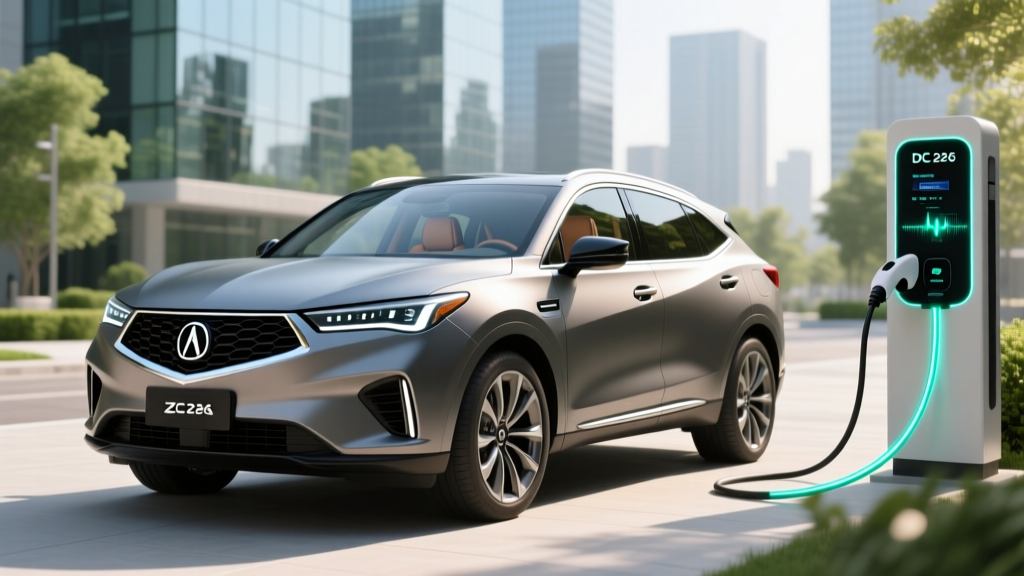
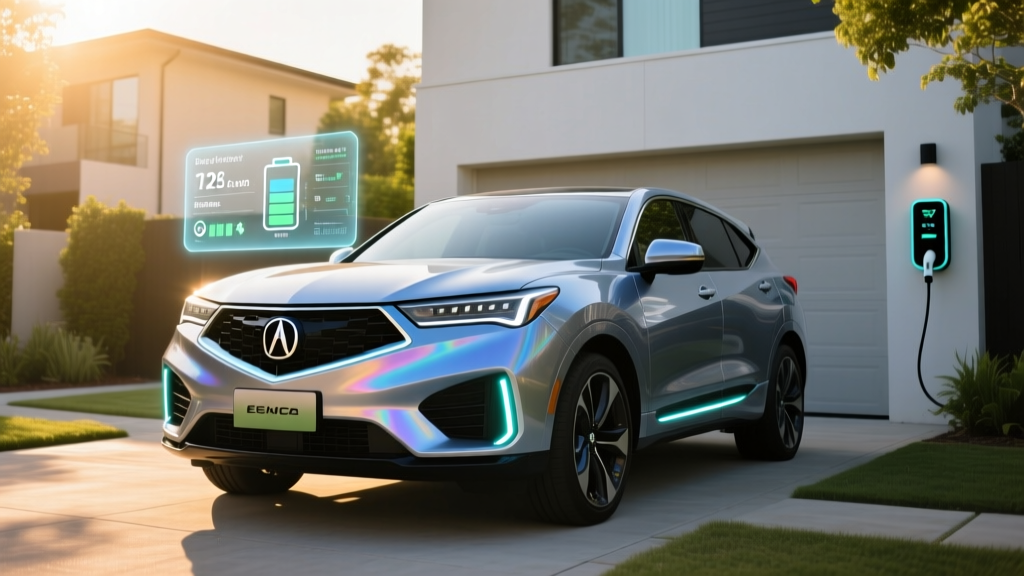
As of early 2026, Acura has not yet released a fully electric RDX. The current RDX remains a turbocharged 2.0L gas model. However, Acura's parent company Honda has confirmed its Honda 0 Series EV platform and next-generation e:Architecture will underpin future Acura electric SUVs, with an electric RDX-class compact SUV widely expected to debut for the 2027 or 2028 model year. If you're researching the "Acura RDX electric" today, here's what's confirmed, what's projected, and how to position yourself for the transition — including whether the current gas RDX or a competing electric SUV better fits your needs right now.
What We Know About an Electric Acura RDX
Honda's electrification roadmap has been turbulent. The company initially targeted 100% EV and fuel-cell sales by 2040, then in 2025 revised its strategy to account for slowing EV demand and hybrid market strength. What remains certain: Acura will eventually field a battery-electric compact luxury SUV to succeed or complement the RDX, built on Honda's next-generation EV architecture.
Based on Honda's published roadmaps and industry reporting, here are the preliminary projected specs for a future electric RDX-class vehicle:
| Attribute | Projected Figure | Notes |
|---|---|---|
| Platform | Honda e:Architecture (next-gen) | Dedicated EV skateboard, not adapted ICE |
| Battery Chemistry | Likely NMC, possible LFP base trim | Honda has partnerships with LG Energy Solution |
| Usable Battery Capacity | ~75–85 kWh (est.) | Based on class competitors |
| EPA Range | ~280–320 miles (est.) | Depends on drivetrain and trim |
| DC Fast Charge Peak | ~200–250 kW (est.) | 10–80% in roughly 20–25 minutes |
| Drivetrain | RWD base / AWD available | Acura's SH-AWD heritage suggests strong AWD option |
| Estimated Starting MSRP | $48,000–$55,000 (est.) | Competitive with Genesis GV60, BMW iX3 successor |
Important caveat: These figures are industry-informed estimates, not manufacturer-confirmed specs. Honda has not published a release date or final specifications for an electric RDX. We'll update this guide when official data drops.
Current Acura RDX (Gas) vs. Competing Electric SUVs: By the Numbers
If you're cross-shopping the current 2026 Acura RDX against electric alternatives in the compact luxury SUV segment, here's how the real data stacks up. All figures from fueleconomy.gov and manufacturer spec sheets.
| Spec | 2026 Acura RDX A-Spec (Gas) | 2025 Tesla Model Y LR AWD | 2025 Genesis GV60 Advanced AWD | 2025 BMW iX xDrive50 |
|---|---|---|---|---|
| Powertrain | 2.0L Turbo I-4 | Dual Motor BEV | Dual Motor BEV | Dual Motor BEV |
| Horsepower | 272 hp | 384 hp | 314 hp | 516 hp |
| 0–60 mph | 6.4 sec | 4.8 sec | 5.3 sec | 4.4 sec |
| EPA Range / Fuel | 21/27/23 MPG | 308 mi (EPA) | 248 mi (EPA) | 324 mi (EPA) |
| Energy/Fuel Cost per Year | ~$2,150 (gas, 15k mi) | ~$650 (elec, 15k mi) | ~$700 (elec, 15k mi) | ~$680 (elec, 15k mi) |
| Base MSRP | ~$46,350 | ~$47,990 | ~$53,350 | ~$87,250 |
| Federal Tax Credit (§30D) | Not eligible | Up to $7,500* | Up to $7,500* | Not eligible (MSRP cap) |
*Federal EV tax credit eligibility under IRS §30D depends on buyer income caps ($150K single / $300K joint AGI), vehicle MSRP caps ($55K for sedans, $80K for SUVs/vans/pickups), battery critical-mineral sourcing, and final assembly in North America. Credits can be transferred at point of sale. Rules are subject to legislative change — consult a tax professional.
Real Cost of Ownership: Gas RDX vs. Electric Alternatives
Purchase price tells only part of the story. Here's a 5-year total cost of ownership (TCO) comparison assuming 15,000 miles/year, $0.14/kWh home electricity, $3.40/gallon gas, and national-average insurance rates:
| Cost Category | 2026 Acura RDX (Gas) | 2025 Tesla Model Y LR AWD |
|---|---|---|
| Purchase Price (base) | $46,350 | $47,990 |
| Federal Tax Credit | $0 | –$7,500 (if eligible) |
| Effective Purchase Price | $46,350 | $40,490 |
| Fuel/Energy (5 yrs, 75k mi) | $10,750 | $3,250 |
| Maintenance (5 yrs) | $3,200 (oil, filters, brakes) | $1,100 (cabin filter, tires, fluid top-offs) |
| Insurance (5 yrs, avg) | $9,500 | $11,200 (EV premiums ~15–20% higher) |
| Estimated Depreciation | –$18,500 | –$19,000 |
| Net 5-Year Cost | ~$51,300 | ~$36,040 |
Key takeaway: The electric alternative saves roughly $15,000 over five years — but only if you qualify for the full federal credit and have affordable home charging. Without the credit, the gap narrows to about $7,500. Without home charging and relying on public DC fast charging at $0.35–$0.50/kWh, your energy savings shrink substantially.
Real-World Ownership Considerations Before You Switch
Buying electric isn't just about sticker price and EPA stickers. These factors determine whether an EV actually works for your life:
Home Charging Access
The single biggest ownership advantage of an EV is waking up to a full "tank" every morning. A Level 2 home charger (240V, 32–48 amps / 7.7–11.5 kW) adds roughly 25–37 miles of range per hour of charging — more than enough to replenish a daily commute overnight. Installation typically runs $800–$2,500 depending on panel capacity and wiring distance. If you live in a condo, apartment, or street-parking situation without charging access, public charging costs and inconvenience significantly erode EV savings.
Climate and Real-World Range
EPA range figures are tested under moderate conditions. In real-world driving:
- Highway driving at 75 mph: Expect 85–90% of EPA range
- Cold weather (below 32°F): Expect 65–80% of EPA range due to cabin heating and battery chemistry limitations
- Moderate city driving: Often exceeds EPA thanks to regenerative braking
A future electric RDX with an EPA rating of ~300 miles would realistically deliver 250–270 miles on a highway road trip in fair weather, and potentially 200–230 miles in freezing temperatures. If your typical one-way trip exceeds 150 miles in winter, fast-charging infrastructure along your route matters.
Driving Patterns
If 90% of your driving is a sub-40-mile daily commute with occasional road trips, an EV is ideal. If you regularly tow, drive 300+ miles daily, or live in a charging desert, a plug-in hybrid (PHEV) or the current gas RDX may be the more pragmatic choice today.
Common Misconceptions About Going Electric
| Myth | Fact |
|---|---|
| "EV batteries need replacing every few years" | Modern NMC and LFP batteries are warrantied for 8 years/100,000 miles (federal minimum). Real-world data from Tesla, Hyundai, and others shows ~5–10% degradation at 100k miles. Most packs outlast the vehicle. |
| "Charging takes forever" | At a 250 kW DC fast charger, a typical EV goes 10–80% in 18–25 minutes. Home Level 2 charging is overnight — you never wait at all for daily driving. |
| "EVs are worse in cold weather" | Range drops 20–35% in freezing temps — a real limitation. But EVs start reliably in cold (no cranking amps to worry about), and preconditioning while plugged in mitigates range loss. |
| "The power grid can't handle EVs" | Most EV charging happens overnight during off-peak hours. Utilities actively manage load with time-of-use rates. A single EV adds roughly the same grid demand as a central AC unit. |
| "All EVs qualify for the $7,500 tax credit" | Eligibility under IRS §30D requires meeting MSRP caps, buyer income limits, North American assembly, and battery sourcing thresholds. Many EVs qualify for partial or no credit. |
Decision Framework: What Should You Buy Right Now?
Should You Wait for an Electric Acura RDX or Buy Now?
Buy the current gas Acura RDX now if:
- You don't have reliable home or workplace Level 2 charging access
- You frequently drive 250+ miles in a single day or tow regularly
- You live in a region with sparse DC fast-charging infrastructure
- You prefer to keep vehicles 10+ years and want proven long-term reliability data
- Your budget is firm at ~$46K–$52K and you can't absorb a potential EV premium
Buy a competing electric SUV now (Model Y, GV60, etc.) if:
- You have home Level 2 charging or can install it
- Your daily driving is under 80 miles round-trip
- You qualify for the federal §30D tax credit (check income and vehicle eligibility on irs.gov)
- You value lower running costs, instant torque, and reduced maintenance
- You're comfortable with current public charging networks for road trips
Wait for the electric Acura RDX if:
- Acura's brand loyalty, dealer experience, and SH-AWD system are non-negotiable for you
- Your current vehicle has 1–2 years of useful life remaining
- You want a dedicated EV platform with the latest battery tech rather than an adapted architecture
- You're willing to accept unknown pricing, availability, and first-model-year risk
What First-Time EV Buyers Need to Know
If the eventual electric RDX (or any EV) will be your first battery-electric vehicle, here's the practical prep work:
- Assess your electrical panel. A Level 2 charger needs a dedicated 40–60 amp circuit. If your home has a 100-amp panel, you may need a $1,500–$3,000 panel upgrade. Have a licensed electrician evaluate this before purchasing an EV.
- Understand kW vs. kWh. kW (kilowatts) measures power — how fast energy flows during charging. kWh (kilowatt-hours) measures energy — how much the battery stores. A 80 kWh battery charged at 10 kW takes roughly 8 hours. This distinction is the single most common EV confusion.
- Plan for insurance costs. EV insurance premiums run 15–25% higher than equivalent gas vehicles due to higher repair costs and battery replacement risk. Get quotes before committing.
- Download charging apps. PlugShare, ChargePoint, EVgo, and Electrify America are essential for trip planning. Acura may also integrate charging network routing into its infotainment system.
- Learn about preconditioning. Most EVs can warm or cool the battery before fast charging, dramatically improving charge speed in cold weather. This feature matters enormously for road-trip charging times.
Frequently Asked Questions
Is there a fully electric Acura RDX available in 2026?
No. As of 2026, the Acura RDX is only available with a 2.0L turbocharged gasoline engine. Acura has not yet released or officially detailed a battery-electric RDX. An electric successor or companion model is widely expected for the 2027–2028 timeframe based on Honda's EV platform announcements.
What electric SUV is closest to an Acura RDX in size and luxury?
The Genesis GV60 (248 mi EPA, ~$53K), Tesla Model Y Long Range (308 mi EPA, ~$48K), and Cadillac Lyriq (314 mi EPA, ~$58K) are the closest electric competitors in the compact luxury SUV segment. Each trades different strengths: the Model Y leads in range and charging speed, the GV60 in interior luxury, and the Lyriq in ride comfort.
Will the electric Acura RDX qualify for the $7,500 federal tax credit?
It's too early to confirm. Eligibility under IRS §30D depends on where the battery minerals are sourced, where final assembly occurs, the vehicle's MSRP (must be ≤$80,000 for SUVs), and the buyer's AGI. Honda's Ohio-based EV production (at the new Anna EV hub) suggests North American assembly is likely, which helps eligibility. We'll update when Acura confirms specs and sourcing.
How much does it cost to charge an EV at home vs. buying gas?
At the U.S. average residential electricity rate of ~$0.16/kWh (per EIA data), fully charging an 80 kWh battery costs roughly $12.80 — yielding about 3.5–4 cents per mile. The gas RDX at 23 MPG combined and $3.40/gallon costs roughly 14.8 cents per mile. That's roughly a $1,500/year fuel savings for 15,000 miles of driving. Public DC fast charging at $0.35–$0.50/kWh narrows this gap significantly.
Should I buy a PHEV instead of waiting for a full EV?
If you want electric daily driving with gas flexibility for road trips, a plug-in hybrid like the Lexus NX 450h+ (37 mi electric-only, 36 MPG combined after depletion) is a strong bridge option. PHEVs eliminate range anxiety while still reducing fuel consumption 40–60% for typical commutes. The trade-off is higher maintenance complexity (two powertrains) and less electric-only range than a full BEV.