The Adapter That Unlocked 25,000+ Superchargers for Non-Tesla EVs
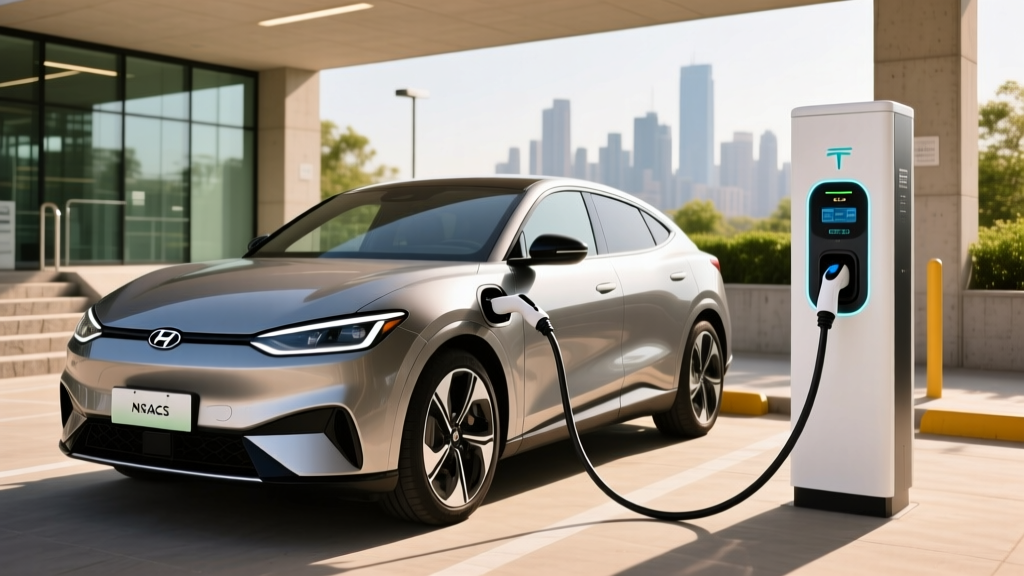
If you drive a Hyundai Ioniq 5, Ford Mustang Mach-E, Rivian R1T, or virtually any non-Tesla EV sold in North America over the last three years, your car shipped with a CCS1 (Combined Charging System) port. But the fastest-growing public fast-charging network — Tesla's Supercharger network, now exceeding 25,000 stalls in North America — uses the NACS (North American Charging Standard) connector. The bridge between these two worlds is a small but critical piece of hardware: the CCS-to-NACS adapter.
As of 2026, the adapter landscape has matured. Ford, GM, Rivian, Volvo, Polestar, Mercedes-Benz, and dozens of other automakers have either begun equipping new vehicles with native NACS ports or provide CCS-to-NACS adapters to existing owners. But confusion persists around charging speeds, Supercharger access, home charging compatibility, and the total cost of going electric. This guide covers every practical angle.
CCS1 vs NACS: Understanding the Connector Shift
Before buying or using a CCS-to-NACS adapter, it helps to understand what's actually happening at the physical and protocol level.
CCS1 is the legacy DC fast-charging standard used by nearly every non-Tesla automaker since roughly 2013. It combines a J1772 AC charging connector on top with two large DC pins below. The connector is bulky — roughly the size of a fuel nozzle handle — and requires a locking mechanism.
NACS (SAE J3400, formally standardized in 2024) is Tesla's original proprietary connector, now adopted industry-wide. It's roughly half the physical size of CCS1, uses the same pins for both AC and DC charging, and eliminates the separate AC/DC pin split. Tesla opened its Supercharger network to non-Tesla EVs starting in 2024, initially via Magic Dock built-in adapters at select stalls, and then broadly via customer-owned CCS-to-NACS adapters.
| Brand | Native Port (2026) | Adapter Needed for Superchargers? | Adapter Needed for Legacy CCS Stations? |
|---|---|---|---|
| Tesla (all models) | NACS | No | NACS-to-CCS adapter (rare) |
| Ford (2025+ models) | NACS | No | NACS-to-CCS adapter included |
| Ford (2024 and earlier) | CCS1 | CCS-to-NACS adapter (provided) | No |
| GM (2025+ models) | NACS | No | NACS-to-CCS adapter included |
| GM (2024 and earlier) | CCS1 | CCS-to-NACS adapter (provided) | No |
| Rivian (2025+ models) | NACS | No | NACS-to-CCS adapter included |
| Hyundai / Kia (2025+ Ioniq/EV9) | NACS | No | NACS-to-CCS adapter available |
| Hyundai / Kia (2024 and earlier) | CCS1 | CCS-to-NACS adapter (sold separately or OEM) | No |
| BMW, Mercedes, VW, others | CCS1 / NACS transition | Check OEM — many provide adapter | Varies |
Key insight: If you own a 2025-or-newer Ford, GM, or Rivian, your vehicle already has a NACS port and needs no adapter for Superchargers. If your EV has a CCS1 port, you need a CCS-to-NACS adapter to use Tesla Superchargers. Several OEMs provide these adapters free or at low cost to owners — check with your dealer before buying third-party.
Charging Levels Explained: Speed, Power, and Real-World Expectations
Every EV owner must understand three charging levels. Power is measured in kW (kilowatts), which is the rate of energy delivery. Energy capacity is measured in kWh (kilowatt-hours), which is the size of your battery. Think of kW as the width of a hose and kWh as the size of the bucket.
| Level | Voltage | Power (kW) | Miles of Range Added Per Hour | Typical Use Case |
|---|---|---|---|---|
| Level 1 | 120V AC | 1.0–1.9 kW | 3–5 miles/hr | Emergency / overnight trickle (PHEVs, short commutes) |
| Level 2 | 240V AC | 3.3–19.2 kW | 12–75 miles/hr | Home charging, workplace, shopping centers |
| DC Fast Charging | 400–800V DC | 50–350 kW | 150–1,200+ miles/hr (peak) | Road trips, highway corridors, rapid top-ups |
Real-world note on DC fast charging: A charger rated at 350 kW does not deliver 350 kW for the entire session. EV batteries follow a charging curve — power peaks at a low state of charge (typically 10–30% SoC) and tapers significantly above 80% to protect battery health. A Hyundai Ioniq 5 with its 800V architecture can peak at ~240 kW and charge 10–80% in roughly 18 minutes. A 400V vehicle like the VW ID.4 peaks around 135 kW and takes roughly 28–34 minutes for the same 10–80% session. Always look at 10–80% time, not peak kW, for a realistic picture.
Using a CCS-to-NACS Adapter at Tesla Superchargers: Speed and Access
When you plug a CCS1-equipped EV into a Tesla Supercharger using a CCS-to-NACS adapter, your charging speed is determined by the lower of two limits: the Supercharger stall's maximum output and your vehicle's maximum DC charge acceptance rate.
Example scenarios:
- Ford Mustang Mach-E Extended Range (CCS1, 150 kW max charge rate) at a V3 Supercharger (250 kW stall): You'll peak near 150 kW, 10–80% in ~30–35 minutes.
- Hyundai Ioniq 5 (CCS1, ~240 kW max charge rate via 800V) at a V3 Supercharger (250 kW stall): You'll peak near 235–240 kW, 10–80% in ~18–20 minutes.
- Any CCS1 EV at a V4 Supercharger (up to 350 kW for NACS-native vehicles): Your vehicle's own charge rate remains the bottleneck, not the adapter.
Does the adapter itself limit speed? High-quality CCS-to-NACS adapters from OEMs (Ford, GM, Rivian-supplied units) and reputable third-party manufacturers like Lectron and A2Z are rated for up to 250 kW / 500A. They do not meaningfully bottleneck charging on current-generation vehicles. However, cheap, uncertified adapters from unknown sellers may have lower current ratings or poor thermal management — avoid these.
Supercharger access requirements (2026): Most automakers require you to register your adapter or vehicle VIN through their app or the Tesla app to activate Supercharger billing. Ford, GM, and Rivian owners typically access Superchargers through their OEM app, which handles authentication and payment. Standalone CCS-to-NACS adapter users (e.g., Hyundai/Kia owners) may need the Tesla app with their adapter's serial number registered.
Home Charging Setup: Electrical Requirements and Installation Costs
Regardless of whether your EV has a CCS1 or NACS port, home Level 2 charging requires the same electrical infrastructure. The adapter question only matters for public DC fast charging — at home, you use a Level 2 EVSE (Electric Vehicle Supply Equipment) with the connector that matches your car.
Electrical Requirements for Level 2 Home Charging
- Voltage: 240V (same as a dryer or oven outlet)
- Amperage: 20A to 80A circuit, depending on charger power. A 40A circuit supports up to 9.6 kW; a 60A circuit supports up to 14.4 kW; an 80A circuit supports up to 19.2 kW.
- Rule of thumb: The circuit breaker must be rated at 125% of the charger's continuous draw. A 48A charger requires a 60A breaker. A 32A charger requires a 40A breaker.
- Dedicated circuit: Your EV charger must be on its own dedicated breaker — it cannot share a circuit with other appliances.
Panel Upgrade Considerations
Many homes built before 2000 have 100A electrical panels. Adding a 60A EV circuit to a 100A panel that's already near capacity (electric dryer, range, HVAC) may require a panel upgrade to 200A, which is the single largest variable in installation cost. Homes with 200A panels usually have sufficient headroom. A licensed electrician will perform a load calculation per NEC Article 220 to determine if an upgrade is needed.
| Component | Low End | High End | Notes |
|---|---|---|---|
| Level 2 EVSE (hardware) | $350 | $750 | 32A–48A smart chargers (ChargePoint, Emporia, Wallbox) |
| Electrician labor (standard install) | $400 | $1,200 | Short run from panel to garage; longer runs cost more |
| Permit and inspection | $50 | $300 | Varies by municipality; required by NEC in most jurisdictions |
| Electrical panel upgrade (if needed) | $1,500 | $4,000 | 100A → 200A upgrade; not needed in most modern homes |
| Total (no panel upgrade) | $800 | $2,250 | Typical scenario for homes with 200A panels |
| Total (with panel upgrade) | $2,300 | $6,250 | Older homes or high-load households |
Federal incentive: The IRS §30D-related Residential Clean Energy Credit (IRC §25D) may cover up to 30% of home charging equipment and installation costs, capped at $1,000 per year. Eligibility and exact terms can change — consult a tax professional and verify current-year rules at irs.gov before claiming.
Home Charger Recommendations: Equipment Picks for CCS1 and NACS Vehicles
Your home charger's connector must match your vehicle's port. CCS1 vehicles need a J1772 connector (the AC standard that CCS1 builds upon); NACS vehicles need a NACS connector. Some chargers now ship with NACS connectors natively; others offer swap kits.
Best Overall: ChargePoint Home Flex (NACS or J1772)
- Power output: Up to 12 kW (50A on a 60A circuit) or up to 9.6 kW (40A on a 50A circuit)
- Connector: Available in NACS or J1772 — choose based on your vehicle
- Cable length: 23 feet
- Smart features: Wi-Fi connected, ChargePoint app scheduling, utility demand-response integration, Alexa/Google Home
- Price: ~$550–$650 (hardware only)
- Why we recommend it: Flexible amperage settings via internal DIP switches, UL-listed, NEMA 4 rated for outdoor use, excellent app with energy tracking. The J1772 version works with all CCS1 vehicles; the NACS version works with Ford, GM, Rivian, and newer Hyundai/Kia models.
Best Budget Smart Charger: Emporia Vue Level 2 EV Charger
- Power output: Up to 11.5 kW (48A on a 60A circuit)
- Connector: J1772 (NACS adapter cable available separately)
- Cable length: 24 feet
- Smart features: Wi-Fi, Emporia app with solar integration, time-of-use scheduling, energy monitoring with whole-home panel integration
- Price: ~$350–$400
- Why we recommend it: Best price-to-features ratio on the market. If you have or plan to add solar, the Emporia ecosystem provides unmatched energy visibility. Pairs well with CCS1 vehicles out of the box.
Best for NACS-Native Vehicles: Tesla Wall Connector
- Power output: Up to 11.5 kW (48A on a 60A circuit)
- Connector: NACS (native)
- Cable length: 24 feet
- Smart features: Wi-Fi, OTA updates, power-sharing between multiple Wall Connectors, integrated Tesla app control
- Price: ~$475
- Why we recommend it: If your EV has a NACS port (2025+ Ford, GM, Rivian, Tesla), this is the most seamless home charging experience. No adapter needed. For CCS1 vehicles, you'd need a NACS-to-J1772 adapter (sold separately, ~$200–$300) to use this charger — at that point, the ChargePoint Home Flex in J1772 is a better value.
Safety and Code Requirements
- Dedicated circuit: NEC requires a dedicated breaker for EVSE — no shared circuits.
- GFCI protection: NEC 2020 and later require GFCI protection for outdoor receptacles used for EV charging. Hardwired EVSE installations (recommended) often have GFCI built into the unit.
- Outdoor rating: If installing outdoors or in an unsealed garage, choose a NEMA 4-rated unit (weatherproof).
- Hardwired vs. plug-in: Hardwired installations (no plug, direct wire from panel to EVSE) are preferred for 48A+ chargers because NEMA 14-50 receptacles are rated for intermittent, not continuous, use. Many electricians recommend hardwiring for reliability and code compliance.
- Permit: Most jurisdictions require an electrical permit and inspection for new EVSE circuits. Skipping this can void home insurance coverage in the event of an electrical fire.
Cost to Charge: Home vs. Public vs. Gas
The economics of EV charging depend heavily on where and when you charge. Here's a realistic breakdown using a mid-size EV with 3.0 miles/kWh efficiency (representative of a Hyundai Ioniq 5 or Tesla Model Y).
| Scenario | Rate | Cost per kWh | Cost per Mile (3.0 mi/kWh) |
|---|---|---|---|
| Home charging (off-peak / TOU rate) | $0.09–$0.14/kWh | $0.12 avg | $0.04/mile |
| Home charging (standard residential rate) | $0.14–$0.20/kWh | $0.17 avg | $0.057/mile |
| Public Level 2 (workplace, shopping) | $0.20–$0.35/kWh | $0.28 avg | $0.093/mile |
| DC Fast Charging (Electrify America, EVgo) | $0.35–$0.55/kWh | $0.45 avg | $0.15/mile |
| Tesla Supercharger (member / OEM app rate) | $0.25–$0.40/kWh | $0.33 avg | $0.11/mile |
| Gasoline (30 MPG combined, $3.40/gal) | $3.40/gal | — | $0.113/mile |
The takeaway: Home charging at off-peak rates is 60–65% cheaper per mile than gasoline. Even DC fast charging at premium rates is roughly cost-competitive with gas. The key economic advantage of EV ownership is consistent home charging — road-trip DC fast charging erodes but does not eliminate the savings. According to fueleconomy.gov, most EVs achieve 100–130 MPGe combined, translating to significant fuel cost savings over a gas vehicle rated at 25–30 MPG combined.
CCS-to-NACS Adapter Buying Guide: What to Look For
If you need a CCS-to-NACS adapter, prioritize these factors:
- OEM-provided adapters first: Ford, GM, and Rivian have provided or offered CCS-to-NACS adapters to existing owners of CCS1-equipped vehicles. Contact your dealer or check your OEM app before purchasing third-party.
- Power rating: Ensure the adapter is rated for at least 250 kW / 500A DC. Lower-rated adapters will bottleneck fast charging.
- UL or equivalent certification: Look for UL-listed or TÜV-certified adapters. Uncertified adapters from unknown online sellers may lack proper thermal protection or pin alignment.
- Supercharger network compatibility: Not all CCS-to-NACS adapters enable Tesla Supercharger access. The adapter must be registered with Tesla (or through your OEM's integrated billing system) to activate a Supercharger stall. Adapters from Lectron, A2Z EV, and OEMs have confirmed Supercharger compatibility as of 2026.
- Warranty: Reputable adapters carry 1–2 year warranties. OEM adapters may be covered under your vehicle's electrical system warranty.
- Price: Expect to pay $150–$300 for a quality CCS-to-NACS adapter. Avoid adapters under $100 from unverified sellers.
Frequently Asked Questions
How much does it cost to install a home EV charger?
A typical Level 2 home charger installation costs $800–$2,250 including hardware, electrician labor, and permits — assuming your electrical panel has sufficient capacity. If a panel upgrade from 100A to 200A is needed, add $1,500–$4,000. The federal Residential Clean Energy Credit (§25D) may offset up to 30% of costs (capped at $1,000). Always get a load calculation from a licensed electrician before committing.
How fast will each charging level add range?
Level 1 (120V) adds 3–5 miles of range per hour — adequate for PHEVs with small batteries but impractical for BEVs. Level 2 (240V, 40A–60A circuit) adds 25–45 miles per hour for most EVs, fully replenishing a 75–85 kWh battery overnight in 8–10 hours. DC fast charging adds 150–1,200+ miles per hour at peak power, with typical 10–80% sessions lasting 18–35 minutes depending on your vehicle's architecture and the charger's output.
Which connector and charger is compatible with my EV?
If your EV has a CCS1 port (most non-Tesla EVs through 2024), you need J1772 for home Level 2 charging and CCS1 for public DC fast charging — plus a CCS-to-NACS adapter to access Tesla Superchargers. If your EV has a NACS port (Tesla, 2025+ Ford/GM/Rivian, newer Hyundai/Kia), you need a NACS home charger and can use Superchargers natively. Check your vehicle's owner manual or the EPA fueleconomy.gov listing for your specific model year.
How much does EV charging cost per mile compared to gas?
Home charging at off-peak electricity rates costs roughly $0.04–$0.06 per mile for a typical EV — about 50–65% less than a 30 MPG gas car at $3.40/gallon ($0.113/mile). Public DC fast charging at $0.35–$0.55/kWh costs roughly $0.12–$0.18 per mile, making it comparable to or slightly more expensive than gas. The financial advantage of EVs is maximized when most charging happens at home.
What electrical upgrades might I need for a home charger?
The most common upgrade is a panel capacity increase from 100A to 200A, costing $1,500–$4,000, required when your existing panel lacks headroom for a 40A–60A dedicated EV circuit. Other potential upgrades include adding a new breaker slot, running a longer conduit from the panel to the garage (adding $200–$600 for runs over 50 feet), or upgrading from aluminum to copper wiring. A licensed electrician's load calculation per NEC Article 220 will determine exactly what's needed.
Will a CCS-to-NACS adapter reduce my charging speed?
A quality adapter rated for 250 kW / 500A will not measurably reduce charging speed. Your vehicle's onboard charge acceptance rate is the limiting factor, not the adapter. However, some early Magic Dock Supercharger stalls (with built-in adapters) may cap at lower power than newer V3 or V4 stalls. For the fastest sessions, use your own adapter at a high-power V3 or V4 Supercharger stall.
Do I need to precondition my battery before DC fast charging?
Yes. Battery preconditioning warms the pack to its optimal charging temperature (~30–35°C / 86–95°F), enabling faster charge acceptance. Most EVs automatically precondition when you navigate to a DC fast charger in the vehicle's built-in navigation. If you use a third-party app or plug in without preconditioning, your initial charge rate may be significantly lower — especially in cold weather. Always navigate to the charger using the car's system when possible.