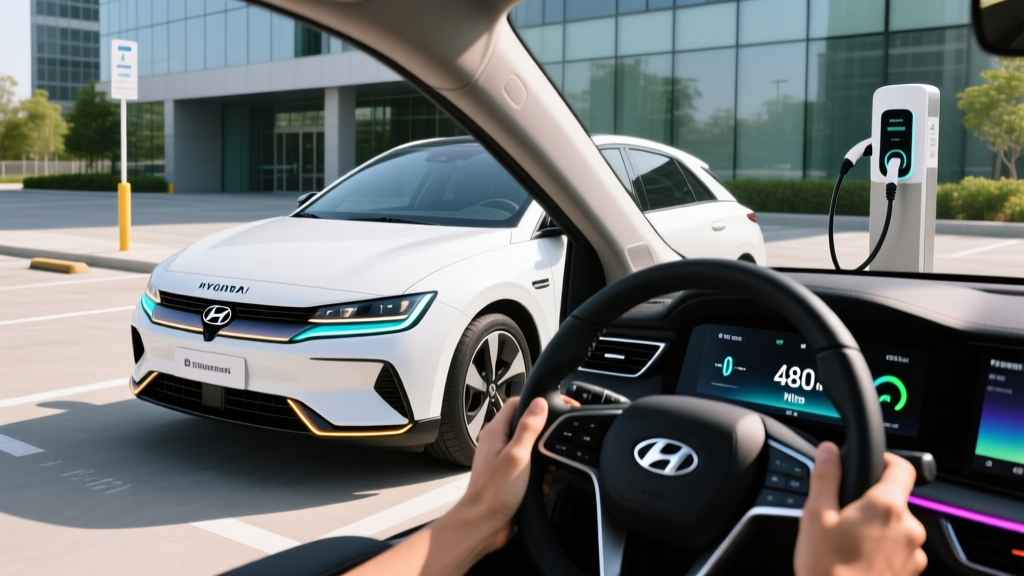
The Hyundai Ioniq 7 arrives for the 2026 model year as the brand's largest electric SUV, built on the E-GMP platform that already underpins the Ioniq 5 and Ioniq 6. It slots above the Ioniq 5 in size and price, targeting three-row family buyers who want genuine road-trip capability, 800V fast-charging architecture, and Hyundai's increasingly refined EV software. After spending time with the preliminary specs, platform data, and Hyundai's official disclosures, here is the full breakdown of what the Ioniq 7 delivers — and where it falls short against rivals like the Kia EV9 and Tesla Model X.
2026 Hyundai Ioniq 7 Core Specifications
| Attribute | SE / SEL (RWD) | Limited / AWD |
|---|---|---|
| EPA Estimated Range | ~300 mi (est.) | ~270 mi (est.) |
| Battery Capacity | ~100 kWh usable (NMC lithium-ion) | |
| Drivetrain | RWD single motor | Dual-motor AWD |
| Horsepower | ~215 hp | ~379 hp |
| 0–60 mph | ~7.5 sec (est.) | ~5.0 sec (est.) |
| Peak DC Fast Charge | ~240 kW (800V architecture) | |
| 10–80% DC Charge Time | ~20 min (est., optimal conditions) | |
| Level 2 Home Charge Rate | 10.9 kW (48A) | |
| MPGe (Combined, est.) | ~84 MPGe | ~78 MPGe |
| Cargo Volume (behind 3rd row) | ~14 cu ft (est.) | |
| Cargo Volume (all rows folded) | ~80 cu ft (est.) | |
| Battery Warranty | 8 years / 100,000 miles | |
| Base MSRP (est.) | ~$55,000 | ~$65,000 |
Note: The Ioniq 7 was announced for the 2026 model year. Specifications above reflect Hyundai's preliminary disclosures and E-GMP platform data from sibling models. Final EPA certifications and MSRP figures will be confirmed closer to the on-sale date. Always verify with fueleconomy.gov before purchasing.
Range and Real-World Efficiency
The Ioniq 7's estimated efficiency of ~84 MPGe combined (RWD) translates to roughly 34–36 kWh per 100 miles. That is competitive with the Kia EV9 but trails the more aerodynamic Tesla Model X, which benefits from a lower drag coefficient. For context, a 300-mile trip at highway speeds in 40°F weather will likely require one DC fast-charge stop of about 15–20 minutes — a meaningful advantage of the 800V platform.
Hyundai's standard heat pump across the Ioniq lineup helps mitigate cold-weather range loss by scavenging waste heat from the drivetrain and cabin electronics rather than relying solely on resistive heating. Owners in northern climates will notice this benefit most during winter commutes, where the heat pump can recover 10–15% of range that would otherwise be lost to cabin heating.
Charging Speed and Infrastructure
The Ioniq 7 inherits the E-GMP platform's 800V electrical architecture, one of its strongest competitive advantages. Most rivals in this segment — including the Rivian R1S and many legacy OEMs — still use 400V systems, which limits peak charge rates.
| Charging Level | Power | Speed / Time | Typical Use Case |
|---|---|---|---|
| Level 1 (120V) | ~1.4 kW | ~3–4 mi/hr | Emergency top-up, overnight trickle |
| Level 2 (240V, 48A) | 10.9 kW | ~25–28 mi/hr; full charge in ~9.5 hr | Home wallbox, workplace charging |
| DC Fast Charge (peak) | ~240 kW | 10–80% in ~20 min | Road trips, Electrify America / Ionity |
| DC Fast Charge (sustained avg.) | ~170–185 kW avg. | 10–90% in ~30 min | Real-world highway stops |
A critical detail many spec sheets obscure: peak kW is not sustained kW. The Ioniq 7 will hit ~240 kW only in the lower portion of the charge curve (roughly 10–40% SoC at optimal battery temperature). Above 60%, the rate tapers progressively, and above 80% it drops sharply to protect battery health. On a real road trip, you will average closer to 170–185 kW across a 10–80% session, which still delivers roughly 180 miles of range in 20 minutes — enough for most drivers to stretch their legs and grab food.
The Ioniq 7 uses the CCS1 connector in North America, though Hyundai has committed to adopting the NACS (Tesla) connector on future models. For 2026, expect a CCS port with a Tesla Supercharger adapter included or available, similar to Hyundai's approach with the refreshed Ioniq 5. Always confirm adapter compatibility with the specific model year before relying on the Supercharger network.
Performance and Driving Dynamics
The RWD Ioniq 7 with a single rear motor produces an estimated 215 hp — adequate for commuting and family hauling but not thrilling. The 0–60 mph time of roughly 7.5 seconds feels relaxed for a vehicle in this price range, though the instant electric torque makes it feel quicker in city traffic than the number suggests.
The dual-motor AWD variant is the performance pick, with an estimated 379 hp and a 0–60 time around 5.0 seconds. That puts it in the same bracket as the Kia EV9 GT-Line AWD and well ahead of most three-row gas SUVs. The E-GMP platform's low center of gravity (battery pack mounted under the floor) gives the Ioniq 7 composed handling for its size, with minimal body roll through corners and a ride quality that favors comfort over sportiness.
Towing capacity is expected at approximately 3,500–5,000 lbs for the AWD model (final rating TBD). This is sufficient for a small camper or utility trailer but falls short of the Rivian R1S and its 7,700-lb rating. If you tow frequently, note that towing can reduce EV range by 30–50% depending on trailer weight and aerodynamics.
Interior, Cargo, and Technology
The Ioniq 7's cabin borrows the minimalist, lounge-inspired design language from the Ioniq 5 but scales it up for three-row duty. Expect a dual-screen setup with a 12.3-inch digital instrument cluster and a 12.3-inch infotainment display running Hyundai's latest Bluelink connected services. Wireless Apple CarPlay and Android Auto should be standard across trims.
Cargo space behind the third row is estimated at ~14 cubic feet — enough for a few grocery bags or a couple of carry-ons, but tight for a full family's luggage. Folding the third row opens up approximately 40+ cubic feet, and folding both rear rows flat yields roughly 80 cubic feet, competitive with the Kia EV9. A front trunk (frunk) is expected to add 2–3 cubic feet of secure storage for charging cables or a small bag.
Driver-assistance technology includes Hyundai SmartSense: adaptive cruise control with stop-and-go, lane-keeping assist, blind-spot monitoring, rear cross-traffic collision avoidance, and highway driving assist. These are SAE Level 2 driver-assistance features — the driver must remain attentive and keep hands on the wheel at all times. Hyundai's Highway Driving Assist 2 (HDA2) adds lane-change assistance on divided highways, but it does not make the vehicle autonomous.
Pricing, Trims, and Federal Tax Credit
| Trim | Drivetrain | Est. Base MSRP | Est. After §30D Credit |
|---|---|---|---|
| SE | RWD | ~$55,000 | ~$47,500* |
| SEL | RWD | ~$58,000 | ~$50,500* |
| Limited | AWD | ~$65,000 | ~$57,500* |
| Calligraphy (if offered) | AWD | ~$70,000 | ~$62,500* |
*Price after credit assumes full $7,500 §30D eligibility. Actual credit depends on battery sourcing, buyer income, and MSRP cap compliance. See checklist below.
The Ioniq 7's eligibility for the federal EV tax credit under IRS §30D hinges on several requirements that change periodically. Here is the current framework:
- MSRP Cap: SUVs must have an MSRP at or below $80,000. All expected Ioniq 7 trims should clear this threshold.
- Buyer Income Cap: Modified adjusted gross income must not exceed $150,000 (single), $225,000 (head of household), or $300,000 (joint filers).
- Battery Sourcing: A percentage of critical minerals must be sourced from the U.S. or free-trade-agreement partners, and battery components cannot come from a "foreign entity of concern" (FEOC). Hyundai's battery supply chain has been evolving — some Ioniq 5 models have qualified for the full credit after U.S. production began; the Ioniq 7's eligibility will depend on where and how its cells are manufactured.
- Point-of-Sale Transfer: Buyers can now transfer the credit to the dealer at purchase, reducing the out-of-pocket price immediately rather than waiting to claim it on their tax return.
Always verify current eligibility at irs.gov before committing to a purchase, as sourcing rules tighten annually and can disqualify a vehicle mid-year.
Pros and Cons
- 800V architecture enables ~20-min 10–80% DC fast charging
- Estimated 300-mile range (RWD) covers most road trips with one stop
- Spacious three-row cabin with flat floor and lounge-style interior
- Heat pump standard — better cold-weather range retention
- Strong battery warranty (8 yr / 100,000 mi)
- Competitive pricing vs. Model X and R1S
- CCS port in a transitioning NACS market (adapter dependency)
- RWD performance is merely adequate — not quick for the price
- Third-row cargo space is tight (~14 cu ft) for family road trips
- Towing capacity trails Rivian R1S significantly
- Full §30D credit eligibility uncertain pending battery sourcing confirmation
- Real-world highway range will fall 25–40 miles below EPA sticker
How the Ioniq 7 Compares to Key Rivals
The Ioniq 7 enters a competitive three-row EV SUV segment. Here is how it stacks up against the models it will most frequently be cross-shopped with:
| Spec | Hyundai Ioniq 7 (est.) | Kia EV9 | Tesla Model X | Rivian R1S (Dual-Motor) |
|---|---|---|---|---|
| EPA Range | ~300 mi | 279–304 mi | 311–335 mi | ~270–352 mi |
| Peak DC Charge | ~240 kW | 236 kW | 250 kW | ~200 kW |
| 10–80% Time | ~20 min | ~20 min | ~20 min | ~25 min |
| 0–60 (AWD) | ~5.0 sec | 5.0 sec | 3.8 sec (Plaid) | ~4.5 sec |
| Starting MSRP | ~$55,000 | $54,900 | $79,990 | $75,900 |
| Third Row | Yes | Yes | Yes (optional) | Yes |
| Towing | ~3,500–5,000 lbs | 5,000 lbs | 5,000 lbs | 7,700 lbs |
The Ioniq 7 and Kia EV9 share the E-GMP platform and will be mechanically similar, so the choice between them will come down to styling preference, interior layout, and dealer experience. The Tesla Model X offers more range and performance but costs significantly more. The Rivian R1S dominates on towing and off-road capability but charges slower and starts at a higher price.
Who Should Buy the Ioniq 7?
- Families needing three rows who prioritize fast road-trip charging over maximum towing capacity.
- Commuters with home Level 2 charging who want a comfortable, tech-forward daily driver with ample cargo flexibility.
- Cold-climate buyers who benefit from the standard heat pump and 800V preconditioning for reliable winter fast-charging.
- You tow heavy trailers regularly (consider the Rivian R1S).
- You want maximum range without stops (the Tesla Model X offers 335 mi).
- You need NACS native charging without an adapter (check upcoming NACS-native models or Tesla).
Frequently Asked Questions
What is the real-world range of the Hyundai Ioniq 7?
The EPA-estimated range for the RWD Ioniq 7 is approximately 300 miles. In real-world highway driving at 70–75 mph in moderate temperatures, expect 250–275 miles. In cold weather below 30°F, plan for 210–240 miles. City driving with regenerative braking can match or slightly exceed the EPA number.
How fast does the Ioniq 7 charge at home and on the road?
At home on a Level 2 (240V, 48A) wallbox, the Ioniq 7 charges at 10.9 kW, adding roughly 25–28 miles of range per hour — a full charge takes about 9.5 hours. On a DC fast charger, it peaks at approximately 240 kW and can go from 10–80% in about 20 minutes under optimal conditions. Real-world sustained average is closer to 170–185 kW.
Does the Ioniq 7 qualify for the $7,500 federal EV tax credit?
It likely will, but eligibility depends on battery sourcing and critical-mineral requirements under IRS §30D, as well as buyer income caps ($150K single / $300K joint) and the $80,000 SUV MSRP cap. Hyundai's U.S. battery production for the Ioniq 5 suggests the Ioniq 7 could qualify, but confirm at irs.gov before purchasing. The credit can be transferred to the dealer at point of sale.
Is the Ioniq 7 worth buying over the Kia EV9?
The Ioniq 7 and EV9 share the same E-GMP platform, so range, charging speed, and performance will be very similar. The decision will likely come down to exterior styling, interior design preferences, specific trim pricing, and your local dealer experience. Test-driving both back to back is the best approach.
What are the biggest drawbacks of the Ioniq 7?
The main trade-offs are a CCS connector in a market shifting to NACS (adapter required for Tesla Superchargers), modest RWD acceleration, limited third-row cargo space for extended family trips, and towing capacity that falls short of the Rivian R1S. Federal tax credit eligibility also remains uncertain pending final battery sourcing confirmation.
What warranty covers the Ioniq 7 battery?
Hyundai covers the Ioniq 7's high-voltage battery for 8 years or 100,000 miles (whichever comes first), consistent with its existing EV lineup. This warranty guarantees a minimum capacity retention threshold (typically 70% of original capacity). The basic vehicle warranty is 5 years / 60,000 miles, and the powertrain warranty is 10 years / 100,000 miles.