CarPlay on Tesla: The Short Answer
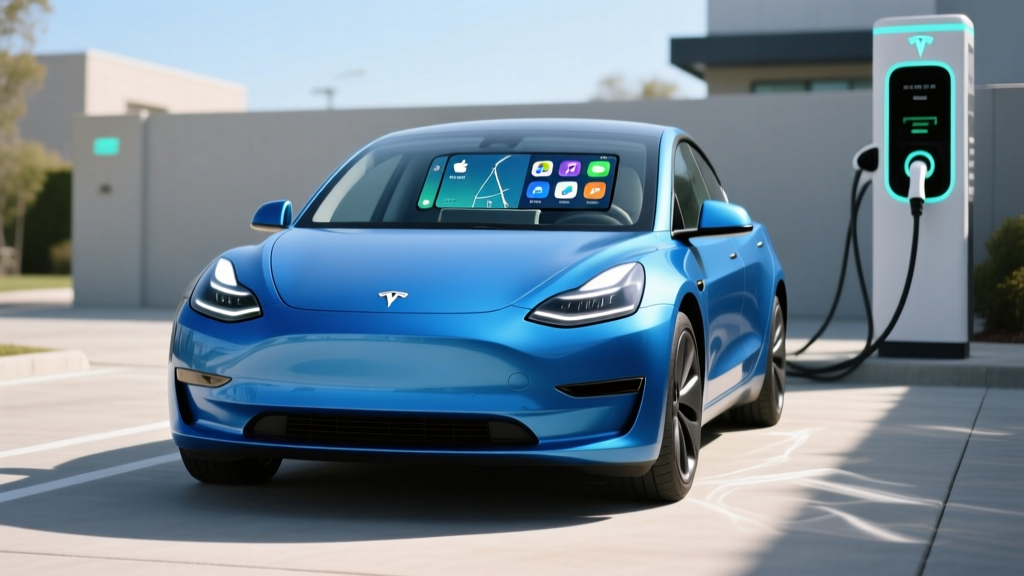
If you've been searching for CarPlay on Tesla, here's the reality as of the 2026 model year: Tesla does not natively support Apple CarPlay or Android Auto in any of its vehicles. The company has built its own vertically integrated infotainment system, and CEO Elon Musk has repeatedly stated that Tesla's software is designed to replace the need for phone projection entirely. For many iPhone users, this is the single biggest friction point when considering a Tesla purchase.
But does Tesla's native system actually eliminate the need for CarPlay? And are there reliable workarounds? In this review, we'll break down the 2026 Tesla Model 3's full spec sheet—range, charging, performance, pricing, and tax-credit eligibility—while giving you an honest assessment of the infotainment situation and what it means for your daily drive.
2026 Tesla Model 3: Core Specifications at a Glance
| Spec | Long Range AWD | Performance AWD | Rear-Wheel Drive |
|---|---|---|---|
| EPA Range | 363 miles | 315 miles | 272 miles |
| Battery Capacity | 79 kWh usable (NMC) | 79 kWh usable (NMC) | 60 kWh usable (LFP) |
| Drivetrain | Dual-Motor AWD | Dual-Motor AWD | Single-Motor RWD |
| Horsepower | 346 hp | 510 hp | 271 hp |
| 0–60 mph | 4.2 sec | 2.9 sec | 5.8 sec |
| Peak DC Fast Charge | 250 kW | 250 kW | 170 kW |
| 10–80% DC Time | ~25 min | ~25 min | ~30 min |
| Level 2 Home Charge | 11.5 kW (~44 mi/hr) | 11.5 kW (~44 mi/hr) | 11.5 kW (~44 mi/hr) |
| MPGe (Combined) | 132 MPGe | 118 MPGe | 142 MPGe |
| Efficiency | 25 kWh/100 mi | 28 kWh/100 mi | 24 kWh/100 mi |
| Base MSRP | $47,740 | $54,740 | $38,990 |
| Battery Warranty | 8 yr / 120,000 mi | 8 yr / 120,000 mi | 8 yr / 100,000 mi |
Sources: fueleconomy.gov, Tesla.com. Prices reflect 2026 model year before destination fees.
Real-World Range: What to Actually Expect
EPA Sticker: 363 miles (Long Range AWD)
Real-World Highway: Expect ~290–320 miles at 70–75 mph
Cold-Weather (Below 32°F): Expect ~235–275 miles depending on cabin heating use
The 2026 Model 3 Long Range carries a 79 kWh (usable) NMC (nickel manganese cobalt) battery pack. On paper, 363 miles of EPA-estimated range places it among the most efficient sedans in its class. In practice, Tesla's thermal management system—standard heat pump included—helps mitigate cold-weather losses better than many competitors, but physics still applies. At sustained highway speeds of 75 mph in 40°F weather, expect roughly 80% of the EPA sticker. City driving with regenerative braking recovers energy more effectively, often pushing real-world efficiency close to or even above the EPA estimate in mild weather.
The base RWD trim uses an LFP (lithium iron phosphate) battery. LFP chemistry offers slower degradation over time and can be routinely charged to 100% without the long-term wear concerns of NMC, but at the cost of lower energy density—hence the 272-mile EPA figure. If your commute is under 60 miles round-trip and you charge nightly at home, the RWD trim's range is more than adequate and the LFP longevity is a genuine advantage.
Charging Speed: DC Fast, Home Level 2, and the Supercharger Network
Charging speed remains one of Tesla's strongest competitive advantages, and it's a major reason buyers tolerate the lack of CarPlay on Tesla vehicles.
| Charging Method | Power (kW) | Miles Added per Hour | Notes |
|---|---|---|---|
| Level 1 (120V household) | ~1.4 kW | ~5 mi/hr | Emergency/trickle only |
| Level 2 (240V home Wall Connector) | 11.5 kW | ~44 mi/hr | Full charge overnight (~7–8 hrs) |
| DC Fast (Supercharger V3) | Peak 250 kW | ~1,000 mi/hr (peak) | 10–80% in ~25 min (Long Range) |
| DC Fast (Supercharger V4) | Peak 250+ kW | Similar to V3 | Rolling out at select corridors |
| CCS Adapter (non-Tesla DC) | Up to 250 kW | Varies | Tesla includes CCS adapter; works on Electrify America, EVgo, etc. |
A few practical notes on charging curves: the Long Range and Performance models peak at 250 kW only between roughly 10–30% state of charge. Above 50%, the rate tapers significantly—by 80%, you're often pulling under 50 kW. This is normal for NMC lithium-ion chemistry but means the last 20% takes nearly as long as the first 60%. For road trips, the optimal strategy is short 10–80% stops rather than topping off completely.
At home, the Tesla Wall Connector on a 60-amp circuit delivers 11.5 kW (48 amps continuous). Expect a full 0–100% charge in roughly 7–8 hours for the Long Range. Installation costs for a Level 2 home setup typically run $800–$2,000 depending on panel capacity and conduit distance—factor this into your purchase budget.
Tesla also now opens its Supercharger network to non-Tesla EVs via the built-in CCS adapter (included with new vehicles), but as a Tesla owner you get the seamless plug-and-charge experience with automatic billing. Access to over 20,000+ Supercharger stalls across the U.S. remains a meaningful infrastructure advantage.
The CarPlay on Tesla Question: Native System vs. What You're Missing
Tesla's 15.4-inch center touchscreen (in the refreshed Model 3, codenamed "Highland" and carried into 2026) runs a proprietary Linux-based operating system. Here's what it does well and where iPhone users feel the gap:
What Tesla's native system handles:
- Native navigation with real-time Supercharger routing and battery preconditioning
- Spotify, Apple Music, Tidal, and podcasts built-in (logged in via the car)
- Bluetooth phone calls and contact sync
- Over-the-air updates that add features regularly
- Tesla app integration for remote climate, Sentry Mode cameras, and charging status
- Netflix, YouTube, and arcade games while parked
What you lose without CarPlay:
- Apple Maps with your saved locations, Favorites, and Siri voice routing
- Siri integration for hands-free messaging and smart home control
- Third-party apps like Waze, Audible (Tesla has native Audible as of 2025), and calendar integration
- Familiar iPhone UI muscle memory
Workarounds in 2026: Some owners use a phone mount with their iPhone running Apple Maps alongside the Tesla nav. Others use aftermarket CarPlay adapter boxes (typically $200–$400) that inject a CarPlay interface into the Tesla display via the car's browser or HDMI input (where available). These solutions are not endorsed by Tesla, can break with OTA updates, and often introduce latency. For most owners, the native system covers 85–90% of use cases, but the 10% gap—particularly Siri and Apple Maps—is a dealbreaker for some.
Pricing, Trims, and Federal Tax Credit Eligibility
The 2026 Tesla Model 3 lineup starts at $38,990 for the RWD base model and climbs to $54,740 for the Performance variant. Destination fees add approximately $1,390.
| Trim | Base MSRP | Est. After §30D Credit | §30D Eligible? |
|---|---|---|---|
| Rear-Wheel Drive | $38,990 | ~$31,490 | Yes (if sourcing rules met) |
| Long Range AWD | $47,740 | ~$40,240 | Yes (if sourcing rules met) |
| Performance AWD | $54,740 | ~$47,240 | Yes (if sourcing rules met) |
IRS §30D Federal Tax Credit Rules (2026):
- Credit Amount: Up to $7,500 ($3,750 for critical minerals + $3,750 for battery component sourcing)
- MSRP Cap: Vehicle must have an MSRP at or below $55,000 for sedans (all Model 3 trims qualify)
- Buyer Income Cap: AGI must not exceed $150,000 (single), $225,000 (head of household), or $300,000 (joint)
- Battery Sourcing: Critical minerals and battery components must meet escalating domestic/FRTA-sourced percentages. Tesla's U.S.-built packs have progressively met these thresholds, but verify current-year compliance on IRS.gov before purchasing.
- Point-of-Sale Transfer: You can transfer the credit to the dealer at purchase for an immediate price reduction rather than waiting for tax filing.
Consult a tax professional to confirm your personal eligibility. Rules are subject to change, and battery sourcing compliance can shift by model year and production batch.
Performance, Interior, and Cargo
The Model 3 Performance variant's 2.9-second 0–60 mph time is supercar territory in a $55K sedan. Even the base RWD model at 5.8 seconds is quicker than most gas-powered compact sedans. Dual-motor AWD trims provide confident all-weather traction, though the RWD model with winter tires remains capable for most climates.
Interior dimensions:
- Front legroom: 42.3 inches
- Rear legroom: 35.2 inches
- Cargo (trunk + frunk): 23 cu ft total
- Frunk: ~3.1 cu ft (useful for charging cables)
The minimalist interior—no physical buttons, everything routed through the touchscreen—polarizes buyers. The refreshed Model 3 added ventilated front seats, ambient lighting, rear-seat ventilation controls, and improved sound insulation over the pre-2024 models. Build quality from the Fremont and Shanghai plants has measurably improved, though panel gaps still draw occasional criticism compared to legacy luxury brands.
Driver Assistance: Autopilot and FSD (Supervised)
SAE Automation Level: Level 2 — The driver must remain fully engaged, hands on or near the wheel, and eyes on the road at all times. Tesla's Autopilot and Full Self-Driving (Supervised) are not self-driving systems.
Tesla includes basic Autopilot (lane centering + adaptive cruise) standard. The FSD (Supervised) package, currently priced at $8,000 or $99/month, adds automatic lane changes, traffic light/stop sign recognition, and city street navigation. As of 2026, FSD remains a supervised system requiring constant driver attention. It handles many scenarios competently but still disengages unexpectedly in construction zones, unmapped areas, and adverse weather. For a detailed breakdown of SAE automation levels, see SAE International's J3016 standard.
Pros, Cons, and Who Should Buy
Pros
- Class-leading Supercharger network access
- 363-mile EPA range (Long Range) is among the best in its segment
- 250 kW DC fast charging with battery preconditioning
- OTA updates continuously add features
- Strong resale value relative to many EV competitors
- Standard heat pump for cold-weather efficiency
- Excellent safety ratings (IIHS Top Safety Pick+)
Cons
- No Apple CarPlay or Android Auto support
- Minimalist interior isn't for everyone (no physical controls)
- FSD costs extra and remains Level 2 supervised
- Insurance costs can be higher than segment average
- LFP battery in RWD trim means lower energy density and reduced cold-weather range
- Aftermarket CarPlay adapters are unreliable and unsupported
Who the Model 3 suits best: Tech-forward commuters and road-trippers who prioritize charging infrastructure and efficiency over traditional infotainment. If you're already deep in the Apple ecosystem and rely on Siri, Apple Maps, and CarPlay-native apps daily, the lack of CarPlay on Tesla will be a daily annoyance. If you can adapt to Tesla's native system—or use your phone on a mount—the Model 3's range, charging speed, and Supercharger network make it one of the most practical EVs on the market.
Frequently Asked Questions
Can I get CarPlay on a Tesla in 2026?
No. Tesla does not support Apple CarPlay or Android Auto natively. Aftermarket adapter boxes exist ($200–$400) but are unofficial, unreliable, and can break with Tesla's over-the-air software updates. Most owners adapt to Tesla's native system or use a phone mount.
What is the real-world range of the 2026 Tesla Model 3?
The Long Range AWD carries a 363-mile EPA estimate. In real-world highway driving at 70–75 mph, expect 290–320 miles. In freezing temperatures, plan for 235–275 miles. The RWD trim's 272-mile EPA figure drops proportionally under similar conditions.
How fast does the Model 3 charge at home and on the road?
At home on a Level 2 Wall Connector (11.5 kW), you'll add ~44 miles per hour, fully charging overnight. On a Supercharger, the Long Range peaks at 250 kW, achieving a 10–80% charge in approximately 25 minutes. Charging slows significantly above 80%.
Does the 2026 Tesla Model 3 qualify for the federal EV tax credit?
Yes—all trims fall under the $55,000 MSRP cap for sedans. However, full $7,500 eligibility depends on battery sourcing requirements, buyer income caps ($150K single / $300K joint), and current-year IRS rules. Verify at IRS.gov and consult a tax professional.
Is the Tesla Model 3 worth buying over a Hyundai Ioniq 6 or BMW i4?
If charging infrastructure and software integration are your priorities, the Model 3's Supercharger network and OTA updates are hard to beat. If Apple CarPlay, physical controls, or a more traditional luxury interior matter more, the Ioniq 6 (361-mile range, CarPlay standard, ~$42K) or BMW i4 (300-mile range, CarPlay standard, ~$52K) are strong alternatives. Test-drive both ecosystems before committing.
How long will the Model 3 battery last?
Tesla warranties the Long Range/Performance battery for 8 years or 120,000 miles (whichever comes first) with a minimum 70% capacity retention threshold. The RWD LFP battery is warrantied for 8 years or 100,000 miles. Real-world data from Tesla's fleet suggests NMC packs retain approximately 85–90% capacity at 150,000 miles. LFP packs degrade more slowly but start with less total range.