Quick Verdict: Yes, Teslas Handle Snow Well — With Caveats
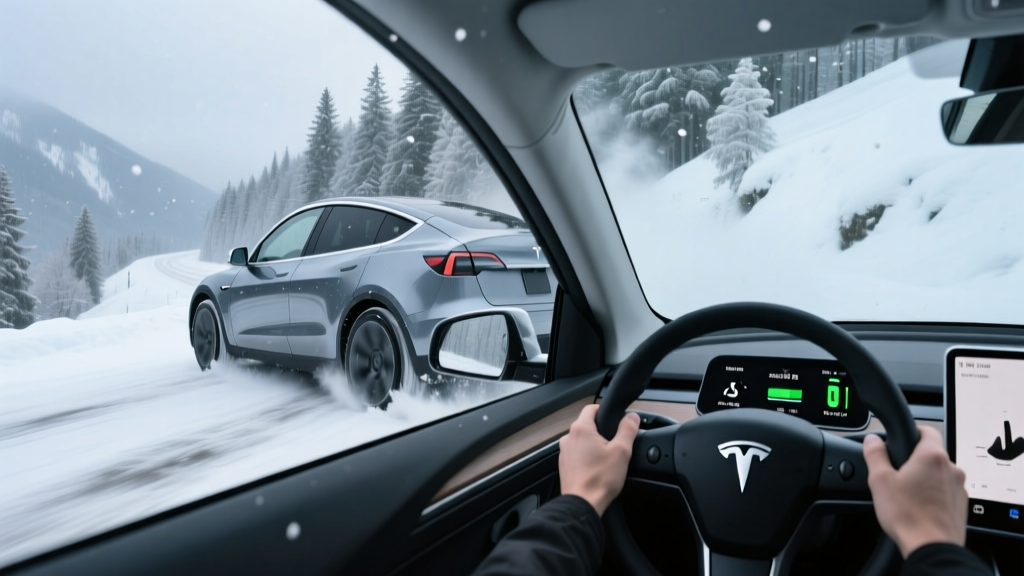
If you've searched "can Tesla drive in snow" before buying, the short answer is yes — dual-motor all-wheel-drive Teslas are among the most capable electric vehicles in winter conditions. The instant torque vectoring, low center of gravity from the under-floor battery pack, and sophisticated traction-control algorithms give models like the Model Y Long Range AWD and Model 3 Long Range AWD genuine competence on snow-covered roads.
But winter EV ownership involves more than traction. Cold temperatures hammer battery efficiency, reduce regenerative braking effectiveness, and slow DC fast-charging speeds. This guide breaks down exactly what happens when you drive a Tesla in snow and freezing weather, using the current 2026 Model Y Long Range AWD as our reference platform — Tesla's best-selling model and the one most buyers considering winter use will actually purchase.
2026 Tesla Model Y Long Range AWD: Core Specs at a Glance
| Specification | Value |
|---|---|
| EPA Estimated Range | 320 miles |
| Battery Capacity (usable) | ~75 kWh (NMC chemistry) |
| Drivetrain | Dual-Motor AWD |
| Horsepower | 384 hp (combined) |
| 0–60 mph | 4.8 seconds |
| Max DC Fast Charge | 250 kW peak (CCS via NACS adapter or native NACS at Superchargers) |
| 10–80% DC Fast Charge | ~27 minutes (warm battery) |
| Level 2 Home Charging | 11.5 kW (44 mi/hr at 48A) |
| EPA Efficiency | 122 MPGe combined / 28 kWh/100 mi |
| Cargo Volume | 30.2 cu ft (rear seats up) / 72.1 cu ft (rear seats folded) |
| Base MSRP | $44,990 (before incentives) |
| Battery Warranty | 8 years / 120,000 miles (min 70% retention) |
Cold-Weather Range: What the EPA Sticker Doesn't Tell You
EPA Rating: 320 miles
Real-World Highway (55–70°F): ~270–290 miles
Real-World Highway (20–32°F): ~210–240 miles (30–35% loss)
Real-World City + Highway Mix (below 20°F): ~190–220 miles
Cold weather is the single biggest variable in Tesla winter ownership. Lithium-ion batteries experience increased internal resistance at low temperatures, and the cabin heater draws significant energy — even with Tesla's efficient heat pump system, which has been standard on Model Y since launch and was retrofitted to Model 3 in the 2021 refresh.
Based on aggregated owner data and independent testing, expect 25–35% range loss in sustained freezing temperatures compared to the EPA sticker. The loss is most severe on short trips where the battery and cabin must heat from cold repeatedly. On longer highway drives, the battery warms from use and losses moderate to roughly 20–25%.
Practical implication: If your round-trip winter commute is 120 miles with a 320-mile EPA range, you still have adequate buffer — but a 250-mile winter road trip that's trivial in July becomes a one-charge planning exercise in January. According to fueleconomy.gov, EVs lose more range in cold weather than gasoline vehicles lose fuel economy, making pre-trip planning essential.
Traction and Snow-Driving Dynamics: How Tesla's AWD System Works
Tesla's dual-motor AWD system is fundamentally different from mechanical AWD in gas vehicles. Instead of a center differential or clutch pack distributing torque between axles, the Model Y uses two independent electric motors — an induction motor up front and a permanent-magnet synchronous motor in the rear. Each motor is controlled independently by software, enabling torque adjustments in milliseconds.
This architecture provides several snow-driving advantages:
- Instant torque vectoring: The system can shift torque front-to-rear far faster than any mechanical system, reducing wheel slip before the driver perceives it.
- Low center of gravity: The battery pack sits under the floor, giving the Model Y a center of gravity comparable to a sedan — reducing rollover risk and improving cornering stability on slippery surfaces.
- Regenerative braking modulation: In normal conditions, regen provides smooth deceleration. However, on ice, aggressive regen can induce wheel lock — Tesla's software automatically reduces regen when traction is low.
- Weight distribution: The heavy battery pack sits low and between the axles, providing balanced weight distribution that aids traction at all four wheels.
Snow Mode and Chill Mode
Tesla does not have a dedicated "Snow Mode" button like some competitors (e.g., Hyundai's Ioniq 5 terrain modes). Instead, traction management is automatic and continuous. The vehicle's stability control system detects low-grip surfaces and adjusts throttle response, torque distribution, and braking intervention accordingly.
What Tesla does offer is Chill Mode, which reduces acceleration aggressiveness. While not a snow-specific feature, it smooths throttle inputs in a way that helps prevent wheel spin on packed snow and ice. Many Tesla owners in snowy climates use Chill Mode year-round for this reason.
The Tire Factor: What Actually Matters Most
Here's where owner experience diverges sharply from marketing claims. Tires matter more than drivetrain in snow. The Model Y ships with all-season touring tires (typically Michelin Pilot Sport All-Season or similar) that prioritize efficiency and dry handling. These tires perform adequately in light snow but are genuinely inadequate in deep snow, ice, or sustained winter conditions.
Tesla owners in northern climates overwhelmingly report that switching to dedicated winter tires (e.g., Bridgestone Blizzak, Michelin X-Ice, or Nokian Hakkapeliitta) transforms the vehicle from "capable" to "exceptional" in snow. The combination of winter rubber compounds, aggressive tread patterns, and Tesla's AWD torque vectoring creates a vehicle that rivals or exceeds most AWD SUVs in winter traction.
Cost note: A set of four winter tires on 19" Gemini wheels (the Model Y's common size) runs roughly $800–$1,400 mounted and balanced. Factor in a second set of wheels ($400–$800 for steel or basic alloy) and seasonal swap labor, and you're looking at a $1,500–$2,500 first-year investment that pays dividends for 4–6 winter seasons.
Charging in Cold Weather: Slower Curves and Preconditioning
| Charging Method | Peak Rate | Speed (Warm Battery) | Speed (Cold Battery, No Preconditioning) |
|---|---|---|---|
| Level 1 (120V household) | ~1.4 kW | ~3–5 mi/hr | ~3–5 mi/hr (minimal impact) |
| Level 2 (240V, 48A home) | 11.5 kW | ~44 mi/hr | ~30–38 mi/hr (reduced) |
| DC Fast Charge (Supercharger) | 250 kW peak | 10–80% in ~27 min | 10–80% in 40–55 min (without preconditioning) |
Cold batteries charge slower — this is physics, not a Tesla defect. Lithium ions move sluggishly through cold electrolyte, and the battery management system (BMS) limits charge rate to prevent lithium plating, which causes permanent degradation.
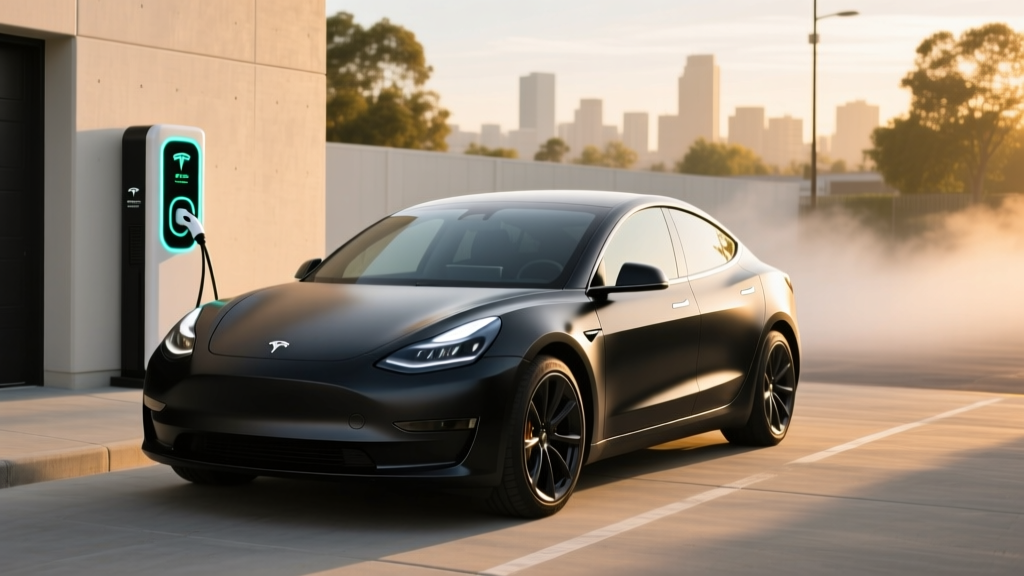
Preconditioning is essential. When you navigate to a Supercharger in the Tesla navigation system, the vehicle automatically begins warming the battery 10–20 minutes before arrival. This can cut a cold-weather DC fast-charge session from 50+ minutes down to roughly 30 minutes — nearly matching warm-weather performance.
The mistake new owners make: Driving to a charger without using navigation (and thus without triggering preconditioning), then wondering why charging is painfully slow. Always navigate to your charging destination, even if you know the route by heart.
At home, Level 2 charging speed is less affected by cold because overnight charging sessions are long enough that the slower rate still delivers a full battery by morning. A 48-amp Level 2 charger adding 44 miles per hour in warm weather might drop to 30–38 mi/hr in deep cold — still more than adequate for daily replenishment.
Winter-Specific Tech: Heat Pump, Cabin Overheat, and Sentry Considerations
Tesla's heat pump (standard on all current Model Y and Model 3 vehicles) is a significant winter advantage. Unlike resistive cabin heaters that draw 3–6 kW, a heat pump moves thermal energy rather than generating it, typically using 1–2 kW for equivalent cabin heating. This directly preserves range in cold weather.
Additional winter-relevant features include:
- Preconditioning from the app: Warm the cabin and battery while plugged in at home, using grid power rather than battery energy. This is the single most effective range-preserving habit in winter.
- Seat heaters and steering wheel heater: These use far less energy than cabin air heating. Using them at moderate settings while lowering cabin air temp by 3–5°F can recover 10–15 miles of range on a cold day.
- Defrost mode via app: Melt windshield ice remotely before leaving the house — no scraping required in most conditions.
- Sentry Mode power draw: In cold weather, Sentry Mode's continuous power draw (roughly 1–2 miles of range per hour) can compound with cold-soak losses. Expect to lose 15–25 miles of range overnight in freezing temperatures with Sentry active, versus 5–10 miles in moderate weather.
Pricing, Tax Credits, and What You'll Actually Pay
| Trim | MSRP | Est. Federal Credit | Effective Price |
|---|---|---|---|
| Model Y Long Range AWD | $44,990 | Up to $7,500 (§30D)* | ~$37,490 |
| Model Y Performance AWD | $49,990 | Up to $7,500 (§30D)* | ~$42,490 |
*Federal tax credit eligibility under IRS §30D is subject to multiple requirements: buyer AGI limits ($150K single / $300K joint), vehicle MSRP cap ($80K for SUVs), and battery component/critical-mineral sourcing thresholds that change annually. The credit can now be transferred to the dealer as a point-of-sale discount. Verify current-year eligibility with a tax professional before purchasing.
As of the 2026 model year, the Model Y Long Range AWD qualifies for the full $7,500 federal credit for buyers meeting income requirements, thanks to Tesla's North American battery sourcing. The point-of-sale transfer option means you can apply the credit as an immediate price reduction at delivery rather than waiting for a tax refund.
State incentives vary significantly. Colorado, for example, offers additional credits, while many states offer none. Check your state's energy office for current programs.
How the Model Y Compares for Winter Driving vs. Key Competitors
| Feature | Tesla Model Y LR AWD | Hyundai Ioniq 5 AWD | Ford Mustang Mach-E AWD |
|---|---|---|---|
| EPA Range | 320 mi | 290 mi | 305 mi |
| AWD Type | Dual-motor (independent) | Dual-motor | Dual-motor |
| Heat Pump | Standard | Standard | Standard (2025+) |
| DC Fast Charge Peak | 250 kW | 233 kW (350 kW capable on 800V) | 150 kW |
| Preconditioning Navigation | Automatic via nav | Manual/app | Manual/app |
| Winter Tire OEM Support | Aftermarket | Aftermarket | Aftermarket |
| Starting MSRP (AWD) | $44,990 | $49,500 | $45,995 |
The Model Y's primary winter advantages are its automatic battery preconditioning (triggered simply by navigating to a charger), the efficiency of its heat pump system, and the Supercharger network's reliability in cold climates. The Ioniq 5's 800V architecture enables faster peak charging but requires compatible 350 kW stations, which are less common in rural winter-driving corridors. The Mach-E's lower peak charge rate means longer stops on winter road trips when charging is already slowed by cold.
- Dual-motor AWD with millisecond torque vectoring
- Heat pump standard — preserves winter range
- App-based preconditioning and defrost
- Supercharger network reliability in cold climates
- Low center of gravity aids snow handling
- Strong federal tax credit eligibility
- 25–35% range loss in sustained freezing temps
- Stock all-season tires inadequate for serious snow
- No dedicated snow/terrain driving mode
- Cold DC fast charging much slower without preconditioning
- Sentry Mode + cold soak drains range overnight
- Ground clearance (6.6") limits deep-snow capability
Who Should Buy a Tesla for Winter Driving?
Choose the Model Y AWD if:
- You have reliable home Level 2 charging (essential for winter preconditioning)
- Your typical winter round-trip is under 200 miles
- You're willing to invest in dedicated winter tires
- You value app-based remote preconditioning and defrost
- You live near Supercharger corridors for longer winter trips
- You lack home charging access (cold public charging is painful without preconditioning)
- You regularly drive 250+ miles in deep cold without charging access
- You need serious off-road/deep-snow ground clearance (consider a Rivian R1S or plug-in hybrid SUV)
- You live in extreme cold (sustained -20°F or below) where range loss exceeds 40%
For the vast majority of winter-climate drivers — those with home charging, commutes under 100 miles, and access to winter tires — the Model Y Long Range AWD is one of the most capable electric SUVs available. It won't replace a lifted truck on unplowed back roads, but for daily winter commuting, school runs, and highway travel on plowed routes, it performs at or above the level of comparable gas-powered AWD SUVs.
Frequently Asked Questions
Do Teslas slip on ice?
All vehicles slip on ice — no drivetrain defies physics. Tesla's dual-motor AWD and traction control react faster than mechanical AWD systems, but ice traction is ultimately limited by tire grip. Winter tires dramatically improve ice performance. On untreated ice, drive slowly regardless of what you're driving.
How much range does a Tesla lose in winter?
Expect 25–35% range reduction in sustained freezing temperatures (20–32°F) compared to the EPA sticker. At extreme cold (below 0°F), losses can reach 40%. The 320-mile EPA Model Y Long Range effectively becomes a ~210–240-mile vehicle in typical winter conditions.
Should I get winter tires for my Tesla?
If you experience more than occasional light snow, yes. The stock all-season tires on the Model Y prioritize efficiency and dry handling. Dedicated winter tires (Bridgestone Blizzak, Michelin X-Ice, Nokian Hakkapeliitta) transform cold-weather traction and braking. Budget $1,200–$2,000 for a complete winter tire and wheel setup.
Can I charge my Tesla outside in freezing weather?
Yes. Tesla's battery management system handles cold-weather charging safely. Level 2 home charging works reliably in any temperature. DC fast charging will be slower without preconditioning — always navigate to your charger via the car's navigation to trigger automatic battery warming.
Is AWD standard on all Teslas?
No. The Model 3 and Model Y offer both rear-wheel-drive (single motor) and AWD (dual motor) configurations. For snow driving, dual-motor AWD is strongly recommended. The RWD versions are significantly less capable in winter conditions despite sharing the same traction-control software.
Does the Tesla Model Y have good ground clearance for snow?
The Model Y has 6.6 inches of ground clearance — adequate for plowed roads and moderate snow accumulation, but less than traditional SUVs like the Subaru Outback (8.7") or Toyota RAV4 (8.4"). In deep, unplowed snow, the Model Y's low front bumper can act as a plow. For consistently deep-snow conditions, a higher-clearance vehicle is preferable.