Tesla Model 3 Lease Deals: What You Need to Know in 2026
If you're researching Tesla Model 3 lease deals, you're likely weighing whether leasing makes sense versus buying outright or financing. The 2026 Tesla Model 3 remains one of the most efficient and tech-forward electric sedans on the market, with EPA-estimated range up to 363 miles, access to Tesla's Supercharger network, and eligibility for the full $7,500 federal tax credit under IRS §30D rules.
This guide breaks down real-world range expectations, charging performance, pricing across trims, and whether the Model 3 is worth leasing compared to competitors like the Hyundai Ioniq 6 or BMW i4.
Real-World Range and Efficiency
EPA vs. Real-World Range
- Long Range RWD: EPA 363 miles | Real-world highway: ~310-330 miles | Cold weather (below 32°F): ~250-280 miles
- Long Range AWD: EPA 341 miles | Real-world highway: ~290-310 miles | Cold weather: ~240-260 miles
- Performance: EPA 315 miles | Real-world highway: ~270-290 miles | Cold weather: ~220-240 miles
Real-world range varies based on driving style, terrain, temperature, and HVAC use. Highway driving at 75+ mph reduces range by 10-15% compared to city driving. Cold weather can reduce range by 20-30% due to battery heating demands and cabin climate control.
The 2026 Model 3 uses either a lithium iron phosphate (LFP) battery in the base RWD trim or a nickel manganese cobalt (NMC) chemistry in Long Range and Performance variants. LFP batteries offer longer cycle life and can be charged to 100% regularly without degradation concerns, while NMC provides higher energy density for maximum range.
| Trim | Battery (kWh) | Chemistry | EPA Range | MPGe (City/Hwy/Combined) | kWh/100 mi |
|---|---|---|---|---|---|
| Long Range RWD | 79 kWh (usable) | NMC | 363 mi | 138 / 123 / 131 | 25 |
| Long Range AWD | 79 kWh (usable) | NMC | 341 mi | 131 / 117 / 124 | 27 |
| Performance | 79 kWh (usable) | NMC | 315 mi | 115 / 106 / 111 | 30 |
Source: EPA Fuel Economy Guide
Charging Speed: DC Fast and Home Level 2
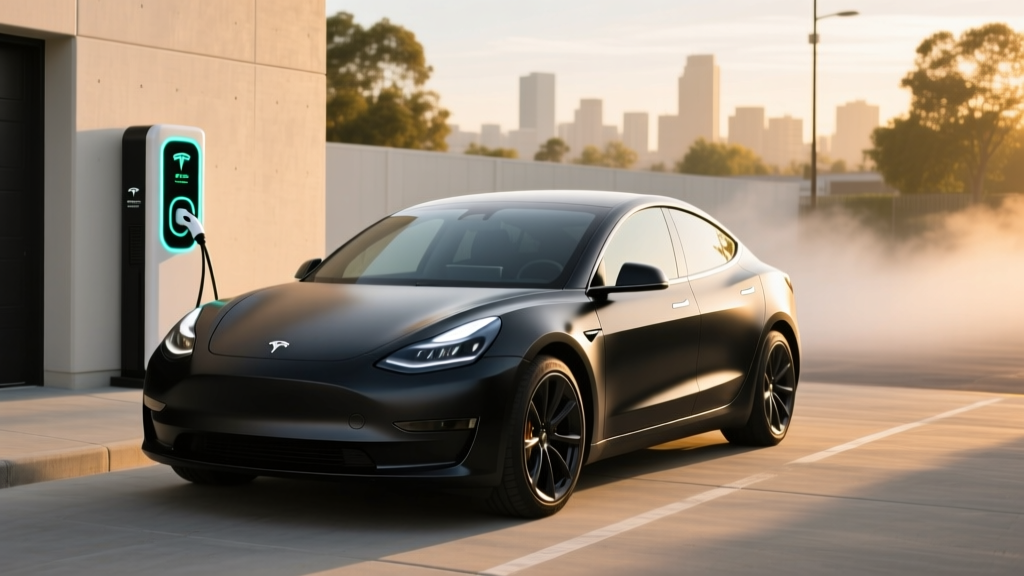
The Model 3 supports DC fast charging up to 250 kW at Tesla Superchargers and third-party CCS stations (with adapter). In real-world testing, the Long Range variants peak around 250 kW but taper significantly above 50% state of charge. Expect a 10-80% charge in approximately 25-28 minutes at a 250 kW Supercharger.
| Charging Method | Power (kW) | Time (10-80%) | Miles Added per Hour |
|---|---|---|---|
| DC Fast (Tesla Supercharger V3/V4) | Up to 250 kW peak | ~25-28 minutes | ~400-500 mi/hr (peak) |
| DC Fast (CCS adapter at EA, etc.) | Up to 250 kW | ~25-28 minutes | ~400-500 mi/hr (peak) |
| Level 2 Home (48A, 11.5 kW) | 11.5 kW | ~7-8 hours (0-100%) | ~44 mi/hr |
| Level 2 Home (32A, 7.7 kW) | 7.7 kW | ~10-11 hours (0-100%) | ~30 mi/hr |
| Level 1 (120V, 12A) | 1.4 kW | ~55+ hours (0-100%) | ~3-4 mi/hr |
Charging curve reality: Peak 250 kW is sustained only between 10-30% SoC. From 50-80%, the rate drops to 80-100 kW, and above 80% it slows to under 50 kW to protect battery health. Plan road-trip stops to charge from 10-80% for optimal speed.
Performance and Drivetrain
| Trim | Drivetrain | Horsepower | 0-60 mph | Top Speed |
|---|---|---|---|---|
| Long Range RWD | Rear-Wheel Drive | 271 hp | 5.8 sec | 125 mph |
| Long Range AWD | Dual-Motor AWD | 346 hp | 4.2 sec | 125 mph |
| Performance | Dual-Motor AWD | 510 hp | 2.9 sec | 163 mph |
All trims feature regenerative braking with one-pedal driving capability. The Performance trim includes track mode, upgraded brakes, and a lowered sport suspension.
Pricing, Lease Deals, and Federal Tax Credit
| Trim | Base MSRP | Federal Tax Credit (§30D) | Effective Price (if eligible) |
|---|---|---|---|
| Long Range RWD | $38,990 | $7,500 | $31,490 |
| Long Range AWD | $43,990 | $7,500 | $36,490 |
| Performance | $52,990 | $7,500 | $45,490 |
Federal tax credit eligibility (IRS §30D): To qualify for the full $7,500 credit, you must meet income caps ($150,000 single / $300,000 joint), the vehicle MSRP must be under $55,000 (sedans), and the battery must meet critical mineral and component sourcing requirements. As of 2026, all Model 3 trims qualify. The credit can be applied at point of sale as a down payment reduction or claimed on your tax return.
Source: IRS New Clean Vehicle Tax Credit
Lease considerations: When leasing, the tax credit typically goes to the lessor (Tesla Finance or third-party bank), not directly to you. However, competitive lease deals often pass savings through as lower monthly payments or capitalized cost reductions. As of early 2026, Tesla offers lease terms of 24-36 months with money factors that translate to roughly 4-6% APR equivalent. Expect monthly payments of $450-$650 depending on trim, term, and down payment.
Interior, Cargo, and Technology
The Model 3 interior is minimalist, with a 15.4-inch touchscreen controlling all vehicle functions. There is no traditional instrument cluster—speed and range info appear on the left side of the main display.
| Specification | Measurement |
|---|---|
| Front Legroom | 42.7 inches |
| Rear Legroom | 35.2 inches |
| Cargo Volume (Trunk) | 23 cu ft |
| Front Trunk (Frunk) | 3.1 cu ft |
| Total Cargo | 26.1 cu ft |
Standout tech features:
- Tesla Autopilot (Level 2 driver assist) with adaptive cruise and lane centering
- Optional Full Self-Driving (Supervised) for $8,000 or $99/month—still requires driver attention
- Over-the-air updates adding features post-purchase
- Native navigation with real-time Supercharger routing
- HEPA air filtration system
- Sentry Mode dashcam recording when parked
Notable drawbacks:
- No physical buttons—climate, mirrors, and glovebox all controlled via touchscreen
- Rear visibility limited by sloping roofline
- No Apple CarPlay or Android Auto (Tesla-native apps only)
- Firm ride quality, especially with 19-inch wheels
Pros and Cons: Is the Model 3 Worth It?
Pros
- Class-leading efficiency (up to 131 MPGe combined)
- Access to Tesla Supercharger network (17,000+ stalls in North America)
- Strong resale value and low depreciation
- Over-the-air updates keep software current
- Eligible for full $7,500 federal tax credit
- Excellent safety ratings (IIHS Top Safety Pick+, NHTSA 5-star)
Cons
- Touchscreen-only controls frustrate some drivers
- Rear seat space tighter than midsize sedans
- No CarPlay/Android Auto integration
- Insurance costs 15-25% higher than gas equivalents
- FSD subscription adds $99/month with no true autonomy
Who Should Lease the Tesla Model 3?
Best for: Tech-savvy commuters with home charging access who prioritize efficiency, range, and access to the most reliable DC fast-charging network. The Long Range RWD at $38,990 (before credit) offers the best value proposition with 363 miles EPA range.
Consider alternatives if: You need maximum rear-seat space (Hyundai Ioniq 6 offers 38.4 inches rear legroom), prefer physical controls, or want CarPlay integration. The BMW i4 offers more traditional luxury but at a higher price point.
Warranty Coverage
| Component | Coverage |
|---|---|
| Basic Vehicle | 4 years / 50,000 miles |
| Battery & Drive Unit | 8 years / 100,000 miles (Long Range/Performance) |
| Battery Capacity Retention | Minimum 70% over warranty period |
Tesla's battery warranty guarantees at least 70% capacity retention over 8 years or 100,000 miles. Real-world degradation data from Tesla's 2025 Impact Report shows average Model 3 batteries retain 88% capacity at 100,000 miles.
Frequently Asked Questions
What is the real-world range of the Tesla Model 3?
The Long Range RWD achieves an EPA-estimated 363 miles, but expect 310-330 miles in real-world highway driving and 250-280 miles in cold weather below freezing. City driving with regenerative braking can match or exceed EPA estimates.
How fast does the Model 3 charge at home and on road trips?
At a 250 kW Tesla Supercharger, the Model 3 charges from 10-80% in about 25-28 minutes. At home on a 48-amp Level 2 charger (11.5 kW), you'll add roughly 44 miles per hour, fully charging overnight in 7-8 hours.
Does the Tesla Model 3 qualify for the federal EV tax credit?
Yes, all 2026 Model 3 trims qualify for the full $7,500 federal tax credit under IRS §30D, provided you meet income limits ($150,000 single / $300,000 joint) and purchase (not lease) the vehicle. When leasing, the credit goes to the lessor but may be reflected in lower payments.
How much does a Tesla Model 3 lease cost in 2026?
Lease payments typically range from $450-$650 per month for 24-36 month terms, depending on trim, down payment, and money factor. The Long Range RWD with $3,000 down averages around $480/month on a 36-month lease.
Is the Tesla Model 3 worth buying vs. competitors?
The Model 3 excels in efficiency, charging infrastructure, and software. Choose it if you value Supercharger access and range. Consider the Hyundai Ioniq 6 for more rear space and CarPlay, or the BMW i4 for traditional luxury feel. The Model 3 remains the benchmark for EV efficiency at its price point.
What are the biggest pros and cons?
Pros: 363-mile range, Supercharger network, strong safety ratings, eligible for $7,500 tax credit, over-the-air updates. Cons: Touchscreen-only controls, firm ride, no CarPlay, higher insurance costs, FSD requires subscription and full attention.
Is Autopilot or FSD actually self-driving?
No. Both Autopilot and Full Self-Driving (Supervised) are SAE Level 2 driver-assist systems. You must keep hands on the wheel and remain fully engaged. Only Level 4 services like Waymo operate without driver supervision in geofenced areas.
For the latest tax credit rules and eligibility details, consult IRS.gov or speak with a tax professional. Vehicle specifications and pricing subject to change; verify current figures at Tesla.com.