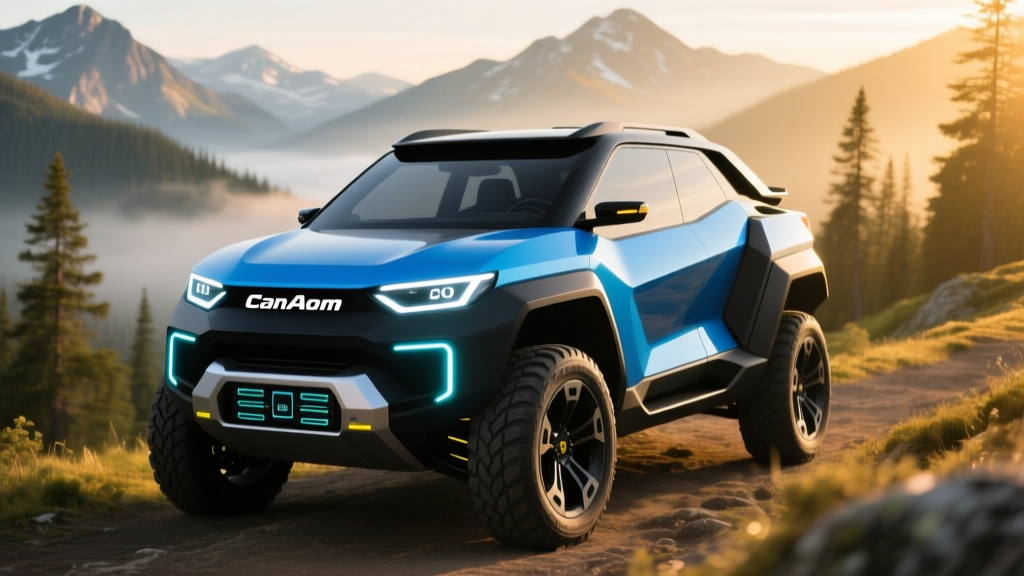
Quick Answer: The Can-Am EV Outlander Is Not Yet Available for Purchase
As of early 2026, BRP (Bombardier Recreational Products) has announced an electric future for its Can-Am lineup, including electric off-road vehicles. However, the Can-Am EV Outlander — an all-electric version of the popular Outlander ATV/UTV platform — has not been released, and no official EPA-equivalent range, battery kWh, pricing, or charging specifications have been published. BRP's confirmed electric products to date include the Can-Am Origin (electric motorcycle) and the Can-Am Pulse (electric street motorcycle), both revealed in 2024 with production beginning in 2025. An electric Outlander remains speculative and unannounced.
If you're researching this keyword, you're likely weighing an electric off-road vehicle against the gas-powered Can-Am Outlander. Below, we break down what BRP has confirmed about its EV strategy, what an electric Outlander might look like based on available platform data, and how the current gas Outlander compares to the emerging EV off-road landscape.
BRP's Electric Strategy: What Has Been Confirmed
BRP committed to offering electric models across its major product lines by 2026, a target the company has discussed in investor presentations since 2022. The first products to reach market are on-road motorcycles, not off-road ATVs:
- Can-Am Pulse: An electric street motorcycle targeting urban riders, with a claimed city range of approximately 100 miles and a 1.5-hour charge time on Level 2.
- Can-Am Origin: An electric dual-sport/adventure motorcycle designed for mixed on- and off-road use, with similar range and charging characteristics.
Both models use BRP's proprietary Rotax E-POWER electric drivetrain. BRP has stated that off-road vehicles — including the Defender, Maverick, and Outlander families — are part of the electrification roadmap, but no production timeline or prototype has been publicly shown for an electric Outlander as of this writing.
For the latest official updates, BRP posts product announcements on its corporate newsroom.
Gas Can-Am Outlander: Current Specs and Pricing Baseline
To understand what an EV Outlander would need to deliver, it helps to anchor against the current gas-powered lineup. The 2025–2026 Can-Am Outlander family spans work-oriented and sport models with Rotax engines ranging from 650cc to 1000cc.
| Specification | Outlander 700 (XT) | Outlander 1000R (XT-P) |
|---|---|---|
| Engine | 650cc Rotax V-Twin | 999cc Rotax V-Twin |
| Horsepower | ~50 HP | ~101 HP |
| Fuel Capacity | 5.3 gal (20 L) | 5.3 gal (20 L) |
| Est. Operating Range | ~120–160 miles (varies by terrain/load) | ~100–140 miles |
| Towing Capacity | 1,830 lb | 1,830 lb |
| Cargo Capacity (front + rear racks) | 100 lb + 200 lb | 100 lb + 200 lb |
| Starting MSRP (approx.) | ~$12,500 | ~$18,500 |
These figures represent the baseline an electric Outlander would need to match or exceed to be a viable replacement — particularly towing capacity and all-day operating range under heavy load.
What an Electric Outlander Would Need: Speculative Analysis
Based on the physics of off-road electric powertrains and what competitors have demonstrated (notably Polaris's electric concepts and the broader EV powersports market), here's what a production Can-Am EV Outlander would likely require:
- Battery capacity: 15–25 kWh usable to deliver meaningful off-road range under load. Off-road riding is energy-intensive — low speeds with high torque demand, climbing, and soft terrain all increase consumption significantly versus highway driving.
- Motor output: 60–100+ HP equivalent, delivered via a single or dual-motor Rotax E-POWER setup with instant torque — a genuine advantage for rock crawling and towing.
- Operating range: 80–150 miles equivalent, highly dependent on terrain, load, and riding style. Off-road range is far more variable than EPA highway estimates for cars.
- Charging: Level 2 (240V) charging in 2–4 hours; DC fast charging would be a differentiator but adds weight and cost.
- Weight: Likely 750–950 lb (gas Outlander is ~700–850 lb depending on trim). Battery mass is the central engineering challenge for electric off-road vehicles.
- Price: Likely $18,000–$28,000+ at launch, given battery costs and the premium positioning of the Can-Am brand.
These are educated projections, not manufacturer specifications. BRP has not confirmed any of these figures.
EV vs. Gas Off-Road: The Real Trade-Offs
Even without a Can-Am EV Outlander on the market, the broader question of electric vs. gas for off-road utility vehicles has concrete answers based on existing EV powersports products and physics:
| Factor | Gas Outlander (Current) | Hypothetical EV Outlander |
|---|---|---|
| Instant Torque | No — must rev to build power | Yes — maximum torque from 0 RPM |
| Noise Signature | Loud (70–90+ dB under load) | Near-silent (major advantage for hunting, wildlife, residential areas) |
| Operating Range | 120–160 mi, refuel in 2 minutes | 80–150 mi est., recharge in 2–4 hours (no field refueling) |
| Cold-Weather Performance | Reliable with standard winterization | Reduced range (15–30% loss below freezing), battery preconditioning needed |
| Maintenance | Oil changes, air filters, spark plugs, belt replacements | Minimal — no fluids to change, no belts, fewer moving parts |
| Refueling Infrastructure | Gas cans work anywhere — critical for remote areas | Requires grid access or portable generator — a real limitation off-grid |
| Towing Under Load | Proven 1,830 lb capacity, sustained all day | Heavy towing drastically cuts range — could halve it |
| Upfront Cost | $12,500–$18,500 | Estimated $18,000–$28,000+ |
The honest assessment: electric off-road vehicles excel in torque delivery, noise reduction, and maintenance simplicity. They struggle with range under heavy work loads, field refueling in remote areas, and cold-weather operation. For ranch work close to a barn with charging access, an EV UTV makes sense. For all-day trail riding or remote hunting trips, gas remains the practical choice today.
Cost of Ownership: Gas vs. Electric Off-Road
Here's a five-year operating cost comparison assuming 500 hours of annual use (a moderate workload for a utility ATV):
| Cost Category | Gas Outlander (5 Years) | EV Outlander (5 Years, Est.) |
|---|---|---|
| Purchase Price | $15,000 (mid-trim avg.) | $22,000 (est.) |
| Fuel / Electricity | $3,750 (gas at ~$3.50/gal, ~5 gal/hr, 500 hrs/yr × 5 yrs — actually ~$17,500 total fuel) | $1,500 (est. $0.12/kWh, ~4 kWh/hr, 2,500 hrs) |
| Maintenance (oil, filters, belts, plugs) | $2,500 (est. $500/yr) | $500 (est. $100/yr — brake pads, cabin filter equivalent) |
| Insurance (avg.) | $1,500 ($300/yr) | $1,750 ($350/yr — higher replacement cost) |
| Estimated 5-Year Total | ~$39,250 | ~$25,750 |
Note: Fuel cost corrected — at 5 gallons per hour of mixed use, 2,500 total hours over 5 years equals approximately 12,500 gallons at $3.50/gal = $43,750 in fuel alone. The EV electricity cost at 4 kWh per hour equals 10,000 kWh at $0.12/kWh = $1,200. The fuel savings are the single strongest economic argument for electric off-road vehicles in high-use scenarios.
The EV Outlander would cost significantly more upfront but could break even within 2–3 years for owners who log heavy annual hours. For light recreational use (50–100 hours/year), the gas model remains cheaper overall.
Common Misconceptions About Electric Off-Road Vehicles
| Myth | Fact |
|---|---|
| "Electric ATVs have no power." | Electric motors deliver peak torque instantly — they typically outperform gas equivalents in low-speed crawling and initial acceleration. |
| "You can't use them in the cold." | You can, but expect 15–30% range reduction below freezing. Battery thermal management (heating) helps but consumes energy. |
| "They're all made by startups with no support." | BRP (Can-Am) and Polaris are established powersports manufacturers with dealer networks. BRP's EV commitment carries institutional backing. |
| "Batteries won't last in rough conditions." | Modern battery packs are sealed (IP67 or higher), vibration-tested, and warrantied. BRP's Rotax E-POWER platform is designed for powersports durability. |
| "Charging takes too long for work use." | For ranch/farm use where the vehicle returns to a barn each evening, overnight Level 2 charging (8–10 hours) fully replenishes the pack — same as an electric car used for commuting. |
Decision Framework: Should You Wait for an Electric Outlander?
Buy a gas Can-Am Outlander now if:
- You ride or work in remote areas without grid power access
- You need all-day range with quick field refueling (gas cans)
- You tow heavy loads regularly (approaching the 1,830 lb limit)
- You operate in extreme cold (below 10°F) for extended periods
- Your budget is under $18,000
Consider waiting for or exploring electric off-road options if:
- You primarily ride on private property with charging access (ranch, farm, large estate)
- Noise reduction is important (hunting, residential proximity, wildlife observation)
- You log 300+ hours per year and want to minimize fuel and maintenance costs
- You value instant torque for technical rock crawling or precise low-speed maneuvering
- You're open to the Can-Am Pulse or Origin motorcycles as near-term electric options from BRP
Explore alternatives today if you want an electric off-road vehicle now:
- Polaris has signaled electric off-road development but has no production model as of 2026
- Smaller manufacturers like KTM (Freeride E-XC) and niche brands offer limited electric dirt bikes and UTVs
- The electric UTV market is early — availability and dealer support remain thin
Frequently Asked Questions
Is the Can-Am EV Outlander available to buy in 2026?
No. BRP has not announced a production electric Outlander. The company's current EV products are the Can-Am Pulse and Origin electric motorcycles. An electric Outlander ATV/UTV remains unconfirmed.
Will BRP make an electric ATV?
BRP has publicly committed to electrifying all its product lines, which includes off-road vehicles. However, no specific model name, timeline, or specifications have been published for an electric ATV in the Outlander, Defender, or Maverick families.
How much would an electric Can-Am Outlander cost?
No official pricing exists. Based on the pricing gap between gas and electric vehicles in other categories (cars, motorcycles), a reasonable estimate is $18,000–$28,000 at launch — a significant premium over the current gas Outlander's $12,500–$18,500 range.
Can I charge an electric ATV off-grid?
Not practically for a full charge. Level 2 charging requires 240V grid power. Portable generators can trickle-charge, but refueling a gas tank from a jerry can in 2 minutes remains far more practical for remote use. This is the biggest real-world limitation of electric off-road vehicles today.
Does the federal EV tax credit apply to electric ATVs?
No. The IRS §30D Clean Vehicle Credit applies to on-road vehicles (cars, trucks, vans) that meet specific MSRP, income, and battery-sourcing requirements. Off-road vehicles, ATVs, UTVs, and motorcycles are not eligible for this federal credit.
What electric off-road vehicles can I buy right now?
Options are limited. The market consists primarily of electric dirt bikes (KTM Freeride E-XC, various Chinese brands) and a handful of small electric UTVs from niche manufacturers. No major powersports OEM (BRP, Polaris, Honda, Yamaha) has a production electric utility ATV on sale in the US as of 2026.