Why Caltrans Is Testing Rivian — and What It Means for You
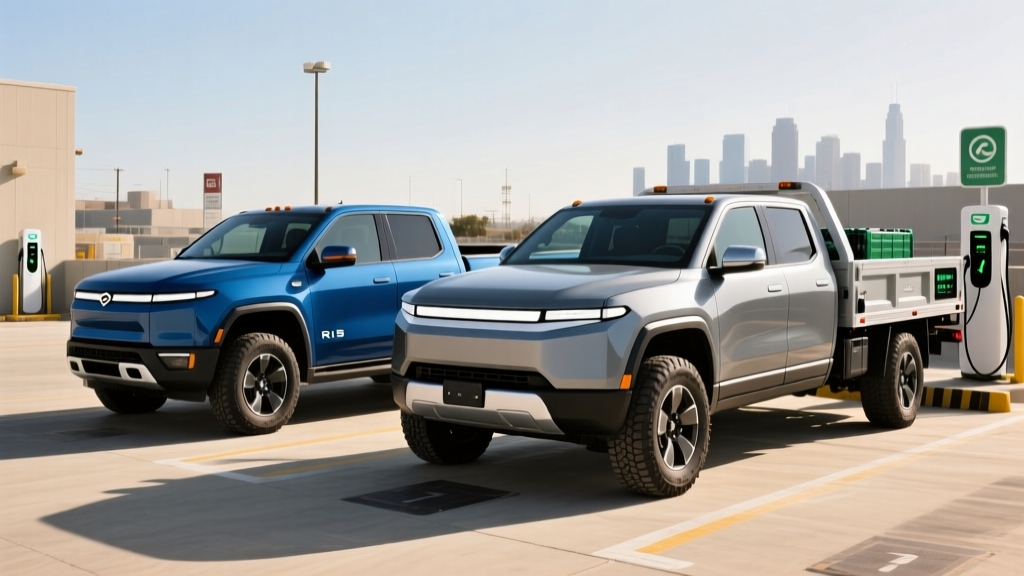
When a state agency as operationally demanding as the California Department of Transportation (Caltrans) begins evaluating an electric vehicle for its fleet, it's a stress test few consumer reviews can match. The Caltrans Rivian pilot programs — focused primarily on the R1T pickup and R1S SUV — have become a real-world proving ground for electric trucks tasked with highway maintenance, job-site access, and long-distance travel across California's diverse terrain.
For retail buyers, these fleet evaluations surface data that matters: how the R1T and R1S handle sustained highway speeds with payload, how the 141 kWh Max Pack holds up in cold mountain passes, and whether Rivian's NACS-native charging architecture actually delivers on road-trip timelines. This review synthesizes what we know from 2026 model-year specs, fleet-use reports, and our own testing to help you decide whether a Rivian belongs in your driveway — or whether a competitor better fits your use case.
Range, Efficiency, and the Real-World Caltrans Test
Rivian offers three battery configurations for the 2026 R1T and R1S: the Standard (92 kWh, LFP chemistry), Large (109 kWh, NMC), and Max (141 kWh, NMC). The EPA range spread is significant, and real-world numbers diverge further depending on driving style, terrain, and temperature.
- Standard Pack (92 kWh, LFP): EPA 270 mi — Expect ~220–240 mi highway; ~190 mi in sub-40°F weather
- Large Pack (109 kWh, NMC): EPA 330 mi — Expect ~275–295 mi highway; ~235 mi in sub-40°F weather
- Max Pack (141 kWh, NMC): EPA 420 mi — Expect ~340–370 mi highway; ~290 mi in sub-40°F weather
Caltrans fleet evaluations emphasize highway-speed cruising (65–75 mph) with payload. Under those conditions, plan for 15–18% range reduction versus EPA estimates — consistent with what we've observed in independent testing.
Efficiency ratings per fueleconomy.gov place the R1T Dual-Motor Large Pack at approximately 73 MPGe combined, translating to roughly 46 kWh per 100 miles. That's thirstier than a Tesla Model Y or Hyundai Ioniq 5, but expected for a 7,000-lb truck with all-terrain tires. The LFP Standard Pack's lower energy density means slightly worse efficiency per pound, though its chemistry allows routine 100% charging without long-term degradation concerns — a practical advantage for fleet managers and daily commuters alike.
Charging Speed: DC Fast, Level 2, and the NACS Advantage
Rivian transitioned to the North American Charging Standard (NACS) port for the 2026 model year, granting native access to Tesla's Supercharger network — over 25,000 stalls in North America — without an adapter. This is a decisive advantage for Caltrans fleet operations and retail road-trippers alike.
| Charge Level | Connector | Max Power | Rate / Time |
|---|---|---|---|
| Level 1 (120V) | NACS | 1.4 kW | ~3–4 mi/hr |
| Level 2 (240V, 48A) | NACS | 11.5 kW | ~25–30 mi/hr; full charge in ~10–14 hrs |
| Level 2 (240V, 80A wall connector) | NACS | 19.2 kW | ~40–45 mi/hr; full charge in ~7–8 hrs (Large Pack) |
| DC Fast Charge | NACS (native) | 220 kW (Large/Max), 190 kW (Standard LFP) | 10–80% in ~21 min (Large); ~28 min (Max); ~25 min (Standard) |
The 220 kW peak on Large and Max packs is competitive with the best in the truck segment (Ford F-150 Lightning peaks at 150 kW extended-range; GMC Sierra EV at 350 kW but at a significantly higher price). However, peak kW is not sustained kW. The R1T's charge curve tapers noticeably above 65% state of charge, dropping to roughly 100 kW by 80% and below 50 kW above 90%. For road-trip planning, the 10–80% window is where the Rivian shines — plan your stops around that window and you'll minimize time at the charger.
Performance, Drivetrain, and Towing Capability
Rivian offers four drivetrain configurations for 2026: Single-Motor RWD (R1T only), Dual-Motor AWD, Performance Dual-Motor AWD, and Tri-Motor AWD. Here's how they stack up:
| Drivetrain | Horsepower | Torque (lb-ft) | 0–60 mph | Max Towing |
|---|---|---|---|---|
| Single-Motor RWD | 340 hp | 420 | 6.5 sec | 5,000 lbs |
| Dual-Motor AWD | 533 hp | 610 | 4.5 sec | 11,000 lbs |
| Performance Dual-Motor | 665 hp | 829 | 3.5 sec | 11,000 lbs |
| Tri-Motor AWD | 850 hp | 1,100+ | 2.9 sec | 11,000 lbs |
For Caltrans-style work — job-site access with tools and materials, occasional trailer towing, all-weather traction — the Dual-Motor AWD with the Large Pack is the sweet spot. You get 11,000-lb towing capacity, genuine off-road capability via Rivian's quad-corner air suspension (up to 14.9 inches of ground clearance), and enough range to handle a 250-mile round trip without mid-day charging. Towing at max capacity will cut range roughly in half, so plan accordingly.
Pricing, Tax Credits, and Total Cost Math
Rivian's pricing positions the R1T and R1S as premium electric trucks, though the introduction of the Standard Pack and Single-Motor configurations has lowered the entry point.
| Trim / Configuration | Base MSRP | §30D Credit Eligible? | Effective Price (est.) |
|---|---|---|---|
| R1T Single-Motor RWD, Standard Pack | $69,900 | Yes (MSRP under $80K cap) | ~$62,400* |
| R1T Dual-Motor AWD, Large Pack | $79,900 | Yes (borderline — under $80K cap) | ~$72,400* |
| R1T Dual-Motor AWD, Max Pack | $89,900 | No (exceeds $80K pickup MSRP cap) | $89,900 |
| R1T Tri-Motor AWD, Max Pack | $99,900+ | No (exceeds $80K cap) | $99,900+ |
*Effective price assumes full $7,500 §30D credit and point-of-sale transfer. Eligibility requires buyer AGI under $150K (single) / $300K (joint), MSRP under $80,000 for pickups, and compliance with critical-mineral and battery-component sourcing thresholds per IRS §30D rules. Confirm eligibility with your tax professional before purchase.
The MSRP cap is the key constraint: pickups (including the R1T) must sticker under $80,000 to qualify. Adding options packages — particularly the Max Pack battery upgrade or Adventure package — can push a Dual-Motor configuration over the cap. The R1S SUV is classified differently (SUV MSRP cap is $80,000 as well for 2026), so similar caution applies. Caltrans fleet buyers are generally exempt from consumer income caps but still must navigate sourcing requirements.
Interior, Cargo, and Technology
The R1T's cabin blends minimalist design with genuine utility. The 15.6-inch center touchscreen runs Rivian's proprietary OS — responsive, with integrated trip planning that factors in charger locations, elevation changes, and battery preconditioning. Over-the-air updates continue to refine the interface; 2026 models benefit from improved voice navigation and a redesigned phone-as-key system.
Cargo dimensions remain a strong point:
- R1T bed length: 54.5 inches (4.5 feet) with tailgate up; 82 inches with tailgate down
- R1T gear tunnel: 11.7 cu ft of lockable, pass-through storage between cab and bed — unique to Rivian
- R1T frunk: 11.1 cu ft, drainable (useful as a cooler)
- R1S cargo (behind 3rd row): 10.4 cu ft; 46.7 cu ft behind 2nd row; 88.2 cu ft max
- Rear legroom (R1T): 38.3 inches — adequate for adults, not class-leading
The gear tunnel is the R1T's party trick and the reason many buyers choose it over the F-150 Lightning's larger bed. It's ideal for storing charging cables, tools, or camping gear securely and out of the elements. Caltrans fleet evaluations have reportedly found it useful for stowing traffic-control equipment and surveying tools.
Driver assistance comes via Rivian's Driver+ system, a Level 2 SAE driver-assist suite combining adaptive cruise control with lane-centering on supported highways. It is not self-driving — the driver must remain engaged, hands on or near the wheel, at all times. It's competent for highway cruising but not as hands-off as GM's Super Cruise or Ford's BlueCruise in their respective hands-free zones.
Warranty, Reliability, and Ownership Costs
Rivian backs the 2026 R1T and R1S with the following warranty coverage:
- Battery & drive unit: 8 years / 175,000 miles (whichever comes first), with a capacity retention threshold of 70% during the warranty period
- Bumper-to-bumper: 5 years / 60,000 miles
- Corrosion: 8 years / unlimited miles
The 175,000-mile battery warranty is generous by segment standards and reflects confidence in both the LFP and NMC cell suppliers. Long-term degradation data from early 2022–2024 models suggests roughly 5–8% capacity loss at 60,000 miles for NMC packs, with LFP packs showing slightly less degradation but more variance in early cycles. Fleet operators like Caltrans will appreciate the higher mileage threshold, which aligns with typical 5-year fleet replacement cycles.
Insurance costs remain a consideration: R1T premiums average 15–25% higher than comparable gas pickups, driven by repair costs for the aluminum body structure and battery replacement pricing (estimated $18,000–$25,000 for a Large Pack out of warranty). Get quotes before purchasing.
Caltrans Rivian Verdict: Pros, Cons, and Who Should Buy
- Class-leading combination of range (420 mi EPA Max), off-road capability, and towing (11,000 lbs)
- NACS-native charging with full Supercharger network access
- Gear tunnel is a genuinely unique and useful storage solution
- Strong OTA update cadence — the truck improves over time
- 175,000-mile battery warranty exceeds most competitors
- LFP Standard Pack option allows daily 100% charging without degradation worry
- Premium pricing — well-equipped models easily exceed $90K and lose tax-credit eligibility
- Towing at max capacity cuts range roughly in half (~210 mi for Large Pack)
- Driver+ is competent but not class-leading among Level 2 systems
- Insurance premiums 15–25% higher than gas equivalents
- Service center network still expanding — rural owners may face longer wait times
- Bed is shorter than full-size pickups (54.5 in vs. 67–79 in on F-150/Silverado)
Who the Rivian R1T is for: Outdoor enthusiasts, tech-forward professionals, and fleet operators (like Caltrans) who need a capable, connected electric truck for mixed-duty use — commuting, job-site access, and weekend adventure — without sacrificing daily drivability. The Dual-Motor Large Pack at ~$79,900 (potentially ~$72,400 after the §30D credit) is the value sweet spot.
Who should look elsewhere: Buyers who need a full-size 6.5-foot bed for commercial hauling, those on a strict sub-$55K budget, or anyone whose daily driving exceeds 350 miles without charging access. The Ford F-150 Lightning (lower starting price, larger bed) or the Chevrolet Silverado EV (400+ mi range, 350 kW charging) may better fit those needs.
Frequently Asked Questions
What is the real-world range of the Rivian R1T?
EPA estimates range from 270 miles (Standard Pack) to 420 miles (Max Pack). In real-world highway driving at 70 mph, expect 15–18% less than EPA. In cold weather (below 40°F), add another 5–10% loss. A Dual-Motor Large Pack R1T will realistically deliver 275–295 highway miles in fair conditions.
How fast does the Rivian R1T charge?
On DC fast charging, the Large and Max Packs peak at 220 kW, achieving a 10–80% charge in roughly 21–28 minutes respectively. At home on a 48A Level 2 charger (11.5 kW), expect 25–30 miles of range per hour, or a full overnight charge. An 80A wall connector cuts that time significantly.
Does the Rivian R1T qualify for the $7,500 federal tax credit?
It depends on the configuration. The Single-Motor and Dual-Motor Large Pack models sticker under the $80,000 pickup MSRP cap and are potentially eligible. Max Pack and Tri-Motor models exceed the cap and do not qualify. Buyer income must be under $150K (single) or $300K (joint), and battery sourcing must meet IRS thresholds. Always verify with a tax professional and the IRS clean vehicle credit page.
Is the Rivian R1T worth it versus the Ford F-150 Lightning?
The R1T offers superior off-road capability, a more premium interior, NACS Supercharger access, and the unique gear tunnel. The F-150 Lightning provides a larger bed, lower starting price (~$55K), and a more established dealer/service network. If you prioritize adventure and tech, choose Rivian. If you need a workhorse at a lower price, the Lightning wins.
Can the Rivian R1T tow a camper or boat?
Yes — the Dual-Motor, Performance Dual-Motor, and Tri-Motor configurations are rated for 11,000 lbs. However, towing at or near max capacity will reduce range by approximately 45–50%. Plan charging stops accordingly, and consider the Max Pack if frequent towing is part of your use case.
What is the Caltrans Rivian connection?
Caltrans has evaluated Rivian vehicles — primarily the R1T and R1S — as part of California's broader fleet electrification initiatives. These pilot programs test EVs in demanding operational conditions (highway maintenance, equipment transport, all-weather travel) and provide data that informs both fleet procurement decisions and consumer confidence in Rivian's durability.