Quick Verdict: The Model 3 Remains the Efficiency Benchmark
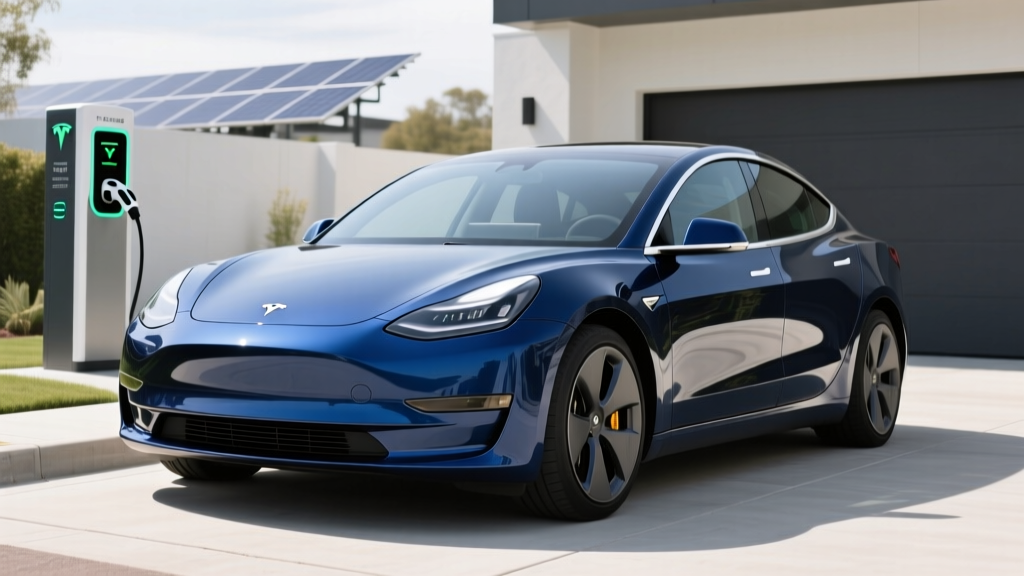
The 2026 Tesla Model 3 Long Range AWD continues to set the bar for midsize electric sedan efficiency, largely thanks to its industry-leading regenerative braking calibration and thermal management. With an EPA-estimated 363 miles of range, a peak DC fast-charge rate of 250 kW, and a starting MSRP of $47,740, it occupies a sweet spot that competitors like the Hyundai Ioniq 6 and BMW i4 struggle to match on total value. The regenerative braking system — which recovers kinetic energy during deceleration and feeds it back into the battery — is central to achieving the Model 3's class-leading MPGe figures and reducing brake pad wear to near-negligible levels over 100,000+ miles.
EPA estimate: 363 miles (Long Range AWD). In real-world highway driving at 70-75 mph, expect approximately 300-325 miles before needing a charge. In cold weather (below 32°F), range can drop 20-30%, yielding roughly 250-290 miles. The RWD base model (EPA 272 mi) realistically delivers 225-245 miles on the highway.
Tesla Regenerative Brakes: How They Work and Why They Matter
Regenerative braking is not unique to Tesla, but Tesla's implementation is among the most aggressive and effective in the industry. When you lift off the accelerator, the electric motor reverses its function — instead of consuming electricity to turn the wheels, it acts as a generator, converting the vehicle's kinetic energy back into electrical energy stored in the battery pack. This process creates significant deceleration force, often enough to bring the car to a complete stop without touching the brake pedal.
The 2026 Model 3 offers a single-pedal driving experience in its default "Standard" regen mode. Tesla removed the adjustable regen setting (Low/Standard toggle) from the Model 3 in 2021 and has not reintroduced it as of the 2026 model year. This means new owners must adapt to the strong deceleration — approximately 0.2g to 0.3g of regen force — which takes roughly 15-30 minutes of driving to feel natural.
Why this matters for ownership: Tesla's aggressive regen captures energy that conventional friction brakes would waste as heat. According to fueleconomy.gov, the Model 3 Long Range achieves 134 MPGe combined (31 kWh/100 mi), one of the highest figures for any vehicle in its class. Additionally, owners routinely report original brake pads lasting 100,000+ miles because the friction brakes are rarely engaged — they exist primarily for emergency stops and low-speed final halts.
Regen Braking vs. Competitors
Compared to the Hyundai Ioniq 6 (which offers adjustable regen levels via paddle shifters) or the BMW i4 (which features an adaptive regen mode that adjusts based on traffic ahead), Tesla's fixed high-regen approach prioritizes maximum energy recovery over driver preference. If you value customization, this can feel limiting. If you prioritize efficiency, Tesla's approach wins on data.
Range, Battery, and Efficiency Specs
| Specification | Model 3 RWD | Model 3 Long Range AWD | Model 3 Performance |
|---|---|---|---|
| EPA Range | 272 miles | 363 miles | 315 miles |
| Battery Capacity (usable) | ~57.5 kWh (LFP) | ~75 kWh (NMC) | ~75 kWh (NMC) |
| Battery Chemistry | LFP (Lithium Iron Phosphate) | NMC (Nickel Manganese Cobalt) | NMC |
| Efficiency (MPGe combined) | 132 MPGe | 134 MPGe | 119 MPGe |
| Energy Consumption | 25 kWh/100 mi | 25 kWh/100 mi | 28 kWh/100 mi |
| Drivetrain | Rear-Wheel Drive | Dual-Motor AWD | Dual-Motor AWD |
| Horsepower | 271 hp | 346 hp | 510 hp |
| 0-60 mph | 5.8 sec | 4.2 sec | 2.9 sec |
The base RWD model uses an LFP battery, which offers superior cycle life (3,000+ charge cycles vs. ~1,500-2,000 for NMC) and can be charged to 100% daily without accelerated degradation. The trade-off is lower energy density, which is why the RWD carries fewer miles of range despite similar vehicle weight. The Long Range and Performance trims use NMC chemistry for higher energy density and greater range.
Charging Speed: DC Fast, Level 2, and Level 1
| Charging Level | Power / Rate | Miles Added per Hour | Notes |
|---|---|---|---|
| DC Fast Charge (Peak) | 250 kW (Long Range/Performance), 170 kW (RWD) | ~1,000 mi/hr at peak | 10-80% in ~25 min (LR); ~30 min (RWD) |
| Level 2 (Home, 48A) | 11.5 kW | ~44 mi/hr | Full charge in ~7-8 hours |
| Level 2 (Home, 32A) | 7.7 kW | ~30 mi/hr | Full charge in ~10-11 hours |
| Level 1 (120V outlet) | 1.4 kW | ~3-5 mi/hr | Emergency/trickle only |
On a Tesla Supercharger V3 or V4 stall, the Long Range AWD peaks at 250 kW but sustains that rate only between roughly 10-30% State of Charge. Above 50%, the charge curve tapers significantly — by 80%, you're pulling closer to 60-80 kW. This is normal for all lithium-ion batteries but means the advertised "175 miles in 15 minutes" applies only when arriving at a low SoC. Plan road-trip stops accordingly: arriving at 10-15% and charging to 60-70% is faster than arriving at 30% and charging to 80%.
For home charging, Tesla's Wall Connector at 48 amps on a 60-amp circuit adds approximately 44 miles of range per hour — enough to fully replenish even the Long Range model overnight. Installation costs typically range from $500 to $2,000 depending on panel proximity and whether a 200-amp service upgrade is needed.
Pricing, Trims, and Federal Tax Credit Eligibility
| Trim | Base MSRP | Est. Federal Credit (§30D) | Effective Price (before state incentives) |
|---|---|---|---|
| Model 3 RWD | $38,990 | Up to $7,500* | ~$31,490 |
| Model 3 Long Range AWD | $47,740 | Up to $7,500* | ~$40,240 |
| Model 3 Performance | $54,990 | Up to $7,500* | ~$47,490 |
*Federal tax credit eligibility under IRS §30D depends on multiple requirements: buyer income caps ($150K single / $300K joint MAGI), vehicle MSRP caps ($55,000 for sedans), battery critical-mineral and component sourcing thresholds, and final assembly in North America. As of 2026, the Model 3 (assembled in Fremont, CA) qualifies, but sourcing requirements tighten annually. The credit can now be transferred to the dealer at point of sale as an instant discount. Always verify current eligibility at IRS.gov and consult a tax professional.
The base RWD at ~$31,490 after the federal credit (if you qualify) makes it one of the most affordable premium electric sedans available. However, the RWD's LFP battery, while durable, delivers noticeably less range — a 91-mile gap versus the Long Range. For buyers with reliable home charging and commutes under 60 miles round-trip, the RWD is the value pick. For road-trippers or those without consistent home charging access, the Long Range justifies its premium.
Interior, Cargo, and Technology
The refreshed Model 3 (introduced for 2024 and carried into 2026) features improved cabin materials, ventilated front seats, a rear passenger touchscreen, and enhanced sound insulation. Cargo volume stands at 23 cubic feet combined (trunk + frunk), competitive with the Hyundai Ioniq 6 (12.3 cu ft trunk only — no frunk) but less than the Model Y crossover.
Key dimensions:
- Front legroom: 42.7 inches
- Rear legroom: 35.2 inches
- Trunk: 21 cu ft
- Frunk: 2 cu ft
- Curb weight: ~3,862 lbs (RWD) / ~4,034 lbs (LR AWD)
Standout tech: The 15.4-inch center touchscreen runs Tesla's proprietary infotainment with native navigation, streaming, and over-the-air updates. Basic Autopilot (Traffic-Aware Cruise Control and Autosteer) is standard. Full Self-Driving (Supervised) — a SAE Level 2 driver-assistance system — remains an $8,000 option or $99/month subscription. FSD is not autonomous driving; the driver must remain fully engaged and responsible at all times.
Tesla Autopilot and FSD (Supervised) are SAE Level 2 systems. They do NOT make the vehicle self-driving. You must keep your hands on the wheel, eyes on the road, and remain prepared to take over instantly. NHTSA continues to investigate Autopilot-related incidents. Do not use these systems in construction zones, unmapped roads, or adverse weather beyond their rated capabilities.
Warranty and Long-Term Ownership
Tesla provides the following warranty coverage for the 2026 Model 3:
- Basic Vehicle: 4 years / 50,000 miles
- Battery & Drive Unit (RWD): 8 years / 100,000 miles (whichever comes first), with minimum 70% capacity retention
- Battery & Drive Unit (Long Range/Performance): 8 years / 120,000 miles, with minimum 70% capacity retention
The 70% retention threshold is standard across the industry (Hyundai offers 10yr/100K at 70% for the Ioniq 6). Real-world degradation data from Tesla fleet analytics suggests most Model 3 packs retain approximately 88-92% capacity at 100,000 miles — well above the warranty floor. LFP packs in the RWD model are expected to degrade even more slowly, though long-term fleet data is still maturing.
Pros and Cons
- Class-leading efficiency (134 MPGe / 25 kWh/100mi)
- Extensive Supercharger network (20,000+ stalls in North America)
- Aggressive regen braking extends range and virtually eliminates brake wear
- Over-the-air updates continuously add features
- Strong resale value relative to EV segment average
- LFP battery (RWD) supports daily 100% charging without degradation concerns
- No adjustable regen setting — one-pedal driving is mandatory
- Rear legroom (35.2 in) is tight for taller passengers
- No Apple CarPlay or Android Auto
- Turn-signal buttons on steering wheel (no stalk) draw polarizing reviews
- FSD subscription cost ($99/mo) adds up without delivering Level 4 autonomy
- Service center wait times remain long in some metro areas
Who the 2026 Model 3 Suits Best
Choose the Model 3 RWD if: You have reliable home Level 2 charging, your daily commute is under 60 miles round-trip, you want the lowest entry price, and you value LFP battery longevity over maximum range.
Choose the Model 3 Long Range AWD if: You take regular road trips (200+ miles), live in a cold-weather state where range loss matters, need dual-motor traction for snow, and want the best balance of range, efficiency, and price in the segment.
Choose the Model 3 Performance if: Acceleration thrills (2.9 sec 0-60) and track capability are priorities, and you're willing to sacrifice 48 miles of range versus the Long Range for the privilege.
Look elsewhere if: You need generous rear-seat space for adults (consider the Hyundai Ioniq 5 or Kia EV6), require Apple CarPlay integration, or prefer adjustable regenerative braking with paddle shifters.
Frequently Asked Questions
What is the real-world range of the 2026 Tesla Model 3?
The Long Range AWD is EPA-rated at 363 miles, but real-world highway driving at 75 mph typically yields 300-325 miles. In freezing temperatures, expect 250-290 miles. The RWD model (EPA 272 mi) delivers roughly 225-245 miles in real-world highway use.
How fast does the Model 3 charge at home and on road trips?
At home on a 48A Level 2 Tesla Wall Connector, the Model 3 adds about 44 miles of range per hour (full charge in 7-8 hours). On a 250 kW Supercharger, the Long Range achieves 10-80% in approximately 25 minutes. The RWD peaks at 170 kW, taking roughly 30 minutes for the same 10-80% session.
Does the 2026 Model 3 qualify for the $7,500 federal EV tax credit?
As of 2026, the Model 3 (assembled in Fremont, CA) qualifies for up to $7,500 under IRS §30D, provided you meet income caps ($150K single / $300K joint), the vehicle MSRP is under $55,000 (sedan cap), and battery sourcing requirements are met. The credit can be applied at point of sale. Verify at IRS.gov before purchasing — rules tighten annually.
Can I adjust the regenerative braking strength?
No. Tesla removed the Low/Standard regen toggle from the Model 3 in 2021. The 2026 model uses a fixed, high-regen calibration that enables one-pedal driving. Most owners adapt within a few days, but if you prefer adjustable regen, consider the Hyundai Ioniq 6 or BMW i4.
Is the Model 3 worth buying vs. the Hyundai Ioniq 6 or BMW i4?
The Model 3 Long Range wins on efficiency, Supercharger network access, and over-the-air feature updates. The Ioniq 6 offers more rear-seat space, adjustable regen, and a lower starting price but charges slower on public DC (peak 235 kW, less common infrastructure). The BMW i4 is more luxurious but starts significantly higher (~$57K) with less range. For most buyers prioritizing value and charging convenience, the Model 3 Long Range remains the segment default.
How long will the Model 3 battery last?
Tesla warranties the battery for 8 years / 100,000 miles (RWD) or 8 years / 120,000 miles (Long Range/Performance) at a minimum 70% capacity retention. Fleet data indicates most packs retain 88-92% at 100,000 miles. Replacement cost, if needed out of warranty, ranges from $12,000 to $16,000 depending on the pack.